

More news on this day
Hundreds of passengers have been left stranded across Canada, the United States, Mexico and Hong Kong after Toronto Pearson International Airport logged 23 flight cancellations and 233 new delays on Saturday, disrupting operations at major carriers including Air Canada, WestJet, Porter and Jazz and triggering ripple effects across the global network.
Widespread Disruptions at Canada’s Busiest Hub
The latest figures from Toronto Pearson highlight a stressful day for travellers, with 256 flights affected in total as the airport grapples with another round of operational strain late in the winter travel season. The majority of the disruptions involve late departures and arrivals, but the 23 outright cancellations have grounded travellers with limited alternatives on already busy weekend routes.
Delays are affecting both domestic and international services, from short‑haul connectors within Ontario and Quebec to transborder flights into major US gateways and leisure routes to Mexico and the Caribbean. Airline operations teams are attempting to reassign aircraft and crew, but tight schedules and aircraft already out of position have made rapid recovery difficult.
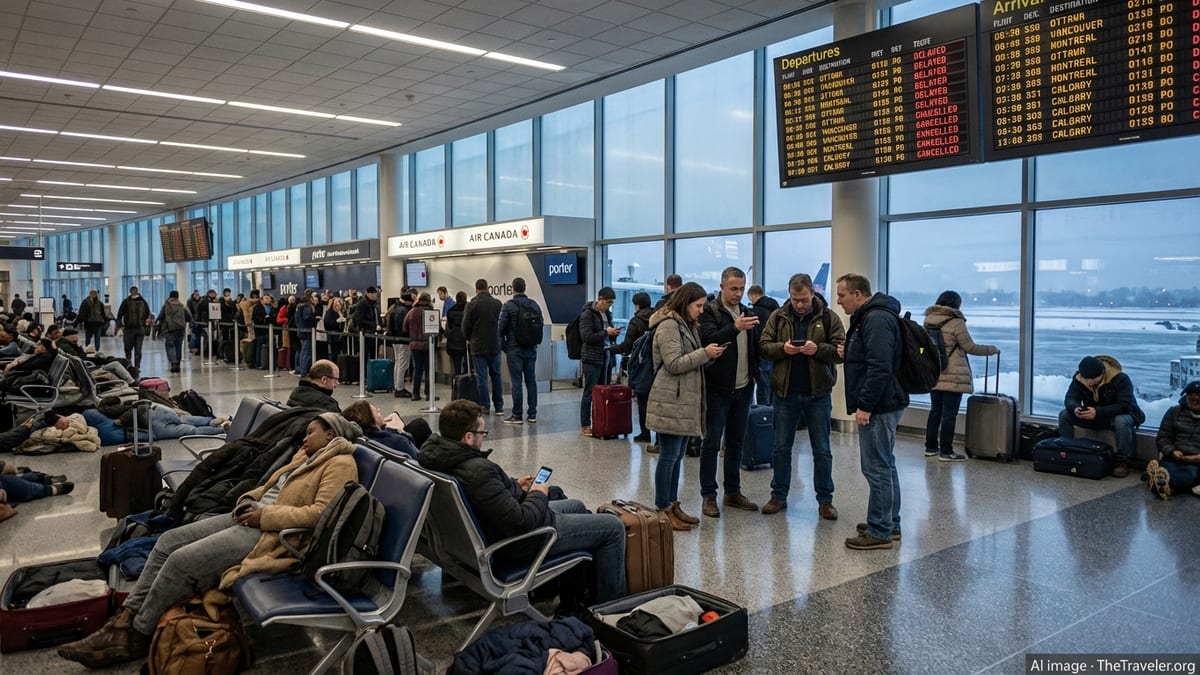
Long lines have formed at customer service counters as passengers seek rebooking options, hotel vouchers and food allowances. Many travellers reported spending hours in terminals with little clarity on revised departure times, a familiar scene at large hubs when weather and congestion converge.
Air Canada, WestJet, Porter and Jazz Among Hardest Hit
National flag carrier Air Canada has borne a significant share of the disruptions, reflecting its dominant presence at Toronto Pearson. The airline has seen more than a hundred delayed services alongside a cluster of cancellations, particularly on high‑frequency domestic routes linking Toronto with cities such as Vancouver, Montreal, Ottawa and Calgary, as well as popular US destinations including New York and Miami.
WestJet has also reported a notable number of delayed departures, with its network of western Canadian connections feeding into Toronto experiencing knock‑on effects. Passengers heading to and from Calgary and Vancouver in particular have encountered rolling delays as aircraft arrive late and turnaround times are extended for de‑icing and safety checks.
Porter Airlines and regional operator Jazz, both key players in short‑haul travel to secondary cities across eastern Canada and the northeastern United States, are dealing with compressed schedules where even modest disruptions quickly cascade. With many of their routes operated by smaller regional jets and turboprops, spare capacity to accommodate displaced travellers is limited, intensifying pressure on remaining services.
Stranded Travellers from Canada to Mexico and Hong Kong
The impact of Pearson’s flight disruptions has extended far beyond southern Ontario. In Canada, travellers have found themselves unexpectedly stuck in cities from Vancouver to Halifax as inbound aircraft originating in Toronto failed to depart on schedule. Missed connections have marooned passengers in intermediate hubs, some forced to stay overnight as later flights filled up.
In the United States, delays to Toronto services have affected travellers in major gateways such as Los Angeles, New York and Miami, many of whom were connecting to or from Canadian domestic flights. Airport hotels near these hubs reported a sudden influx of last‑minute bookings as airlines issued accommodation vouchers and travellers scrambled to secure rooms on a busy weekend.
Southbound holidaymakers in Mexico have similarly been caught in the disruption. Passengers in resort destinations such as Cancun reported remaining at the gate for hours awaiting updated departure times for Toronto‑bound flights, while others saw their return journeys cancelled outright and were instructed to contact airlines for rebooking options on later services.
Farther afield, services linking Toronto with Hong Kong and other key Asian destinations have also felt the strain. Even where long‑haul flights operated, late departures from Canada have translated into missed onward connections in Asia and Europe, extending the disruption for business and leisure travellers alike.
Winter Weather and Network Congestion Fuel Ongoing Chaos
The latest wave of cancellations and delays comes amid a month of volatile winter weather across Canada and parts of the United States. Snow, freezing rain and low visibility conditions around the Great Lakes and along the eastern seaboard have repeatedly forced airlines to slow operations, lengthen de‑icing times and, in some cases, pre‑emptively cancel flights to maintain safety and reduce the risk of aircraft and crew becoming badly out of position.
These local conditions have coincided with wider weather‑related disruption across the continent, including recent storms that snarled air traffic at major US hubs and complicated transatlantic schedules. As a result, airlines at Toronto Pearson are operating within an already stressed network, where reserve aircraft and crews are limited and any small delay can ripple across multiple flights and time zones.
Operational experts note that while Pearson is accustomed to winter weather, the combination of frequent storms, high passenger volumes and tightly timed schedules leaves little margin for error. Ground handling teams, already stretched by prior weather events this month, have been working extended shifts to keep runways clear and aircraft serviced, but residual congestion from previous days of disruption continues to affect turnaround times.
What Passengers Can Expect in the Coming Days
Airlines at Toronto Pearson have urged passengers to check their flight status frequently before heading to the airport, use mobile apps and notification services, and consider rebooking where flexible travel options are available. Many carriers are offering fee‑free changes for affected routes, allowing travellers to move their trips to later dates or alternative airports when seats permit.
Industry analysts say it may take at least another day for schedules to stabilise if no new weather systems emerge, as airlines work through backlogs of displaced passengers and reposition aircraft to where they are needed most. High‑demand leisure routes to sun destinations and key transcontinental links are likely to remain under pressure, with limited spare capacity even after operations normalise.
For travellers currently stranded in Canada, the US, Mexico or Hong Kong, consumer advocates recommend documenting all expenses incurred during the disruption and retaining receipts, in case partial reimbursement is available under airline policies or national air passenger protection regulations. While compensation rules differ depending on the cause of delays and cancellations, passengers may be eligible for meals, accommodation or rebooking assistance in many situations.
For now, the scene at Toronto Pearson reflects a familiar picture during a difficult winter: crowded departure halls, long lines at rebooking counters, weary travellers searching for updates on flickering departure boards, and the hope that the next boarding call will finally bring an end to an unexpectedly long journey.