

More news on this day
A wave of disruptions at Toronto Pearson International Airport has resulted in 347 delays and 80 cancellations, rippling across regional and transborder networks and leaving thousands of travelers stranded from Sudbury and Sault Ste. Marie to major U.S. cities including Nashville and Philadelphia.
Get the latest news straight to your inbox!
Severe Operational Disruptions at Canada’s Busiest Hub
Toronto Pearson International Airport, Canada’s largest air hub, experienced a sharp spike in irregular operations as publicly available flight-tracking data showed 347 flights delayed and 80 canceled within a single operating day. The figures represent a significant interruption to Pearson’s normal schedule and underscore the vulnerability of regional and international connections that depend on the Toronto hub.
Reports indicate that the disruption has affected a broad mix of domestic, transborder, and international routes. Regional services into northern Ontario, key links to U.S. gateways, and long-haul departures have all experienced knock-on impacts, with aircraft and crews out of position and departure banks heavily compressed.
While the exact blend of causes can vary from one carrier and route to another, aviation observers point to a combination of weather-related constraints, congestion in peak departure windows, and ongoing staffing and aircraft-availability challenges across the industry. The result for passengers has been extended waits on the ground, missed connections, and widespread last-minute itinerary changes.
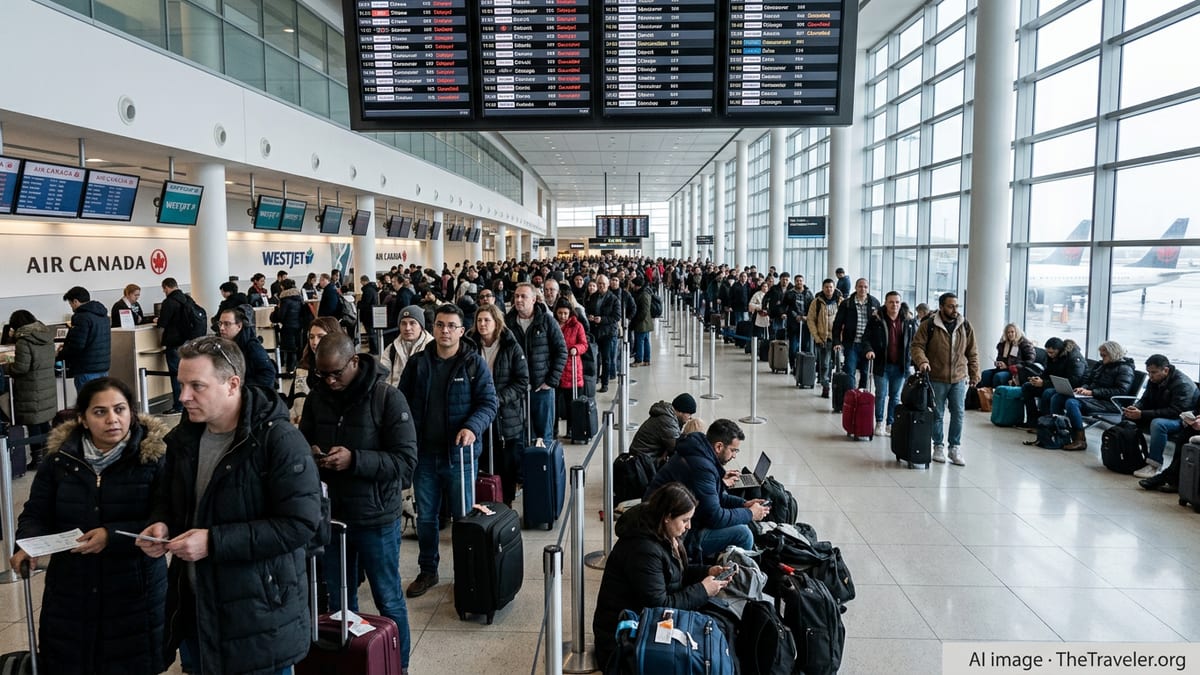
The operational imbalance at Pearson has also placed pressure on airport services in the terminals. Travelers have reported crowded check-in halls, long queues at security and boarding gates, and high demand for rebooking assistance at airline service counters.
Regional Routes to Sudbury and Sault Ste. Marie Hit Hard
Regional travelers across Ontario have been especially exposed to disruption, with flights linking Toronto Pearson to cities such as Sudbury and Sault Ste. Marie among those affected. These short-haul services are central to business travel, medical appointments, and essential community connections, meaning delays and cancellations can have outsized consequences compared with higher-frequency trunk routes.
Public data from recent schedules shows that multiple daily rotations between Pearson and northern Ontario depend on efficient aircraft turnarounds and tight crew scheduling. When the hub experiences an extended period of disruption, these thinner routes can quickly see cascading delays, as a single late arrival can impact a chain of subsequent departures.
Travelers on these routes have encountered a mix of challenges, from multi-hour delays to same-day cancellations resulting in unexpected overnight stays in Toronto or at origin airports. Replacement capacity is often limited, since regional aircraft fleets are tightly scheduled and spare aircraft are not always readily available, particularly during busy travel periods.
The knock-on effect has reached beyond the immediate Toronto connections. Passengers from Sudbury and Sault Ste. Marie planning to connect in Pearson to western Canada, the Atlantic provinces, or the United States have been forced into last-minute rebookings or complete itinerary changes, adding cost and uncertainty to their travel plans.
Transborder Disruptions Spread to Nashville, Philadelphia and Beyond
The impact of Pearson’s flight irregularities has extended across the U.S. border, with services to major American cities such as Nashville and Philadelphia among those disrupted. These routes, often operated as part of larger alliance networks, are crucial for feeding Canadian traffic into the U.S. domestic system and for connecting American travelers through Toronto to Europe and other international destinations.
According to publicly available flight-status boards and airline schedule data, passengers on affected transborder flights have faced both late departures and outright cancellations. In some cases, travelers headed to U.S. cities have been rerouted via alternative hubs such as Montreal, Vancouver, Chicago, or New York, increasing travel times and raising the risk of missed onward connections.
Secondary U.S. destinations that rely on a smaller number of daily flights from Toronto are particularly exposed. When a limited-frequency service is canceled, same-day recovery options can be scarce, especially during busy travel windows. This has left some travelers facing extended layovers in Toronto, unplanned overnight stays, or complicated multi-stop reroutes that add stress to already disrupted journeys.
The ripple effects have also flowed in the opposite direction. Disruptions on inbound legs from the United States into Toronto have contributed to the imbalance in aircraft and crew resources at Pearson, compounding the challenge of restoring normal operations across the network.
What the Numbers Reveal About Pearson’s Vulnerability
The headline figure of 347 delayed and 80 canceled flights in a single day highlights the scale of disruption at Toronto Pearson and provides a window into broader operational pressures. Even at a major hub that handles hundreds of daily movements, a disruption of this magnitude can touch tens of thousands of passengers and impact airports across multiple regions.
Industry analysts note that Pearson’s role as a primary hub for national and international carriers makes it particularly sensitive to external shocks. Weather systems moving through southern Ontario, constraints in U.S. airspace, and localized staffing or equipment issues can quickly produce a chain reaction, affecting both high-frequency trunk routes and crucial regional lifelines.
Data from prior seasons has illustrated that winter and early spring are especially challenging periods, with fluctuating temperatures, snow, and freezing rain often forcing adjustments to runway operations and ground handling. When these seasonal factors intersect with already tight schedules and high demand, the likelihood of large-scale delay events increases.
For airlines operating at Pearson, the task of recovery after such a spike in disruptions typically extends beyond a single day. Aircraft and crews may remain out of optimal position for several rotations, meaning that passengers can experience residual delays or minor schedule changes even after the most visible disruption has passed.
Guidance for Affected Travelers Across Canada and the U.S.
With disruptions radiating from Pearson to airports across Canada and the United States, travelers are being urged by consumer advocates and travel experts to take a proactive approach to managing their journeys. Publicly available guidance from regulators and airlines emphasizes the importance of monitoring flight status frequently on the day of travel and signing up for airline notifications where possible.
Passengers facing cancellations or long delays are encouraged to review the specific conditions of carriage for their airline and, for U.S.-bound itineraries, the latest information on passenger rights published by transportation regulators. These documents outline when travelers may be entitled to rebooking, meal vouchers, or other forms of assistance, although policies vary widely by carrier and route.
Travel planners recommend building additional connection time into itineraries that pass through Toronto Pearson, particularly during periods of unsettled weather or peak travel demand. Where feasible, travelers with critical time-sensitive engagements may wish to consider earlier departures or alternative routings that reduce reliance on a single hub.
In the short term, the focus for both carriers and passengers remains on managing the immediate disruption, clearing backlogs, and restoring predictable schedules. As operations stabilize, there is likely to be renewed scrutiny on how Canada’s busiest airport and its airline partners can bolster resilience and communication to better absorb future shocks without leaving thousands of travelers stranded across multiple regions.