

More news on this day
Travelers across Canada and the United States are facing fresh disruption after Toronto Pearson International Airport logged dozens of delayed and cancelled flights, unsettling operations for WestJet, Air Transat, Air Canada and other airlines on busy routes that include San Francisco, Chicago and several additional transborder and domestic destinations.
Get the latest news straight to your inbox!
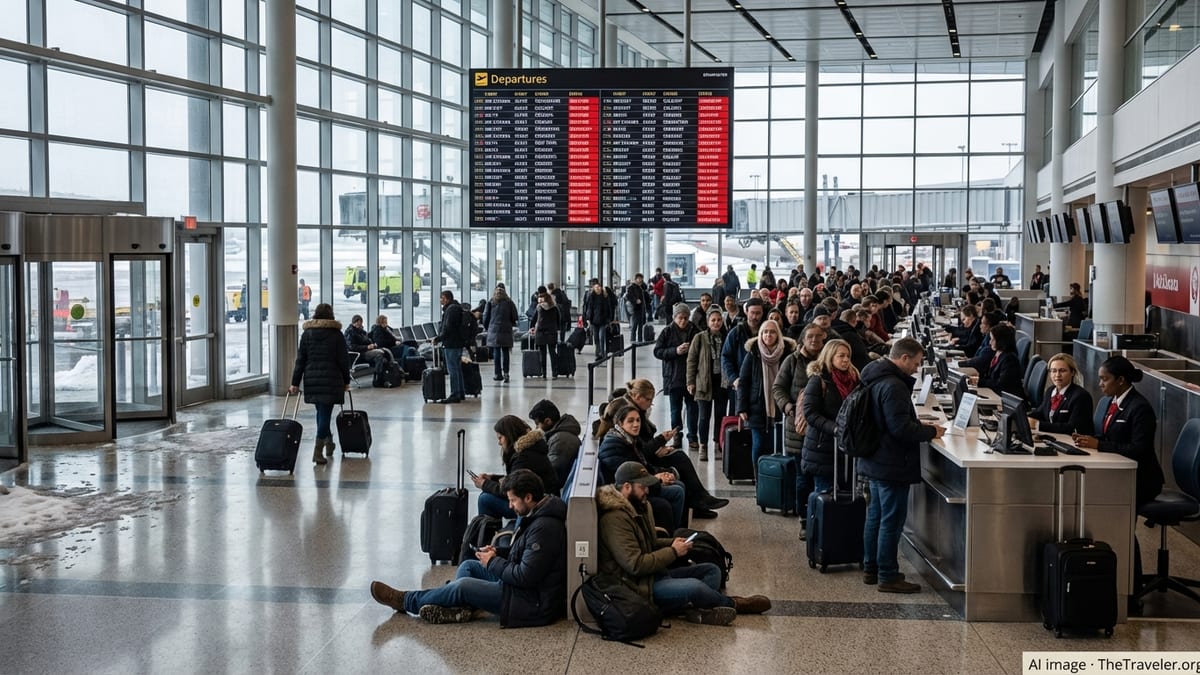
Toronto Pearson Records New Wave of Schedule Disruptions
Publicly available flight-tracking tallies for early April indicate that Toronto Pearson has again emerged as one of North America’s most heavily impacted hubs, with around three dozen departures running late and more than a dozen services cancelled in a single day. The latest snapshot shows 34 delays and 14 cancellations tied to Pearson’s operations, continuing a pattern of persistent disruption at Canada’s largest airport.
Data compiled from aviation monitoring services and industry coverage suggest that Pearson has repeatedly posted some of the country’s highest delay totals this week, following earlier days in which the airport registered in excess of 90 delayed flights and more than a dozen cancellations. Reports indicate that while outright cancellations remain limited compared with overall traffic volume, a high share of departures are leaving behind schedule, creating rolling congestion throughout the day.
These figures add to a wider series of operational challenges across Canada, where winter weather, staffing constraints and aircraft repositioning issues have all contributed to a volatile operating environment. Toronto’s role as a central hub for both domestic and international connections has meant that even a modest number of cancellations can have outsized consequences for passengers connecting onward to the United States, Europe and the Caribbean.
Major Carriers Affected, From Air Canada To WestJet
The latest disruption at Toronto Pearson has affected a cross-section of carriers, with national flag carrier Air Canada, leisure-focused Air Transat and low-cost and hybrid operators such as WestJet among those recording delayed or cancelled services. Regional affiliates and codeshare partners have also been swept up in the turbulence as shared aircraft and crew rotations struggle to keep to schedule.
Published coverage and airline status boards show Air Canada bearing a significant share of late departures and isolated cancellations, consistent with its position as the largest operator at Pearson. WestJet and Air Transat, which rely heavily on Toronto for transborder and leisure traffic, have also been listed among airlines posting schedule changes, particularly on routes linking Canada with major U.S. gateways.
Other international and regional carriers using Pearson as a Canadian entry point, including partners aligned with larger global alliances, have reported knock-on impacts when inbound aircraft arrive behind schedule or when connecting passengers miss their onward flights. In many cases, even when a particular carrier has not cancelled a departure, delayed ground handling, de-icing or air traffic flow restrictions have contributed to late pushbacks and extended gate holds.
Ripple Effects On Routes To San Francisco, Chicago And Beyond
Operational data and media tallies indicate that the latest Pearson disruptions have rippled across several prominent cross-border routes, particularly services to major U.S. hubs such as San Francisco and Chicago. These cities play a key role in wider North American connectivity, funnelling passengers onward to secondary markets throughout the United States and internationally.
Flights between Toronto and Chicago, a heavily trafficked corridor served by multiple carriers and alliance partners, have seen a mix of delayed departures and scattered cancellations as Pearson’s schedule has been repeatedly compressed. Similar patterns have been noted on services linking Toronto with San Francisco, where late arriving aircraft and crew time limitations can force last-minute adjustments.
These impacts extend beyond the headline U.S. hubs. According to route and operations summaries, disruptions at Pearson have also affected flights toward other major American cities and sun destinations, as well as domestic connections within Canada. Even when Pearson’s own cancellation counts remain in the low double digits, the timing and route mix of those flights can leave travelers with limited same-day alternatives, particularly on transcontinental and long-haul services.
Weather, Congestion And Operational Strain Behind The Numbers
Reports from aviation outlets and travel industry analysts point to a combination of weather-related challenges and broader operational strain as key drivers of the current disruption pattern. A series of early April storms has brought snow, freezing rain and low visibility conditions to parts of Canada, periodically triggering de-icing backlogs and reduced runway capacity at major hubs.
At the same time, congestion within the wider North American network has compounded those weather effects. When flights are held for air traffic management reasons or arrive late from other affected airports, turnaround times at Pearson can stretch, placing pressure on gate availability, baggage handling and crew scheduling. If aircraft miss their scheduled departure windows, the impact can cascade through multiple subsequent legs.
Industry commentary also highlights underlying staffing and resource constraints at airports and airlines, which can make it more difficult to recover quickly once disruption sets in. Even as carriers adjust timetables and issue travel advisories to spread demand, the legacy of earlier cancellations and delays has left some routes operating with thinner margins for further disruption, particularly during peak travel periods.
What Travelers Are Experiencing And How To Navigate The Disruptions
For passengers, the practical effects of the latest Pearson disruptions have included missed connections, extended waits on the ground and last-minute rebookings across multiple carriers. Travelers heading to or from cities such as San Francisco and Chicago, as well as those connecting onward from Toronto to international destinations, have faced the prospect of overnight stays or lengthy reroutes when same-day alternatives were not available.
Travel guidance from consumer advocates and industry publications emphasizes the importance of monitoring flight status closely, especially during periods when Pearson’s delay tallies are rising. Passengers are encouraged to use airline mobile apps and airport information screens to track gate changes and departure times, and to seek rebooking options as soon as a significant delay or cancellation appears likely.
Available information on passenger rights in Canada indicates that eligibility for compensation or assistance can depend on the cause of the disruption, the length of the delay and the operating carrier. In cases where delays are attributed to weather or air traffic restrictions, financial compensation may be limited, although airlines may still provide meal vouchers, accommodation or alternative transport options in some circumstances. Travelers are advised to retain receipts and documentation related to any expenses incurred while they wait for new travel arrangements.
With further weather and operational challenges possible in the coming days, observers note that Toronto Pearson’s performance will continue to play a central role in determining how smoothly travel flows across Canada and on key transborder routes. Even modest improvements in on-time performance at the country’s primary hub could ease pressure on the broader network, while any renewed spike in delays and cancellations would likely be felt quickly on flights linking Toronto with major cities such as San Francisco, Chicago and other high-demand destinations.