

More news on this day
Travelers at Toronto Pearson International Airport faced mounting disruption today as publicly available flight-tracking data showed 95 delays and 14 cancellations affecting routes across Canada, the United States, Germany, Brazil and other international destinations.
Get the latest news straight to your inbox!
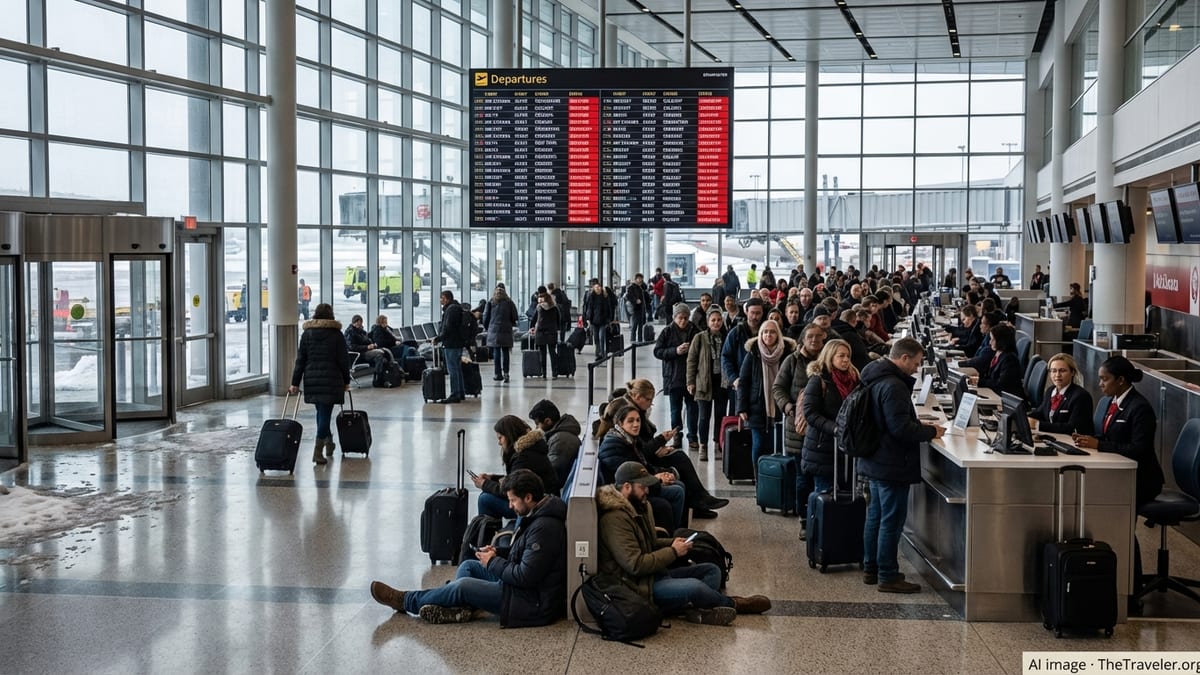
Ripple Effects Across North and South America
Operational data compiled from major tracking platforms indicates that the disruption at Toronto Pearson built steadily through the morning, with delay counts climbing as departure banks stacked up. Short-haul services within Canada and to the United States absorbed much of the initial impact, but knock-on effects soon began to touch longer-haul links to South America and Europe.
Flights operated by Air Canada, Delta Air Lines, Endeavor Air and WestJet appeared prominently among the delayed and cancelled services, reflecting their substantial presence in the Toronto market. Regional and feeder operations were also affected, complicating onward connections for passengers bound for secondary Canadian cities as well as major hubs such as New York, Chicago and Atlanta.
Connections to Brazil, including services routed via U.S. and Canadian hubs, were among those disrupted, according to published coverage of today’s wider North American aviation challenges. Passengers booked on multi-leg itineraries from Brazilian gateways to Toronto and onward to other Canadian or U.S. cities faced longer journey times, missed connections and rebooked routings.
Transatlantic links connecting Toronto with Germany were likewise drawn into the difficulties as delays in North American feeder flights narrowed connection windows or forced last-minute itinerary changes. Travel industry reports suggest that even when long-haul departures managed to leave close to schedule, late-arriving passengers and baggage created further strains on ground handling and customer service teams.
Multiple Carriers, One Congested Hub
The day’s numbers at Toronto Pearson mirror a pattern of recurrent strain across Canadian aviation observed in recent weeks. Earlier this month, travel-industry monitoring indicated that the airport had already led the country in delay counts on several occasions, with Air Canada and WestJet among the carriers reporting the highest number of affected flights. Those recurring pressures have left little margin in schedules for recovery when fresh disruption arises.
According to recently published operational summaries, Air Canada has been carrying a significant share of Canada’s domestic and transborder disruption, while WestJet and its affiliates have experienced their own bouts of elevated cancellations and delays. Delta and its regional partner Endeavor Air, which connect Toronto to key U.S. hubs, add another layer of complexity when weather or air traffic control measures ripple across both sides of the border.
Industry analyses of punctuality data show that Toronto Pearson consistently operates near capacity in peak periods, which can amplify even modest disturbances. When one departure bank is delayed, aircraft and crew may arrive late for subsequent flights, triggering a cascade of schedule changes that ultimately registers as dozens of delayed departures and arrivals across several carriers.
Recent historical examples from Canadian and U.S. airports highlight how such congestion can quickly translate into widespread disruption. In earlier episodes this month, similar delay and cancellation totals at major Canadian hubs left thousands of passengers facing missed connections and extended airport stays, underscoring how sensitive the system is to incremental shocks.
Weather, Congestion and Operational Constraints
While specific causes vary by flight, recent weather patterns across Canada and the United States have played a recurring role in schedule instability. Late-season storms documented in recent days brought snow, freezing rain and reduced visibility to parts of the country, cutting runway capacity at several major airports and creating de-icing bottlenecks. Even when Toronto’s conditions improved, aircraft and crew displaced by earlier disruptions contributed to lingering irregular operations.
Air traffic control flow restrictions in busy U.S. airspace have also been cited in earlier regional disruptions, limiting the number of flights that can safely depart or arrive during congested periods. When these measures intersect with already tight airline schedules, they can translate into rolling delays for Toronto-bound and Toronto-originating flights, particularly on cross-border routes operated by Air Canada, Delta and Endeavor.
Operational data and transport-policy publications further indicate that Canadian carriers have been operating with relatively little spare capacity in recent seasons. High aircraft utilization and lean crew rosters can boost efficiency in normal conditions but leave less flexibility for rapid recovery when weather, technical issues or air traffic restrictions intervene. As a result, a modest cluster of initial delays can expand into a network-wide challenge over the course of a single day.
Travel-sector observers point out that these conditions are emerging against a backdrop of sustained demand on key business and leisure corridors, including Canada–U.S. transborder routes and long-haul services to Europe and South America. When flights are heavily booked, accommodating disrupted passengers on later services becomes more difficult, lengthening recovery times after a day like today at Toronto Pearson.
Passenger Impact From Canada to Germany and Brazil
For passengers, the disruption translated into missed meetings, curtailed holidays and unplanned overnight stays. Travelers connecting in Toronto from Canadian cities onto flights bound for the United States, Germany and Brazil were among those most vulnerable to missed connections, given the tight transfer windows that often characterize hub schedules.
On Canada–U.S. routes, published reports show that even short delays can trigger a chain reaction for itineraries involving onward same-day connections. At Toronto Pearson, where many North American passengers change planes, the 95 delayed flights recorded today significantly increased the risk that connecting travelers would be rebooked on later departures or rerouted through alternate hubs.
Longer-haul travelers to Germany and Brazil faced a different set of challenges. In some instances, delays on feeder services into Toronto threatened to push passengers beyond minimum connection times for overnight transatlantic or southbound departures. When that occurs, options often narrow to limited next-day services, especially on routes with lower frequencies, compounding the personal and financial impact of a missed flight.
Travel disruption also carries economic implications for airlines and the wider tourism sector. Industry assessments of previous episodes at Toronto Pearson and other major hubs have highlighted the cost of crew repositioning, aircraft out-of-service time and passenger care, as well as the potential for eroded confidence among frequent travelers when irregular operations become a recurring experience.
What Travelers Can Do When Disruption Hits
Consumer-rights organizations and travel-industry guides continue to advise passengers to monitor their flights closely on days when major hubs such as Toronto Pearson report elevated disruption. Real-time updates from airline apps and airport displays can provide warning of developing delays, giving travelers more time to adjust ground transportation or secure alternative connections where possible.
Recent guidance materials outlining Canadian and U.S. passenger protections stress the importance of documenting delay times and keeping records of any additional expenses incurred, such as hotels and meals. In some circumstances, especially when disruption is attributed to controllable operational issues rather than severe weather, passengers may be eligible for refunds or compensation under national regulations or airline policies.
Travel analysts also suggest that, where feasible, passengers consider building slightly longer connection times into itineraries that route through congested hubs. Although this may lengthen total journey time, it can provide a buffer against mounting delays on busy travel days and reduce the risk of missed long-haul or international connections.
With 95 delays and 14 cancellations recorded at Toronto Pearson today across a mix of domestic, transborder and long-haul routes, publicly available data illustrates how quickly a single hub’s operational challenges can resonate far beyond Canada’s borders. For travelers heading between Canada, the United States, Germany, Brazil and beyond, the episode serves as a fresh reminder of the value of preparation, flexibility and awareness of their rights when schedules unravel.