

More news on this day
Toronto Pearson International Airport is facing another day of heavy disruption, with 95 delays and 14 cancellations backing up schedules and sending ripple effects through airline networks across North America.
Get the latest news straight to your inbox!
Late-Season Storm and Tight Schedules Converge
The latest disruption comes as a late-season weather system and already strained aviation operations intersect, creating fresh pressure on Canada’s busiest hub. Publicly available flight data and operational tallies point to a delay-dominant pattern, with far more services running late than being fully cancelled, but with each delayed departure contributing to mounting congestion at Toronto Pearson.
Reports from flight-tracking platforms and specialist travel outlets indicate that the 95 delayed flights and 14 cancellations at Toronto Pearson are part of a broader pattern of springtime turbulence for North American air travel. Recent days have seen snow and mixed precipitation sweep across key corridors, with Canadian airports in Toronto, Montreal and Calgary repeatedly appearing among the continent’s most disrupted facilities.
Operational analysts note that airlines continue to run tight schedules with limited spare aircraft and crew. Under these conditions, even modest weather-related slowdowns at a hub such as Toronto Pearson can quickly spill into missed rotation times, aircraft out of position and further knock-on delays later in the day.
The specific mix of 95 delays and 14 cancellations underscores that carriers are attempting to preserve most of the schedule while trimming select flights to regain control. However, the imbalance still translates into crowded gates, long lines at customer service desks and extended waits on tarmacs and taxiways.
Ripple Effects Across Canada and U.S. Hubs
Trouble at Toronto Pearson rarely stays local. As one of the primary connecting points between Canada and the United States, as well as a key transatlantic and transpacific hub, any wave of delays and cancellations can quickly reverberate through the wider network.
Published disruptions tallies for early April show Canadian airports repeatedly hit by weather and operational strain, with Toronto Pearson often recording the highest number of delayed departures in the country. Other major facilities, including Montréal–Trudeau and Calgary International, have simultaneously faced dozens of late or cancelled flights linked to the same weather systems and shared airline networks.
In the United States, recent coverage describes thousands of delayed flights at major hubs such as Chicago, New York and Atlanta during stormy periods this spring. When aircraft operating cross-border or transcontinental segments run late or are cancelled, knock-on impacts appear at Toronto as connecting passengers and crews miss onward departures, reinforcing the delays already building in the system.
The result is a feedback loop in which a mid-morning delay at Toronto Pearson can surface hours later as a missed connection in another city, and then circle back as an evening arrival that is out of position for the next day’s operation.
Airlines and Routes Most Exposed
While Toronto Pearson itself is the focal point, the impact of 95 delayed flights and 14 cancellations is distributed unevenly among airlines and routes. Publicly available breakdowns from recent disruption days in Canada suggest that the country’s largest carriers typically bear the brunt of delays, particularly on high-frequency domestic and transborder services.
Short-haul routes linking Toronto with Montreal, Ottawa and Western Canadian cities often see multiple daily departures, which can provide passengers with rebooking options but also concentrate operational risk. When the first wave of morning flights runs late, tight turnarounds and crew duty limits make it more difficult to bring subsequent departures back on schedule.
Transborder routes to New York, Chicago, Boston and other U.S. gateways are similarly vulnerable. Travel industry coverage in recent weeks has documented how disruptions at one major airport can cascade quickly into another, with Toronto Pearson both absorbing and exporting delays on these key business and leisure corridors.
Long-haul international services from Toronto to Europe and Asia are less numerous but carry significant numbers of connecting passengers. Even a small number of cancellations or extended delays on feeder flights can strand travelers who miss their once-daily departures, forcing overnight stays and complex rebookings via alternate hubs.
Passenger Experience: Missed Connections and Crowded Terminals
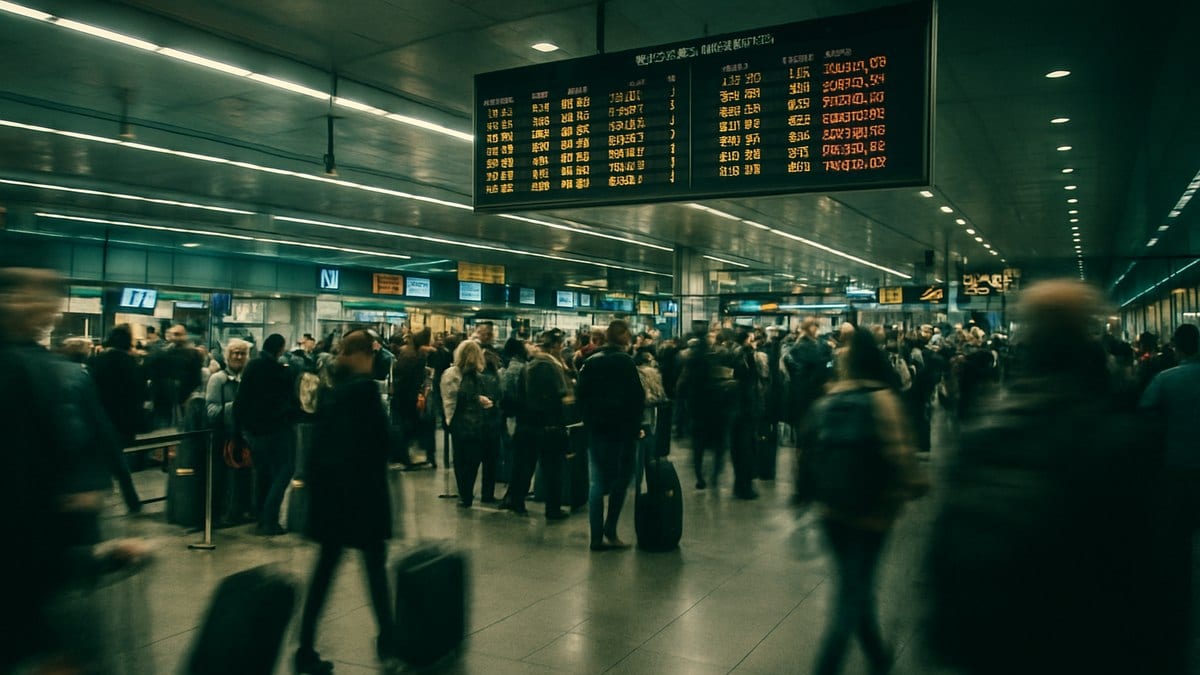
For passengers, the numbers translate into missed connections, rebooked itineraries and congested terminal spaces. With 95 delayed operations, a substantial share of the day’s departures is running behind schedule, creating longer dwell times in gate areas and added strain on airport amenities.
Travel coverage from this spring highlights a recurring pattern when disruption hits Toronto Pearson and other large hubs. Lines grow at airline service counters as travelers seek rerouting or hotel vouchers on cancelled or severely delayed flights. Security and border-control areas can also become pinch points if large groups of passengers reach checkpoints simultaneously after extended gate holds or deplaning delays.
Families and business travelers alike are advised by consumer advocates and travel analysts to build extra time into itineraries that involve connections at Toronto. Recent reporting across North America emphasizes that shorter layovers that might have been acceptable several years ago now carry greater risk, given the frequency of weather disruptions and the thinner buffers embedded in airline schedules.
In addition, delays feed into pressure on airport ground services, from baggage handling to catering and aircraft maintenance. Any slowdowns in these areas can extend turnaround times and contribute further to the cascading effect that begins with a modest weather or air traffic control constraint.
How Travelers Can Navigate Ongoing Disruptions
With Toronto Pearson again featuring prominently in disruption statistics, travel experts are reiterating a set of practical steps for passengers moving through the airport and the wider North American network. Publicly available guidance from consumer organizations stresses the importance of monitoring flight status through official airline channels before leaving for the airport and throughout the travel day.
Advisories published in recent days also recommend favoring early departures, which statistically have a greater chance of leaving close to on time and offer more backup options later in the day if a flight cancels. Travelers connecting through Toronto Pearson are frequently encouraged to choose longer layovers where possible, particularly during seasons prone to severe weather.
Carry-on-only travel is another recurring theme in recent travel reporting, reducing reliance on checked baggage systems that can become backlogged during large waves of delays. When passengers are rebooked at short notice or rerouted through alternate hubs, traveling light can make it easier to change flights and avoid lengthy waits at baggage carousels.
Finally, publicly available information on passenger rights in Canada and the United States outlines the obligations airlines face in cases of long delays and cancellations, especially when disruptions are within carrier control. While weather-related events often fall outside compensation schemes, published guidance encourages travelers to keep receipts for meals, hotels and transport in case policies or goodwill measures allow for partial reimbursement after the fact.