

More news on this day
A deadly missile strike on a civilian vehicle in Abu Dhabi, part of a broader campaign of Iranian missile and drone attacks linked to the ongoing conflict involving Iran, the United Arab Emirates, Israel, and the United States, is sharpening global attention on whether it is safe to visit the UAE’s capital and wider Gulf region in March 2026.
Get the latest news straight to your inbox!
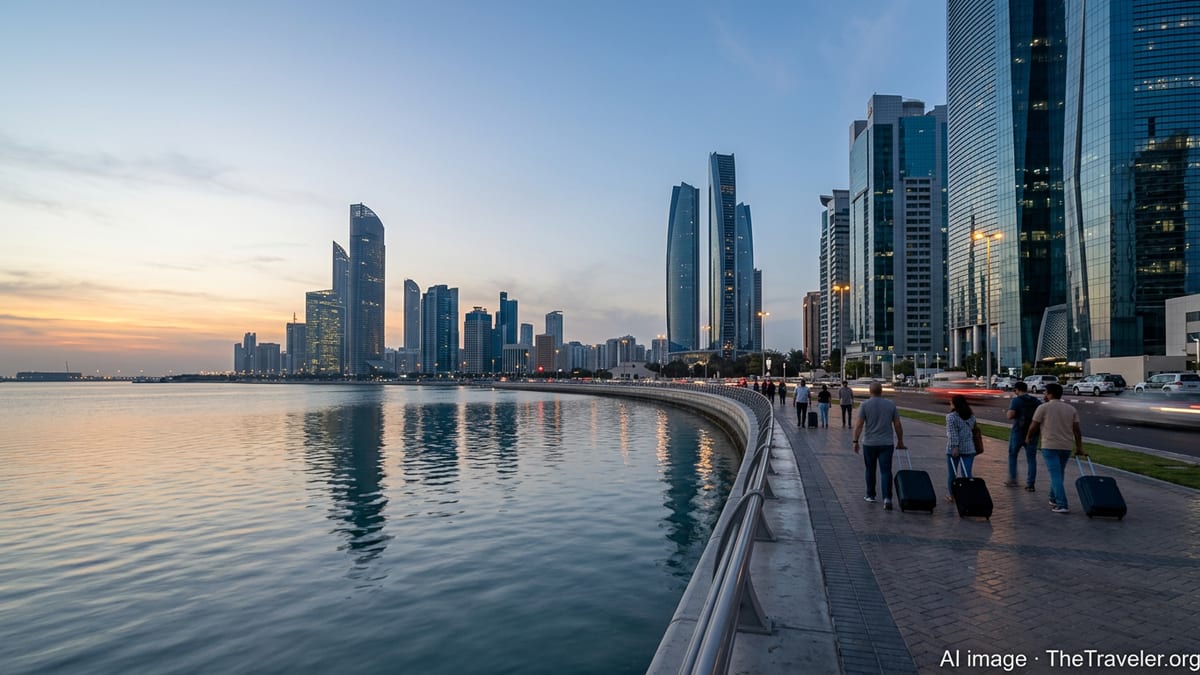
What Happened in Abu Dhabi and Why It Matters for Visitors
Publicly available reporting on the current phase of the conflict indicates that since February 28, 2026, Iran has launched repeated waves of ballistic missiles and drones toward the United Arab Emirates in retaliation for joint United States and Israeli strikes on Iranian territory. Air defense systems around Abu Dhabi and other emirates have intercepted the vast majority of incoming fire, but interception debris has caused damage and casualties on the ground.
Within this broader barrage, documentation of a missile hitting a civilian car in the Al Bahyan area of Abu Dhabi, killing a Palestinian national, has become a focal point for concerns about incidental harm to noncombatants. This incident, described in open-source conflict chronologies, highlights that while military and strategic sites are the primary targets, civilian spaces and transport routes can still be affected.
The strike on the civilian vehicle follows earlier reports of debris falling near major infrastructure, including airports and urban areas, and comes alongside at least several civilian deaths and dozens of injuries inside the UAE linked to the current round of attacks. These developments are feeding into a reassessment by travelers and tourism businesses of how predictable everyday life and movement in Abu Dhabi can be while the conflict continues.
For visitors, the central implication is that the risk profile in Abu Dhabi is no longer limited to abstract regional tensions. Instead, there is now a documented pattern of projectiles and debris affecting locations where residents and visitors may be present, even if unintentionally.
Current Security Environment and Official Travel Advice
The United Arab Emirates has long marketed itself as one of the most stable tourism destinations in the Middle East. However, the security landscape changed markedly at the end of February 2026, when the United States and Israel carried out large-scale strikes on Iran and Tehran responded with missile and drone attacks across the Gulf, including on UAE territory.
Government travel advisories from multiple countries, including the United States and various European states, now reference the threat of terrorism alongside explicit warnings about missile and drone attacks. Some foreign ministries have upgraded their advice for the UAE to higher-risk categories, and at least a few, such as Australia, have moved to very restrictive positions, advising residents not to travel due to the potential for further strikes and rapidly shifting conditions.
International coverage reflects a degree of divergence between advisories. Some commercial risk bulletins emphasize that daily life in parts of Dubai and Abu Dhabi continues with heightened security and occasional disruptions, while others underline the unpredictability of further launches and the possibility of sudden airspace closures. The evolving nature of the conflict, as well as Iran’s public references to the presence of United States forces on UAE soil, contributes to a perception that the country could remain exposed to additional attacks as long as hostilities persist.
Travelers considering Abu Dhabi are therefore being encouraged, in publicly available guidance, to track both their own government’s travel advisories and local announcements in the UAE, and to understand that the situation can change with limited notice.
Air Travel, Transit Hubs, and On-the-Ground Disruptions
Abu Dhabi’s Zayed International Airport and Dubai International Airport function as major global transit hubs linking Europe, Africa, Asia, and Oceania. Since the escalation of the conflict, these airports have experienced temporary suspensions of operations and partial airspace closures as air defenses respond to incoming missiles and drones.
News coverage from early March 2026 describes periods when flights were largely suspended before resuming in a limited and carefully controlled manner. Airlines based in the UAE, including Etihad Airways and Emirates, have been operating reduced schedules with a focus on repatriation and essential connections, while many foreign carriers have canceled or rerouted flights to avoid airspace near areas of active military activity.
For travelers, this has meant longer journeys, last-minute schedule changes, and in some cases, being stranded in the UAE while governments organized evacuation or special flights. Aviation advisories and industry circulars describe flights between Europe or North America and Asia being rerouted over alternative corridors, adding several hours to typical travel times.
Inside Abu Dhabi, publicly available security briefings refer to temporary road closures around key sites, increased checkpoints, and heightened alert levels as air defenses respond to perceived threats. While public transport and everyday commercial activity in many districts continue, visitors are advised in open-source travel advisories to build flexibility into their plans, allow extra time for airport procedures, and remain prepared for rapid changes in route or timing.
Tourism Demand, Hotel Operations, and Visitor Experience
The missile strike on the civilian vehicle in Abu Dhabi is unfolding against a broader backdrop of weakened tourism demand across the UAE and neighboring states. Industry reports and regional media note that cancellations have risen sharply since the start of the conflict, affecting not only leisure trips but also conferences, cruise calls, and stopover tourism that typically flows through Abu Dhabi and Dubai.
Some hotels and resorts in the UAE are reported to be pivoting toward domestic guests and resident staycations to compensate for a decline in international arrivals. Promotional discounts, flexible booking policies, and enhanced in-house activities are being used to retain occupancy, particularly in city properties that rely heavily on transit passengers and business travelers.
At the same time, the visitor experience on the ground is being reshaped by security considerations. Travelers who do arrive in Abu Dhabi currently encounter more visible security measures, such as bag screening at major attractions, advisory messaging in malls and hotels, and guidance about what to do in the rare event of an air defense activation. Some cultural and entertainment events have been rescheduled, scaled back, or moved indoors, while operators reassess risk and adjust to logistical constraints.
These adaptations are not unique to the UAE, but given Abu Dhabi’s role as a gateway to the wider region, the city’s tourism decisions are being closely watched as an indicator of how Gulf destinations might manage prolonged periods of elevated threat.
Practical Safety Considerations for Prospective Visitors
For travelers still contemplating a trip to Abu Dhabi while the conflict continues, publicly available guidance from governments, security consultancies, and travel industry sources points to several recurring themes. The first is the importance of closely monitoring official travel advisories from one’s home country, as these documents summarize the latest government assessments of risk and may have implications for travel insurance coverage.
Second, open-source security briefings emphasize the need to follow local instructions in the UAE, including any alerts related to missile or drone activity, air defense operations, or temporary airport and road closures. Visitors are encouraged to stay informed through reputable news outlets and official public safety messaging, rather than relying on social media speculation.
Third, airline and tour operator policies have become central to trip planning. With flight schedules subject to rapid change, travelers are advised to book flexible tickets where possible, maintain contingency plans for extended stays or alternative routes, and keep contact details updated with carriers so they can receive alerts about schedule adjustments or rebookings.
Ultimately, whether to visit Abu Dhabi under current conditions is a personal risk decision that depends on individual tolerance, itinerary needs, and the strength of local support networks. The missile strike on a civilian vehicle underscores that even though the UAE’s air defenses have intercepted most incoming threats, the residual risk to civilians and visitors has increased, and travelers are weighing that reality carefully against the city’s enduring appeal as a tourism and transit hub.