

More news on this day
International and domestic travel across Australia, Thailand, India and the United States is surging back toward or beyond pre-pandemic levels, prompting carriers such as Qantas and Virgin Australia and hotel groups including OYO, Marriott and Hilton to accelerate capacity growth, network expansion and new property openings in a fresh bet on the long-term strength of global tourism.
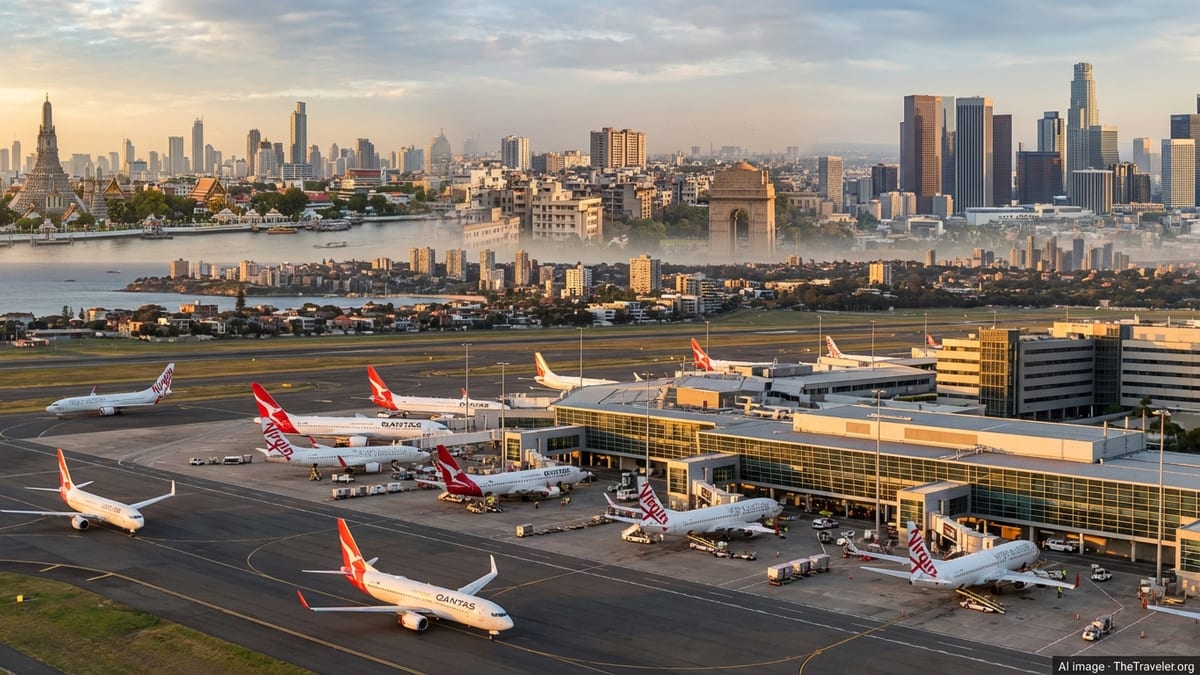
Tourism Rebound Reshapes Global Travel Flows
Across key markets in the Asia Pacific and North America, the travel recovery is transitioning into a structurally higher phase of demand, reshaping how airlines and hotels plan their next decade of growth. In Australia, international arrivals climbed sharply in 2024, reaching about 10.7 million visitors, or roughly 92 percent of the pre-Covid peak, according to analysis of official data. India’s outbound travelers are powering record flows into Southeast Asian hotspots such as Thailand, while the United States remains both a leading long-haul destination and the world’s largest outbound source market by spending.
For airlines, the rebound is encouraging a renewed push into long-haul and leisure-heavy routes, often supported by partnerships designed to funnel tourists efficiently into key hubs. For hotel operators, the upswing is translating into higher occupancies, stronger average daily rates and a new wave of signings in midscale and premium segments that cater to increasingly value-conscious but experience-driven travelers. The interplay between airline capacity and hotel development is particularly visible along corridors linking Australia, India, Thailand and the U.S., where demand has snapped back fastest.
Analysts say the current wave of tourism demand is being driven by a blend of delayed trips, flexible work arrangements and a clear shift in preferences toward shorter, more frequent international breaks. That trend is benefiting nearby destinations for each of these markets: Southeast Asia for India and Australia, India for U.S. and European travelers seeking value, and the United States for high-spending visitors from Australia and India who are returning in greater numbers. The net result is a competitive race among airlines and hotel brands to secure share before the next phase of capacity and property growth fully matures.
Australia’s Visitor Economy Lures Qantas and Virgin Australia Back to Growth Mode
In Australia, the recovery of the visitor economy is now well entrenched. Industry assessments drawing on national statistics show that the country welcomed about 10.7 million international visitors in 2024, up sharply from 2023 and rapidly closing in on 2019’s record. Short-term arrivals exceeded 8 million, with New Zealand, China and the United States among the top source markets. That momentum has continued into 2025, underpinning optimism across airlines and hospitality groups.
Flag carrier Qantas has been steadily restoring and upgrading its international network, aiming to return capacity to and then exceed pre-pandemic levels. The airline has focused on reinstating long-haul routes that are heavily geared toward both inbound tourism and outbound Australians, alongside a strategy to deploy newer, more efficient aircraft on ultra-long sectors. Qantas’ broader plan, including so-called “Project Sunrise” nonstop services from Australia’s east coast to major U.S. and European cities, is framed squarely around the expectation that premium leisure travel and blended business-leisure trips will keep growing.
Virgin Australia, which restructured during the pandemic, has moved back into growth with a leaner balance sheet and sharper focus on profitable leisure and domestic markets. While the airline has trimmed some underperforming services, such as its Cairns to Tokyo flight in the face of softer inbound demand from Japan, it is expanding elsewhere. New or revived routes to tourism icons such as Uluru are being marketed directly at holidaymakers, supported by sales campaigns and package deals aimed at stimulating both domestic and foreign visitation to regional Australia.
Industry consultants say the combination of Qantas’ push into long-haul and Virgin Australia’s targeted growth, alongside aggressive discounting by low-cost competitors, is having a measurable effect on inbound tourism. More capacity and competition are placing downward pressure on fares on routes where demand is growing fastest, encouraging longer stays and broader itinerary planning that channels spending into hotels, tours and dining across Australian cities and regional centers.
Virgin Australia’s International Bets Signal Confidence in Future Demand
Virgin Australia’s most striking vote of confidence in the future of tourism has come through its deepening ties with Qatar Airways. In 2025, the Australian airline secured regulatory approvals for a 25 percent minority investment from Qatar Airways’ parent group and an integrated alliance that includes the launch of long-haul flights to Doha from several Australian cities. The arrangement is expected to deliver billions of dollars in economic value to the visitor economy over the coming years by improving connectivity between Australia and key inbound markets in Europe, the Middle East and Africa.
New daily services from Melbourne to Doha, along with existing and planned flights from Sydney, Brisbane and Perth, effectively plug Virgin Australia into Qatar Airways’ extensive network of more than one hundred onward destinations. For inbound visitors, that creates a smoother journey to Australian tourist hotspots via a single connection, while outbound Australians can tap into a wider range of leisure and business destinations without relying solely on traditional kangaroo route carriers. Virgin Australia is marketing these corridors heavily to both international visitors seeking Australian experiences and Australians eyeing long-haul holidays.
Alongside strategic partnerships, the airline is leaning into aggressive pricing and limited-time sales to stimulate demand and fill new capacity. A series of international sales in early 2026, including cut-price fares to Bali, Fiji and Queenstown, highlighted how competition among carriers is now centered on leisure traffic. By combining discounted fares with holiday packages that bundle hotel stays, Virgin Australia is deepening its integration with the accommodation sector and positioning itself as a one-stop platform for travelers planning trips across the region.
Executives and analysts argue that these moves position Virgin Australia as a pivotal connector between tourism hotspots in Southeast Asia, the Pacific and Australia’s domestic destinations. As arrivals to Australia approach and are expected to surpass pre-pandemic levels, the airline’s bet is that travelers will prioritize routes that offer the most seamless connections and the broadest range of hotel options, from budget properties to global chains, at their final destination.
United States Tourism Nears Record Levels, Fueling Hotel and Airline Ambitions
The United States remains the single most important node in the global travel system, both as a magnet for international tourists and as the world’s largest outbound market by trip volume. Government data for 2024 show that international visitor arrivals climbed to more than 72 million, up around 9 percent on the previous year and equivalent to roughly 91 percent of 2019’s level. All major source regions posted gains, with Western Europe, Canada and Mexico leading the way and India among the fastest-growing long-haul markets.
Outbound travel from the U.S. has already risen to fresh records. More than 107 million international departures by U.S. citizens were recorded in 2024, underscoring Americans’ appetite for foreign leisure travel as well as business trips and visits to friends and relatives. Forecasts from the country’s tourism authorities indicate that inbound visitation is expected to surpass its pre-pandemic peak in 2025 and rise further toward 100 million annual visitors over the next few years, providing a supportive backdrop for both airlines and hotels.
For American and international carriers, the recovery has justified a renewed focus on long-haul capacity linking the U.S. with Australia, India and Thailand via key hubs. Airlines have been restoring services to Australian gateways such as Sydney and Melbourne, while U.S. carriers and their partners court high-yield traffic from India’s growing middle class and affluent travelers heading to American cities. At the same time, strengthening demand for trips to Thai beaches and Indian heritage circuits among Americans is supporting a web of one-stop itineraries that feed into regional airlines, including Qantas and Virgin Australia.
Hotel groups such as Marriott and Hilton, which have large portfolios across the U.S., are clear beneficiaries of the inbound rebound. Rising international arrivals are bolstering occupancy in gateway cities such as New York, Los Angeles and San Francisco, while domestic travelers continue to support demand in secondary and resort markets. The combination of strong U.S. outbound travel and increasing inbound flows is also feeding into loyalty ecosystems that reward travelers who stay within these global hotel families as they move between the U.S., Australia, India and Southeast Asia.
India and Thailand Ride a Wave of Regional and Long-Haul Demand
India and Thailand are emerging as both source and destination powerhouses in the latest phase of the tourism rebound. India’s rising middle class, coupled with easier visa regimes in parts of Southeast Asia and the Gulf, has driven a surge in short-haul international trips. Reports from travel platforms highlight sharp year-on-year growth in Indian bookings to destinations such as Dubai and Bali, with Bangkok and other Thai cities also ranking among the top choices for leisure travelers. Typical trips range from five to seven days within Southeast Asia and longer itineraries for Europe and the United States.
Thailand, still one of the world’s most tourism-dependent economies, is aggressively courting visitors from India, Australia and the United States alongside its traditional East Asian markets. Airlines have restored or launched routes linking Bangkok and other Thai cities with major Indian metros, while carriers such as Qantas and Virgin Australia, through their partners, feed Australian holidaymakers into Thai beach resorts and cultural hubs. Hotel brands report that Indian and Australian guests are increasingly willing to trade up from basic accommodation to midscale and premium properties that promise better locations and amenities.
India itself is seeing robust inbound tourism, with states such as Kerala reporting record visitor numbers in 2025, far beyond pre-pandemic levels. Domestic tourism has surged even more dramatically, as Indians explore hill stations, coastal getaways and cultural circuits within the country. That boom is creating a fertile environment for hotel expansion and encouraging global chains to deepen their partnerships with local developers. It is also feeding a growing pipeline of outbound travelers who are familiar with hotel brands at home and seek them out again when they travel to Thailand, Australia or the United States.
Industry observers note that this two-way dynamic between India and Thailand is critical for airlines such as Qantas and Virgin Australia and for global hotel groups. Routes that connect Indian cities to Southeast Asian and Australasian hubs often generate traffic in both directions, while hotel loyalty programs can capture guests in one market and retain them as they move through others. The result is a more interconnected regional travel ecosystem that amplifies the effects of tourism growth across multiple countries simultaneously.
OYO’s Global Push Aligns With New Tourism Corridors
Indian hospitality group OYO is positioning itself at the center of this shifting landscape by scaling aggressively in both its home market and key international regions. The company, which built its brand on budget and economy hotels across India and Southeast Asia, has been adding premium properties in global hotspots popular with Indian and regional travelers, including Dubai, Bali and Bangkok. Its recent data highlight strong double-digit growth in bookings to visa-friendly destinations for Indian users, reflecting how travel preferences are evolving as more middle-income households head overseas.
OYO’s expansion strategy is increasingly international. In 2024, its parent company acquired G6 Hospitality, owner of economy brands Motel 6 and Studio 6 in the United States, in a deal valued in the hundreds of millions of dollars. Building on that foothold, OYO has resumed direct expansion in the U.S., adding around 150 new OYO-branded properties in 2025 with plans to match that pace again by year-end. The portfolio now numbers more than 300 OYO hotels across multiple American states, with a focus on the Sun Belt and Great Lakes regions.
Executives at the company describe the U.S. as a critical market for both inbound and outbound travel. On one hand, an expanding network of economy and midscale hotels gives American travelers affordable options on domestic road trips and regional journeys. On the other, OYO can leverage rising numbers of Indian, Australian and Southeast Asian tourists visiting the U.S., who may already be familiar with the brand from trips at home or within Asia. By investing in technology-driven pricing and loyalty tools, OYO aims to increase repeat stays as these travelers hop between markets linked by airlines such as Qantas and Virgin Australia.
In Southeast Asia, the company is widening its reach through locally branded premium hotels and resorts that target Indian couples, families and young professionals seeking aspirational experiences in Bali, Thailand and beyond. These properties are well positioned to capture traffic generated by the surge in short- and medium-haul flights across the region, including services feeding into Australia and, via long-haul connections, the United States. As such, OYO’s strategy mirrors that of larger global chains, but with a heavier emphasis on value and technology in rapidly growing mid-market segments.
Marriott and Hilton Double Down on Asia Pacific and India
Global hotel giants Marriott and Hilton are also making sizeable bets on the long-term strength of tourism flows between Australia, India, Thailand and the United States. Both groups have been signing new deals at a rapid pace in India, where rising domestic travel and inbound tourism are generating demand for everything from upscale business hotels in tier-two cities to resort properties in Goa, Rajasthan and the southern coastal states. Pipeline announcements in recent quarters show hundreds of additional hotels planned or under development across South Asia and Southeast Asia.
Thailand and neighboring markets are another strategic focus. In Bangkok, Phuket, Chiang Mai and emerging secondary destinations, Marriott and Hilton are rolling out new lifestyle and resort concepts aimed at younger travelers and premium leisure guests. These projects are designed to tap renewed interest from Australian and Indian holidaymakers, as well as from U.S. visitors drawn to Thailand’s combination of relatively affordable luxury and rich cultural experiences. Many of the properties are linked closely with airline partners through miles-and-points collaborations and packaged offers.
Australia itself remains a priority for both groups, particularly in gateway cities and key regional tourism centers. As international arrivals climb back toward pre-pandemic highs, Marriott and Hilton have been refurbishing existing hotels and adding new flags along popular coastal corridors and in destinations such as the Red Centre. Inbound tourists arriving on Qantas and Virgin Australia services are feeding demand for branded accommodation in Sydney, Melbourne, Brisbane and beyond, while domestic travelers bolster occupancy in shoulder seasons.
At the global level, Marriott Bonvoy and Hilton Honors loyalty programs act as powerful connective tissue linking stays across continents. An Indian traveler who accumulates points at a business hotel in Bengaluru may redeem them at a beachfront resort in Thailand, a city-center property in Sydney or a convention hotel in the United States. As airlines restore and expand routes connecting these markets, the value of such loyalty ecosystems increases, reinforcing the growth strategies of both airlines and hotel groups.
How Airlines and Hotels Are Locking In the Next Decade of Growth
The acceleration of tourism between Australia, Thailand, India and the United States is prompting airlines and hotels to plan well beyond the immediate recovery phase. Qantas and Virgin Australia are using fleet investments, alliances and targeted route additions to shape future demand patterns, betting that premium leisure, visiting-friends-and-relatives travel and blended business trips will continue to grow. Their decisions on where to deploy new aircraft or launch routes can, in turn, determine which cities and regions see the strongest hotel development pipelines.
Hotel groups from OYO to Marriott and Hilton are responding by deepening their presence in markets that sit along these emerging corridors. They are backing midscale and premium projects in India and Southeast Asia, upgrading and expanding in Australia, and leveraging large North American portfolios to capture both outbound and inbound flows. Technology investments, from dynamic pricing to AI-enhanced distribution and loyalty personalization, are being deployed to maximize returns on each additional traveler who enters this expanding ecosystem.
Analysts caution that the outlook is not without risks, including potential economic slowdowns, currency volatility and geopolitical tensions that can affect air travel demand. However, the underlying structural drivers of tourism in these four markets appear strong: growing middle classes in India and Southeast Asia, high propensity to travel in Australia and the United States, and a steady shift in consumer spending toward experiences rather than goods. For now, airlines such as Qantas and Virgin Australia and hotel groups including OYO, Marriott and Hilton are betting that the tourism surge is not a fleeting rebound but the foundation of a new era in global travel.