

More news on this day
A serious tourist bus crash in Odisha has left a key highway blocked and several passengers trapped in precarious conditions, as early reports highlight hazardous road geometry, poor visibility and ongoing questions about vehicle fitness and driver fatigue on one of the state’s busiest routes.
Get the latest news straight to your inbox!
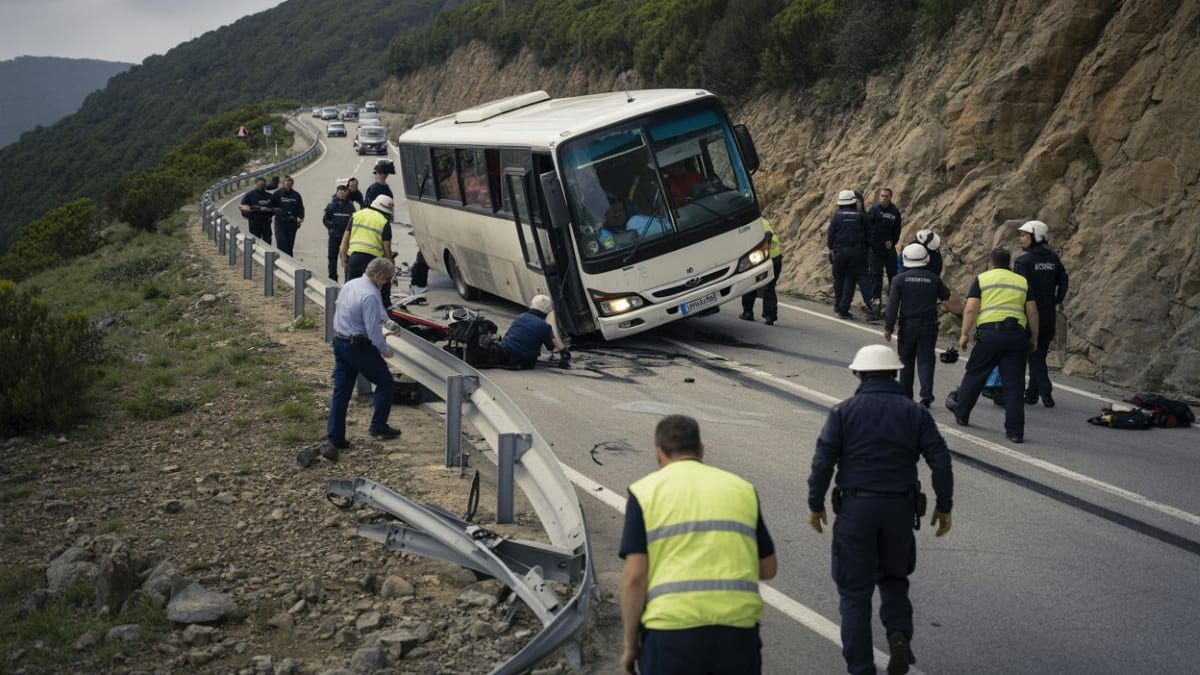
Image by Global Travel Alerts, Advisories, International Travel Alerts
Crash on Busy Tourist Corridor Sparks Fresh Safety Fears
According to regional media coverage, the incident involved a tourist coach traveling toward a popular pilgrimage and sightseeing belt in Odisha when it veered off its lane on a curved section of road and overturned, coming to rest across multiple lanes. Initial accounts describe chaotic scenes as the vehicle lay on its side, partially hanging near the road edge and blocking traffic in both directions.
Publicly available information indicates that the bus was carrying visitors from outside the immediate district who were on an organized tour. Several passengers were unable to exit the vehicle immediately due to the angle at which it toppled and the crumpling of one side of the bodywork. Rescue efforts focused on cutting through jammed windows and emergency exits, while onlookers and passing motorists were reported to have assisted with moving luggage and helping those who could climb out.
Local coverage notes that the crash occurred during a busy travel period, with increased bus traffic bringing pilgrims and domestic tourists to religious sites, beaches and eco-tourism spots across Odisha. The timing compounded the disruption, quickly creating a long tailback of buses, trucks and private vehicles along the corridor and raising concerns about access for ambulances and emergency services.
While full casualty figures remain fluid in early reporting, the combination of trapped passengers, blocked lanes and difficult terrain has placed renewed scrutiny on how tourist transport is regulated on hilly and semi-urban stretches of Odisha’s growing road network.
Passengers Trapped as Road Blockage Slows Rescue Efforts
Reports from the scene describe a complex rescue operation complicated by the way the bus came to rest. The coach appears to have skidded sideways before rolling, leaving its roof pressed close to the embankment on one side and its undercarriage protruding into the opposite lane. This configuration left some passengers pinned by seats and overhead racks, while others were forced to crawl through broken glass and twisted metal.
Publicly available information shows that traffic quickly backed up on both approaches to the accident site, limiting the speed at which emergency vehicles could reach the overturned bus. Witness accounts published in local outlets refer to drivers abandoning their vehicles in the standstill to walk ahead and offer help, further narrowing the passageway for subsequent emergency teams.
The blockage also heightened the risk of secondary incidents. Stationary lines of vehicles on a downhill curve left little room for heavy trucks to brake, and there were concerns that any additional loss of control could send another vehicle into the crash zone. Travel advisories circulated through local news outlets urged motorists to avoid the stretch altogether, diverting traffic onto smaller rural roads already struggling with increased volumes during the current tourist season.
For the trapped passengers, conditions inside the tilted coach were described as increasingly hazardous, with fuel odors, scattered luggage and unstable seating adding to the danger. Rescue teams prioritized stabilizing the bus with support blocks before attempting to cut through sections of the body to reach those in the most confined spaces.
Hazardous Road Conditions Under Scrutiny
The crash has renewed focus on the broader safety profile of Odisha’s tourist corridors, many of which combine steep gradients, sharp curves and high commercial traffic. Road-safety advocates have long highlighted that some of the state’s most scenic routes double as freight arteries, creating an uneasy mix of heavy trucks and lightly built tourist coaches on narrow stretches.
Published commentary on similar incidents in eastern India points to recurring risk factors, including inadequate night-time lighting, worn signage, and crash barriers that do not consistently meet modern standards on older highways. In monsoon and pre-monsoon periods, waterlogged shoulders and potholes can further reduce grip and increase stopping distances, especially for overloaded or poorly maintained buses.
Early analysis of the latest Odisha crash points to a combination of factors rather than a single cause. The road segment where the bus overturned has been described in previous coverage as a blind curve with limited shoulder space and informal roadside activity, including vendors and pedestrians. Such conditions can pressure drivers into sudden lane changes or hard braking, particularly when facing oncoming high-beam headlights or unexpected obstacles.
The incident is also feeding into a wider conversation about whether tourist operators are adjusting schedules and speeds to reflect real-world road conditions. Overnight or early-morning departures aimed at maximizing sightseeing time can leave drivers contending with fatigue, reduced visibility and fog on challenging terrain, increasing the likelihood of errors at critical moments.
Questions Raised Over Bus Fitness, Oversight and Tour Operations
Beyond the geometry of the road, scrutiny is turning toward the mechanical fitness of the bus and the operating practices of the tour company involved. Recent investigations into other regional crashes in South Asia have repeatedly uncovered issues such as lapsed insurance, incomplete safety equipment, and makeshift repairs that compromise structural integrity during a rollover.
Publicly available information on the Odisha coach indicates that it was registered as a tourist vehicle and operating a multi-day itinerary, a format that can place significant cumulative strain on brakes, suspension and tires. Observers of the sector note that, while formal standards exist for periodic inspection, enforcement can be inconsistent, especially for vehicles that frequently cross state borders or operate from smaller depots.
Attention is also being paid to passenger loading and baggage practices. Heavy luggage stored on overhead racks or loosely stowed inside the cabin can turn into dangerous projectiles in a crash, contributing to head and upper-body injuries even when seat structures remain intact. Reports from the scene in Odisha describe scattered bags and equipment strewn across the floor and piled against windows, complicating evacuation for those who were not seriously hurt but found their exit paths blocked.
Tour operators are likely to face renewed pressure to disclose more information about vehicle age, safety features and driver rotations when marketing itineraries, particularly those aimed at older travelers and families. The Odisha crash underscores how quickly a routine sightseeing transfer can become life-threatening if basic safeguards are neglected or if journeys are scheduled too tightly against daylight and weather constraints.
Investigation Launched Amid Calls for Stronger Tourist Road Safety
An official investigation into the Odisha tourist bus crash has begun, with publicly available statements indicating that teams are examining skid marks, onboard mechanical systems and driver records to build a fuller picture of what unfolded in the minutes before the rollover. Depending on the findings, the case may feed into broader national discussions on tourist transport regulations and the management of high-risk road segments.
Analysts following India’s transport sector note that major crashes involving tour groups often prompt short-lived enforcement drives, such as roadside checks and speed-control campaigns, but that longer-term changes to infrastructure and oversight can lag. The prominent location of this crash on a major tourist route, combined with images of stranded visitors and gridlocked traffic, may increase public pressure for more lasting reforms in Odisha.
Travel and tourism stakeholders in the state have repeatedly argued that safer highways are essential to sustaining growth in pilgrimage circuits, beach resorts and eco-tourism centers. The latest incident highlights how quickly a serious crash can ripple outward, disrupting not only the affected tour group but also local businesses that rely on reliable road links for day visitors and overnight guests.
For now, the focus remains on clearing the wreckage, restoring full traffic flow and supporting injured passengers and their families. As investigators work through the technical and human factors behind the crash, the Odisha tourist corridor at the center of the incident is likely to become a test case for whether renewed attention on road safety can be translated into concrete improvements for travelers.