

Georgia rewards travelers who plan ahead. From Atlanta’s big-ticket attractions to moss-draped Savannah squares and the waterfalls of North Georgia, a mix of city, regional and statewide passes can stretch your budget and simplify logistics. The key is knowing which passes locals actually use, how they work in 2026, and when they truly save money versus buying tickets a la carte.
How Tourist Passes Work in Georgia Right Now
Tourist passes in Georgia roughly fall into three groups: city sightseeing passes, regional bundles focused on a single destination like Savannah, and outdoor passes tied to state or federal lands. Each takes a different approach to pricing. Some are all-inclusive for one or more days, while others operate on a build-your-own-itinerary model where you choose a set number of attractions. Understanding this structure up front helps you match a pass to your travel style rather than forcing your trip to fit the pass.
Most Georgia-focused passes are designed for visitors who plan to see multiple paid attractions in a short window. When you do, savings can be substantial, especially for families. However, the headline “save up to 40 percent” assumes a busy schedule and full-price admission at each stop. In reality, your savings will depend on exactly which attractions you pick, how many you squeeze into each day, and whether you qualify for other discounts such as student, military or senior pricing. Taking fifteen minutes to run the numbers before you buy is almost always worth it.
Smart use of passes also involves looking beyond pure ticket cost. Many passes unlock skip-the-line entry windows, bundled digital tickets on your phone and flexible cancellation policies. For popular sites and tours in high season, the ability to reserve a timed entry or avoid ticket queues can be as valuable as the dollar savings, especially in busy hubs like Savannah’s riverfront or Atlanta on a weekend.
If you are traveling with a mix of heavy sightseers and more laid-back companions, remember that you do not all need the same pass. In many Georgia destinations it makes sense for history buffs or parents with kids to buy passes, while slower-paced travelers cherry-pick one or two individual tickets. Treat passes as one tool in the toolkit rather than an automatic purchase for the whole group.
Savannah’s All-Inclusive TourPass: Riverboats, Trolleys and Ghost Tours
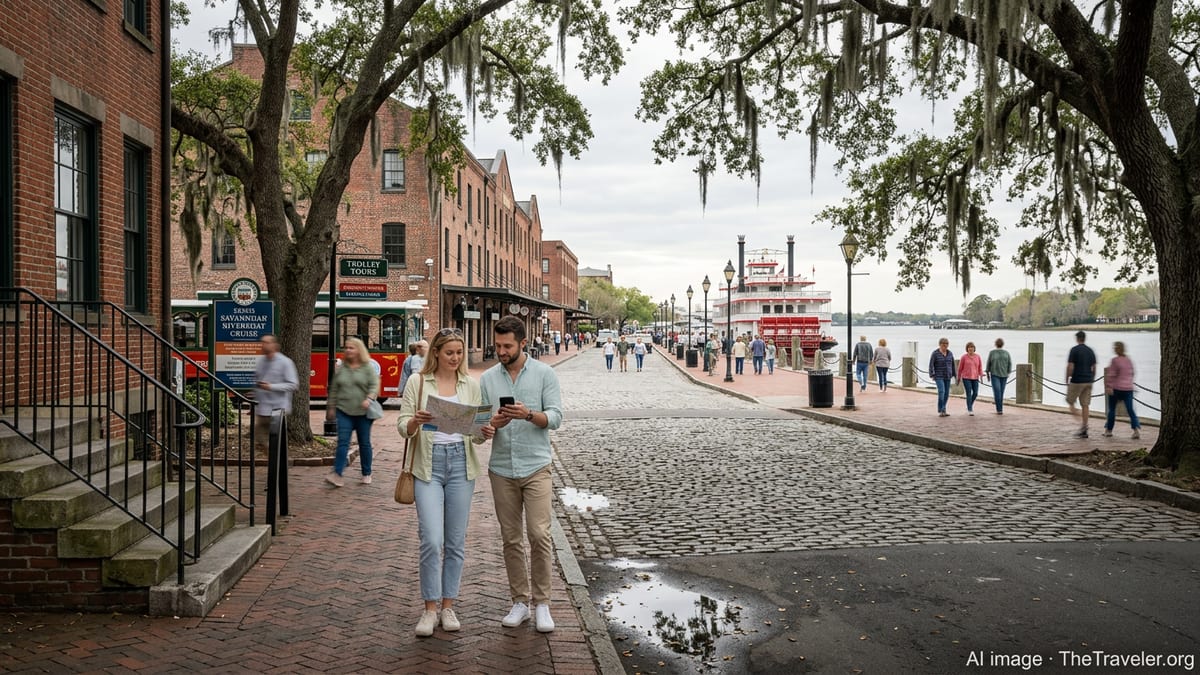
Among Georgia’s tourist passes, Savannah’s all-inclusive TourPass is one of the most established and visible. It functions as a 1, 2 or 3 day sightseeing pass that covers admission to a curated list of top-rated tours and attractions across the city. Travelers buy a pass for a set number of consecutive days, receive it instantly on a mobile device, and then show the digital pass at participating partners instead of individual tickets. Admission is prepaid, so you are not pulling out a credit card at each stop.
The focus in Savannah is on experiences rather than static museums alone. Typical inclusions span a hop-on hop-off trolley tour, a narrated riverboat cruise or dolphin eco cruise, several themed walking tours and ghost tours, historic home and house museum entries, and cultural venues such as the city’s history and art museums. The mix is intentionally heavy on guided tours that visitors are most likely to book anyway, which is a key reason the pass appeals to first-timers who want to cover Savannah’s greatest hits efficiently.
Pricing for Savannah’s TourPass is structured so that you save most when you pack your days with higher-value tours. Promotional materials commonly cite potential savings approaching 40 percent for travelers who book multiple premium experiences each day, particularly for families of four or more. Realistically, if you schedule a trolley tour, a river cruise and one additional paid attraction on a single day, you often reach or exceed the face value of a 1-day pass compared with buying those tickets separately at full price.
Where travelers should be more cautious is on slower itineraries. If you see yourself wandering Forsyth Park, browsing shops and lingering in cafes more than you join organized tours, then a pass may add pressure to over-schedule. The pass works best when you are motivated to follow a structured plan, comfortable with set departure times for tours, and happy to cluster most paid sightseeing into one or two focused days of activity during your stay.
Atlanta’s Attraction Bundles and Regional City Passes
Atlanta does not have a single statewide tourist pass, but visitors will encounter several attraction bundles and multi-ticket packages marketed through official tourism channels and private operators. The classic model here is the multi-attraction pass that offers prepaid admission to a handful of headline sites at a discount. These typically include centerpieces such as the Georgia Aquarium, World of Coca-Cola, the College Football Hall of Fame and other major downtown or Midtown museums and attractions.
These city-style passes are well suited to travelers who plan to spend a couple of days based in central Atlanta and focus on the big draws. Families often use them to structure a weekend where one day is largely devoted to the aquarium and nearby attractions, while another might focus on the zoo, science center or sports-themed experiences. Because individual ticket prices have crept upward in recent years, especially for premium timed entries, the cumulative cost of three or four attractions can surprise travelers who do not plan ahead.
With Atlanta passes, the main tradeoff is flexibility. Passes usually require that you use your included admissions within a fixed window, such as a few consecutive days from first activation. Some operate on a fixed-attraction basis, where you pick a set number of experiences from a larger list, which can work well if you want to include less obvious museums or neighborhood attractions. Others are all-inclusive for a calendar span but may cap the number of premium experiences you can book.
Georgia travelers should also pay attention to whether these passes handle reservations for time-sensitive or capacity-controlled attractions. Some include integrated booking tools that let you secure specific time slots, while others only cover the ticket price and leave you to navigate reservation systems yourself. When comparing options, think through your ideal Atlanta day hour by hour. If a pass would force you into backtracking across town or rushed transfers on MARTA or in traffic, you may be better off booking a smaller bundle or even individual tickets that match your actual route.
Georgia State Parks: ParkPass, Memberships and When They Pay Off
Beyond the cities, Georgia’s biggest “pass” decision for many visitors in 2026 is the Georgia State Parks ParkPass, which covers parking at more than 40 state parks and some related facilities around the state. As of January 1, 2026, the standard daily parking fee doubled to around 10 dollars per vehicle, while the standard annual ParkPass rose to roughly 70 dollars for most passenger vehicles. The goal of the increase is to fund overdue maintenance, trail and road work and facility upgrades across the park system.
For short trips, the daily ParkPass remains the simplest choice. You can buy it at park offices, kiosks inside parks or by scanning QR codes upon arrival, and the pass is valid at multiple state parks on the same day. Overnight guests staying in state park campgrounds, cabins or other facilities typically pay the daily fee only once per stay regardless of length, which softens the cost for multi-night camping or cabin trips. The ParkPass covers state parks specifically rather than state historic sites, which generally have their own admission fees.
The annual ParkPass is aimed at repeat visitors and road-trippers who will visit several parks in a year. If you anticipate seven or more day visits across different parks, or you are planning a long loop that includes multiple waterfall hikes, North Georgia mountain parks and perhaps a coastal stop like Skidaway Island, the math can favor the annual pass. Senior travelers 62 and older, active-duty military and veterans can typically access discounted annual passes at reduced rates, usually available in person with ID. Larger vans and buses are subject to higher daily and annual rates that reflect their capacity.
An often-overlooked option is joining Friends of Georgia State Parks, a membership program that includes one or more annual ParkPasses plus camping nights and discounts on lodging and activities. Higher-tier memberships can include two ParkPasses, three free nights of camping and percentage discounts on cabins, lodges and even state historic sites. For families who plan a full year of in-state getaways, or snowbirds who linger in Georgia parks, these bundles can quickly pay for themselves while also supporting park conservation.
Federal Lands and National Park Passes that Touch Georgia
While Georgia does not host one of the marquee national parks that dominate postcards, several federal recreation sites and historic areas fall under national park and related systems, and these are covered by federal passes. The main product for most travelers is the America the Beautiful annual pass, which offers entrance to participating national parks, national forests, wildlife refuges and other federal recreation lands across the United States. For U.S. residents, the standard price remains about 80 dollars for an annual pass covering a single vehicle or a limited number of accompanying adults at per-person fee sites.
Recent policy changes mean international visitors will face higher prices for some of these federal passes and entrance fees starting in 2026, especially at a small group of heavily visited parks in the West. While that does not change costs at Georgia’s own federal sites directly, it matters for international travelers planning a wider U.S. itinerary that starts or ends in Georgia. A nonresident family that uses Georgia as a launch point to visit iconic parks in other states will want to budget for the new nonresident annual pass and potential surcharges at select parks, which can add significantly to trip costs.
Within Georgia, the federal pass is most relevant if you visit multiple national recreation areas, historic battlefields and seashore sites in the same year, or if your Georgia trip is part of a longer national park road trip. However, it is important to know that the federal pass does not cover Georgia State Parks or local county and city parks. The systems are separate. You cannot rely on a national park pass to cover parking at a Georgia waterfall in a state park, and you cannot use a Georgia state ParkPass at a national battlefield managed by the federal government.
For many domestic visitors, the right combination is an America the Beautiful annual pass for federal lands plus either a daily or annual Georgia ParkPass, depending on how many state parks they plan to visit. Layered together, these can unlock a year of hiking, paddling and camping across Georgia and beyond, with the cost recouped over multiple weekend trips rather than a single vacation.
Local Discounts, Resident Programs and Niche Passes
In addition to the well-known city and state passes, Georgia is dotted with a patchwork of smaller, niche programs that can benefit both locals and long-stay visitors. One example is hometown programs attached to trolley operators in Savannah and other tour-heavy destinations. These schemes allow residents of designated counties to ride free or at a steep discount when accompanying a full-fare paying guest. While primarily aimed at locals, they can be useful if you are visiting friends or family who live in the region and want to join a tour with you.
Museums and attractions in cities like Atlanta, Augusta and Macon sometimes participate in seasonal savings programs, cultural passes or library partnerships that grant free or reduced admission. These are not strictly tourist passes, but travelers who are staying with relatives in Georgia or working remotely from the state for an extended period may be able to tap into them. The catch is that eligibility often depends on having a local library card or proof of residency, and offers can change annually, so you need to verify details shortly before you travel.
On the outdoor side, county-level park systems around metro Atlanta and coastal communities may sell their own annual parking tags or recreation passes that cover boat ramps, lake access and local greenspaces. These are typically priced for residents who use facilities weekly, but some counties sell nonresident versions at higher rates. For visitors renting lake houses or beach cottages for a month or more, a local pass to cover daily parking at nearby trailheads or beaches can end up cheaper than paying individual day fees.
Georgia also occasionally pilots regional trail passes or paddling trail programs that offer perks to repeat users along certain rivers or greenway corridors. While these are less standardized than city sightseeing passes, travelers who specialize in a particular type of recreation, such as cycling or kayaking, should check before a trip to see if any networks in their destination area bundle access or rentals in a way that could save money over a week of steady use.
How to Decide if a Georgia Tourist Pass Is Worth It
Evaluating whether a pass makes sense for your Georgia trip comes down to three questions: what you plan to see, how fast you like to travel and how comfortable you are committing to a schedule. Start by making a realistic list of attractions or parks you care about, along with standard ticket or parking prices. Ignore advertised “up to” savings for the moment and compare the actual combined cost of your preferred list to the price of the relevant pass or passes. In many cases, this simple spreadsheet or notepad exercise reveals whether you will come out ahead.
Next, examine the calendar. Passes that are valid for one, two or three consecutive days reward dense itineraries. If your Georgia vacation spans a week and you want to mix city sightseeing with unstructured time on Tybee Island or in the mountains, a short-duration city pass used intensively in the middle of the trip may work, while the rest of your days are better handled with one-off tickets or free activities. For Georgia State Parks, consider whether an annual pass might also serve weekend getaways or additional trips later in the year, not just the current vacation.
The third factor is your appetite for logistics. Passes are most effective when you are willing to pre-book timed entries, stick to departure times for tours and navigate occasional rules about which experiences you can repeat. Travelers who prefer to wake up each morning and decide on the spot may feel constrained by the structure. In places like Savannah and Atlanta, it is entirely possible to design a satisfying, mostly free itinerary built around neighborhoods, parks and self-guided walking while only paying for one or two standout experiences.
Finally, remember that passes are rarely all-or-nothing. A family might buy a Savannah TourPass for the parents and older children who love ghost tours and riverboats, while a grandparent who tires more easily buys just a trolley ticket and one museum entry. In outdoor settings, one household might purchase a Friends of Georgia State Parks membership with multiple ParkPasses and shared discounts that benefit the entire group. Flexibility, not rigid adherence to a marketing bundle, is how you get the best value out of Georgia’s pass system.
The Takeaway
Tourist passes in Georgia can be powerful money-savers, but only when they match your actual travel plans. Savannah’s all-inclusive pass is ideal for visitors who want to fill one to three days with a curated lineup of tours, from trolleys to riverboats and ghost walks. Atlanta’s attraction bundles work best for families focused on marquee museums and experiences in a compact time frame, while local niche passes and hometown discounts primarily serve residents and long-stay guests who know they will return often.
For outdoor travelers, the rise in Georgia State Parks parking fees in 2026 makes it more important than ever to choose the right mix of daily or annual ParkPasses and, where appropriate, membership bundles that include added lodging and activity perks. Federal national park passes remain a separate layer that can be valuable for domestic and international visitors whose Georgia trip sits within a broader circuit of U.S. public lands.
If you take the time to price out your wish list, think honestly about your pace and consider how many days you will actually want tightly scheduled sightseeing, you can use Georgia’s network of passes to unlock more experiences at a lower overall cost. Treat them not as must-buy tourist products, but as optional tools to make the most of your time among the state’s city skylines, coastal marshes and mountain overlooks.
FAQ
Q1. Are tourist passes in Georgia worth it for a short weekend trip?
They can be, especially in Savannah or Atlanta, if you plan to visit multiple paid attractions or tours in two or three days and are comfortable following a fairly structured schedule.
Q2. What is the main benefit of Savannah’s TourPass for visitors?
The primary benefit is convenience and potential savings by bundling many of Savannah’s most popular tours and attractions into a single mobile pass, so you pay once instead of at every stop.
Q3. Does the Georgia State Parks ParkPass cover admission to historic sites?
No. The ParkPass is a parking pass valid at state parks. Most state historic sites in Georgia have separate admission fees that are not included.
Q4. When does it make sense to buy an annual Georgia ParkPass instead of daily passes?
An annual ParkPass usually becomes cost effective if you expect at least seven or more separate day visits to Georgia State Parks in a year, or you are planning a road trip that includes many parks.
Q5. Are national park passes valid at Georgia State Parks or local city parks?
No. Federal national park passes apply to federal lands and do not cover Georgia State Parks, county parks or city-run recreation areas, which have their own fee systems.
Q6. Can international visitors use the same national park passes as U.S. residents when starting a trip in Georgia?
International visitors can buy federal passes, but beginning in 2026 they face higher prices at some major national parks, so they should check current nonresident pass costs before planning a wider U.S. itinerary.
Q7. Do Georgia tourist passes include public transportation within cities like Atlanta?
Most attraction passes in Georgia focus on admission tickets rather than transit, so you should plan to pay separately for MARTA, rideshares or parking within Atlanta.
Q8. Are there special discounts on Georgia passes for seniors, students or military members?
Yes. Georgia State Parks offer discounted annual ParkPasses for seniors and military personnel, and some city attractions and tours provide their own reduced rates, though availability varies by operator.
Q9. How far in advance should I buy a Georgia tourist pass?
You can usually purchase passes shortly before your trip, but it is wise to buy once you have a firm itinerary so you can immediately reserve any timed entries or popular tours.
Q10. Can one family share a single tourist pass in Georgia?
Most passes are sold either per person or per vehicle, and rules vary. A Georgia ParkPass covers one vehicle, while city and tour passes typically require each participating adult to hold an individual pass.