

More news on this day
Towne is moving to the forefront of hospitality technology with Nexity, introducing digital parking and mobility solutions designed to make hotel arrivals faster, simpler and more profitable for operators.
Get the latest news straight to your inbox!
Tech-Enabled Parking Becomes a Core Hospitality Asset
Parking, once treated as a back-of-house necessity, is increasingly viewed as a strategic revenue and guest-experience driver. Industry reports describe Towne as a tech-enabled, multi-service parking and hospitality provider that has been expanding its commercial parking operations and data-centric platforms across the United States, particularly in high-growth markets such as Nashville, Houston and Washington, D.C. This shift underscores how integrated technology and operations are reshaping what guests encounter the moment they arrive at a property.
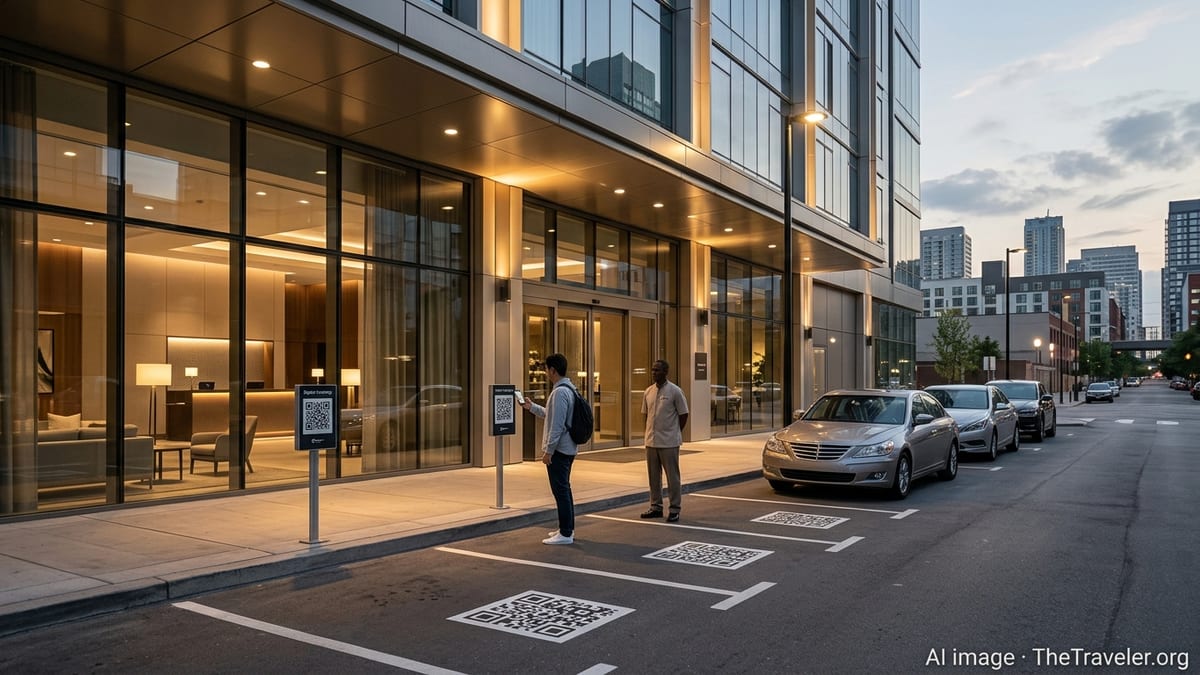
Nexity’s role in this landscape is to provide a digital layer that connects parking, mobility and guest services into a single experience. Drawing on trends seen across smart-parking innovators, the Nexity model emphasizes real-time data, mobile payments, and cloud-based platforms that remove friction from the parking journey. Instead of gates, paper tickets or manual validation, guests are increasingly guided by signage, QR codes and automated license-plate or session tracking that turns each space into a connected asset.
For hotels and mixed-use developments, this approach helps to transform parking lots and garages from static infrastructure into flexible hospitality tools. Operators can calibrate pricing by time of day or event demand, segment inventory for VIP or loyalty guests, and integrate parking fees with room folios or membership accounts. The collaboration between Towne and Nexity is positioned to standardize these capabilities across portfolios rather than as one-off, property-level experiments.
Contactless Journeys and Seamless Revenue Capture
Hospitality parking technology has evolved rapidly in recent years, with gateless, app-free self-parking models emerging as a benchmark for convenience. Published product information on Towne’s own digital solutions highlights mobile-based payment flows where guests park, scan a code or text a number, enter their license plate and payment details, then simply depart when ready. Nexity’s platform extends these concepts, combining contactless access, remote management and automated enforcement into a continuous, low-friction process.
For guests, the benefit is straightforward: fewer queues, no printed tickets and no need to download yet another app. Clear on-site signage and mobile-responsive payment pages allow travelers to manage their stay in a few taps from the car or lobby. For operators, every step of that journey is captured in a unified system that tracks occupancy, duration, rate schedules and payment status in real time, reducing revenue leakage and manual reconciliation.
This type of infrastructure also supports more sophisticated commercial strategies. Hotels can introduce premium curbside or front-entrance parking tiers, package parking with room nights or meeting-space bookings, and offer digital validations to restaurants, retailers or medical offices located on-site. The net effect is a parking operation that not only pays for itself but actively contributes to ancillary revenue, aligning with Towne’s broader focus on profit-enhancing hospitality services.
From Static Lots to Intelligent Mobility Hubs
As urban mobility patterns shift, parking facilities are being reimagined as multi-use hubs rather than simple storage for vehicles. Across the sector, data-rich platforms are enabling operators to monitor space utilization, adjust allocations between guests, residents and staff, and coordinate with nearby transport options. Nexity’s technology is designed to plug parking directly into this broader mobility ecosystem, positioning Towne-managed sites as flexible nodes that respond to real-time demand.
In practice, that can mean reservable spaces for ride-hail or shared vehicles, electric-vehicle charging bays that sync usage data to billing systems, or clearly defined zones for micro-mobility such as scooters and bikes. By integrating these functions within a single management console, properties gain a clearer picture of how people and vehicles move through their campuses throughout the day.
Such visibility is increasingly important for mixed-use destinations and city-center hotels, where congestion, limited curb space and competing uses are constant challenges. Digital parking and mobility platforms informed by Nexity’s approach can help operators direct guests to underused areas, smooth peak arrival periods for events or conferences, and reduce the time drivers spend circling for a spot. These improvements support both guest satisfaction and local traffic conditions, reinforcing Towne’s positioning as a partner to surrounding neighborhoods as well as to individual properties.
Data, Integration and the Future of Guest Experience
A defining feature of the latest generation of parking technology is the way it interacts with other hotel systems. Publicly available hospitality technology materials show that modern solutions are increasingly integrated with property-management and point-of-sale systems so that parking charges can appear directly on room bills or corporate accounts. Towne’s collaboration with Nexity builds on this direction, presenting parking not as an isolated function but as a touchpoint within the broader guest journey.
With centralized data, operators can identify frequent parkers, link them to loyalty profiles and tailor offers accordingly. Guests who regularly drive to a property for dining or spa visits might receive targeted incentives, while corporate clients can be given bundled parking arrangements for meetings and events. Over time, analytics on occupancy, dwell time and stay patterns can guide decisions about staffing, wayfinding, shuttle services and capital improvements.
These same insights carry operational benefits. Digital dashboards allow managers to oversee multiple locations from a single interface, compare performance across markets and adjust policies quickly without new hardware installations. This agility is particularly valuable for portfolios like Towne’s, which span hotel, healthcare and commercial environments with differing peak times and customer expectations. Nexity’s platform architecture is intended to support that range while maintaining a consistent experience for end users.
New Benchmarks for Travel, Cities and Mixed-Use Destinations
The combination of Towne’s operational footprint and Nexity’s technology is setting new benchmarks that extend beyond individual hotels. As cities and mixed-use districts look for ways to balance visitor demand, resident needs and sustainability targets, modern parking and mobility solutions are becoming a key part of planning conversations. Digital tools that optimize space usage and streamline payment processes can reduce cruising for parking, cut emissions and encourage return visits to urban destinations.
For travelers, these shifts may be most visible in the absence of friction. Arriving at a hotel or lifestyle district, guests increasingly encounter clear signage, simple digital instructions and a swift transition from vehicle to lobby or venue. When parking feels intuitive and predictable, it fades into the background, allowing the destination itself to take center stage.
As more properties adopt Towne and Nexity’s style of integrated, data-driven parking, expectations across the travel and hospitality sectors are likely to rise. What was once a differentiator is setting a new baseline: a connected, guest-centric mobility experience that begins at the curb and continues seamlessly through the stay.