

More news on this day
Fresh federal data and new visual dashboards are giving travelers a clearer picture of where and when U.S. flights are most likely to run late or be canceled, as airlines and airports navigate another disruption-heavy travel season.
Get the latest news straight to your inbox!
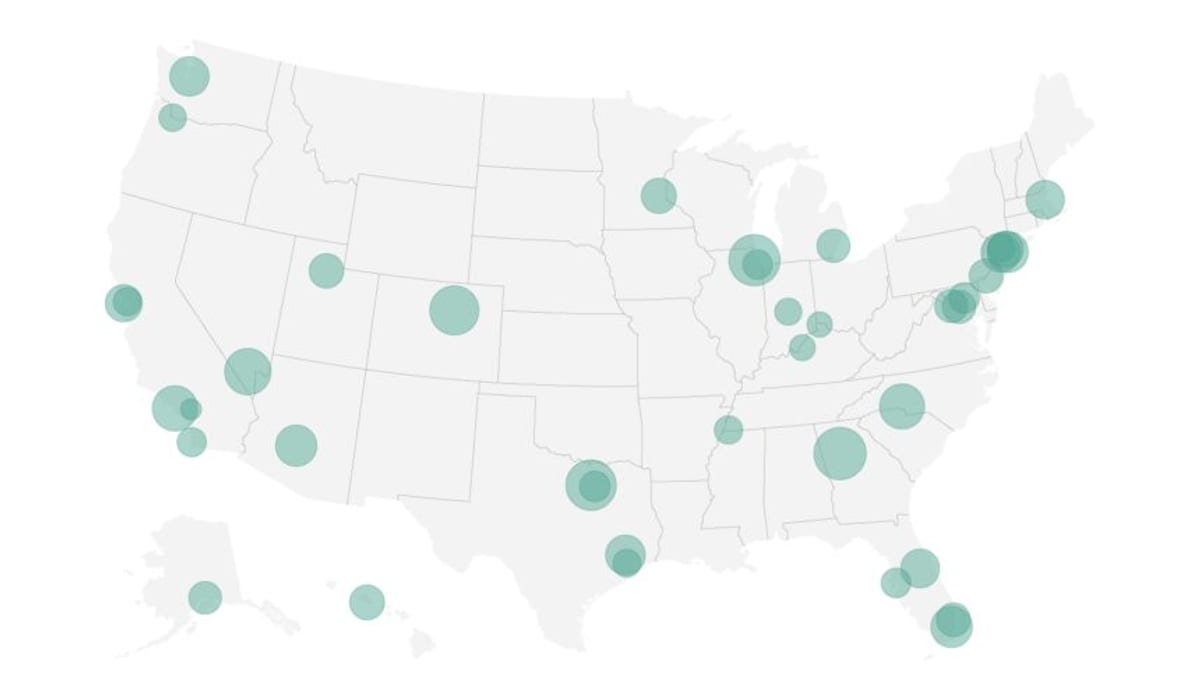
Image by KESQ
National On-Time Performance Shows a Fragile Recovery
Publicly available information from the Bureau of Transportation Statistics indicates that roughly three out of four U.S. flights arrived on time in 2025, with nationwide on-time performance near 77 percent. Charts built from these data show an improvement from the most chaotic pandemic-era years, but still short of the most reliable pre-2020 seasons.
Delay and cancellation visualizations highlight that even small changes in performance translate into millions of affected passengers. With tens of millions of domestic departures each year, a few percentage points of additional late or canceled flights can mean hundreds of thousands of disrupted itineraries, particularly around peak holidays.
Analyses of BTS and airline punctuality dashboards consistently show that cancellations remain relatively rare compared with delays. For most major carriers, only around 1 to 2 percent of flights were canceled in 2025, while 20 percent or more arrived at least 15 minutes behind schedule, reinforcing that inconvenience more often takes the form of long waits rather than outright scrapped trips.
Researchers using multi-year BTS chart sets also point to a gradual shift in how disruptions propagate through the system. Weather is still a dominant trigger on bad days, but system-wide charts increasingly highlight the role of congestion, security processes, and late-arriving aircraft in amplifying small disturbances into widespread delays.
Storm Systems Turn Delay Charts into Spikes
Overlaying meteorological information on flight status charts makes clear how quickly winter storms convert routine operations into national disruption events. Timelines from December 2025, for example, show sharp spikes in delays and cancellations as snow and high winds swept across the Midwest, Northeast, and Great Lakes during the Thanksgiving and Christmas travel windows.
Flight-tracking dashboards recorded days with more than 9,000 delays and well over 1,500 cancellations as storms moved through major hubs such as Chicago, New York, Boston, and Denver. On those days, bar charts of hourly delays resemble jagged peaks, with late departures accumulating from early morning schedules and cascading into the evening.
Historical views of severe weather events tell a similar story. Storm summaries from November and December 2025 depict airports like Chicago O’Hare and Dallas–Fort Worth registering hundreds of cancellations and thousands of delayed flights across a single weekend. When those data are plotted, relatively steady delay lines suddenly jump, underscoring how a single system can reset national aviation reliability metrics for an entire month.
Early 2026 has followed that pattern. Charts tracking the January 23 to 27 winter storm show one of the most disrupted periods since the early pandemic years, with industry data pointing to more than 11,000 cancellations over several days. Analysts note that such episodes, although rare, dominate annual disruption totals and shape traveler perceptions of flight reliability.
Which Airports and States See the Most Disruption
Geographic breakdowns of delay and cancellation data reveal wide gaps between airports and regions. Interactive maps compiled from insurance-claim records and BTS statistics show that states with large, weather-exposed hubs tend to experience higher disruption rates than those with smaller or more temperate airports.
Recent dashboards ranking U.S. airports by on-time performance in 2025 place some major hubs in the lower tiers. Newark Liberty, for example, appears frequently in charts of long departure delays and above-average cancellation rates, reflecting chronic congestion and weather vulnerability along the busy Northeast corridor.
Other visualizations highlight strong performers. State-level charts from mid-2024 through mid-2025 show Hawaii with among the lowest combined delay and cancellation rates, with fewer than 13 percent of flights disrupted. Analysts attribute that record, visible in both bar and line charts, to stable island weather patterns, streamlined operations, and a network that relies on a smaller number of well-managed airports.
Airport rankings published ahead of the 2025 holiday season also draw attention to large mainland hubs such as Dallas–Fort Worth and Denver, which are projected in several models to account for a sizable share of winter disruption. In chart form, these hubs stand out as bright nodes where local storms or traffic surges can create ripple effects that spread across national route maps.
Airlines Diverge on Delays, Less on Cancellations
Carrier-by-carrier charts show that airlines diverge more on delays than on outright cancellations. Visual comparisons of 2025 performance indicate that the gap in on-time arrivals between the best and worst U.S. airlines can approach 10 to 15 percentage points, even when their cancellation rates differ only modestly.
Public rankings compiled from BTS data and independent analytics firms place some low-cost carriers among the most delayed, while others have improved on-time records despite financial challenges. Spirit, for instance, is cited in recent coverage as having an on-time performance above 78 percent in 2025, a relatively strong result among budget airlines, even as it navigated restructuring.
Charts breaking down delay causes point to a familiar pattern across carriers. Late-arriving aircraft typically account for the largest single category of delay minutes, followed by national aviation system factors such as air traffic control programs and airport congestion. Carrier-level issues, including maintenance and crew scheduling, usually trail but can spike during operational breakdowns or major technology outages.
Cancellation pie charts, meanwhile, increasingly separate events under airline control from those attributable to uncontrollable factors such as weather or mandatory aircraft inspections. New federal guidance issued in late 2025 regarding aircraft recalls, for example, distinguishes between disruptions tied to safety-driven groundings and those stemming from routine operational decisions, a distinction that can influence what compensation passengers receive.
How Travelers Can Read and Use the New Charts
The growth of public-facing dashboards has made flight status data more accessible to individual travelers. Several news outlets and travel-analysis firms now publish regularly updated charts that display daily delay counts, cancellation totals by airline, and rankings of airports by on-time performance using BTS and flight-tracking feeds.
Experts in aviation operations suggest that travelers can use these visual tools to evaluate trade-offs before booking. A chart showing a preferred airline with strong on-time performance but operating through a chronically congested hub, for instance, may lead some passengers to select a slightly less convenient routing through a more reliable airport, especially during peak holiday weeks.
Seasonal charts also highlight higher-risk windows. Graphs of historical performance consistently reveal late December, early January, and peak summer getaway periods as having the highest share of delayed and canceled flights. For flexible travelers, shifting departure dates away from those peaks can substantially reduce the chance of disruption, as visible in decade-long trend lines.
Finally, the expanding universe of delay and cancellation charts provides a broader accountability function. By converting raw government and flight-tracking data into clear visuals, analysts and news organizations enable the public to monitor how policy changes, airline strategies, and infrastructure investments translate into real-world reliability, one plotted point at a time.