

More news on this day
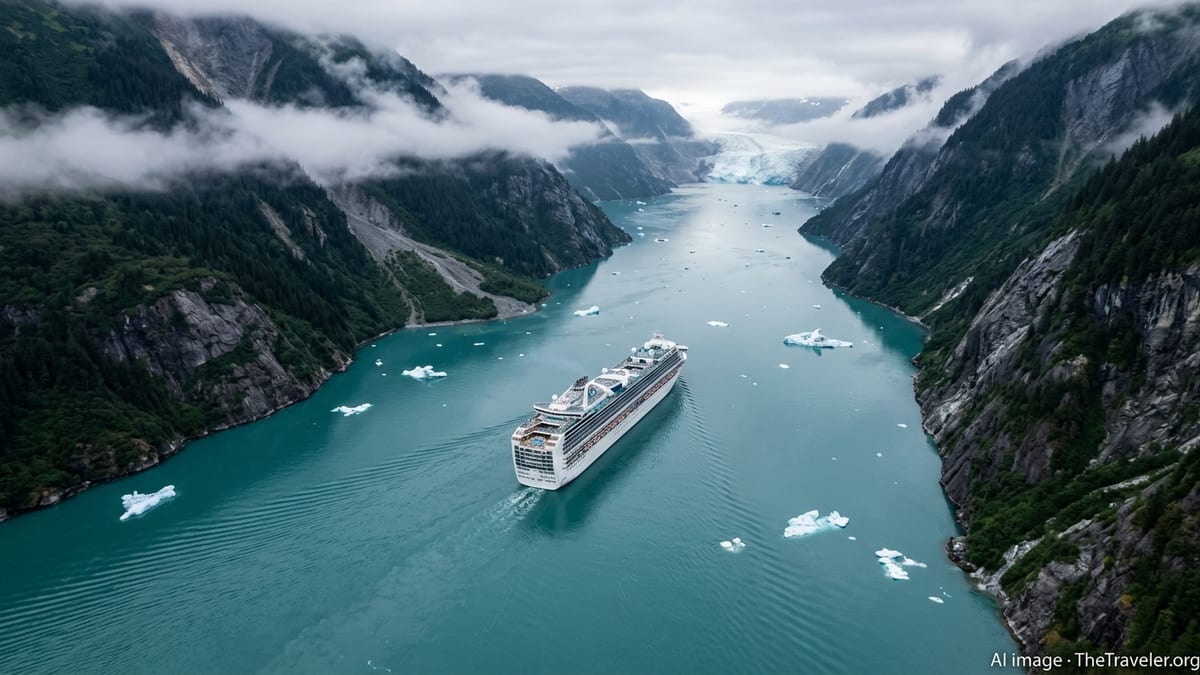
Carnival Cruise Line has removed scenic cruising in Alaska’s Tracy Arm Fjord from its 2026 itineraries, following a 2025 landslide and growing safety concerns about navigating large cruise ships through the narrow, glacier-carved passage.
Get the latest news straight to your inbox!
Safety Concerns Reshape a Signature Alaska Scenic Day
Tracy Arm Fjord has long been promoted as a highlight of Inside Passage itineraries, with Carnival ships offering full days of scenic cruising past sheer rock walls, waterfalls and floating ice. In recent months, however, publicly available information has pointed to rising anxiety about geological instability in the fjord and the risks this may pose to larger vessels.
In August 2025, a major slope failure sent a large volume of rock and debris into Tracy Arm, generating a localized tsunami and scattering ice and sediment through the channel. Regional travel coverage and cruise industry reports indicate that the event temporarily closed the fjord to ship traffic and prompted navigation advisories while conditions were assessed.
Since then, cruise lines operating in Southeast Alaska have been steadily revisiting their glacier-viewing strategies. Industry-focused outlets have documented several itinerary adjustments by different brands, often shifting scenic cruising from Tracy Arm to nearby Endicott Arm, a parallel fjord that offers similar scenery and glacier access but with alternative approaches and anchorages.
The removal of Tracy Arm from Carnival’s 2026 plans reflects this broader reassessment. Publicly available materials and updated schedules show the company favoring routes that still deliver an Alaska glacier experience while steering clear of the most constrained, recently disturbed sections of Tracy Arm.
From Tracy Arm to Endicott Arm and Port Days
Travellers planning Alaska cruises with Carnival in 2026 will still find glacier and fjord scenery on the schedule, but often in a different form. Itinerary descriptions and tour brochures now lean more heavily on Endicott Arm, Dawes Glacier, and extended time in Juneau or other Southeast Alaska ports instead of a full scenic day in Tracy Arm.
According to published coverage of itinerary changes across several lines, Endicott Arm has become a frequent substitute when Tracy Arm is deemed difficult or unsafe to enter. The fjord lies at the southern edge of the broader Tracy Arm–Fords Terror Wilderness, and features similar steep-sided valleys, icebergs and tidewater glacier views, making it a natural alternative for cruise planners seeking to preserve the visual impact of an Alaska voyage.
For Carnival guests, this shift typically means glacier-focused days that combine cruising in a different arm with more hours ashore. Reports from recent schedules show expanded calls in Juneau and other ports, giving passengers additional opportunities for flightseeing, whale watching and small-boat glacier excursions sold through local operators or the cruise line.
While specific day-by-day changes vary by ship and departure, the pattern reflects a preference for flexibility. Scenic cruising segments that once highlighted Tracy Arm are now being framed more broadly as fjord or glacier days, allowing adjustments based on ice, weather and ongoing assessments of the Tracy Arm channel.
Landslides Highlight the Realities of a Dynamic Fjord
The August 2025 landslide underscored what geologists and local mariners have long noted about Southeast Alaska: its fjords are living landscapes where steep slopes, glacial retreat and heavy precipitation can rapidly reshape conditions. Analyses released by scientific agencies and summarized in regional situation reports describe the Tracy Arm event as a significant slope collapse that displaced enough material to generate hazardous waves within the confined waterway.
Commentary in cruise and adventure travel media has emphasized that such events, while rare on the scale seen in 2025, are a known risk in narrow fjords. Ice calving, rockfall and sudden debris flows can all affect navigation, especially for large cruise ships with deep drafts and limited maneuvering room between cliff faces.
These realities have led to increased scrutiny of the balance between spectacular close-up glacier viewing and conservative route planning. After the 2025 incident, several operators temporarily rerouted or shortened their Tracy Arm visits, and some expedition-style cruises shifted to smaller vessels better suited to the changed conditions.
Against this backdrop, Carnival’s decision to remove Tracy Arm from its 2026 program aligns with a growing industry focus on risk management. Publicly available information about updated deployments suggests that larger ships are spending more time in wider passages and relying on small-boat excursions, where available, to deliver closer glacier encounters.
Impacts on Guests and the Alaska Cruise Experience
For travelers who specifically chose Carnival’s Alaska itineraries to see Tracy Arm, the change may come as a disappointment. Tracy Arm has been widely photographed and promoted for its twin Sawyer Glaciers, narrow curves and dramatic cliff faces, and some guests booked cruises or excursions with that precise scenery in mind.
At the same time, passenger feedback shared across public forums and travel communities indicates that many travelers remain primarily focused on seeing glaciers, wildlife and coastal landscapes somewhere in Southeast Alaska, rather than in one particular fjord. In that context, Endicott Arm, Glacier Bay and other glacier destinations often meet or exceed expectations, even when Tracy Arm is no longer part of the route.
Published guidance from travel planners stresses that Alaska itineraries have always been subject to last-minute changes because of ice and weather. The recent landslide and its aftermath have simply made those built-in caveats more visible, particularly for narrow fjords like Tracy Arm where conditions can shift quickly.
For 2026 Carnival guests, the practical advice now circulating in travel coverage is to focus on the broader mix of glacier days, wildlife opportunities and port experiences, rather than anchoring expectations to a specific fjord name printed on an early brochure.
Regulatory Oversight and Future Prospects for Tracy Arm
Navigation through Tracy Arm involves a combination of federal oversight, state-level monitoring and local maritime expertise. Public documents from Alaska agencies and pilot associations reference ongoing evaluation of the fjord’s conditions after the 2025 landslide, including observations of sediment movement, ice patterns and slope stability.
Coastal pilots and harbor authorities play a central role in advising whether a given route remains safe for cruise ships of different sizes. While the technical details of those assessments are not always visible to the traveling public, updates in cruise line deployments and excursion offerings provide a practical signal of how the risk picture is evolving.
Looking further ahead, there is no indication in current public information that Tracy Arm has been permanently closed to all traffic. Smaller expedition vessels, charter operators and photography cruises continue to advertise Tracy Arm itineraries for 2026, often emphasizing flexibility and close coordination with local experts who can judge conditions in real time.
For major cruise brands like Carnival, however, the combination of a recent landslide, narrow geography and a strong emphasis on large-ship safety has tipped the balance toward caution for the coming season. Whether Tracy Arm returns to the line’s mainstream Alaska programs in future years is likely to depend on how the fjord’s slopes and channels stabilize, and on how regulators, pilots and cruise planners weigh the risks against the enduring appeal of one of Alaska’s most dramatic waterways.