

More news on this day
Rail passengers travelling through Sussex have faced severe disruption on key routes linking London, Gatwick Airport, Brighton and the south coast, with engineering works and infrastructure faults leading to widespread delays, diversions and overcrowding for both daily commuters and international visitors.
Get the latest news straight to your inbox!
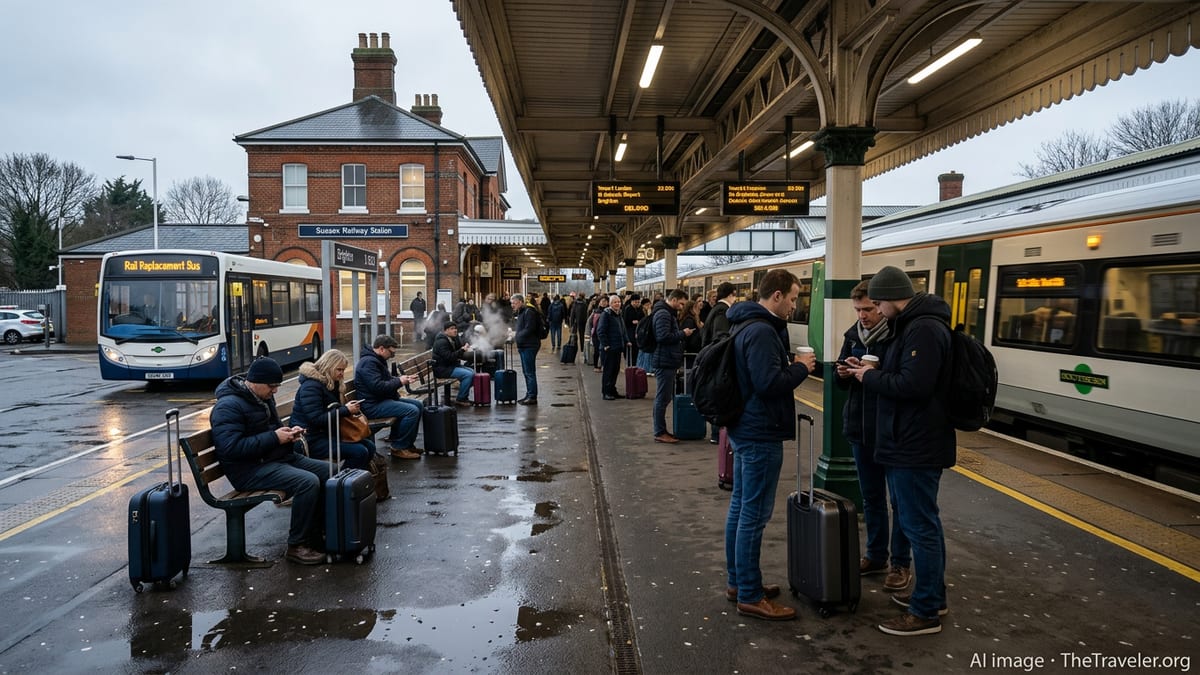
Key Sussex Rail Corridors Hit by Major Disruption
Recent weekends and weekday peaks have seen extensive disruption across the Brighton Main Line and connecting routes through Sussex, a corridor that carries thousands of commuters and tourists between London, Gatwick Airport and coastal destinations including Brighton, Eastbourne and Portsmouth. Publicly available information from National Rail and train operating companies indicates that services have repeatedly been suspended between East Croydon and Gatwick Airport, with knock-on delays spreading across the wider network.
Planned engineering work has coincided with unplanned incidents such as signalling faults, track circuit failures and power problems on the wider Southern and Thameslink networks. Industry reports and timetable updates show that when the core section between East Croydon and Gatwick closes, direct trains between London and Brighton are withdrawn, leaving passengers dependent on slower diversionary routes or rail replacement buses.
Sussex routes are particularly sensitive to disruption because so many services share the same infrastructure. Analysis from regional rail reviews highlights that any problem in the London approaches or around Gatwick can quickly cascade into delays for services across Surrey, West Sussex and East Sussex, affecting trains towards Horsham, Worthing, Bognor Regis and the Arun Valley as well as Brighton.
For travellers, the result has been prolonged journeys, crowded trains on the remaining open routes and heavy pressure on already-busy road networks as passengers switch to coaches, taxis and private cars at short notice.
Impact on Commuters Between Sussex and London
The disruption has been especially acutely felt by regular commuters who depend on fast, frequent trains between Sussex towns and central London. Social media posts and passenger forums describe early-morning and evening peak services being heavily curtailed, with some journeys that usually take around an hour stretching to well over two hours when replacement buses and multiple changes are required.
On days when all lines between Gatwick Airport and East Croydon are closed, published service plans show Brighton and south coast passengers routed via alternative lines through Horsham or East Grinstead, connecting with buses at key hubs such as Three Bridges. These diversionary options add significant time and complexity, and many travellers report adjusting work hours, cancelling leisure trips or working from home to avoid the most heavily affected days.
Commuters from intermediate Sussex stations, including Haywards Heath, Burgess Hill and Hassocks, have also faced reduced frequencies and occasional last-minute cancellations as trains are turned short or re-routed to manage congestion. Public timetables and operator updates indicate that some services are starting and terminating earlier on the route than usual, leaving passengers to make additional changes on already crowded platforms.
Alongside longer journey times, travellers have pointed to the financial impact, with rail users highlighting that higher fares in recent years make disrupted services harder to tolerate. Online discussions show some passengers experimenting with split tickets, alternative operators, or coach services in an attempt to keep commuting costs and uncertainty under control.
Tourists and Air Travellers Caught in the Delays
The knock-on effects extend beyond regular commuters, with tourists and air travellers particularly exposed to sudden changes on the Sussex rail network. Gatwick Airport depends heavily on rail links, and the corridor between London and the airport is one of the busiest in the country. When the lines between East Croydon and Gatwick are closed, publicly available travel advice directs passengers to use slower routes via East Grinstead with bus connections, or to rely on diverted Southern trains between London Victoria and Gatwick that take considerably longer than normal.
These changes can be especially challenging for international visitors unfamiliar with the UK rail system. Reports from recent closure periods describe passengers missing pre-booked airport check-in windows or arriving at hotels many hours later than planned after negotiating multiple transfers between trains and buses. The lack of simple, direct services between central London and Gatwick during major works has also contributed to heavier use of road-based options such as airport coaches and private transfers.
Brighton, one of the UK’s most popular seaside destinations, has likewise been affected, as many city-break visitors and day trippers normally rely on the straightforward rail journey from London. When direct services are suspended, travellers have had to piece together itineraries involving trains to Gatwick or Three Bridges, onward buses, and secondary rail routes along the coast, reducing the appeal of short-notice leisure trips.
Tourism bodies and local businesses have previously highlighted the importance of reliable rail links for the visitor economy in Sussex. The current pattern of repeated closures and diversions on key weekends, including those outside the traditional low season, has raised concern that some visitors may opt for alternative destinations that are perceived as easier to reach.
Replacement Buses and Diversion Routes Under Strain
To keep people moving during closures, operators have deployed large-scale rail replacement bus networks across Sussex, linking major hubs such as Gatwick Airport, Three Bridges, East Grinstead, East Croydon and Brighton. Passenger accounts suggest that while these arrangements provide essential connectivity, they are often stretched by high demand, with long queues at bus stops, standees on board and delays caused by motorway and local road congestion.
Service summaries shared in public bulletins describe how some Southern and Thameslink trains are diverted away from the Brighton Main Line via Horsham, Dorking or Epsom, or operate in short shuttle patterns between coastal towns and inland junctions. These complex operating plans are designed to make best use of the infrastructure that remains open, but they can be confusing for infrequent travellers and visitors who are more used to straightforward direct services.
Additional challenges arise where replacement buses need to navigate narrow local roads or town centres not designed for high-frequency coach traffic. Reports from previous major works on the line have noted that journey times can be heavily influenced by traffic conditions near Gatwick and around key junctions such as Crawley and Redhill, making it difficult for passengers to accurately predict arrival times or make tight onward connections.
Publicly available feedback channels show that some passengers have welcomed the provision of extra staff at interchange points and clearer signage at stations during recent disruption. Others, however, emphasise that information can still be inconsistent between different apps, websites and station displays, particularly when unplanned faults occur on top of scheduled engineering activity.
Calls for Greater Resilience on Sussex Rail Routes
The scale and frequency of recent disruption on Sussex rail corridors has intensified debate about the resilience of the region’s rail infrastructure. Transport strategy documents for the South East note that the Brighton Main Line and its branches are operating close to capacity, with limited flexibility when incidents occur on the busiest sections, particularly between London and Gatwick.
Industry reports and policy papers discuss a range of potential longer-term measures, including signalling upgrades, renewed track and power supplies, and further work at key bottlenecks. These documents also highlight that any major project in this area is complex and often requires extensive weekend or holiday closures, creating a cycle in which work to improve reliability in the long term can still cause short-term disruption for passengers.
Passenger groups and local representatives have consistently argued that the impact on communities and businesses in Sussex needs to be a central consideration in the planning of future work. Suggestions emerging in public forums include clustering disruptive engineering into shorter, more intensive blocks, enhancing coordination of replacement buses, and improving real-time information so travellers can make informed choices before setting out.
For now, publicly available journey planners continue to show further weekend and overnight changes on Sussex routes in the coming months. Travellers are being encouraged by operators and rail information services to check their journeys carefully on days when works are scheduled and to allow substantial extra time, particularly when travelling to and from Gatwick Airport or making connections in London.