

More news on this day
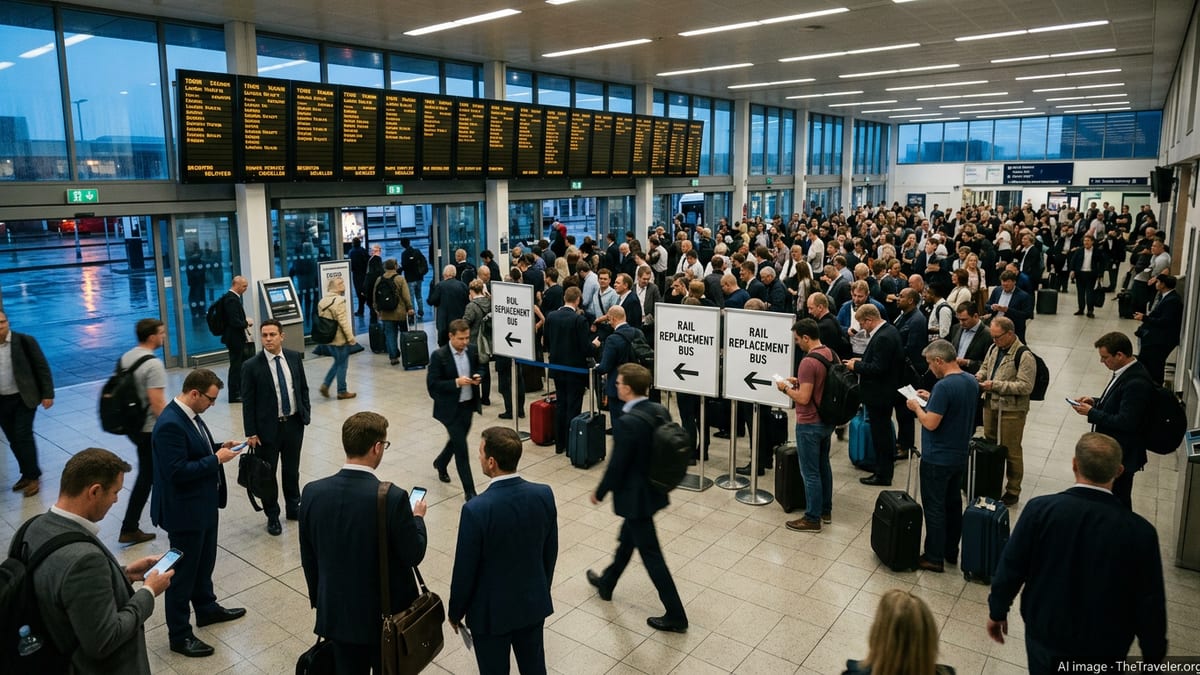
Major train disruption across parts of Sussex has led to widespread delays and cancellations on key rail corridors linking London, Gatwick Airport and popular south coast destinations, leaving commuters and international visitors facing extended journey times and last-minute changes to travel plans.
Get the latest news straight to your inbox!
Signalling and Engineering Issues Snarl Brighton Main Line
Reports indicate that the latest disruption centres on the busy Brighton Main Line, a critical artery for services between London Victoria, London Bridge, Gatwick Airport and destinations including Brighton, Eastbourne and coastal towns across West and East Sussex. Publicly available information from rail operators and infrastructure updates points to a combination of signalling issues and planned engineering work creating a constrained network at key bottlenecks north of Gatwick and around East Croydon.
Recent months have seen recurring closures and capacity reductions between Gatwick Airport and junctions further north, with rail replacement buses deployed on weekends and certain off-peak periods. Travellers have reported being diverted via East Grinstead or Three Bridges, adding significant time to journeys that typically take under an hour between central London and Brighton. Service patterns across Southern, Thameslink and Gatwick Express have been thinned or altered when tracks are taken out of use for upgrades.
Rail performance summaries and regional reviews highlight the cumulative impact of signal faults and infrastructure failures in the wider Sussex area, including intermittent issues at junctions and on key commuter approaches to London terminals. While these incidents are often short-lived individually, their frequency compounds the effect of longer-term engineering schemes, resulting in a network that is regularly operating with limited resilience during busy travel periods.
The Brighton Main Line has long been identified as capacity-constrained, particularly where routes converge near Croydon. Upgrades to track layout and signalling are intended to ease congestion and improve punctuality over the medium term, but in the short term they continue to necessitate closures and diversions that many rail users experience simply as yet another day of disruption.
Commuters Face Longer Journeys and Overcrowding
For daily commuters in Sussex, the disruption has translated into extended journey times, missed connections and increased overcrowding on the services that do operate. Common patterns include peak-hour cancellations, trains starting and terminating short of their usual destinations and irregular gaps in the timetable, especially when sections around Gatwick or East Croydon are closed or operating on reduced capacity.
Accounts shared on public forums describe weekday morning and evening peak services running with standing room only for much of the journey, with some passengers being advised to travel earlier or later to avoid the most congested trains. Others have reported arriving at stations such as Brighton, Three Bridges or Haywards Heath to find departure boards dominated by “delayed,” “revised” or “cancelled” notices, with limited information about alternative options.
Rail users who rely on timely connections into London or across the south of England report that even minor timetable changes can lead to missed meetings and additional childcare costs. Season ticket holders in particular have expressed frustration at what they view as a mismatch between rising fares and the reliability of the service delivered on the busy Sussex commuter network.
Delay compensation schemes provide some financial redress, but passengers report uneven experiences when submitting claims, especially on complex journeys involving more than one operator or rail replacement buses. Many commuters describe routinely building additional time into their journeys, accepting longer door-to-door travel as a practical necessity when using the route.
Tourists and Gatwick Passengers Struggle With Uncertainty
The disruption has been especially challenging for tourists and air travellers using Gatwick Airport, one of the country’s main gateways for international visitors heading to London and the south coast. According to published coverage and passenger updates, closures between Gatwick and key junctions have meant that the most direct airport rail links can be suspended or substantially rerouted, with buses substituting for trains on stretches of the journey.
Visitors unfamiliar with the area have reported confusion when planned direct services to London Victoria or London Bridge are replaced by multi-leg itineraries involving a mix of slower trains and buses. In some cases, passengers have had to change at intermediate stations such as East Grinstead or Three Bridges, navigating crowded concourses and busy bus bays while managing luggage and tight flight check-in times.
Tourism bodies and local businesses along the Sussex coast rely heavily on the rail network to bring day-trippers and longer-stay visitors to resorts including Brighton, Worthing, Hastings and Bognor Regis. When disruption coincides with weekends, school holidays or major events, anecdotal reports suggest that some visitors choose to abandon rail plans altogether, switching to car travel or postponing trips rather than risk long delays.
The uncertainty around journey times is a particular concern for overseas visitors planning tight itineraries that link flights, hotels and tours. Even where alternative routes remain available, the perception of unreliability on airport and coastal services can influence how travellers plan their time in the region and whether they choose to rely on rail for excursions beyond London.
Knock-On Effects Across the Wider Sussex Network
While the most visible disruption has occurred on the main corridor linking London, Gatwick and Brighton, knock-on effects have spread across the Sussex rail network. When the core route is constrained, operators often need to adjust services on branches and secondary lines to free up train paths or rolling stock, leading to reduced frequencies or altered stopping patterns on routes serving towns such as Horsham, Lewes and Eastbourne.
Publicly available timetables show that, during intensive engineering periods, some coastal and inland services are curtailed at intermediate hubs like Barnham or Chichester, requiring passengers to change trains to complete journeys that are usually direct. On other occasions, services are diverted via slower routes or less direct junctions, extending travel times for communities that already depend heavily on rail links for work, education and healthcare access.
Disruption in the core Sussex area can also affect connectivity further afield, particularly where services interwork with routes into Surrey, Kent and Hampshire. Delays on south coast flows may, for example, ripple through to services serving Portsmouth, Southampton or Ashford, creating pockets of unreliability that are not immediately obvious from headline notices focused on the Brighton Main Line.
Freight and non-passenger services are also affected when line capacity is restricted, with some freight flows rescheduled or routed differently to accommodate works. While these changes are less visible to the general public, they form part of the broader operational challenge of keeping people and goods moving across a busy mixed-traffic railway.
Advice for Affected Travelers Planning Sussex Journeys
Travel organisations and journey planners advise that anyone planning rail trips through Sussex, especially via Gatwick Airport or Brighton, should check for updates as close as possible to departure. Engineering works and late-notice infrastructure issues can alter timetables at short notice, and replacement buses may be scheduled on sections that would normally be served by frequent trains.
Passengers are encouraged in publicly available guidance to allow extra time for interchanges when rail replacement buses are involved, as road traffic and boarding queues can lengthen overall journey times. Travellers heading to or from Gatwick Airport are particularly advised to build a larger margin into their schedules to avoid missing flights or onward connections, and to consider alternative routes if services to their preferred London terminal are heavily disrupted.
For tourists visiting coastal destinations, checking for planned works on weekends and holidays can help in choosing departure times and routes less likely to be affected. Some may find it useful to plan flexible itineraries that allow for slower journeys or alternative attractions in case of significant delays en route.
Although the current pattern of disruption is unwelcome for many, infrastructure investment and signalling upgrades are expected over time to provide a more reliable and higher-capacity network through Sussex. In the meantime, passengers face a continued period in which careful planning, real-time information and additional journey time are essential components of travelling by train across the region.