

Arkansas is not known as a major rail hub, yet the Natural State offers an appealing mix of practical Amtrak service and nostalgic excursion trains that showcase its hills, rivers, and historic depots. Whether you are planning a long‑distance journey on the Texas Eagle, a short scenic ride through the Ozarks, or a family outing on a vintage trolley, understanding the routes, ticket options, and on‑board experience will help you make the most of train travel in Arkansas.
Arkansas by Rail: What Is Available Today
Passenger rail in Arkansas currently falls into two broad categories: scheduled Amtrak service used for regional and cross‑country travel, and shorter scenic or heritage rides that focus on history and landscape rather than point‑to‑point transportation. Travelers should not expect the dense network found in the Northeast or on the West Coast, but the services that do exist can be rewarding for those willing to plan around limited schedules.
The backbone of intercity train travel in Arkansas is Amtrak’s Texas Eagle, a long‑distance route that links Chicago with San Antonio, with some departures continuing to Los Angeles. The line passes through the state from northeast to southwest, stopping in several communities that serve as gateways to nearby attractions and universities. Because frequencies are modest and many departures occur at off‑peak hours, flexibility is essential, but riders gain the comfort and space that rail travel can offer on day‑long or overnight journeys.
Alongside Amtrak, a handful of scenic and heritage railways operate seasonal excursions. In northwest Arkansas, the Arkansas & Missouri Railroad offers day trips through the Boston Mountains, while the Eureka Springs & North Arkansas Railway focuses on short excursions and themed dining trains. In Fort Smith, a trolley museum operates a historic streetcar on a short line past key landmarks, giving visitors a taste of early twentieth‑century urban transit.
For travelers, these services are complementary rather than interchangeable. Amtrak provides a way to arrive in the state or connect between major cities, whereas excursion lines are best thought of as attractions in their own right. Combining the two can create a varied rail‑themed itinerary that pairs practical transportation with immersive experiences.
Amtrak’s Texas Eagle: Mainline Access to Arkansas
The Texas Eagle is the only Amtrak route serving Arkansas, and it is the primary option for travelers who wish to reach the state by train from Chicago, St. Louis, Dallas, Austin, or San Antonio. As of early 2026, the train typically runs daily in each direction, with a single northbound and southbound departure passing through Arkansas on most days. Exact schedules, however, can change with seasonal adjustments and operational needs, so it is important to confirm times close to your travel date.
Within Arkansas, the Texas Eagle generally serves the communities of Walnut Ridge, Little Rock, Malvern, Arkadelphia, Hope, and Texarkana. Little Rock is the most significant stop, with its historic station positioned near the city’s riverfront and downtown attractions. Arkadelphia’s depot, a restored Missouri Pacific station, illustrates how smaller towns have preserved rail heritage even as train frequencies have declined, and it doubles as a hub for regional bus services. Other stops offer convenient access to nearby colleges, historic districts, and, in the case of Hope, the town associated with President Bill Clinton.
Riding the Texas Eagle through Arkansas gives passengers a cross‑section of the state’s landscapes, from river bottoms and pine forests in the south to rolling farmland in the northeast. Much of the route follows Union Pacific freight tracks, so timings can be affected by freight traffic and dispatching priorities. Delays of an hour or more are not unusual on long‑distance services, and travelers should build in generous buffers for connections and evening plans.
On board, the Texas Eagle usually offers coach seating and sleeping accommodations, plus an at‑seat snack or café service and, on some segments, a more substantial dining option. Wi‑Fi may be available in certain cars, although coverage and performance can vary by segment and demand. Power outlets at most seats, large windows, and the ability to move around the train make long stretches across Arkansas more comfortable than a comparable bus or car journey, especially for overnight legs.
Buying Amtrak Tickets in Arkansas: Fares, Classes, and Tips
Purchasing tickets for Amtrak travel to, from, or within Arkansas is straightforward, but a few strategies can help secure better fares and smoother travel. Fares on the Texas Eagle are yield‑managed, meaning prices tend to rise as departure dates approach and as lower‑priced fare buckets sell out. Booking several weeks in advance often yields noticeably lower coach fares than last‑minute purchases, especially around holidays or major events along the route.
Most Arkansas travelers will opt for coach class, which provides assigned or automatically allocated seating with reclining chairs, reasonable legroom, and overhead storage. For overnight segments into or out of the state, roomettes and bedrooms may be available, offering private space and, on some portions, inclusive meals. These accommodations are significantly more expensive than coach but can be cost‑effective for couples or families who value privacy, especially when compared with one‑way airfare plus hotel costs.
Tickets can be bought through Amtrak’s website, mobile app, or call center, and at staffed stations when agents are on duty. Smaller Arkansas stations may be unstaffed for portions of the day or entirely, with passengers relying on e‑tickets and the conductor’s handheld scanners for boarding. It is advisable to arrive at least 30 minutes before departure at unstaffed stops and a bit earlier at busier stations like Little Rock, particularly if you are checking baggage.
Discounts may be available for seniors, students, children, military members, and certain rail pass products, though eligibility and availability can change over time. Flexible fares, which allow easier changes and cancellations, typically cost more than value or saver fares, but they can be worthwhile for travelers whose plans are uncertain. Because long‑distance trains occasionally experience significant delays, opting for refundable or changeable tickets on onward flights or rental cars is a prudent complement to your rail booking.
Scenic Excursions with the Arkansas & Missouri Railroad
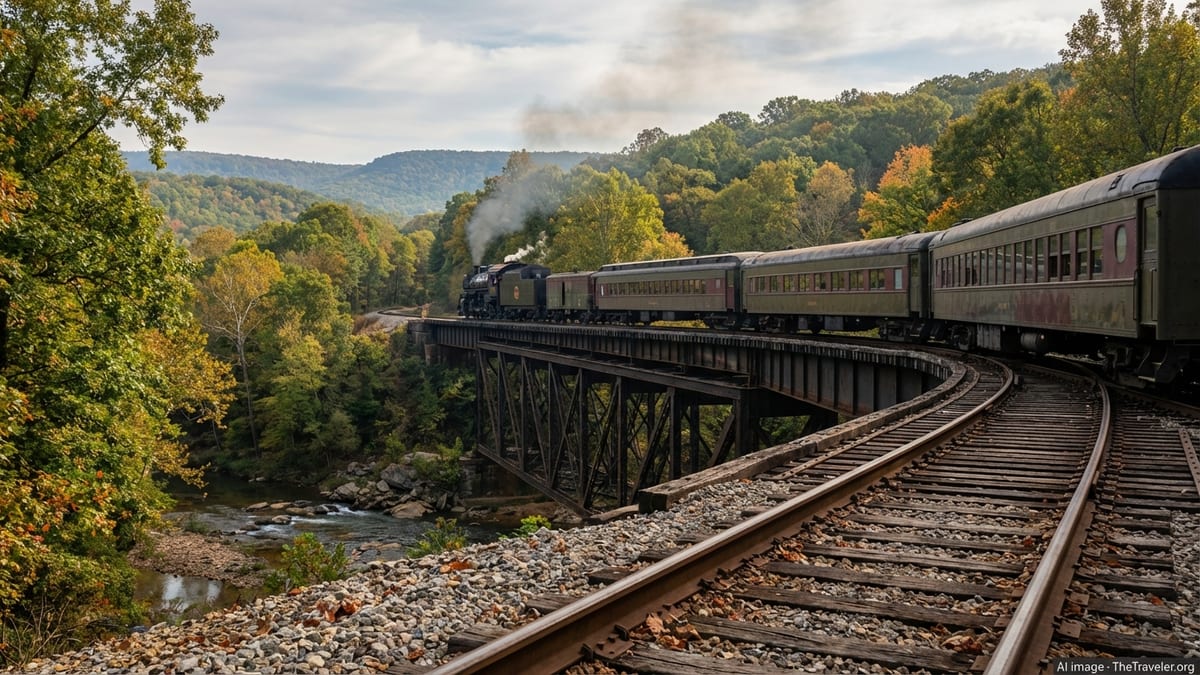
For travelers more interested in scenery than in getting from point A to point B, the Arkansas & Missouri Railroad operates some of the state’s most celebrated excursion trains. Headquartered in Springdale, this freight railroad runs seasonal passenger trips that climb into the Boston Mountains, a rugged portion of the Ozarks marked by deep valleys, high trestles, and forested slopes that blaze with color in autumn. Excursions typically operate on selected days rather than daily, and schedules vary by season.
The railroad offers routes such as Springdale to Winslow, Van Buren to Winslow, and longer round trips between Springdale and Van Buren. These journeys generally last a few hours round trip, with the train turning at or near the small community of Winslow, home to a notable quarter‑mile tunnel drilled through the mountain. The experience is more akin to a rolling sightseeing tour than traditional transportation, complete with narration by conductors who point out geological features, historic sites, and the heritage of the line.
Passengers ride in restored mid‑twentieth‑century coaches and, in some cases, dome or parlor‑style cars. Seating is usually assigned at booking, with different price tiers depending on the level of service and car type. Light snacks and beverages are often available, and some special departures emphasize themes such as fall foliage, holiday lights, or family‑friendly pajama trains in December. Because these excursions operate on active freight tracks, exact departure times can be subject to operational adjustments, and slight delays are not uncommon.
Tickets for Arkansas & Missouri excursions are typically sold directly by the railroad and by partner visitor centers in communities like Van Buren. Advance reservations are strongly recommended, especially during peak foliage season or around major holidays. Travelers should check the latest calendars, as weather, maintenance, or operational considerations can prompt changes even within a season. In general, though, those who plan ahead are rewarded with one of the most picturesque train rides available anywhere in the central United States.
Eureka Springs & North Arkansas Railway: Short Rides and Dining Trains
In the Victorian resort town of Eureka Springs, the Eureka Springs & North Arkansas Railway offers a more intimate form of train travel. Operating on about two and a half miles of restored track on the former right‑of‑way of the long‑defunct North Arkansas Line, this for‑profit tourist railway focuses on brief excursions and rail‑themed dining experiences rather than lengthy journeys. Its historic depot, originally built in the early twentieth century, sets the tone with period architecture and railroad artifacts.
Typically open from spring through late October, the Eureka Springs & North Arkansas Railway runs one‑hour excursion trains that give visitors a taste of traditional diesel‑powered railroading in the Ozarks. The line features a 1940s‑era diesel locomotive and preserved steam locomotive exhibits, and visitors can often watch the crew operate a turntable to reposition equipment. Although the line is short, it offers a relaxed perspective on the surrounding hills and a tangible sense of how small branch lines once linked communities across the region.
One of the line’s signature offerings is its luncheon and dinner trains, which pair plated meals with a leisurely ride. Guests dine in vintage railcars styled to evoke the 1920s, with white‑tablecloth service and menus that change periodically. These trains are popular for special occasions, anniversaries, and small group gatherings, and reservations are essential, particularly on weekends and during festival periods in Eureka Springs. Dress codes are generally casual but neat, reflecting the railway’s blend of nostalgia and vacation‑town informality.
Because the Eureka Springs & North Arkansas Railway is a self‑contained tourist operation rather than a through route, tickets are sold per excursion rather than by distance. Families should budget extra time to explore the depot area, browse the small gift shop, and observe switching maneuvers on the grounds. As with other tourist lines, schedules and start dates can shift from year to year, so it is important to consult the current season’s calendar before planning a rail‑centric day in Eureka Springs.
Historic Streetcars and Trolleys: Fort Smith’s Living Rail Museum
Not all rail journeys in Arkansas take place on long trains crossing mountain trestles. In Fort Smith, on the western edge of the state, the Fort Smith Trolley Museum operates a heritage streetcar line that allows visitors to ride aboard early twentieth‑century urban transit equipment. The museum’s signature vehicle, a Birney Safety Car originally built in the 1920s, is listed on the National Register of Historic Places and still carries passengers along a short route past several historic landmarks.
The operating line today stretches for roughly three‑quarters of a mile, connecting the museum’s carbarn near the downtown area with sites such as the Fort Smith National Historic Site and the national cemetery. The ride itself is brief, but it provides a vivid sense of how residents once moved through the city before buses and private automobiles became dominant. Wooden seats, overhead trolley poles, and the characteristic sounds of rails and flanges help recreate the period atmosphere, while volunteer motormen share stories about the city’s transit past.
The Fort Smith Trolley Museum is primarily a volunteer‑run organization, and its schedule reflects both seasonal demand and available staffing. Public operations tend to be more frequent during warmer months, with daily service at the height of the season and reduced hours or weekend‑only operations during quieter periods. Modest fares, typically just a few dollars per adult, make the trolley ride an accessible addition to a broader visit to downtown Fort Smith’s museums, riverfront, and historic district.
Because equipment maintenance, weather, and special events can affect operating days, visitors should verify current trolley schedules shortly before arrival. The museum grounds often feature additional exhibits, including preserved locomotives and buses, so rail enthusiasts may wish to allocate extra time to explore beyond a single streetcar loop. For families and history‑minded travelers, the Fort Smith trolley offers a hands‑on introduction to the era when electric streetcars were a central part of life in many Arkansas communities.
Practical Planning: Schedules, Seasons, and What to Pack
Train travel in Arkansas rewards travelers who plan carefully, particularly because many services operate on limited schedules. Amtrak’s Texas Eagle passes through each Arkansas station once daily in each direction at most, with some stops served in the early morning or late at night. Scenic lines like the Arkansas & Missouri Railroad and the Eureka Springs & North Arkansas Railway usually run only on selected days of the week and often only between spring and late fall. As a result, aligning your rail plans with hotel reservations, rental cars, or other transportation is crucial.
Seasonal considerations also play a significant role. Summer brings longer daylight hours and lush greenery along mountain routes, but it can also mean higher temperatures and humidity, especially in the river valleys. Autumn is a particularly popular time for excursion trains through the Ozarks, when foliage colors peak, and trains may sell out weeks in advance. Winter operations are more limited, often confined to special holiday trains, and cold snaps can affect comfort on older equipment, even when cars are heated.
Packing for train travel in Arkansas is similar to preparing for any long‑distance rail journey. Layers are helpful, as interior temperatures can vary between cars and time of day. A light jacket or sweater, a small travel pillow, and an eye mask can improve comfort on overnight Amtrak segments. On excursions, comfortable walking shoes are useful for boarding from low platforms, exploring depots, or strolling around small towns during layovers. Because cell coverage can be inconsistent in rural stretches, offline reading material and downloaded entertainment are worth having.
Food options vary by operator and route. Amtrak provides at least a café service on the Texas Eagle, with snacks and simple hot dishes, but passengers are welcome to bring their own cold food and nonalcoholic beverages. Excursion lines may offer limited snacks on shorter rides and full meals only on designated dining trains. Bringing bottled water and a light snack is a sensible backup, especially when traveling with children. A compact day bag that keeps valuables, medications, and electronics at hand is preferable to relying on overhead luggage space alone.
Accessibility, Families, and First‑Time Riders
Accessibility on Arkansas trains differs widely depending on whether you are traveling with Amtrak or on a heritage railway. Amtrak’s Texas Eagle is subject to federal accessibility requirements, and most of its stations and cars include provisions such as wheelchair lifts or level boarding at designated doors, accessible restrooms in certain cars, and crew training to assist passengers with mobility challenges. However, not every small station has the same level of infrastructure, and boarding may require advance notice so that staff can position lifts or ramps.
Heritage and excursion lines, by contrast, operate vintage equipment that was not originally designed with modern accessibility in mind. Some have taken steps to add ramps, lifts, or specially adapted cars, while others may require passengers to climb steep steps or navigate narrow aisles to reach their seats. Dome cars, in particular, often require using stairs and may be unsuitable for those with limited mobility. For travelers who use wheelchairs, walkers, or strollers, contacting the operator ahead of time to discuss specific needs is highly recommended.
Families generally find Arkansas train rides to be child‑friendly, provided expectations are managed. Shorter excursions of one to two hours are usually better suited for younger children than all‑day or overnight trips. Many scenic operators offer themed trains for holidays, and some encourage children to engage with conductors, ask questions, or participate in simple on‑board activities. Parents should still bring quiet games, books, or downloaded shows to bridge slow moments, particularly on long Amtrak segments.
For first‑time riders, basic etiquette enhances the experience for everyone. Keep luggage compact and out of aisles, use inside voices in shared cars, and follow crew instructions promptly, especially when boarding, disembarking, or during unexpected stops on the line. On scenic trains with open vestibules or viewing platforms, observe posted safety rules, hold children’s hands, and avoid leaning out of windows or doors. Most Arkansas train crews are friendly and eager to answer questions, and a courteous approach goes a long way in making the journey memorable.
The Takeaway
Train travel in Arkansas occupies a niche but rewarding space, combining the practical connectivity of Amtrak’s Texas Eagle with a cluster of scenic and historic rail experiences that highlight the state’s landscapes and small‑town heritage. Travelers willing to work around limited schedules are rewarded with views of the Boston Mountains, glimpses of preserved depots, and the chance to ride everything from full‑sized mainline trains to lovingly restored streetcars.
For visitors arriving from across the country, the Texas Eagle offers a comfortable alternative to flying or driving, especially when paired with an extended itinerary that includes stops in Little Rock, Arkadelphia, or Texarkana. Once in the state, excursion lines such as the Arkansas & Missouri Railroad and the Eureka Springs & North Arkansas Railway provide opportunities to slow down and experience the Ozarks at track speed, complete with historic equipment and, in some cases, on‑board dining.
Whether your goal is a practical rail connection, a weekend getaway built around a scenic excursion, or an afternoon outing on a vintage trolley, Arkansas’s rail options reward planning and curiosity. By understanding the available routes, ticketing practices, and on‑board realities, you can craft a train trip that fits your timetable and travel style while connecting with a mode of transport that helped shape the state’s past and still finds a place in its present.
FAQ
Q1. Does Arkansas have any regular passenger trains?
Yes. Amtrak’s Texas Eagle currently provides the only regular intercity passenger service in Arkansas, stopping at several communities along a north‑south route through the state.
Q2. Which Arkansas cities does Amtrak serve?
Amtrak’s Texas Eagle generally serves Walnut Ridge, Little Rock, Malvern, Arkadelphia, Hope, and Texarkana, though exact schedules and stops should always be confirmed before traveling.
Q3. How far in advance should I buy Amtrak tickets for Arkansas?
Buying several weeks or more in advance usually offers the best selection of lower fares, especially around holidays or busy travel periods on the Texas Eagle route.
Q4. Are scenic trains in Arkansas open year‑round?
Most scenic and heritage trains in Arkansas operate seasonally, often from spring through late fall, with limited or special holiday service in winter.
Q5. Is there food available on Arkansas train trips?
Amtrak’s Texas Eagle offers at least a café service, while scenic lines may provide snacks or full meals on designated dining trains. Bringing a light snack and water is wise.
Q6. Are Arkansas train rides suitable for young children?
Yes. Shorter excursions of one to two hours and themed holiday trains are generally very child‑friendly, provided parents bring quiet activities and supervise children closely.
Q7. How accessible are Arkansas trains for passengers with mobility issues?
Amtrak trains and major stations have accessibility features, but heritage railways use older equipment with more limited access. Always contact operators in advance to discuss specific needs.
Q8. Can I use Arkansas scenic trains as transportation between cities?
Scenic and heritage railways in Arkansas are designed as round‑trip excursions or short rides and are not intended as practical transportation between cities.
Q9. What is the best season to ride a scenic train in Arkansas?
Autumn is especially popular for Ozark excursions thanks to fall foliage, but spring and early summer offer lush greenery and milder temperatures.
Q10. Do Arkansas trains often run late?
Long‑distance Amtrak trains can experience delays due to freight traffic and long routes, so plan generous buffers. Scenic excursions may also run slightly behind schedule on occasion.