

Arkansas is not usually the first state travelers associate with train journeys, yet its mix of mainline Amtrak service, Ozark mountain excursion trains, and heritage trolleys makes it an unexpectedly rewarding place to explore by rail. Whether you are planning a practical point to point trip on the Texas Eagle, dreaming of a slow ride through Boston Mountain tunnels, or looking for a family friendly trolley outing, understanding the routes, tickets, and on board experience will help you make the most of train travel in the Natural State.
Understanding Arkansas Rail Options Today
Passenger rail in Arkansas falls into two broad categories. The first is practical intercity service on Amtrak’s Texas Eagle, which connects a string of Arkansas communities to major cities such as Chicago, St. Louis, Dallas, Austin, and San Antonio. The second comprises a small but diverse group of excursion and heritage operations, including the Arkansas and Missouri Railroad’s scenic trains in the northwest, the Fort Smith Trolley Museum’s heritage streetcar, and tourist lines based near Eureka Springs and Van Buren. Together they offer a blend of transportation, scenery, and nostalgia that can suit very different types of travelers.
The scale of rail service is modest compared with larger states, so setting expectations is important. Amtrak provides once daily long distance service rather than frequent corridor trains, and schedules are built around the needs of the entire 1,300 mile Texas Eagle route rather than local commuting patterns. Tourist railways typically operate seasonally, concentrate departures on weekends or peak travel days, and may limit operations in the coldest winter months or during shoulder seasons. Planning ahead and booking in advance is therefore essential, particularly during fall foliage, school holidays, and major events in nearby cities.
Despite these limitations, Arkansas rail journeys have some distinct advantages. The routes that do exist often follow historic rights of way through river valleys and low mountain passes, threading through scenery you will not glimpse from interstate highways. Vintage equipment, small town depots, and compact downtown boarding points also tend to keep the experience relaxed and personal. Staff and volunteers on excursion lines often live locally and can provide context on everything from nearby hiking trails to Civil War history, making train travel an easy way to connect with the character of Arkansas communities.
For visitors unfamiliar with the region, it helps to think of Arkansas rail in layers. Use Amtrak for long hops into and out of the state, then layer on scenic day trips by excursion rail or trolley once you have arrived. With that structure in mind, you can build itineraries that tie Little Rock or Fort Smith to Ozark mountain towns, or that combine rail with driving loops through state parks and historic districts.
Amtrak’s Texas Eagle: Arkansas’s Intercity Backbone
Amtrak’s Texas Eagle is the only intercity passenger train serving Arkansas, running daily between Chicago and San Antonio with through cars several days a week continuing on to Los Angeles. In Arkansas the route roughly follows Interstate 30 and the Union Pacific main line, with stops at Walnut Ridge in the northeast, Little Rock, Malvern, Arkadelphia, Hope, and Texarkana along the southwestern border. For residents, it functions as a lifeline to regional hubs, while for travelers it is a comfortable, scenic alternative to long highway drives.
Service levels are typical of a long distance Amtrak train. The Texas Eagle usually operates once a day in each direction, with northbound and southbound trains calling at Arkansas stations at set times that tend to be similar year to year but that can shift when schedules are adjusted. Because the train is traversing multiple states, exact arrival and departure times may be early in the morning or late at night in some communities. Travelers should always confirm current timetables close to their travel date, as long distance schedules can change slightly from season to season and are occasionally impacted by track work.
On board, passengers can expect standard Amtrak amenities for a long haul route. Coach cars offer reclining seats with leg rests, generous pitch compared with most airlines, and at seat power outlets on newer equipment. Sleeper accommodations are available in roomettes and bedrooms for longer segments, which include most meals in the dining car. All Texas Eagle trains carry a cafe or lounge car where coach passengers can purchase light meals, snacks, and beverages. Wi fi availability can vary and cellular coverage may be intermittent through rural stretches, so travelers who need to work should plan to download documents in advance and treat connectivity as an added bonus rather than a guarantee.
Because the Texas Eagle shares tracks with heavy freight traffic, delays are possible. Padding in the schedule helps, but connections to tight onward itineraries are risky. When planning, build in extra time if you are transferring to flights, rental car pickups, or ticketed events on the same day. For many riders, the journey itself is a key part of the experience, with the train rolling past farm fields, pine forests, and small Arkansas towns in a way that highlights the state’s landscape more gently than interstate driving.
Booking Amtrak Tickets and Choosing Classes
Buying tickets for the Texas Eagle is straightforward but benefits from early planning. Fares fluctuate based on demand and inventory, so booking well in advance often secures lower coach prices, especially around weekends, Thanksgiving, Christmas, and spring break periods. Travelers can typically choose between flexible and less flexible fare buckets in coach, with the lowest fares carrying more restrictions on changes and refunds. For long overnight segments, sleeper accommodations sell out frequently, particularly roomettes, so early reservations are worth the effort if you value privacy and flat sleeping surfaces.
Arkansas station staffing varies, with Little Rock’s station generally offering more amenities and staffed hours, while some smaller stops may be unstaffed or have limited ticket office times. In those locations, passengers often board with e tickets on a smartphone or printed at home. Checked baggage is not available at every station, so if you plan to travel with large suitcases, confirm whether your origin and destination both support checked baggage. Otherwise, pack in carry on sized luggage that you can handle yourself and store in overhead racks or at the ends of the car.
When deciding between coach and sleeper class, consider both comfort and budget. Daytime trips between Arkansas cities and nearby hubs such as Dallas or St. Louis are usually comfortable in coach, where wide reclining seats, large windows, and the ability to walk to the cafe car make the experience more relaxed than a short flight. For an overnight segment such as Little Rock to Chicago or Texarkana to San Antonio, a roomette provides bunks, curtains for privacy, access to a shower in the sleeper car, and included meals, which can justify the higher fare for those prioritizing rest.
Travelers with disabilities, families with young children, and older passengers should pay attention to accessibility details. Amtrak trains serving Arkansas generally have accessible restrooms and spaces for passengers using mobility devices, and stations typically provide some form of level boarding or lifts. However, accessibility can vary from station to station and may be impacted temporarily by construction or weather. If you have specific needs, contacting Amtrak in advance to request assistance and confirm current arrangements is wise. Arriving at the station at least 30 to 45 minutes early allows more time to board comfortably and settle in.
Scenic Excursions on the Arkansas and Missouri Railroad
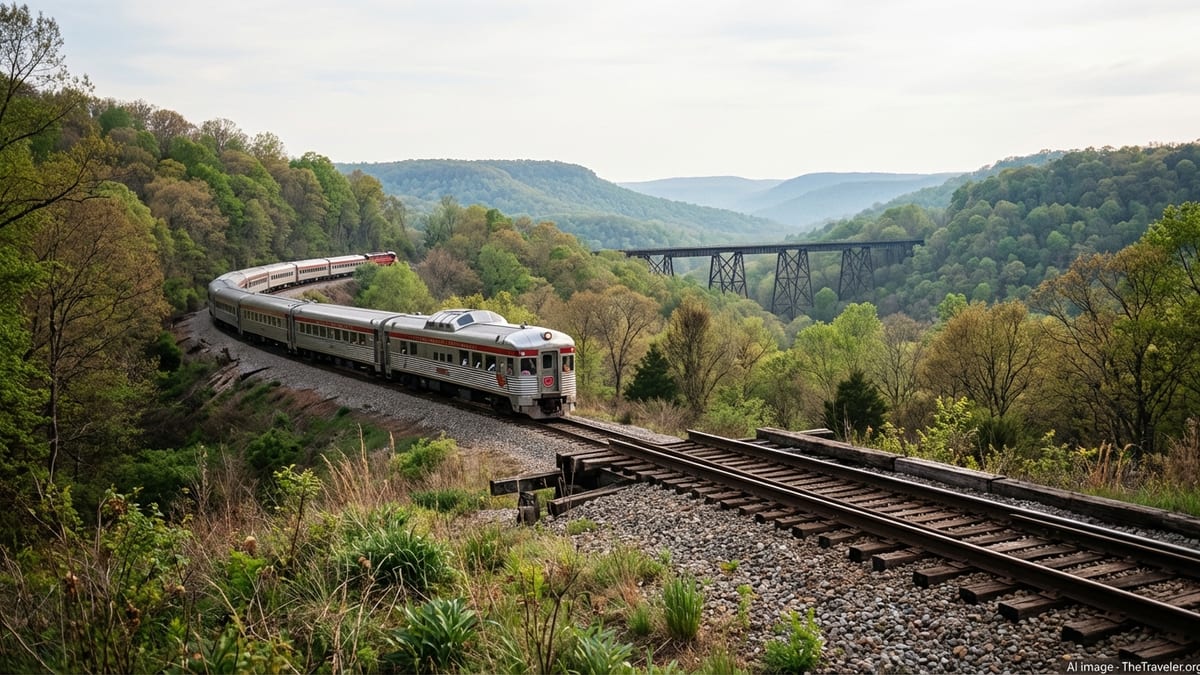
While Amtrak provides the backbone of intercity service, the Arkansas and Missouri Railroad offers some of the state’s most memorable rail journeys. Based in Springdale in northwest Arkansas, this freight railroad also operates seasonal passenger excursions through the Boston Mountains, a subrange of the Ozarks. Trains typically run between Springdale, Winslow, and Van Buren, with routes threading through tree covered hills, over tall trestles, and through Arkansas’s longest railroad tunnel. It is a markedly different experience from highway travel, with the train moving slowly enough to savor the views.
Excursion operations are heavily seasonal, with most departures clustered between spring and late fall and a focus on weekends or select weekdays. The railroad also promotes special themed trips such as fall foliage excursions, holiday trains for families, and occasional photography charters. Schedules can vary by year, and some events sell out quickly, so checking dates and booking well ahead of peak seasons is recommended. Because these are dedicated excursion trains, departure and return times are typically designed to create a half day or full day outing rather than simple point to point transportation.
Tickets on the Arkansas and Missouri Railroad are sold in several classes of service. At the most economical level, standard coach seats in vintage railcars provide large windows and comfortable seating, suitable for families and casual travelers. Upgraded classes may offer seating in restored parlor or dome cars, sometimes with table seating, slightly elevated views, and at seat service for drinks or light snacks. Some excursions include commentary about the line’s history and local landmarks, though the experience is generally geared toward relaxation and scenery rather than formal narration.
Passengers should prepare as if for a gentle outdoor excursion. Weather can shift quickly in the Arkansas highlands, and railcars can feel warm in full sun or cooler near tunnels and valley bottoms. Dressing in layers, wearing comfortable walking shoes, and bringing water and sun protection will make time on station platforms or in open vestibule areas more pleasant when permitted. Photography opportunities are frequent, particularly as the train crosses high bridges or curves along wooded slopes, so cameras with moderate zoom lenses and lens hoods are useful for handling variable light.
Tourist Railways, Trolleys, and Short Scenic Rides
Beyond the Arkansas and Missouri Railroad, several smaller tourist and heritage operations round out the state’s rail offerings. In Fort Smith, the Fort Smith Trolley Museum operates a short heritage streetcar line using restored early twentieth century equipment. The primary car is a 1926 Birney streetcar, restored and operated along a route of roughly three quarters of a mile that links downtown Garrison Avenue with the edge of the Fort Smith National Cemetery. It is a compact but atmospheric ride, often combined with visits to nearby historic sites and museums.
The Fort Smith line operates most heavily from May through October, when the trolley typically runs daily, and shifts to weekends in the cooler months. Hours are usually concentrated in the late morning and afternoon, and short loop rides provide a glimpse of how streetcars once shaped urban life. Fares remain relatively modest, and the museum grounds showcase additional rolling stock, locomotives, and buses, making it a good stop for families and rail enthusiasts alike. Because these operations are run by a nonprofit with volunteer support, schedules can occasionally change for maintenance or special events, so it is wise to verify hours not long before your visit.
Elsewhere in northern Arkansas, tourist rail activity is more variable. The Eureka Springs and North Arkansas Railway has historically offered short excursions and occasional dining trains on preserved track near the Victorian spa town of Eureka Springs, using vintage diesel locomotives and passenger cars. Operations on this and similar short lines can fluctuate from year to year due to demand, maintenance, and ownership changes, so travelers interested in a specific experience should research current offerings, months of operation, and whether trains are running on their planned dates.
In addition to in state options, a handful of regional excursion trains just across the border dip into Arkansas territory or pair well with Arkansas road trips. Some Branson based excursions in neighboring Missouri, for example, run on former Missouri Pacific trackage that extends into northern Arkansas, giving passengers a taste of the state’s landscapes as part of a broader Ozarks itinerary. While these trips are marketed primarily from out of state depots, they are readily combined with driving loops that include northwest or north central Arkansas towns.
Planning Routes, Connections, and Multi Day Itineraries
Given the limited number of passenger routes, planning train journeys through Arkansas is as much about combining modes as it is about choosing specific trains. A common approach is to use the Texas Eagle to enter or leave the state, then rely on rental cars or regional buses to connect to scenic excursions and smaller communities. For instance, travelers might ride Amtrak to Little Rock, spend a night downtown, then drive into the Ozarks to board a scenic excursion on the Arkansas and Missouri Railroad from Springdale or Van Buren. Alternatively, visitors coming from Texas could disembark in Texarkana or Hope and continue by road toward Hot Springs, state parks, or mountain towns.
Within Arkansas, same day hops between intermediate Texas Eagle stations can work well when the timing suits your plans. Short segments such as Arkadelphia to Malvern or Hope to Texarkana typically take under an hour, making them pleasant alternatives to highway driving when schedules align with your needs. However, because there is usually only one train per day in each direction, you cannot rely on frequency for commuting or last minute changes. It is important to build your day around the train schedule rather than assuming multiple departures.
Rail based itineraries are especially appealing for travelers who enjoy slow travel. One option is to book an overnight roomette from major hubs such as Chicago or San Antonio to Little Rock, waking up with the skyline and Arkansas River just outside your window. After exploring the capital’s riverfront and museums, you might then rent a car to reach northwest Arkansas, combining time in Fayetteville, Bentonville, and Eureka Springs with a day trip on an excursion train through the Boston Mountains. From there, a loop west to Fort Smith can incorporate a heritage trolley ride before returning to your starting point by road.
Because excursion trains and heritage operations often release schedules months in advance but adjust details closer to departure, flexibility is helpful. Consider building your plan around broad date windows rather than fixed day by day commitments, especially in shoulder seasons when demand and weather may influence operating days. Travel insurance that covers changes and cancellations can offer additional peace of mind when combining nonrefundable rail tickets with hotel bookings and rental cars.
On Board Experience, Scenery, and Seasonal Considerations
The experience of train travel in Arkansas is shaped in large part by the state’s varied landscapes. The Texas Eagle crosses wide agricultural plains, pine forest corridors, river bottoms, and modest hills, while the Arkansas and Missouri Railroad’s excursions dive more deeply into the folds of the Boston Mountains. In autumn, hardwood forests burst into shades of red and gold, and fall foliage excursions can become highlight experiences for photographers and leaf peepers. Spring brings wildflowers and bright green hillsides, while summer offers lush scenery punctuated by high sun and longer evenings.
On board both Amtrak and excursion trains, the pace is generally unhurried. Long distance trains prioritize steady running and schedule adherence over rapid acceleration, giving passengers time to watch small town depots, farmhouses, and forest edges slide by. Excursion trains may move even more slowly on steep grades or scenic stretches, sometimes pausing for photo opportunities or to allow riders to appreciate long trestle crossings. This gentle motion, combined with the ability to stand, stretch, and visit lounge or cafe cars, makes train travel particularly comfortable for families, older travelers, and those looking to avoid the stresses of driving.
Seasonality plays a major role in planning. Summer brings warmer temperatures and often higher ridership, particularly on family oriented excursions and holiday themed trains. Car interiors are typically climate controlled, but boarding platforms and station areas may be hot and humid, so light clothing, sun hats, and water are important. Fall is arguably the prime season for scenic rides through the Ozarks and Boston Mountains, when milder temperatures and colorful foliage coincide. Winter operations continue on the Texas Eagle, but some excursion lines either scale back departures or suspend rides entirely in the coldest months, especially in January and February.
Weather can influence comfort and schedules. Heavy rain, extreme heat, or ice can slow trains or require extra caution on trestles and in tunnels. While complete cancellations are not common, they are possible during severe storms or flooding events. Travelers should monitor forecasts closely in the days leading up to their trip and provide up to date contact information when purchasing tickets so that operators can notify them of schedule changes. Packing layers, a light rain jacket, and closed toe shoes will help you stay comfortable if conditions shift during your journey.
Practical Tips: Tickets, Packing, and Expectations
A bit of preparation goes a long way toward making Arkansas train travel smooth. For Amtrak trips, booking early, downloading your e ticket, and arriving at the station 30 to 45 minutes before departure are simple steps that reduce stress. If you are boarding at a smaller unstaffed stop, identify the exact location of the platform in advance and allow time for parking and walking to the boarding area. Conductors will usually scan or visually check tickets on board shortly after departure, so keeping your phone charged or carrying a printed backup copy is wise.
On both Amtrak and excursion trains, pack as if you were combining a relaxed road trip with a day outdoors. A small daypack with water, snacks, a light sweater or jacket, sunscreen, and any medications you may need will cover most contingencies. Although cafes and concession services are common, they may offer a limited selection, and lines can form during peak times. Many operators allow outside food and nonalcoholic drinks in sealed containers, but rules vary, so check policies when you book. Comfortable non slip shoes are recommended, since you may be walking on gravel, old platforms, or sloped vestibule steps.
For families, setting expectations with children makes a big difference. Long stretches of beautiful scenery can feel slow to younger travelers, so bringing quiet activities such as books, coloring materials, or downloaded shows on a tablet can keep everyone content between scenic highlights. Some excursion trains build in interactive elements such as themed narrations, costumed staff, or special events on board, which can be a welcome break in the day. On the Texas Eagle, quiet hours are typically observed in sleeper cars at night, so families with energetic children may prefer daytime coach segments or shorter regional hops.
Finally, approach Arkansas train travel with a flexible, curiosity driven mindset. Schedules may shift, small delays may appear, and equipment assignments can change. Vintage railcars may creak and rattle more than modern coaches, and air conditioning or heating may feel imperfect at times. Yet these same quirks are part of the charm, tying today’s rides to more than a century of railroading history. By allowing time, building in contingencies, and focusing on the landscape out the window, you can turn a simple train journey into an integral part of your Arkansas adventure.
The Takeaway
Train travel in Arkansas is a niche but rewarding pursuit that blends practical connectivity with scenic journeys and living history. The Texas Eagle offers a comfortable, if infrequent, spine of intercity service, allowing travelers to reach Little Rock, Texarkana, and several smaller communities without touching a steering wheel. Scenic excursions on the Arkansas and Missouri Railroad, trolley rides in Fort Smith, and tourist railways in the Ozarks round out the picture, adding mountain vistas and heritage experiences to the mix.
For visitors and residents alike, the key is to plan around limited frequencies and seasonal operations, booking tickets early and confirming schedules as travel dates approach. Travelers who embrace a slower pace, who enjoy the rhythm of rails underfoot and the chance to watch small town Arkansas slip by outside their window, will find much to appreciate. With thoughtful preparation and realistic expectations, journeys by train can become some of the most memorable chapters in an Arkansas trip, connecting landscapes, communities, and stories in a way that only rail travel can.
FAQ
Q1. What passenger train routes currently serve Arkansas?
Amtrak’s Texas Eagle is the primary intercity route, stopping at Walnut Ridge, Little Rock, Malvern, Arkadelphia, Hope, and Texarkana, while the Arkansas and Missouri Railroad and several tourist lines operate shorter scenic excursions.
Q2. How often does Amtrak’s Texas Eagle run through Arkansas?
The Texas Eagle typically runs once daily in each direction through Arkansas, so most towns see one northbound and one southbound train per day, subject to schedule adjustments.
Q3. Do I need to buy train tickets in advance in Arkansas?
Advance purchase is strongly recommended, especially for excursion trains and for Amtrak trips around holidays, weekends, and peak seasons when lower fare buckets and popular dates can sell out.
Q4. Are there scenic train rides in the Arkansas Ozarks?
Yes, the Arkansas and Missouri Railroad offers seasonal excursions through the Boston Mountains, and additional tourist operations near towns such as Eureka Springs provide shorter scenic rides when in season.
Q5. What should I expect on board Arkansas excursion trains?
Expect vintage railcars with comfortable seating, large windows, relatively slow speeds for sightseeing, and a casual atmosphere, sometimes with light narration or themed events depending on the trip.
Q6. Are Arkansas trains suitable for families with children?
Yes, many families enjoy both Amtrak and excursion trains, but parents should bring quiet activities for longer stretches and check whether specific excursions offer kid focused themes or shorter ride options.
Q7. How reliable are train schedules in Arkansas?
Schedules are generally dependable, but long distance Amtrak trains can face delays from freight traffic, and excursion operations may adjust or cancel trips due to weather or maintenance, so flexibility helps.
Q8. What is the best season for train travel in Arkansas?
Fall and late spring are often ideal, with milder temperatures and colorful foliage in the Ozarks, though summer offers lush scenery and more frequent family oriented excursions.
Q9. Are Arkansas train services accessible for travelers with disabilities?
Most Amtrak trains and many stations offer accessible features such as lifts and designated seating, while excursion operators vary; travelers with specific needs should confirm arrangements before booking.
Q10. Can I use trains to get around Arkansas without a car?
Trains can cover key segments, but limited routes and frequencies mean most visitors will still want a car or local transportation to reach parks, small towns, and excursion depots beyond Amtrak stations.