

California by train feels different from seeing the state through a windshield. The tracks trace ocean bluffs, river deltas and mountain passes that highways often miss, while dropping you directly into walkable downtowns from San Diego to Sacramento. With a mix of state supported Amtrak corridors, commuter lines and classic tourist excursions, train travel in California can be both a practical way to get around and a memorable part of the journey itself. This guide explains the main routes, how tickets and passes work, and which scenic rides are worth planning a trip around.
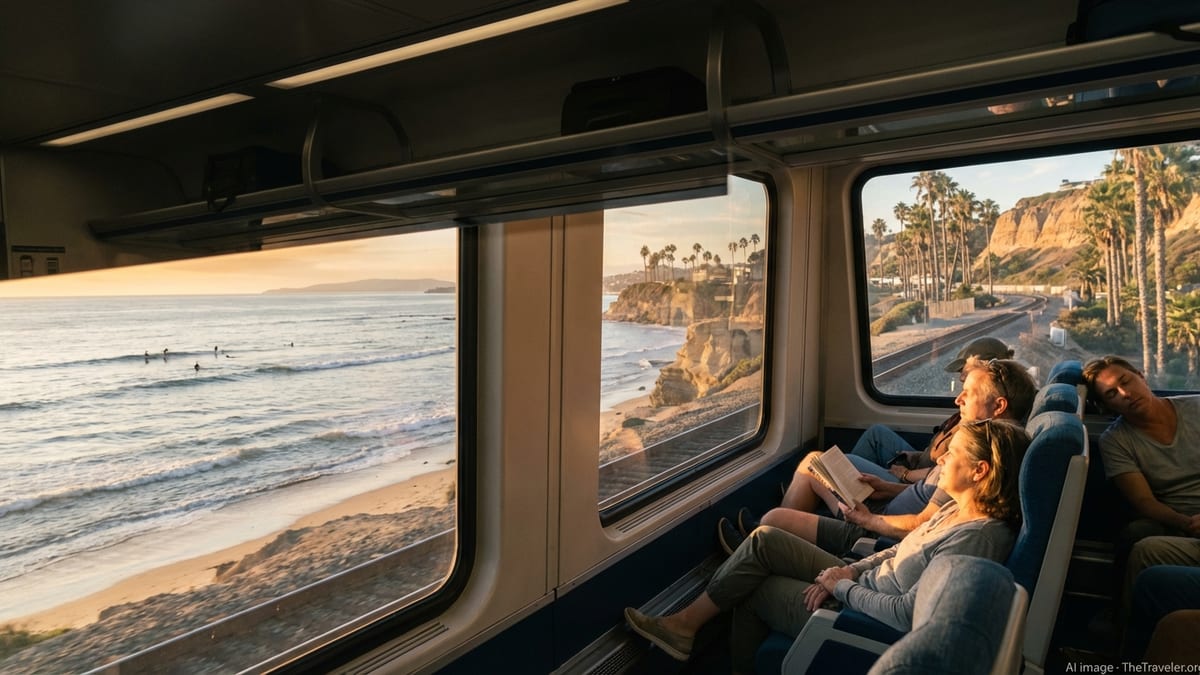
The Landscape of Rail Travel in California Today
California’s modern rail network is built around three key state supported Amtrak corridors plus several long distance routes that pass through on their way across the West. The Pacific Surfliner hugs the southern and central coast between San Diego and San Luis Obispo, the San Joaquins connect the Bay Area and Sacramento with the San Joaquin Valley, and the Capitol Corridor links San Jose, Oakland and Sacramento with frequent service. These routes function as the backbone of intercity rail within the state, supplemented by long haul trains such as the Coast Starlight and California Zephyr that provide scenic but less frequent options.
Schedules and frequencies have been steadily recovering and expanding after several years of weather related and infrastructure disruptions. As of mid 2025 the Pacific Surfliner is operating 12 daily round trips between San Diego and Los Angeles and multiple daily trains farther north, offering a genuinely flexible timetable for day trips and weekend getaways along the coast. The San Joaquins and Capitol Corridor maintain multiple daily departures in each direction, aimed at both commuters and leisure travelers who prefer to avoid highway congestion in the Bay Area and Central Valley.
Alongside these Amtrak operated services is a patchwork of regional and commuter lines. In Southern California, Metrolink connects downtown Los Angeles with surrounding counties, sharing some stretches of track with Amtrak. In the Bay Area, Caltrain runs between San Francisco and the South Bay, and BART provides rapid transit that interchanges with several rail stations. Smaller operators, such as the San Diego Trolley light rail and local bus systems, provide the last mile links that turn a train ticket into a viable door to door journey.
For visitors, the result can appear complex, but the underlying pattern is simple. Amtrak handles most medium distance trips between cities, while Metrolink, Caltrain and local transit help you reach neighborhoods, suburbs and airports. Planning your trip is largely about understanding which of these layers you will need and allowing enough connection time between them.
Major Amtrak Routes: From Coastlines to Mountain Passes
For many travelers, the phrase “train travel in California” brings to mind a seat on the Pacific Surfliner. This corridor runs roughly 350 miles from San Diego north through Los Angeles, Ventura, Santa Barbara and San Luis Obispo, much of it within sight of the Pacific. South of Los Angeles, long stretches of track run immediately above the surf, giving passengers views that are difficult to match from Interstate 5. With multiple daily departures and reserved seating, it has become a popular alternative to driving on some of the busiest freeways in the state.
North and inland, the San Joaquins offer a very different experience. Trains run between Bakersfield and either Oakland or Sacramento, crossing the agricultural heartland of the Central Valley. While the scenery is less dramatic than the coast or the Sierra Nevada, these trains are a practical way to link Los Angeles area bus connections with the Bay Area, Stockton, Modesto, Fresno and other valley cities. Dedicated Amtrak Thruway buses extend the network to places the tracks do not reach, including San Francisco and several mountain gateways.
The Capitol Corridor focuses on Northern California’s urban crescent from San Jose through Silicon Valley, Oakland, Berkeley, the Carquinez Strait and Sacramento. It is designed for both commuters and day trippers, with multiple departures and simple station layouts. Travelers can watch marshlands, ports and river crossings slide past while avoiding Bay Bridge and Interstate 80 traffic. The route’s strength is its connectivity, with direct links to BART, Caltrain and light rail systems at major stations, making it easy to continue on to San Francisco or local neighborhoods without a car.
Overlaying these corridors are long distance trains that cross state lines. The Coast Starlight runs between Los Angeles and Seattle via the central California coast and the Cascade Range, passing through San Luis Obispo, Salinas, San Jose, Oakland and Sacramento. Portions of this route, especially between San Luis Obispo and the Bay Area, combine coastal views, inland valleys and mountain curves. Farther east, the California Zephyr connects the Bay Area with Denver and Chicago, climbing through the Sierra Nevada via Donner Pass. For California focused itineraries, travelers often ride only segments of these long routes, treating them as scenic alternatives to regional trains.
Tickets, Passes and How to Book
Ticketing for California’s Amtrak services has become more flexible, with a mix of traditional point to point tickets and multi ride passes that reward repeated use. Standard fares on the Pacific Surfliner, San Joaquins, Capitol Corridor and long distance trains are dynamic, so prices vary by date, demand and how early you book. Reserved coach seats are the norm, and booking in advance through the Amtrak app or ticket machines usually secures the best combination of price and seat availability. Business class is available on several routes for a higher fare, typically offering more space and quieter cars rather than luxury service.
For travelers planning several journeys in a short period, passes can offer significant value. The national USA Rail Pass allows 10 segments of coach travel within 30 days and is valid on most Amtrak routes that pass through California, including the Pacific Surfliner, San Joaquins, Capitol Corridor, California Zephyr and Coast Starlight. The pass is normally priced in the high hundreds of dollars but is occasionally discounted for limited time promotions, with recent sales lowering the cost substantially for bookings during specific weeks. The pass must be used within 120 days of purchase, and the 30 day clock begins once the first trip is taken, which calls for careful planning if your itinerary includes long distance segments.
California specific rail passes target travelers who want to see more of the state without committing to a national itinerary. The California Rail Pass, for example, is designed for flexible hopping on and off within the state over a span of several weeks, typically granting seven days of travel within a 21 day window at a fixed price for adults and discounted price for children. While prices and terms are adjusted periodically, the core idea remains to allow multiple journeys on the state supported routes without buying individual tickets each time. These passes do come with restrictions on which trains and classes of service are included, so it is worth reviewing current terms before purchase.
Even without a pass, regular riders on specific corridors can make use of monthly or multi ride tickets that are aimed more at commuters than tourists but are available to anyone. Multi ride tickets such as 10 ride passes are valid for a set number of trips between two stations within a defined time period and can be cost effective if you expect to travel the same route repeatedly. Regardless of the product you choose, Amtrak now requires pass holders to confirm each trip in advance through its RideReserve system, which allocates a seat on a specific departure. This helps reduce crowding but means that spontaneous boarding without a reservation is no longer guaranteed on the busier trains.
Regional and Commuter Rail Connections
Understanding California’s commuter and regional rail systems can greatly expand what you can do once you arrive by Amtrak. In Southern California, Metrolink operates several lines radiating from Los Angeles Union Station, including routes to Orange County, Riverside, San Bernardino, Ventura County and the Antelope Valley. Many of these trains share tracks with the Pacific Surfliner, and the two services are scheduled to complement each other on key corridors. For example, a traveler heading from Los Angeles to Anaheim or Oceanside may find that Metrolink offers additional departure times at commuter focused hours, while the Amtrak trains provide more comfortable seating and amenities on longer rides.
In the San Francisco Bay Area, Caltrain runs along the Peninsula between downtown San Francisco and Gilroy, stopping at key Silicon Valley hubs such as San Mateo, Redwood City, Palo Alto and Mountain View. Caltrain connects directly with Amtrak’s Capitol Corridor at stations such as Santa Clara and San Jose Diridon, allowing through journeys from the Peninsula to Sacramento or the East Bay without a car. At Millbrae, Caltrain links to BART, making it possible to transfer between intercity trains, regional rail and the region’s main rapid transit spine in a single hub.
BART itself interfaces with intercity trains at several points. In the East Bay, riders can walk across the platform from Amtrak’s Capitol Corridor at Richmond to BART trains that cross under the bay to San Francisco. Oakland Coliseum station offers another transfer between Capitol Corridor trains and BART services to downtown Oakland, Berkeley, San Francisco and Oakland International Airport. In the Sacramento region, light rail and bus connections meet Capitol Corridor trains at Sacramento Valley Station, supported by a transfer program that, in many cases, offers free or discounted onward rides on local transit services. Similar transfer options exist at select stations served by the San Joaquins, particularly where city bus networks focus on their downtown rail hubs.
For visitors, the most important step is to build a buffer between train arrivals and local connections, as schedules are coordinated but not immune to delays. Buying tickets for local transit can usually be done on the spot through vending machines or mobile apps, and in several metropolitan areas, a single contactless payment card or app can cover multiple systems. When in doubt, station staff and conductors on routes such as the Capitol Corridor are accustomed to helping passengers navigate transfers and can often provide printed guides to local connections.
Most Scenic Train Journeys in California
California’s rail network offers several rides where the journey itself is the highlight. The Pacific Surfliner between Los Angeles and San Diego is one of the most photographed rail corridors in the state, with segments where the tracks run directly along sandy beaches and surf breaks. Riders on the coastal side of the train can often watch surfers, beachgoers and tide pools just below the window, especially between San Juan Capistrano and Oceanside. North of Los Angeles, the line skirts the base of coastal bluffs and passes near state beaches and estuaries, offering sunset views that justify planning your departure around the golden hour.
Farther north, the Coast Starlight between San Luis Obispo and the Bay Area serves as a de facto scenic train even though it is part of a longer interstate route. After climbing out of San Luis Obispo, the train winds through rolling hills, vineyards and ranchland before dropping into the Salinas Valley, a patchwork of fields and small towns. Approaching the Bay Area, the route crosses wetlands, marshes and tidal flats, with distant views of the Santa Cruz Mountains. Many rail enthusiasts regard this stretch as one of the most beautiful segments of mainline railroad in the western United States.
For mountain scenery, the California Zephyr’s climb through the Sierra Nevada east of the Sacramento region remains unmatched. The line threads its way up canyon walls, across high bridges and through tunnels before cresting near Donner Pass, offering views of pine forests, granite outcrops and alpine lakes when weather and daylight cooperate. While snow and operational constraints can occasionally affect schedules in winter, a well timed trip in late spring or early autumn can deliver long hours of clear mountain views. Travelers who do not want to commit to the full multi day journey to Denver or beyond can ride only the California portion, disembarking at Reno or other intermediate stops.
Beyond the national network, California also hosts niche scenic and heritage operations. The Napa Valley Wine Train runs vintage Pullman cars through vineyard country north of Napa, pairing multi course meals with slow paced views of wineries and the Mayacamas Mountains. Elsewhere, historic short lines in places such as Mendocino County and the Sierra foothills operate seasonal excursions with open air cars, themed events and family oriented schedules. These rides are not practical transportation in the usual sense but can add a memorable rail themed day trip to a longer California itinerary.
Planning Your Journey: Timing, Classes and Seasons
Successful train travel in California starts with realistic expectations about timing and seasonality. Intercity trains are generally punctual enough for relaxed travel but are subject to occasional delays from freight traffic, track work and weather, particularly on long distance routes. When planning connections between Amtrak corridors and regional transit or flights, allow generous buffers rather than scheduling tight transfers. For same day connections between long distance trains and local services, it is wise to have a fallback option such as a later departure or rideshare, especially in smaller cities with limited evening transit.
Choosing where to sit and which class of service to book can also shape your experience. On routes like the Pacific Surfliner and Coastal segments of the Coast Starlight, the best ocean views are usually on the west side of the train, while inland routes may reward sitting on the side that faces river valleys or mountain ranges. Standard coach class on California routes is fairly comfortable, with wide reclining seats, power outlets and generous window size. Business class typically offers a quieter environment, additional legroom and sometimes complimentary drinks or at seat service, which can be worthwhile on busier departures or longer days of travel.
Season matters, especially on the most scenic lines. Coastal routes remain attractive year round, but winter storms can occasionally affect track conditions in areas vulnerable to erosion or slides, leading to temporary bus substitutions. Spring often brings green hillsides and wildflowers inland, while late summer and early autumn can mean clearer mountain views in the Sierra Nevada before winter storms return. Heat waves in the Central Valley and desert regions may influence your comfort on station platforms or connecting buses, though trains themselves are air conditioned.
Finally, consider building in unscheduled time at intermediate stops rather than treating the train purely as a means of getting from one big city to another. Towns such as Santa Barbara, San Luis Obispo, Davis and San Juan Capistrano have walkable cores a short distance from their stations, making it easy to step off for a few hours or overnight before continuing. With passes that allow multiple segments or travel days, this kind of slow, flexible itinerary becomes one of the main advantages of seeing California by rail.
Practical Tips for Riding Trains in California
A bit of preparation can make train travel in California smoother and more enjoyable. Booking tickets early for popular days such as holiday weekends, major events and peak summer Saturdays is the safest way to secure both a good fare and your preferred departure time, especially on the Pacific Surfliner and long distance trains. When you purchase a pass, set reminders for the 120 day validity window and the 30 day travel clock if you hold a national USA Rail Pass, and consider mapping out at least a tentative itinerary before activating your first segment so you do not run out of days or segments before reaching your final destination.
Pack as you would for a long distance bus or short flight: a small daypack with water, snacks, layers and any medications or essentials you do not want to stow. Luggage allowances on Amtrak are relatively generous compared with airlines, with space for carry on bags in overhead racks and at the ends of cars, plus checked baggage on many but not all stations and routes. On busy trains it helps to arrive early so you can board close to your assigned car and secure space for larger items without rushing.
On board, take advantage of amenities that are easy to overlook. Many California corridor trains provide power outlets at most seats, Wi Fi that is adequate for email and light browsing, and cafe cars selling simple meals, snacks and drinks. On scenic segments, observation lounges on long distance trains like the Coast Starlight and California Zephyr feature larger windows and more social seating arrangements, which can be a welcome change from staying in one seat for hours. Conductors and onboard staff are generally happy to answer questions about upcoming stops, connections and good vantage points for photography.
At stations, basic safety and awareness go a long way. Stay behind marked lines on platforms, listen for announcements about boarding changes, and use designated crossings rather than walking across tracks. Many California stations are unstaffed but have clear signage and self service ticketing machines, so downloading the Amtrak app or the relevant local transit app before you travel can reduce stress if you arrive to find the ticket window closed. In larger hubs such as Los Angeles Union Station, Sacramento Valley Station or San Diego’s Santa Fe Depot, plan a few extra minutes to navigate between platforms, find restrooms or purchase food before boarding.
The Takeaway
Train travel in California offers more than a practical way to avoid traffic and airport security lines. The state’s rail network allows you to experience the Pacific coast, central valleys and Sierra Nevada at a human pace, framed by wide windows rather than brake lights. With a clearer understanding of the main routes, ticketing options and seasonal patterns, you can tailor rail journeys to match your time, budget and appetite for scenery, whether that means a quick hop from Los Angeles to San Diego or a multi day odyssey across mountain passes.
For many riders, the greatest surprise is how naturally train travel fits into a California itinerary once you plan around it. Coastal cities line up along the tracks like beads, small college towns and historic districts sit within a short stroll of their stations, and passes make it easy to improvise side trips without starting from scratch each time. With infrastructure steadily improving and schedules expanding on key corridors, the coming years are likely to make exploring California by rail even more viable. If you are willing to let the timetable set the rhythm of your days, the train can turn getting there into a central part of the experience.
FAQ
Q1. Which California train route is best for first time visitors?
The Pacific Surfliner between Los Angeles and San Diego is often the best introduction, combining frequent service, dramatic coastal scenery and easy station access in both cities.
Q2. Do I need a reservation to ride Amtrak in California?
Most state supported Amtrak routes in California use reserved seating, so it is strongly recommended to book in advance, especially on weekends and holidays, although limited same day space may be available.
Q3. Is the USA Rail Pass a good value if I am only traveling in California?
The USA Rail Pass can be good value if you plan many segments, but travelers focused solely on California should compare its cost with the California Rail Pass and regular point to point fares.
Q4. How early should I arrive at the station before my train?
For staffed stations and long distance trains, arriving 30 to 45 minutes early is sensible, while 20 minutes is usually sufficient for smaller stops if you already hold a ticket.
Q5. Can I bring luggage and bikes on California trains?
Most Amtrak California trains allow at least two carry on bags per passenger and offer bike spaces or racks, though advance reservations or small fees may apply on certain routes and departures.
Q6. What is the difference between coach and business class on these routes?
Coach provides standard comfortable seating with large windows, while business class usually adds extra legroom, a quieter environment and sometimes complimentary drinks or priority boarding, depending on the route.
Q7. Are California trains accessible for travelers with disabilities?
Amtrak and major regional rail services in California generally provide accessible cars, ramps or lifts, and accessible restrooms, but passengers with specific needs should note these when booking to ensure appropriate assistance.
Q8. How reliable is Wi Fi on California trains?
Wi Fi on corridor trains is typically sufficient for email, messaging and light browsing, though speeds can drop or service can briefly cut out in tunnels, remote areas or during heavy onboard usage.
Q9. Can I use one ticket across Amtrak, Metrolink, Caltrain and BART?
There is no single ticket valid across all operators, but some corridors offer transfer discounts or passes that integrate local transit; in most cases you will buy separate tickets for each system.
Q10. Is it safe to travel by train at night in California?
Stations and trains are generally safe, with conductors and security present, but as with any travel, it is wise to keep valuables close, stay aware of your surroundings and wait in well lit, populated areas when possible.