

Germany’s rail network is one of Europe’s most extensive, connecting major cities, small towns, and scenic regions with frequent and generally reliable trains. Whether you are planning a whirlwind city-hopping itinerary, a slower regional exploration, or simply trying to understand the different ticket options, knowing how the system works will save you money and stress. This guide explains the main train types, popular routes, current ticket products, and practical tips so you can move around Germany with confidence.
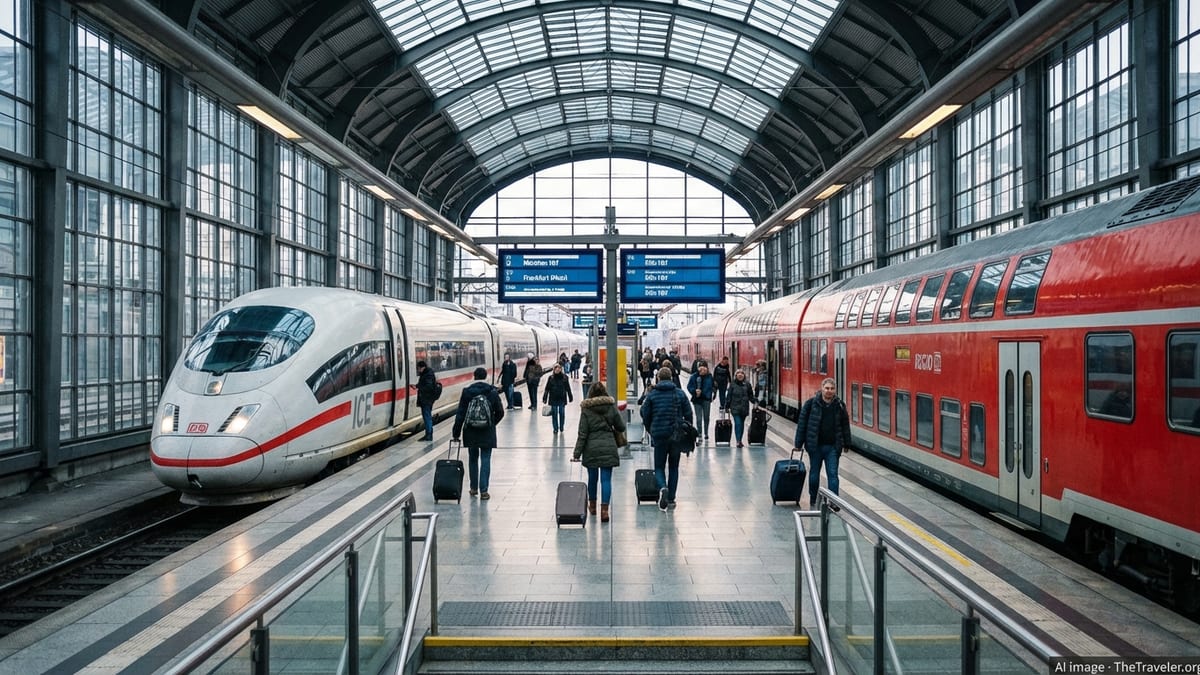
Understanding Germany’s Train Network
Germany’s rail system is anchored by Deutsche Bahn, the national operator, and complemented by a growing number of private and regional companies. Services range from high-speed InterCity Express trains between major hubs to slower regional and suburban lines that reach into smaller towns and rural areas. For travelers, this means most destinations of interest can be reached entirely by train, often without needing a car.
Long-distance services are typically branded as ICE, IC, or EC. ICE trains are the flagship high-speed services that run at up to around 300 kilometers per hour on core routes such as Berlin to Munich or Frankfurt to Cologne. IC and EC trains are slightly slower but still comfortable, connecting cities that may not be on the dedicated high-speed lines. On the regional level, you will see abbreviations like RE and RB, along with S-Bahn services in larger metropolitan areas, all of which are crucial for local exploration and for reaching smaller destinations.
Timetables are largely integrated, allowing relatively smooth transfers between long-distance and regional services. In practice, that means you can buy a single ticket that covers a journey from a major city to a small town, even if it involves several train changes. Real-time updates are widely available via the main national journey planner apps and station departure boards. While delays do occur, particularly on busy high-speed corridors, the system is designed so that missed connections on through tickets can usually be rebooked without extra cost.
For visitors familiar with other European systems, Germany’s mix of national and regional providers can look complicated, but the key point is that the national journey planner still covers almost all operators. You can usually search once for the entire route and see options across different train types and companies. This integrated planning is one of the main strengths of the German network and makes independent travel much easier than it might first appear.
Key Routes and Classic Rail Journeys
Many travelers start with Germany’s core high-speed axes, which link the country’s main cultural and economic centers. The Berlin to Munich route, upgraded in recent years, now takes as little as about four hours on the fastest ICE trains, offering a comfortable alternative to short-haul flights. Frankfurt, with one of Europe’s largest airports, is a major rail hub, linking to Cologne, Stuttgart, Nuremberg, and Hamburg with frequent direct services that run throughout the day.
Another popular line is the Rhine corridor between Cologne and Mainz, where regional trains and some long-distance services run along the river past castles, vineyards, and steep valley slopes. This stretch is often considered one of Germany’s most scenic mainstream routes, and regional trains allow you to hop on and off in smaller wine towns while still benefiting from frequent service. Farther south, the connections into the Black Forest and the lake regions around Lake Constance reveal a different Germany of dense forests and Alpine panoramas, accessible mainly with regional trains rather than high-speed services.
Urban travelers will find that city pairs like Hamburg to Berlin, Cologne to Berlin, and Munich to Stuttgart are all well served by ICE and IC trains. Travel times are competitive with flying once you factor in airport transfers and security checks. These routes are particularly suited to advance-purchase saver fares, which can bring the cost down significantly if you are willing to commit to a specific departure.
Cross-border connections are another strength of the German rail network. High-speed and intercity trains link major German cities to neighboring countries including France, the Netherlands, Switzerland, Austria, Denmark, Poland, and the Czech Republic. Some of these trains, particularly in summer, require compulsory seat reservations and can be very busy, so it is wise to check reservation requirements well in advance if your itinerary includes international segments.
Ticket Types: Flex, Saver, and Passes
Deutsche Bahn’s main long-distance tickets can be grouped into flexible fares and advance-purchase saver products. Flexible tickets cost more but allow you to travel on any train within a given route and date, which is useful if you value spontaneity or need to keep plans open. Advance-purchase saver fares, often marketed under names such as saver or super saver, are significantly cheaper but tied to specific train departures and come with restrictions on changes and refunds.
On top of these national fares, Germany has a wide range of regional day tickets and state-based offers. Many federal states sell a one-day pass that covers unlimited regional travel within that state and sometimes neighboring ones, often with options for individuals, groups, or off-peak travel. These passes can represent excellent value if you plan to spend a full day exploring by regional trains, especially outside the major high-speed corridors.
Since 2023, the Deutschlandticket has become an important part of Germany’s fare landscape. This monthly pass allows unlimited travel on local and regional public transport across the country, including most regional trains, trams, metros, and buses. It is sold as a subscription product, and its price has risen from the original 49 euros to a higher monthly fee as of 2025, with further increases already decided for the coming years. The ticket does not cover high-speed long-distance trains such as ICE, IC, or EC, but for travelers who plan extensive regional travel or longer stays, it can still be a cost-effective backbone for local journeys.
International visitors sometimes consider rail passes that cover multiple European countries. In Germany, these passes are usually valid on most long-distance and regional trains operated by national and participating railways, but you may still need to pay separate seat reservation fees for certain trains or routes. Before buying, it is worth comparing the pass cost with a realistic list of journeys, especially when factoring in regional day tickets and the Deutschlandticket, which may be cheaper for slower-paced itineraries based around one or two regions.
How and Where to Buy Tickets
Tickets for German trains can be purchased through several channels, each with advantages depending on your preferences. The main national website and official mobile apps allow you to plan journeys, compare different train combinations, and purchase digital tickets that are stored on your phone. For many travelers, especially those comfortable with booking in advance, this is the most convenient approach. The interface typically offers clear filters for direct routes, regional-only options, and long-distance services.
If you prefer to buy tickets in person, most medium and large stations have staffed ticket counters as well as machines that support multiple languages. Machines usually accept major credit and debit cards as well as cash, and they issue both long-distance and regional tickets, including many of the popular regional day passes. However, some promotional offers and very cheap advance fares are only available online or in the app, so you may not always see the absolute lowest prices at a counter or machine.
For the Deutschlandticket and many regional flat-fare products, sales are increasingly digital and subscription-based. The Deutschlandticket is typically available as a monthly digital ticket tied to a specific person, with automatic renewal unless canceled before the deadline set by the issuing operator. Regional transport authorities sometimes offer their own apps and online shops for local passes, occasionally with small discounts for digital purchases compared with paper products.
International travelers should be aware that some cross-border tickets are best purchased using the website or app of the operator most associated with that route, especially where different national systems overlap. While the German national journey planner can usually show timetables and even sell many international tickets, it is not always the sole or cheapest option. Nevertheless, for journeys primarily within Germany, using the national channels remains the most straightforward solution.
Seat Reservations and Traveling Comfortably
On most domestic long-distance trains in Germany, seat reservations are optional rather than mandatory. You can buy a ticket, board any train indicated on that ticket, and sit in any seat that is not marked as reserved on the small electronic or paper displays above each seat. However, optional does not mean unnecessary. On busy days and popular routes, trains can become very crowded, and a seat reservation can make the difference between a comfortable ride and standing in the corridor for several hours.
Seat reservations on long-distance trains are sold for a modest extra fee per journey segment, with slightly higher prices in first class than in second. You can usually book them at the same time as your ticket, either online, in the app, at ticket machines, or at staffed counters. In first class, flexible tickets often include a seat reservation at no additional cost, reflecting the higher base fare. For families, there are special reservation options that cover several seats together at a discounted combined price, making it easier to sit as a group.
There are important exceptions where reservations are compulsory. Certain international ICE and IC trains, including routes to France and some seasonal services to neighboring countries, require a reservation, which is typically included in the ticket price. In high summer periods, some cross-border routes introduce temporary reservation requirements because of heavy demand. If a train is marked as requiring a reservation, you cannot simply board with a flexible ticket and hope to find a place; you must have a proper booking for that specific service.
For regional trains, reservations are generally not available at all, and seating is entirely first come, first served. These trains can fill up during rush hours, on popular tourist lines, or when there are disruptions on the network. When possible, avoid traveling with heavy luggage during commuter peaks in big cities, and consider slightly earlier or later departures to enjoy a more relaxed journey. Choosing off-peak times is one of the simplest ways to make your train trips in Germany more pleasant.
Insider Tips for Smooth Train Travel
One of the most effective strategies for enjoyable train travel in Germany is to plan around the busiest times. Friday afternoons, Sunday evenings, and the start and end of school holidays see particularly heavy use on the main long-distance corridors. If you have flexibility, traveling midweek or earlier in the day often means quieter trains, better chances of finding unreserved seats, and sometimes cheaper saver fares.
On high-speed ICE trains, consider where you board in relation to the platform layout. Cars at the very front or rear of the train are sometimes less crowded than those near the middle, which are closest to station escalators and exits. Station departure boards usually show a simple diagram indicating where different train sections will stop along the platform. Arriving a few minutes early and lining up at the right area can help you board quickly and settle in before the crowds arrive.
Another insider tactic is to look closely at journey suggestions in the national planner and compare long-distance options with regional-only routes. For shorter distances or when using a Deutschlandticket or state pass, a slightly slower regional connection may be almost as fast door to door, especially if it avoids long transfers at busy hubs. These regional routes can also be more scenic and less stressful, particularly for travelers not in a hurry.
Finally, keep an eye on real-time information. Delay notifications, platform changes, and replacement services are communicated through station announcement systems, digital boards, and mobile apps. If a delay threatens a tight connection, speak to the staff on board your current train; they may be able to confirm alternative routes or note your situation, which can be helpful if you need to rebook or claim compensation under passenger rights rules. Staying informed and slightly flexible will make it much easier to cope with the occasional disruption.
Using the Deutschlandticket and Regional Offers
The Deutschlandticket has reshaped everyday travel in Germany by offering a single flat monthly price for most local and regional public transport across the country. It is marketed primarily to residents as a subscription, but visitors staying longer than a few weeks can sometimes benefit too. The ticket is valid on regional trains, S-Bahn services, trams, metros, and most buses run by participating operators. It is not valid on ICE, IC, EC, or equivalent long-distance trains, and it does not cover certain special private or tourist lines, which may charge their own fares.
As of 2025, the monthly price has risen from the original 49 euros to a higher amount, and an additional increase has already been agreed for the following year. Exact pricing and possible discounts vary slightly between regions and customer groups, with some cities and states offering reduced prices for students, trainees, or low-income passengers. This ongoing evolution reflects political debates over how to fund the ticket in the long term, and travelers should always check the current monthly cost and conditions shortly before purchase.
For short-term visitors, the logistics of subscribing to the Deutschlandticket can be a limiting factor. Many transport associations require a bank account or subscription setup that is easier for residents than for tourists. In these cases, regional day tickets and classic local passes may be more straightforward. For instance, state-wide day passes often allow groups to travel together on regional trains for a fixed price, making them ideal for friends or families exploring within one or two federal states.
When planning a trip that mixes regional and long-distance travel, treat the Deutschlandticket or state passes as a base layer that covers local segments, and then add separate long-distance tickets for the high-speed portions. This can be cost-effective if, for example, you are staying in a city for several days and taking day trips to nearby towns entirely by regional trains. Understanding where the boundary lies between regional and long-distance services is essential to avoid accidentally boarding trains that your pass does not cover.
The Takeaway
Train travel in Germany rewards travelers who combine a bit of advance research with on-the-ground flexibility. The network reaches almost everywhere you are likely to want to go, from world-famous cities to small riverside villages, and offers a mix of rapid high-speed trains and slower scenic routes. Learning the basics of the different train types, key routes, and major stations makes it much easier to design an itinerary that fits your pace and interests.
On the ticketing side, the choice between flexible fares, advance saver tickets, regional day passes, and the Deutschlandticket can seem overwhelming at first, but each product has a clear use case. If you value spontaneity, flexible tickets and regional passes may suit you best. If you are planning specific long-distance journeys and are comfortable locking in dates and times, advance saver fares often provide the best value. For longer stays with heavy use of local and regional transport, the Deutschlandticket or local equivalents are worth close consideration, keeping in mind the latest prices and subscription rules.
Most importantly, approach Germany’s rail system with realistic expectations. Delays and crowded trains do occur, especially at peak times and on some busy high-speed lines, but the overall network remains one of Europe’s most capable and comprehensive. By reserving seats on key journeys, traveling off-peak when possible, and keeping an eye on real-time information, you can significantly improve your experience.
With a little preparation, train travel in Germany can become a highlight of your trip rather than just a way to get from place to place. Watching castle-studded valleys pass by from a Rhine-side window seat, stepping off a high-speed train directly into the center of a historic city, or hopping between small towns on a regional line all become part of the journey. Understanding the system’s structure, tickets, and unwritten rules gives you the confidence to enjoy it fully.
FAQ
Q1. Do I need to reserve a seat on German trains?
On most domestic long-distance trains, seat reservations are optional but highly recommended on busy routes and peak days. Regional trains generally do not offer reservations, and seating is first come, first served.
Q2. Is the Deutschlandticket useful for short-term tourists?
The Deutschlandticket can be useful if you stay at least a full calendar month and travel extensively by regional trains and local transport, but it is sold as a subscription and may be harder for short-stay visitors to obtain than standard tickets or regional day passes.
Q3. Can I use the Deutschlandticket on ICE or IC trains?
No. The Deutschlandticket is valid on local and regional public transport, including most regional trains, but it does not cover long-distance services such as ICE, IC, or EC trains.
Q4. How far in advance should I book long-distance tickets?
Advance-purchase saver fares typically appear several months before departure. Booking a few weeks ahead often secures better prices, especially on popular routes and weekends, but very cheap fares may sell out early.
Q5. What is the difference between ICE, IC, and regional trains?
ICE trains are high-speed services linking major cities with the fastest travel times. IC and EC trains are intercity services that are slightly slower but still comfortable. Regional trains, labeled RE or RB and similar, stop more often and serve smaller towns.
Q6. Are German trains usually on time?
Punctuality varies by route and time of day. Many trains run close to schedule, but delays are not uncommon on busy corridors. Allow a buffer for important connections and monitor real-time updates in apps and at stations.
Q7. Can I bring luggage and bikes on German trains?
Luggage is generally unrestricted as long as you can carry it yourself and store it without blocking aisles. Bicycles are allowed on many trains, often with a separate bike ticket and sometimes a reservation on long-distance services, subject to space and local rules.
Q8. How do compensation and passenger rights work?
If your long-distance train is significantly delayed or canceled, you may be entitled to partial refunds or compensation under passenger rights regulations. Claims are usually submitted through official forms or online portals, using your ticket and delay details as evidence.
Q9. Is it cheaper to buy tickets online or at the station?
Many of the lowest advance fares and promotional offers are sold online or via apps. Station counters and machines provide the same base fares and most regional tickets, but they may not always show the very cheapest limited-availability deals.
Q10. Are there quiet zones or family areas on German trains?
Many ICE and IC trains designate specific coaches or sections as quiet zones, where phone calls and loud conversations are discouraged, as well as family areas near play spaces or stroller storage. These can be selected when reserving seats, subject to availability.