

Train travel in India is one of the most atmospheric and practical ways to cross a vast country, but the booking process can feel intimidating to first timers. Between multiple travel classes, complex quotas and fast selling tickets, a little knowledge goes a long way. This guide walks you through IRCTC booking, explains the main Indian Railways classes and shares current ticket strategies so you can plan your journey with confidence.
Understanding IRCTC and the Indian Railways System
Indian Railways runs one of the world’s largest rail networks, carrying millions of passengers daily across everything from overnight cross country expresses to short suburban hops. Online bookings for long distance trains are handled primarily through IRCTC, the Indian Railway Catering and Tourism Corporation, which operates the official reservation website and mobile app. Whether you are in India or planning a trip from abroad, IRCTC is the starting point for most reserved tickets.
IRCTC allows you to search trains by origin, destination and date, view real time availability by class, and book electronic tickets that can be shown on your phone. In recent years the system has been upgraded to handle very high booking volumes per minute, improving reliability at peak times. Alongside IRCTC, tickets can also be purchased at physical reservation counters at major stations, but these typically require long waits and are less convenient for visitors.
Bookings open a set number of days before travel, known as the advance reservation period. For most long distance trains this is several months, while certain special or seasonal services may have shorter windows. Popular routes and holidays can sell out within hours of booking opening, which is why understanding when and how to use IRCTC effectively is central to planning a stress free trip.
IRCTC registration is free, but all users must provide a working mobile number and email address, and domestic users are encouraged to link their profile with national ID for smoother authentication. Recent changes have also made digital verification more prominent for morning booking peaks and certain quotas, so it is wise to complete your profile details well before you actually need to buy tickets.
How to Book Train Tickets on IRCTC Today
Booking through IRCTC follows a broadly similar flow whether you use the website or the official Rail Connect app. After registering and logging in, you start by choosing your origin and destination stations, date of journey and preferred class. The search results page shows a list of trains for that route with departure and arrival times, travel duration, and a class wise snapshot of availability such as “Available,” “WL” for waitlist or “RAC” for reservation against cancellation.
Once you select a train and class, IRCTC prompts you to enter passenger details including full name, age, gender and a valid ID type and number for at least one traveler. You can book up to a limited number of passengers per ticket and a limited number of tickets per month from a single account, with a higher monthly allowance if your profile is Aadhaar authenticated. You can also indicate berth preferences such as lower or upper, though these are not guaranteed and are subject to availability at the time of chart preparation.
Payment is handled via multiple options including domestic cards, net banking, unified payments interfaces, select wallets and IRCTC’s own preloaded wallet that can speed up checkout during competitive booking windows. After successful payment, your e ticket is generated with a unique PNR number. You do not need a printed copy for travel; a digital ticket and valid ID are sufficient on most trains, which is especially convenient for international visitors who may book on the move.
It is important to pay attention to booking timings. Regular advance booking for most classes typically opens in the morning, while last minute Tatkal and Premium Tatkal quotas open closer to the date of travel, also in the morning. These windows can be extremely competitive on busy routes, and a stable internet connection plus prefilled passenger details significantly increase your chances of success.
Decoding Indian Train Classes: From Sleeper to Executive AC
Indian Railways offers a wide spectrum of travel classes, which can be confusing until you understand the basic structure. At the top end is First AC, often labeled 1A, which provides lockable two or four berth cabins with bedding, air conditioning and the most privacy on overnight trains. Fares are comparatively high and this class is typically found only on important long distance services.
Second AC, or 2A, offers air conditioned open bays with two tiers of berths on either side of the aisle, along with bedding and curtains for some privacy. Third AC, or 3A, is similar but has three tiers of berths, which means more people per bay and generally more affordable fares. In some trains you may also see 3E or economy AC three tier, which is a slightly denser configuration at a lower price point than standard 3A.
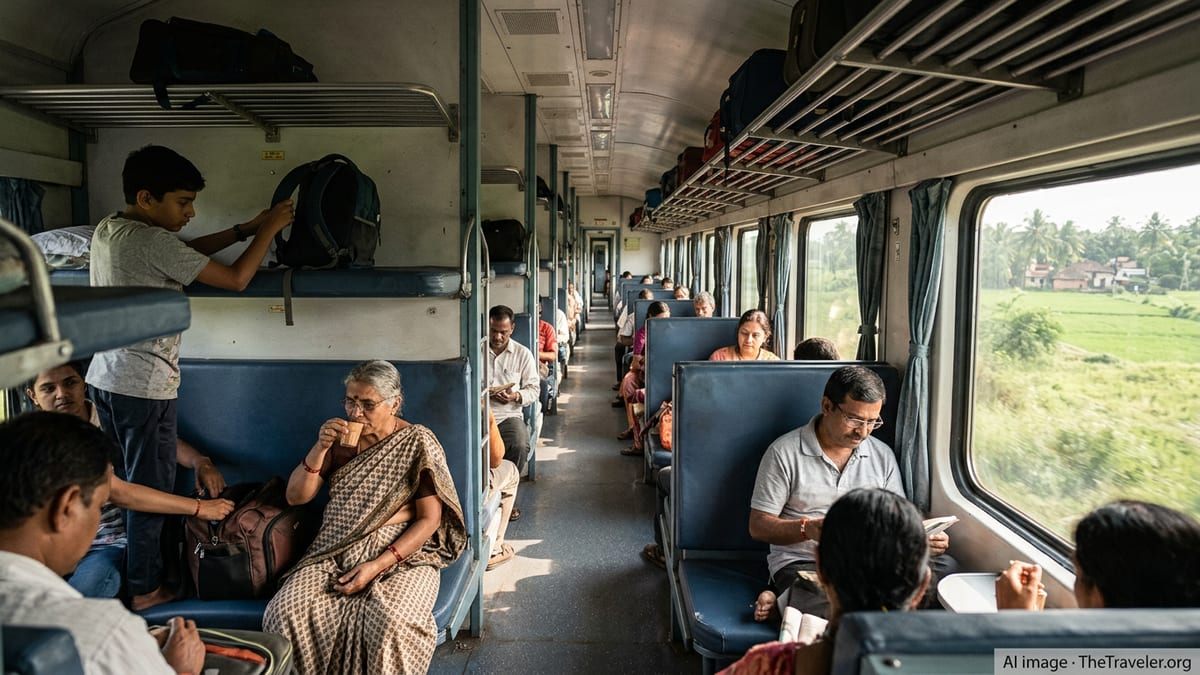
Below the air conditioned sleeping classes is Sleeper Class, labeled SL, which mirrors the three tier layout of 3A but without air conditioning. Windows can usually be opened and you will need to bring your own bedding if desired. Sleeper Class offers a very local experience and is one of the most widely used classes within India. For seated journeys, especially day trains, you will find Second Sitting, or 2S, which is a basic non AC reserved seat, and AC Chair Car, or CC, which provides air conditioned reclining seats in a two by three arrangement.
Premium day time trains on major routes may also feature Executive Chair Car, or EC, with more spacious two by two seating, included meals on some services, and business travel oriented comfort. Not all trains carry every class; many short distance trains may offer only Second Sitting or Sleeper, while premier Rajdhani, Shatabdi and newer generation services prioritize air conditioned classes. When planning your route, always check which classes are actually available on the specific train you hope to book.
Quotas, Waitlists and Current Booking Rules
One of the most distinctive features of Indian Railways reservations is the use of quotas, which allocate portions of a coach’s berths to specific passenger categories or boarding stations. Common quotas include a general quota for most passengers, a foreign tourist or special tourist quota on some trains, a ladies quota, defense and railway staff quotas, and lower berth or senior citizen quotas. When you search on IRCTC you can often select a specific quota if you are eligible, which can improve your chance of getting a confirmed berth.
Waitlisting is another key concept. When all general quota seats in a class are sold, IRCTC continues to issue waitlisted tickets up to a defined limit that Indian Railways recently tied more closely to the capacity of each coach. You will see codes like WL followed by a number. As other passengers cancel, your position may move up and could eventually confirm. Reservation against cancellation, or RAC, is a halfway status in which you are guaranteed to board but may initially share a berth that later converts into a full berth if enough cancellations occur before charting.
Over the last couple of years, Indian Railways has tightened certain booking rules to reduce uncertainty and curb misuse of the system. This includes capping the number of waitlist tickets issued in each class to a percentage of total capacity and making Aadhaar based authentication more central for high demand booking windows and for users who want to book an extended number of tickets each month. These changes are especially relevant for travelers relying on last minute plans, since fewer people will be allowed to board with only waitlisted tickets.
For many journeys, especially during busy seasons, it is now wise to avoid relying purely on remote waitlist tickets. Instead, consider alternative dates or trains, use different quotas for which you qualify and monitor the PNR status regularly. IRCTC and various travel apps show near real time movement of your waitlist number, which can help you decide whether to keep the ticket, look for an alternative or switch to Tatkal if that option opens.
Inside Tatkal and Premium Tatkal: Last Minute Options
The Tatkal scheme is India’s dedicated last minute booking quota on many trains, designed for passengers who need to travel on short notice. Tatkal booking typically opens one day before the date of journey for that train’s boarding station, with separate opening times for AC and non AC classes. When you search on IRCTC close to your travel date, you can select the Tatkal option and see fares and availability specifically from that quota.
Tatkal tickets cost more than regular tickets of the same class because they include an additional charge, and they sell out extremely quickly on popular routes. Bookings open in a narrow morning window when thousands of users log in simultaneously, leading to intense competition. To improve your chances, prepare passenger details in your IRCTC profile in advance, ensure your payment method is reliable, and log in a few minutes before the window opens so you can move through the steps without delay.
Premium Tatkal is a dynamic fare version of the same concept available on selected trains and classes. Instead of a fixed additional charge, fares under Premium Tatkal rise with demand in a way similar to airline pricing. Availability can disappear within minutes on high demand days and fares can be significantly higher than standard Tatkal. For some travelers, however, the flexibility is worth the price, especially when alternatives involve complex multi leg journeys.
Recent policy tweaks around Tatkal bookings have focused on tightening identity verification and limiting agents during the critical first half hour of booking. Aadhaar based authentication is increasingly important for users who want to access the full range of Tatkal facilities online. If you are traveling as a foreign visitor without Aadhaar, you can still book Tatkal tickets where available, but you may find that competition is stiff and that planning slightly earlier with regular quotas offers a much smoother experience.
Practical Tips for Choosing the Right Class and Seat
Selecting the right class is a balance between comfort, budget and the kind of travel experience you want. For long overnight journeys during hotter months, most travelers find AC classes such as 3A or 2A a comfortable compromise, providing cooler interiors, closed windows and included bedding. If you are on a tighter budget and prefer a more local experience, Sleeper Class can work well outside the hottest weeks, provided you are comfortable with crowds and simpler facilities.
For day journeys under six or seven hours, seated classes are usually more convenient. AC Chair Car is a good choice on major corridor trains, especially Shatabdi or similar fast services, where seats are typically more ergonomic and the atmosphere quieter than in non AC Second Sitting. On some premium daytime trains, Executive Chair Car is only marginally more expensive yet offers extra legroom and a more relaxed environment.
Berth and seat preferences on IRCTC can influence your comfort but are never fully guaranteed. Lower berths are generally preferred by older passengers and families with small children. In many trains, specific lower berths are reserved under senior citizen and lower berth quotas, which you can select if eligible. Solo travelers might choose an upper berth for more privacy at night, while couples may prefer side berths in some layouts for easier access.
When choosing your class and seat, also think about station timings. On routes where trains arrive or depart very late at night or very early in the morning, having a confirmed lower berth can make it easier to sleep without disturbing others. If your journey includes scenic stretches in daylight, a window seat in Chair Car or a lower berth in AC classes can give you unbroken views of the countryside as it rolls by.
Booking Strategies for Domestic and International Travelers
For domestic travelers based in India, the most reliable strategy is to create and verify your IRCTC account well before any major journey. Completing Aadhaar based authentication where available enables you to book a larger number of tickets per month and may smooth the process during peak booking times. Keeping your contact details up to date ensures that you receive important messages about schedule changes, coach composition and platform information.
International travelers face a few additional considerations. While IRCTC has periodically adjusted access for users abroad and payment processing for foreign cards, in practice many visitors successfully book tickets in advance using the website or official app. If you plan to rely heavily on trains for your trip, set up your IRCTC account early, test login from your home country and ensure your bank is aware of upcoming international transactions to prevent card declines during payment.
For both domestic and foreign passengers, combining IRCTC with local support can be useful. Authorised travel agents in India, hotel travel desks in major cities and sometimes station based tourist bureaus can help with complex itineraries or last minute adjustments, using either their own IRCTC logins or quota access. If you choose to use an agent, always confirm that you are receiving an official IRCTC ticket with a valid PNR, and keep a digital copy of the ticket on your device.
Another useful strategy is to remain flexible with dates, routes or classes. If your preferred overnight train in a particular class is full, check alternative trains leaving earlier or later the same day, consider splitting the journey with a change at a major junction, or move one class up or down if that greatly improves your chances of confirmation. The reservation system is complex but also offers many combinations, and a small adjustment can sometimes turn an impossible journey into a confirmed seat.
The Takeaway
Mastering train travel in India is less about memorising every rule and more about understanding the basic structure of IRCTC bookings, classes and quotas. Once you know how to read availability codes, what different classes really feel like and when key booking windows open, the system becomes much more predictable. You can then focus on enjoying the experience of rail travel itself, from chai at the door of your coach to sunrise over unfamiliar landscapes.
Plan ahead for popular routes and seasons, keep your IRCTC profile updated, and choose classes that match both your expectations and the climate at the time of travel. Use Tatkal and Premium Tatkal as backup options rather than your only plan, and be realistic about waitlisted tickets in the era of tighter capacity caps. With a thoughtful approach, India’s railways can become a highlight of your journey rather than a source of stress.
Most importantly, remember that millions of people navigate this system every day. Staff at major stations are accustomed to helping confused passengers, and fellow travelers are often generous with advice. Combine that human support with the practical tips in this guide, and you will be well placed to explore India by train, safely and comfortably.
FAQ
Q1. Do I really need an IRCTC account to book long distance train tickets in India?
Yes, for most reserved long distance trains an IRCTC account is effectively essential if you are booking online. Station reservation counters can issue tickets without an account, but for advance planning, managing multiple journeys and checking status digitally, an IRCTC login is the standard route for both domestic and international travelers.
Q2. How far in advance should I book my Indian train tickets?
On busy routes and during major holidays, it is wise to book as soon as the advance reservation window opens, which is typically several months before the date of journey on many long distance trains. For less popular sectors and midweek travel, you may find availability closer to the date, but betting on last minute tickets now carries more risk than in the past due to stricter waitlist limits.
Q3. Which class is best for overnight journeys for a first time visitor?
For most first time visitors, AC Three Tier or AC Two Tier strikes a good balance between cost, comfort and safety. Both classes are air conditioned and include bedding, while 2A offers more space and slightly more privacy than 3A. Travelers on a tighter budget who are comfortable with a more local experience sometimes choose Sleeper Class, especially in cooler months.
Q4. What is the difference between WL, RAC and CNF on my ticket status?
WL means waitlisted and does not guarantee you a berth or the right to board if it remains waitlisted at the time of chart preparation. RAC stands for reservation against cancellation and allows you to board with at least a shared seat or berth that may convert to a full berth if other passengers cancel. CNF or confirmed means you have an allocated seat or berth.
Q5. Are Tatkal tickets always available for every train and class?
No, Tatkal quotas apply only to selected trains and classes, and even where they exist, the number of Tatkal berths is limited. On popular routes they can sell out within minutes of booking opening. You should never assume that Tatkal will be available as a guaranteed backup; it is better to treat it as an additional chance if your regular booking is not possible.
Q6. Can foreign travelers use international credit cards on IRCTC?
IRCTC’s support for international cards has evolved over time, and acceptance can vary by bank and card type. Many foreign travelers do succeed in paying with major card brands, but occasional declines or extra verification steps are common. It helps to inform your bank in advance about upcoming online transactions in India and to have an alternative payment method where possible.
Q7. Is it safe to travel in Sleeper Class as a solo traveler?
Sleeper Class is widely used by Indian families, students and workers, and many solo travelers use it without incident. However, it is more crowded and less controlled than AC classes. If you are traveling alone, especially overnight, keep valuables locked and within reach, use basic common sense precautions and consider an AC class if you value a quieter and more controlled environment.
Q8. What happens if my ticket is still waitlisted after the chart is prepared?
If your ticket remains in a pure waitlist status after the final reservation chart is prepared, you are generally not entitled to board the reserved coach. In that situation, you should look for alternative options such as a different train, another class with availability or same day Tatkal if offered. Always check your PNR status a few hours before departure so you know your final position.
Q9. Do I need to carry a printed copy of my e ticket?
No, a printed copy is no longer mandatory for most e tickets. You can show the digital ticket on your phone or other device along with an acceptable photo ID in the name of at least one passenger on the ticket. That said, some travelers still prefer to keep a paper copy as a backup in case of phone battery or connectivity issues.
Q10. Are meals included in the ticket price on Indian trains?
Meals are not automatically included on all trains. On certain premium services such as some Rajdhani and Shatabdi trains, catering may be built into the fare, particularly in AC and Executive classes. On many other trains you can pre order meals through IRCTC or purchase food from onboard vendors and station stalls along the route, so it is worth checking what applies to your specific train and class when you book.