

Train travel in the Netherlands is fast, frequent, and increasingly cashless. For visitors and residents alike, the shift from the familiar OV chipkaart to the new OVpay and OV pas systems is changing how people buy NS tickets, use rail passes, and tap in and out with a bank card or phone. Understanding how these payment options work together will help you move confidently across the country’s dense rail network, from Amsterdam and Rotterdam to small village stations.
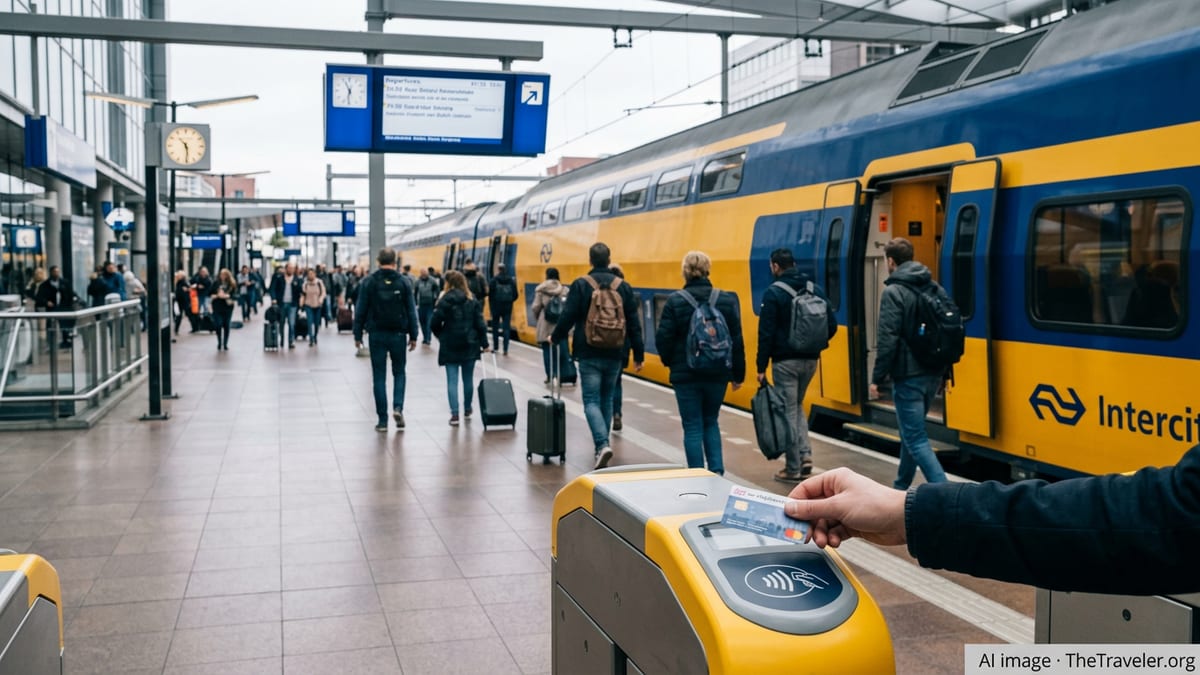
How the Dutch Rail System Works Today
The Netherlands has one of Europe’s densest rail networks, with Nederlandse Spoorwegen, usually shortened to NS, operating most intercity and regional trains. Trains link virtually every part of the country, usually with at least two departures per hour on main routes and more frequent services on busy corridors between major cities. Services are largely all second class and first class, with no seat reservations needed inside the country for standard domestic trips.
Most stations have automatic gates or platform validators that require you to check in at the start of your journey and check out at the end. The fare is normally distance based and calculated between the station where you checked in and the one where you checked out, with off peak discounts available through certain passes and subscriptions. The same station infrastructure is now used for multiple payment methods, including contactless bank cards, single use paper smart tickets, and various pass products.
Behind the scenes, the Dutch are in a multi year transition. The long running OV chipkaart smartcard is gradually being phased out in favor of a new OV pas and an account based contactless system known as OVpay. For travelers this means there are more options than ever to pay for trains, but it also means you should understand which system you are using on any given journey.
Domestic train travel is fully integrated into the wider Dutch public transport network, which includes buses, trams, and metros. Most of the same payment methods you use on NS trains will also work on local transport, though specials like international trains or night trains often have separate ticketing rules.
NS Tickets and Rail Passes for Visitors
For short stays, the simplest option is often a regular NS ticket. You can buy these as one way or day return tickets from NS ticket machines at stations, from staffed counters at larger stations, or through the NS app. These tickets are usually issued as disposable smartcards or digital barcodes and are valid only for the specific date and route printed on them. They are checked at the gates and occasionally on board by conductors.
Alongside standard tickets, NS and partner operators sell a handful of day passes that can be attractive for heavy travel days. One of the best known is the Holland Travel Ticket, which offers a full day of unlimited second class travel on trains plus most buses, trams, and metros across the country. A peak and off peak version exist, with the off peak option excluding weekday morning rush hours. These products are generally aimed at tourists and conference visitors who want simplicity more than the absolute lowest price on each route.
International rail passes such as Interrail and Eurail also cover many NS trains. Passholders generally do not need seat reservations for domestic trains and can just board, but they must still pass the station gates. In many cases, NS provides special barcode readers or manual gate lanes that allow passholders with digital or paper passes to enter. It is important for pass users to ensure they are entering through the right gates and not accidentally triggering contactless payment with a bank card at the same time.
Some visitors also take advantage of promotional tickets sold through Dutch retailers or special offers from NS itself. These are typically digital day tickets or off peak tickets valid on specific days or outside the busiest periods. While they can be excellent value, they usually come with conditions around time of day, train type, and refund rules, so always read the small print before travelling.
NS Flex, Subscriptions, and Frequent Traveler Options
For people staying longer in the Netherlands or commuting regularly, NS subscriptions can significantly reduce the cost of travel. NS Flex is one of the most widely used frameworks. Rather than loading credit onto a card and paying immediately per trip, NS Flex lets you travel throughout the month and then settles your trips through a monthly invoice, often combined with a discount formula such as 40 percent off off peak fares.
There are several flavors of NS Flex, from basic variants that simply allow post paid travel, to more comprehensive options that include generous off peak discounts, weekend travel benefits, or first class upgrades. Subscriptions are normally tied to a personal travel card, historically the personal OV chipkaart and in future the new OV pas. They are particularly popular with commuters who travel at consistent times or who make frequent off peak trips that benefit from the discount rules.
Separate from NS Flex, NS also offers traditional season tickets between two stations, monthly or annual passes, and combined products that integrate bike rental through the OV fiets system. While these products are gradually being reconfigured to fit into the newer OVpay and OV pas landscape, the underlying idea remains the same: pay a fixed amount to reduce or eliminate the cost of day to day trips on a specific route or in a specific period.
For international visitors planning a long stay, it can sometimes be worth running the numbers. If you are commuting daily for study or work, a discount subscription such as an off peak product linked to a personal card can quickly pay for itself. If your travel is scattered and irregular, sticking to standard tickets or contactless pay as you go is usually simpler and more flexible.
From OV Chipkaart to OV Pas and OVpay
For nearly two decades, the OV chipkaart has been at the center of Dutch public transport. This contactless plastic card, available in anonymous and personal versions, allowed travelers to load balance, add season tickets, and check in and out seamlessly on trains, trams, buses, and metros nationwide. However, the technology behind the card is aging, and transport authorities have been working on its replacement.
The successor is an account based system branded OVpay, which allows you to travel using a contactless debit or credit card or an OV pas, a new transport pass that works as a front end to an online account. The goal is that all major forms of public transport in the Netherlands can be accessed through the same taps at gates and validators, using whichever contactless card or device suits you. The transition is already well underway, and the legacy OV chipkaart is expected to be fully phased out around the end of 2027.
The OV pas functions similarly to a traditional smartcard from a passenger perspective, but more of the administration lives online. Instead of topping up at ticket machines, you manage your balance and any discount products through an account portal. You can also block the card online if it is lost or stolen and sometimes move products from one card to another without visiting a sales counter. For many locals this makes long term use of the system more convenient.
During the transition period, all three systems coexist: OV chipkaart, OV pas, and direct OVpay with a bank card. For travelers, that means you should decide which one you want to rely on, then stick to it consistently to avoid duplicate charges or confusion at the gates. NS continues to support the older cards for now but increasingly directs new customers to the more flexible, account based options.
How OVpay Contactless Travel Works on Trains
OVpay is the branding for contactless pay as you go travel across Dutch public transport. On trains, it allows you to simply hold a suitable debit card, credit card, or a device with a mobile wallet near the gate or validator to check in. At your destination, you tap the same card or device again to check out. Your day’s travel is then bundled and charged through your bank or card provider, usually as a single debit per day rather than a separate payment per train.
From the traveler’s vantage point, the experience is remarkably similar to tapping with a traditional transport smartcard. You will hear a beep and see a confirmation on the screen indicating that you have successfully checked in or out. What differs is that you do not load travel credit in advance. Instead, OVpay calculates the fare and settles it after the fact, using your underlying bank account or card balance.
Contactless travel with OVpay works for standard full fare travel in second class, and on many operators it now also supports first class fares and age based discounts if configured correctly. However, most complex subscriptions and railcards, such as heavy commuter passes, are still linked to transport specific cards like the current OV chipkaart or the emerging OV pas. As the system matures, more subscriptions are expected to migrate into OVpay, but travelers should currently assume that OVpay is best for straightforward pay as you go use.
To view your trip history and charges with OVpay, you can create an online account and link your bank card or credit card. This allows you to see which trips were recorded on which days, useful for expense claims or checking unexpected charges. Importantly, transport operators and NS emphasize that conductors can only see the travel entitlement linked to the card when scanning it on board, not your bank balance or personal financial details.
Practical Tips for Using Contactless and NS Tickets
For a smooth experience with NS and OVpay, it helps to develop a few habits. First, always separate the card or device you intend to use at the gate. If you hold a wallet containing multiple cards or a phone with a digital wallet plus a physical card behind it, the gate may read the wrong card. This can lead to unexpected charges or incomplete journeys that you then have to correct later through customer service.
Second, treat the check out as seriously as the check in. With contactless travel it is easy to step off the train and head straight for the exit, especially when following a crowd at busy stations. Failing to check out usually results in a default fare for an incomplete journey, which is significantly more expensive than the trip would normally cost. NS and OVpay both provide channels for reclaiming money after a missed check out, but the process takes time and is subject to conditions such as filing within a fixed number of days.
Third, when travelling with international e tickets or rail passes on your phone, be mindful of how NFC behaves on your device. Some travelers prefer to temporarily disable NFC to ensure that the gate scanner only reads the QR code of their pre purchased ticket and not a bank card stored in their mobile wallet. NS gates often have separate lanes for barcode tickets, but the proximity of other readers can occasionally confuse devices if multiple technologies are active at once.
Finally, keep an eye on your travel days if you rely heavily on day passes or promotional tickets. Many of these require travel to begin after a certain off peak time or exclude the early morning rush on weekdays. NS staff are used to dealing with visitors and will usually explain if you are boarding a train outside your ticket’s validity, but they are also entitled to issue fines if you travel without a valid ticket during restricted periods.
Comparing Options: When to Use OVpay, OV Pas, or Traditional Tickets
For many visitors, OVpay with a contactless bank card is now the most straightforward way to ride NS trains. You land in the Netherlands, ensure your card supports contactless payments with foreign transactions, then simply tap in and out on each journey. There is no need to queue for machines or understand local tariff systems in detail. You pay the standard full fare, which is usually acceptable for light to moderate rail use during a short holiday.
If you plan a series of intensive travel days, particularly if you want to combine trains with trams and buses in multiple cities, day passes such as the Holland Travel Ticket and other regional passes begin to make sense. While they require an upfront purchase and careful reading of validity rules, they shield you from the mental calculation of individual fares and allow more spontaneous hopping on and off trains. For families and small groups, the convenience can be worth as much as the potential savings.
Longer term residents and regular commuters are still best served by subscriptions tied to a personal transport card, currently the OV chipkaart and increasingly the OV pas. These allow structured discounts, off peak benefits, or route based seasons that significantly reduce monthly costs compared with paying standard fares through OVpay or single tickets. Many employers in the Netherlands also reimburse or directly provide such passes to staff as part of mobility packages.
There is no single correct choice. The right solution depends on how long you are staying, how intensively you will use the trains, and how much effort you want to invest in optimizing your travel budget. The trend, however, is clearly toward flexible, account based ticketing, where your underlying identifier can be a bank card, a phone, or a transport specific pass that all speak the same language at the gates.
The Takeaway
Train travel in the Netherlands is in a period of visible change, but for passengers it remains one of the fastest and most comfortable ways to cross the country. NS continues to run frequent services between cities and towns, while the ticketing layer gradually shifts from stored value smartcards to OVpay and the OV pas. Understanding this shift will help you avoid confusion at the gates and choose the payment method that matches your travel style.
Visitors on short trips can rely on standard NS tickets or simply tap in and out with a contactless bank card, accepting the default full fare as the price of simplicity. Those on longer stays, frequent commuters, or students will usually benefit from more structured products like NS Flex, season tickets, or subscriptions linked to a personal transport card. Across all these options, the principles of checking in and out correctly and using one card consistently remain the most important habits.
As the OV chipkaart fades from everyday use and the OV pas and OVpay grow, paying for trains in the Netherlands should become more intuitive and more aligned with how people already use bank cards and phones in shops. With a bit of preparation before you arrive and a clear sense of which system you want to use, you can step onto any NS platform with confidence, knowing that the technology in your pocket is ready to take you wherever the rails run.
FAQ
Q1. Can I use my foreign bank card to pay for NS trains with OVpay?
Yes, many contactless debit and credit cards from abroad work with OVpay, but acceptance can vary by issuer, so you should check that your card allows contactless payments and foreign transactions.
Q2. Do I still need an OV chipkaart to travel by train in the Netherlands?
No, you can already travel using contactless bank cards, disposable tickets, and in some cases the new OV pas, but the OV chipkaart is still accepted during the transition period and required for certain subscriptions.
Q3. What happens if I forget to check out when using OVpay?
If you forget to check out, the system usually charges a default fare that is higher than the normal price; you can later request a correction through OVpay or NS within a set time window.
Q4. Is OVpay cheaper than buying a regular NS ticket?
For standard full fare journeys, OVpay generally charges a similar price to regular NS tickets, but it does not automatically include special discounts or promotions that might be available with specific passes or subscriptions.
Q5. When will the OV chipkaart stop working completely?
Current plans indicate that the OV chipkaart will be phased out around the end of 2027, with functionality gradually moving to OVpay and the OV pas before that date.
Q6. Can I use NS Flex with a contactless bank card instead of a transport card?
At present, most NS Flex products are linked to personal transport cards such as the OV chipkaart and, in future, the OV pas; OVpay with a bank card is mainly used for standard pay as you go travel.
Q7. Do I need to check in and out if I have an Interrail or Eurail pass?
With Interrail or Eurail, you usually show your pass for inspection and then use special gates or manual access at stations; on routes where you must pass gates, you should follow NS instructions to avoid accidentally triggering contactless payment.
Q8. Is it safe to pay for trains using my phone or smartwatch?
Yes, mobile wallets and wearables use the same secure technologies as contactless bank cards, and inspectors can only see your travel entitlement, not your full banking details.
Q9. How can I see what I was charged when travelling with OVpay?
You can create an online OVpay account, link your bank or credit card, and then view a digital overview of your trips and the amounts charged for each travel day.
Q10. Which option is best for a weeklong visit using trains every day?
For a week of intensive rail travel, you may wish to compare the total cost of pay as you go via OVpay with the price and convenience of day passes or regional tickets that include unlimited travel, choosing the one that fits your planned itinerary and budget.