

More news on this day
Senegalese carrier Transair is preparing to restart scheduled operations from Dakar on 12 March after a nine-month suspension that has tested the resilience of West Africa’s already fragile regional air network.
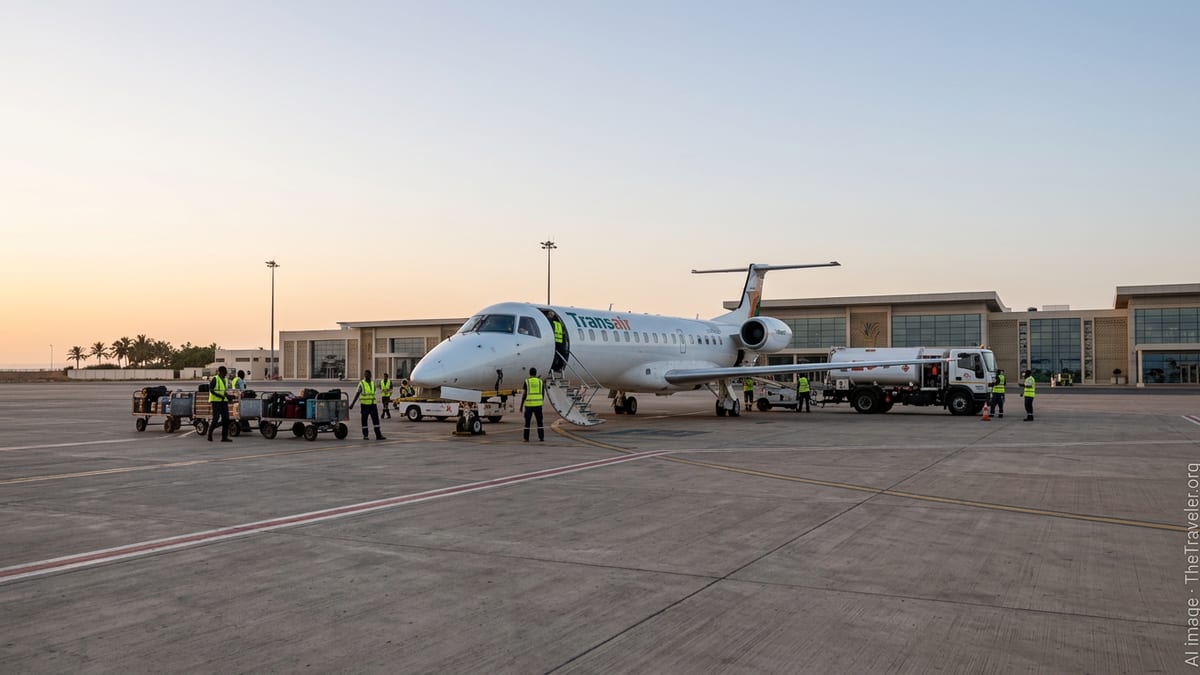
Regional Carrier Returns After Prolonged Grounding
Transair confirmed it will resume commercial flights on 12 March, restoring a network that was abruptly interrupted nine months ago when the private carrier halted operations amid regulatory and operational headwinds. The relaunch marks a significant moment for Senegal’s aviation sector, where smaller airlines play an outsized role in linking secondary cities and neighboring countries that major international carriers often bypass.
Before the pause, Transair had carved out a niche as a regional connector from Dakar, serving destinations across West Africa and operating flights on behalf of other airlines, including wet-lease and charter work. The suspension left a noticeable gap in capacity from Blaise Diagne International Airport, particularly on short- and medium-haul routes that depend on smaller carriers to maintain frequency and affordability.
Industry observers in Dakar say the resumption will be closely watched by regulators, airport operators and business travelers, many of whom have faced higher fares and longer journey times during Transair’s absence. With international hubs such as Paris, Casablanca and Istanbul dominating long-haul flows, regional operators like Transair remain critical for the “last mile” connections that feed those intercontinental routes.
Safety Scrutiny and Operational Reboot
Transair’s nine-month hiatus followed a period of heightened safety scrutiny after a Boeing 737-300 operating on behalf of Air Senegal suffered a runway excursion during a rejected takeoff at Dakar in May 2024, injuring several occupants and damaging the aircraft. While Transair and Senegal’s civil aviation authority did not publicly link the subsequent suspension directly to that incident, the carrier’s return comes against a backdrop of tighter oversight and a renewed emphasis on safety culture in the country’s aviation sector.
Senegal has been working to strengthen its air safety regime, with the International Civil Aviation Organization noting an improvement in the state’s effective implementation score in 2025 compared with the previous year. Officials credit closer coordination between the civil aviation authority, the national airport operator and the Agency for the Safety of Air Navigation in Africa and Madagascar, better known by its French acronym ASECNA, which manages air traffic control across a large swathe of West and Central Africa.
According to people familiar with the relaunch, Transair has spent recent months revisiting procedures, training and maintenance planning, while working with regulators to demonstrate compliance with updated requirements. The airline is expected to restart with a more cautiously structured schedule, aligning aircraft utilization and crew rosters with the new safety and oversight framework that has been put in place during its absence.
Dakar’s Role in West African Connectivity
Dakar has steadily consolidated its status as a gateway for both francophone and lusophone West Africa, thanks in part to its location on the western tip of the continent and the opening of Blaise Diagne International Airport, which replaced the older Léopold Sédar Senghor facility for scheduled passenger traffic. From this hub, regional carriers connect capitals such as Bamako, Bissau and Nouakchott to long-haul flights serving Europe, the Middle East and North America.
The suspension of Transair services over the past nine months highlighted how dependent the region remains on a small group of local airlines to sustain intra-African mobility. With limited rail infrastructure and long overland journeys across borders, short regional flights are often the only practical option for business travelers, migrant workers and officials from multilateral organizations based in Dakar and Abidjan.
Airline analysts note that while larger carriers have added some capacity into West African markets, they often focus on trunk routes and profitable time banks, leaving thinner city pairs underserved. Transair’s return is expected to ease some of the pressure on fares and seat availability on secondary routes, though how quickly the airline can rebuild its pre-suspension frequencies will depend on aircraft readiness and demand recovery.
Competitive Landscape and Passenger Expectations
The relaunch comes at a pivotal time for West African aviation, as national and private carriers recalibrate strategies in the face of higher operating costs, currency volatility and evolving regulatory pressures. Air Senegal has undergone its own network adjustments in recent years, including the suspension of some long-haul services and a renewed focus on fleet renewal, while foreign airlines have trimmed or reshaped Dakar routes in response to demand shifts.
For passengers, Transair’s return could bring more schedule choice on key regional sectors and new opportunities for multi-stop itineraries linking coastal and inland cities. Travel agents in Dakar report pent-up demand from small business owners, NGOs and diaspora travelers who had relied on the carrier’s timetable flexibility and pricing before the suspension.
At the same time, consumer expectations have hardened during the hiatus, with travelers more vocal about punctuality, transparent communication during disruptions and baggage handling standards. Aviation specialists say Transair will need to balance a rapid re-entry into the market with visible improvements in customer service and operational reliability if it hopes to win back loyalty in a competitive environment.
Outlook for West Africa’s Skies
Transair’s return is being interpreted by many in the industry as a barometer for the health of regional aviation in West Africa, where several carriers have struggled to maintain consistent operations amid economic headwinds and infrastructure constraints. The airline’s ability to sustain its March restart and gradually expand its schedule will influence how investors and partners view the viability of mid-sized operators based in the subregion.
ASECNA and national regulators across the Dakar flight information region, which covers multiple West African states, are simultaneously advancing modernization programs for navigation systems and air traffic management. These upgrades are designed to improve resilience and capacity as traffic grows, helping carriers operate more efficiently on short-haul routes that are particularly sensitive to delays and airspace bottlenecks.
For Senegal, a smooth Transair relaunch would complement ongoing efforts to promote the country as a tourism and business hub, from beach resorts along the Petite Côte to conference venues in Dakar’s new districts. As the first flights lift off again on 12 March, the airline’s performance will be closely followed not only by passengers on board but by an entire region looking for signs that its skies are stabilizing after a turbulent period.