

More news on this day
Low cost carrier Transavia is set to significantly strengthen its link between Innsbruck and Amsterdam this summer, increasing the number of weekly flights in response to rising leisure and transfer demand between Tirol and the Netherlands.
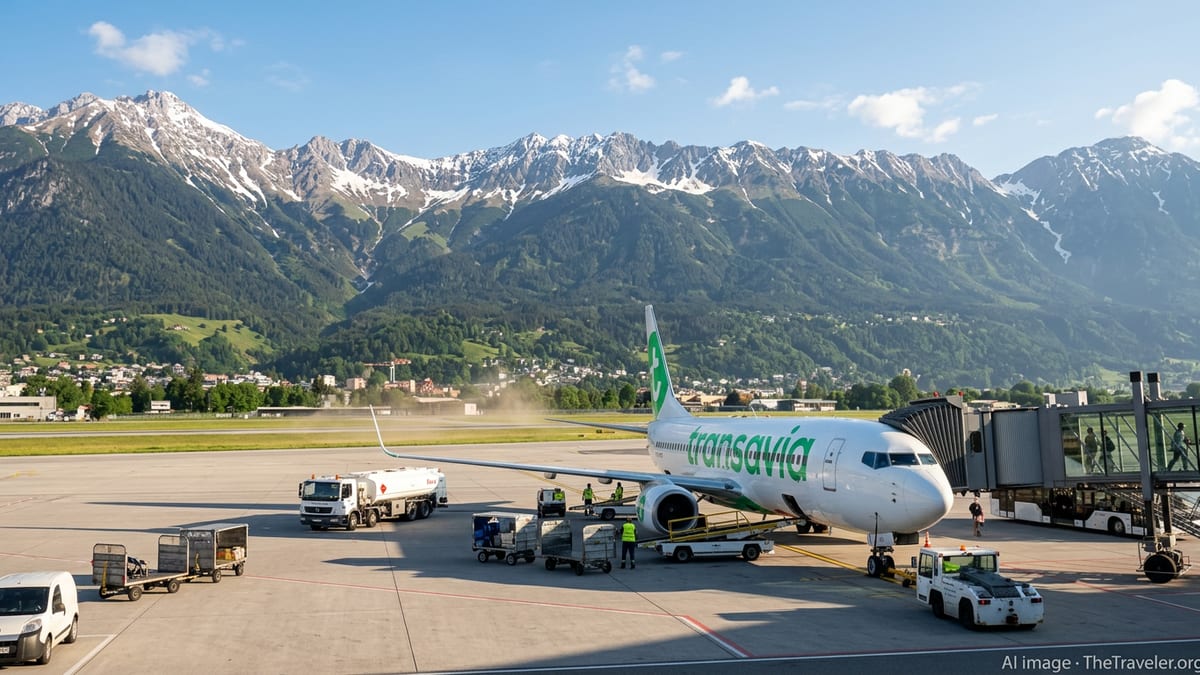
More Frequencies on a Growing Alpine City Route
Innsbruck Airport has confirmed that Transavia will step up its summer timetable on the Innsbruck–Amsterdam route, adding capacity throughout the coming high season. The move follows several years of steady growth in Dutch visitor numbers to Tirol and strong outbound demand from local residents using Amsterdam Schiphol as a global hub.
From mid-April, Transavia plans to operate up to three weekly services between Innsbruck and Amsterdam for most of the summer season, rising to four weekly flights at peak holiday times. According to the airport’s latest schedule preview, this effectively doubles the carrier’s summer presence on the route compared with previous seasons, when services were concentrated around winter sports traffic and a more modest summer offering.
The increased frequencies are timed to give travelers greater flexibility for both short breaks and longer holidays. Morning and daytime departures are being used to optimize connections at Schiphol, while maintaining convenient timings for point-to-point passengers flying directly between the Tyrolean capital and the Dutch metropolis.
Industry data show that Innsbruck to Amsterdam is already one of the most heavily used international city routes from the Tyrolean airport, served by both Transavia and Austrian Airlines. Transavia’s decision to invest in additional summer capacity signals growing confidence in year-round demand on what was once regarded as predominantly a winter-ski market.
Up to Four Weekly Flights at Peak Summer
The expanded schedule will see Transavia operate three weekly flights from April through much of the shoulder season, typically on Wednesdays, Saturdays and Sundays. From late June to late August, these will be joined by a fourth weekly rotation, most commonly on Mondays, pushing the route to four services per week during the core summer holiday period.
Airport planners expect the extra frequencies to translate into several thousand additional seats across the season. With Transavia usually deploying Boeing 737 aircraft on the route, each additional weekly rotation noticeably lifts total capacity and provides more choice on popular travel days such as weekend changeovers for holiday homes and package tours.
The pattern follows a broader trend in Transavia’s network planning, in which the airline is widening its focus from purely sun-and-beach or ski-specific flying toward more balanced, city-and-leisure mixes over the summer. Innsbruck, with its combination of historic old town, mountain accessibility and proximity to lakes and valleys, has become increasingly attractive in the warmer months for Dutch travelers seeking active holidays and cooler alpine air.
For the airport, the added service frequency also supports operational resilience. More flights spread demand across multiple days rather than concentrating traffic on a single departure, easing pressure at security, check-in and ground handling while smoothing passenger flows through the terminal during peak weeks.
Boost for Tirol’s Tourism and Local Economy
Tourism officials in Tirol view the bolstered Innsbruck–Amsterdam schedule as a strategic gain. The Netherlands consistently ranks among the most important source markets for the region, and easy access by air is seen as a key factor in encouraging repeat visits and diversified types of travel, from family holidays to cycling and hiking trips.
Stronger air links are particularly valuable for accommodations and attractions that rely on short-stay guests. With more weekly flights, Dutch visitors can consider long weekend trips outside of the main school holidays, helping to lengthen the season for hotels, guesthouses and city businesses that cater to international travelers.
Local business organizations also underline the importance of Amsterdam’s role as a gateway. Even though Transavia itself operates as a point-to-point low cost carrier, many passengers combine its flights with separate onward tickets from Schiphol, using the Dutch hub for connections to long haul destinations in North America, the Middle East and Asia. The improved Innsbruck schedule therefore supports not only tourism but also outbound business and student travel from western Austria.
Airport management has indicated that sustained strong load factors on the reinforced summer rotations could open the door to further gradual expansion in future years. By signaling clear, predictable demand from the Dutch market, the 2026 summer build-up is seen as a test case for additional growth and potentially even more year-round stability on the route.
Competitive Landscape and Passenger Choices
While Transavia is the primary low cost operator on Innsbruck–Amsterdam, it is not alone on the city pair. Austrian Airlines continues to offer direct flights between the two airports, as well as one-stop options via Vienna, giving passengers a mix of full-service and low cost products with differing schedules, fare structures and connection possibilities.
For travelers, the expanded Transavia timetable increases competition on dates and times of day that are in highest demand, such as weekend mornings and early evening returns. This may help keep fares competitive during peak weeks, particularly for those willing to book well in advance or travel outside the busiest school holiday dates in both Austria and the Netherlands.
Travel agencies in the region report growing interest in combining flight segments with rail and rental car itineraries, underscoring the role of Amsterdam as a flexible entry and exit point for broader European trips. With more flights on offer, passengers gain additional options to build open-jaw journeys or tailor schedules around local events, festivals and sporting fixtures in both Innsbruck and the wider Tirol region.
Digital booking platforms are expected to highlight the additional frequencies in their summer search results once all seasonal timetables are fully loaded, helping to raise the visibility of Innsbruck as an alternative to larger Austrian gateways among Dutch and international travelers browsing for alpine destinations.
Looking Ahead to Stronger Year-Round Connectivity
Although the latest increase focuses on the summer timetable, aviation observers note that the evolution of the Innsbruck–Amsterdam route illustrates a broader shift toward more consistent year-round connectivity between secondary European cities. What began as a largely ski-season route is gradually becoming a stable, multi-season link that supports both tourism and everyday mobility.
By investing in additional flights during a period of robust leisure demand, Transavia is positioning itself to capture a loyal customer base that may, in time, justify further enhancements outside the peak. Should passenger numbers continue to climb, there is scope for the airline to consider extended shoulder-season operations or even more regular patterns across spring and autumn.
For now, the confirmed step-up in summer frequencies marks a clear win for both Innsbruck Airport and its Dutch partner carrier. Travelers on both sides of the route gain more choice, better timing and a stronger bridge between the Tyrolean Alps and the canals of Amsterdam, just as Europe heads into another busy holiday season.