

More news on this day
A Transavia flight from Hurghada in Egypt to Amsterdam Schiphol has drawn sharp criticism and regulatory scrutiny after reports indicated that a woman and a young child were allowed to remain in the cockpit for the entire six-hour journey, raising fresh questions about cockpit security, safety culture and passenger trust in European air travel.
Get the latest news straight to your inbox!
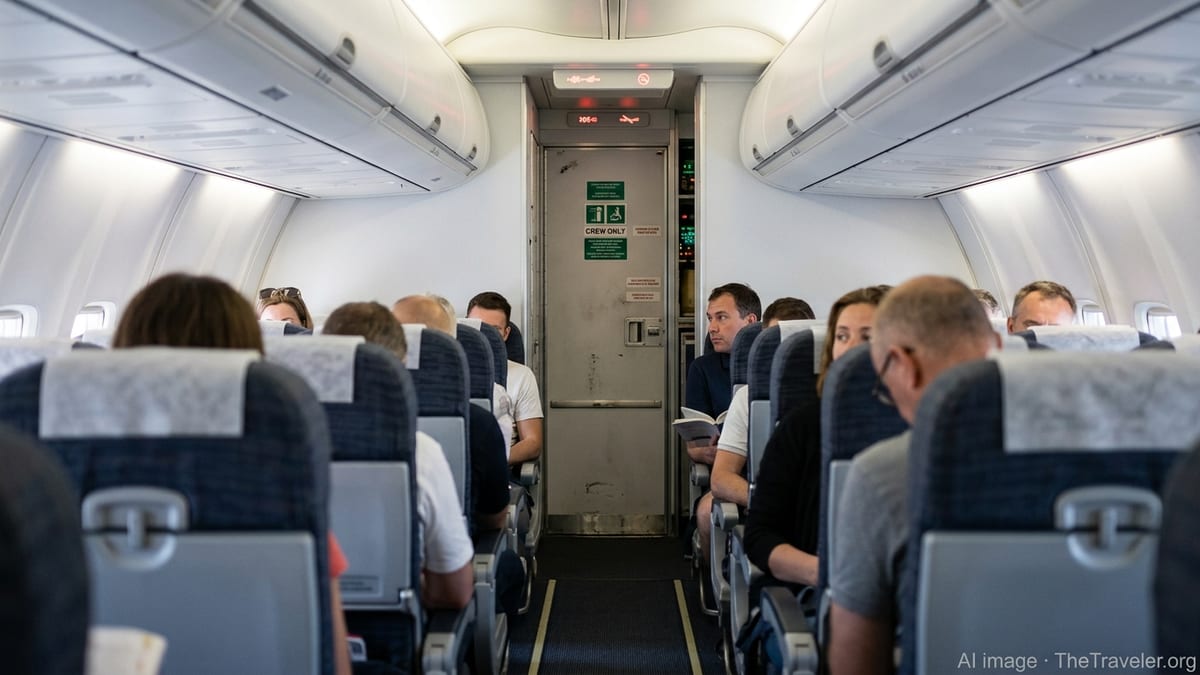
Reports of Unusual Cockpit Seating Spark Outcry
According to publicly available coverage, the incident occurred on a Transavia-operated Boeing 737 flight linking the Red Sea resort of Hurghada with Amsterdam Schiphol, a route popular with Dutch holidaymakers returning from winter-sun packages. Passengers reported that shortly after boarding, a woman and a small child were escorted to the front of the aircraft and subsequently remained in the cockpit area for the duration of the flight.
Accounts circulating in Dutch and international media describe the pair as seated on cockpit jump seats, typically reserved for qualified crew members or personnel travelling on duty. The detail that the arrangement continued from take-off through landing, rather than just during boarding or after arrival, has intensified the reaction among aviation commentators and travellers.
Images and descriptions shared on social platforms, which appear to show a child visible near cockpit controls in flight, have fuelled public concern about whether standard safety procedures were followed. While the authenticity and context of individual images remain a matter of debate, their circulation has contributed to a perception that established cockpit access rules may have been stretched beyond what many passengers consider acceptable.
The incident quickly attracted attention in the Netherlands, where Transavia is a familiar low-cost brand and where public sensitivity around aviation safety has traditionally been high. Discussion has centred not only on the specifics of this flight but also on how cockpit access policies are communicated and enforced across the European airline sector.
Regulatory Rules on Cockpit Access Under the Spotlight
European aviation rules allow some discretion for captains to authorise individuals in the cockpit under tightly controlled conditions, typically codified in an airline’s operations manual. Industry guidance generally reserves cockpit jump seats for crew members, security officers or trained personnel, and stresses that any non-crew presence should never compromise safety or security procedures.
Publicly available information on European and Dutch regulations shows that the cockpit is treated as a security-restricted area, with access strictly limited and subject to detailed internal protocols. These rules are influenced by both international aviation security standards and lessons learned from past incidents involving unauthorised persons or distractions on the flight deck.
In practice, some European airlines have maintained limited flexibility for relatives of crew members or authorised guests to occupy cockpit jump seats on specific sectors, particularly on domestic or short-haul flights. However, such arrangements are generally framed as exceptions, require prior approval, and are designed to ensure that visitors do not interfere with crew workload or aircraft operation, especially during critical phases of flight such as take-off and landing.
The Hurghada to Amsterdam case is drawing fresh attention to where the line is drawn between permitted discretion and perceived overreach. Aviation specialists commenting in published reports note that allowing a young child to remain in the cockpit for a full multi-hour sector may be difficult to reconcile with current best practices on sterile cockpit procedures, distraction management and security optics.
Transavia’s Safety Reputation and Passenger Perception
Transavia, a Dutch low-cost carrier within the Air France-KLM group, operates an all-Boeing 737 fleet on dense leisure and city routes across Europe, North Africa and the Middle East. Historically, the airline has marketed itself as informal and friendly, with a relaxed holiday-oriented onboard atmosphere that many passengers find appealing.
Publicly available safety records and accident investigations involving Transavia in recent years have generally focused on technical events, weather-related turbulence and procedural issues rather than deliberate safety shortcuts. Dutch and European investigation reports typically highlight the carrier’s cooperation with inquiries and the implementation of recommended procedural changes.
The current controversy is less about mechanical safety and more about perceived judgment on the flight deck. For many travellers, the idea of a child spending hours in the cockpit during an international sector clashes with expectations shaped by post-2001 security norms. Even for those who remember brief cockpit visits for children during cruise in earlier decades, the notion of continuous in-flight presence can appear out of step with modern risk awareness.
Reactions from frequent flyers and aviation enthusiasts, as reflected in online forums and comment sections, range from outright condemnation to more nuanced arguments that the situation may have been technically permissible but poor in terms of optics. Several voices stress that, in an era where passenger confidence is central to airline brands, visible adherence to strict cockpit separation is as important as the underlying legal framework.
Potential Implications for European Cockpit Policies
The Hurghada to Amsterdam incident is already being cited in wider debates about cockpit access across Europe. Some commentators argue that even where regulations grant captains limited discretion, airlines should voluntarily adopt tighter, more uniform rules that bar non-operational passengers, especially children, from being present on the flight deck except in emergencies.
Others point out that existing rules may be adequate on paper but inconsistently understood or implemented on individual routes and by different crews. From this perspective, the case highlights a communication gap: passengers often do not know that cockpit visitors can be allowed under certain circumstances, and airlines may underestimate how practices that are internally accepted can appear troubling when seen through a passenger’s smartphone camera.
Industry observers also note that the incident is emerging at a time of heightened scrutiny of flight crew workload, mental health and distraction risks. Allowing a parent to manage a young child in the cockpit for hours could add an additional variable to the crew’s task environment, raising questions about how such arrangements are risk-assessed in advance.
If regulators determine that rules were breached or that existing guidance is ambiguous, the episode may accelerate moves towards more harmonised European standards on cockpit visitors, including clearer age limits, stricter role-based criteria and more robust documentation of any exceptions. For airlines, this could mean tightening long-standing informal perks for family members in favour of a more visibly rigid separation between passengers and the flight deck.
Trust, Transparency and the Passenger Experience
Beyond the technical regulatory questions, the Transavia case underscores the delicate balance between maintaining an approachable, human face to air travel and upholding visible boundaries that reassure passengers about safety. Many leisure travellers choose low-cost carriers as much for their informal tone as for their fares, but they still expect a clear line when it comes to cockpit access and operational decisions.
Travel industry analysts suggest that transparent communication will be key in the coming weeks and months. Clear public explanations of cockpit access policies, including any restrictions on children and non-crew guests, could help reset expectations and avoid misunderstandings that might otherwise circulate widely on social media without context.
The episode also serves as a reminder of how quickly a single unusual decision on board can become a wider reputational issue in a hyper-connected travel landscape. Passengers on holiday flights, particularly those involving families and children, often document their journeys extensively. What may once have been a little-known internal practice can now be scrutinised instantly by a global audience.
For travellers planning flights between the United States, Europe and popular resort destinations such as Hurghada, the story is likely to feed into ongoing conversations about airline choice, safety culture and perceived professionalism on the flight deck. As investigations and internal reviews proceed, many in the travel community will be watching to see whether this high-profile case prompts tangible changes in how airlines manage and communicate cockpit access in the future.