

More news on this day
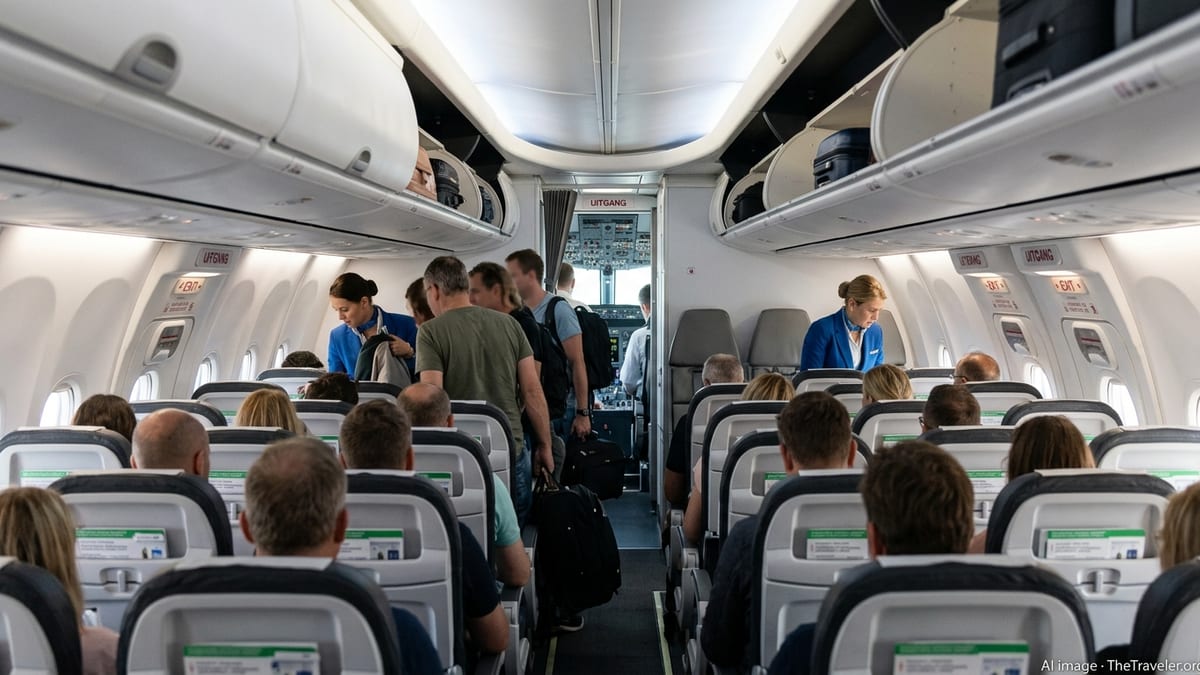
A reported overbooking incident involving a Transavia flight, in which the captain allegedly asked for volunteers to sit in or near the cockpit area, is drawing fresh attention to how low cost airlines manage oversold flights and the hard limits imposed by modern aviation safety rules.
Get the latest news straight to your inbox!
Reports of Unusual Seating Request Raise Questions
According to emerging online accounts and aggregated media coverage, the Transavia flight at the center of the discussion was reportedly oversold, leaving gate and flight crews searching for last minute solutions once all ticketed passengers presented themselves for boarding. As details circulated on social platforms, some posts claimed that the captain floated the idea of volunteers occupying space in or around the cockpit jump seats to accommodate everyone.
While the exact sequence of events and the airline’s internal communications have not been fully described in public documents, the suggestion of any passenger being seated in the cockpit area during commercial operations has quickly become a focal point. Commenters have questioned how such an option could coexist with long standing international rules that strictly limit who may be present behind the flight deck door.
Transavia, a Dutch low cost carrier within the Air France–KLM group, has previously appeared in news coverage for unusual in flight situations, ranging from disruptive passengers to unscheduled diversions. In this case, however, the discussion is less about passenger behavior and more about how an overbooked flight might push front line staff to consider options that appear to conflict with established safety conventions.
Publicly available aviation guidance highlights that decisions about seating and aircraft loading ultimately rest with the operating crew and airline procedures. As a result, even informal suggestions related to the cockpit can carry significant weight in the eyes of regulators and travelers, regardless of whether they are ultimately implemented.
Strict Rules on Who May Sit in the Cockpit
International and regional aviation regulations set clear boundaries on cockpit access. In normal commercial operations, only pilots, authorized cabin crew, and specifically cleared personnel such as inspectors or off duty crew members with appropriate authorization may occupy cockpit seats, including additional fold down jump seats. Since the early 2000s, reinforced cockpit doors and tightened access rules have become standard across much of the industry.
Public guidance from safety agencies and airline policy documents consistently stress that passengers without operational duties are not permitted to remain in the cockpit during taxi, takeoff, cruise, or landing. While brief visits on the ground or after arrival may be allowed in some jurisdictions at the captain’s discretion, these are categorically distinct from using the cockpit as surplus seating to resolve an oversell problem.
Industry discussions also note that jump seats are integrated into crew safety procedures. They are used during critical phases of flight and turbulence and are factored into weight and balance calculations as part of routine performance planning. Treating them as an extension of the passenger cabin conflicts with the design intent and with the way risk is evaluated for flight deck operations.
For these reasons, aviation specialists observing the Transavia discussion have framed any suggestion of placing ordinary passengers in the cockpit during an overbooked flight as incompatible with the prevailing regulatory environment in Europe and many other regions. Even if raised informally, the idea would typically be expected to be ruled out in favor of more conventional denied boarding or rerouting solutions.
How Transavia and Other Airlines Handle Overbooking
Overbooking is a widespread commercial practice in air travel, particularly among low cost and network carriers that operate high utilization fleets. Airlines routinely sell more tickets than there are seats, relying on historical no show data to ensure aircraft depart with as few empty seats as possible. When more passengers show up than expected, staff must quickly find volunteers to travel later or, failing that, deny boarding to some customers.
Consumer facing resources and passenger rights firms that monitor Transavia and other European airlines note that, under European Union rules, travelers denied boarding due to overbooking are typically entitled to re routing, care such as meals and accommodation where necessary, and in many cases financial compensation. As a result, the default solution to an oversold flight is not to stretch aircraft seating arrangements beyond design assumptions but to negotiate with affected passengers at the gate.
Reports indicate that in most overbooking situations, airlines first call for volunteers willing to give up their seats in exchange for vouchers, cash, or rebooking on a later service. Only when an insufficient number of travelers come forward do standard denied boarding procedures apply. This framework is designed to balance commercial flexibility with passenger protection and safety.
Against that backdrop, suggestions about using cockpit space to absorb excess passengers sit uneasily. Aviation observers argue that the established compensation regime already provides a clear pathway for handling oversold flights, making any use of non passenger areas of the aircraft an unnecessary departure from both regulation and best practice.
Passenger Rights, Safety Culture and Public Perception
The online reaction to the Transavia overbooking discussion reflects a broader sensitivity among travelers to how airlines weigh commercial pressures against safety margins. Many passengers view cockpit access as a bright line, shaped by two decades of heightened security measures and high profile incidents involving attempts to breach the flight deck.
Advocates of strong passenger protections maintain that safety culture depends heavily on clear, consistently enforced boundaries. From that perspective, even informal talk of volunteers in the cockpit during an overbooked flight can be seen as eroding confidence, regardless of whether the idea is swiftly dismissed in practice. Social media amplification can intensify these concerns, transforming what may have been a brief, hypothetical suggestion into a widely discussed controversy.
For airlines such as Transavia, managing that perception is increasingly part of routine crisis communication. Publicly available commentary from regulators and industry bodies underscores that customer trust is closely tied to visible adherence to safety rules, especially in sensitive areas like cockpit access. Overbooking, which is already unpopular with many travelers, becomes even more contentious when it appears to intersect with safety policy.
As scrutiny grows, the incident is prompting renewed attention to how information about oversold flights is communicated at the gate and on board. Passengers are increasingly encouraged to familiarize themselves with their rights under regional regulations and to question any arrangements that seem to blur the line between operational necessity and regulatory compliance.
Broader Debate Over Overselling and Operational Limits
The discussion surrounding the Transavia case feeds into a larger, ongoing debate about whether airlines should reduce or eliminate overbooking altogether. Some consumer advocates argue that modern data analytics and dynamic pricing should allow carriers to match capacity and demand more precisely, reducing the need to oversell and therefore lowering the risk of confrontational boarding situations.
Airlines counter, in publicly available statements and financial disclosures, that overselling remains a key tool for keeping fares low and aircraft efficiently utilized. They emphasize that only a small fraction of passengers are ever denied boarding and that most are accommodated through voluntary rebooking with added benefits. From this standpoint, rare edge cases receive outsized attention compared with the overall reliability of the system.
Events that appear to test the boundaries of safety, however, can quickly reshape that conversation. An overbooked flight is generally expected to result in vouchers, re routing, or, at most, public relations fallout, not in experimentation with who may occupy the cockpit. As a result, the Transavia discussion is being used in some quarters as a reminder that commercial practices must always operate within clearly defined safety and security constraints.
For travelers, the key takeaway is that cockpit seating is not an acceptable lever for resolving overbooking. As airlines continue to fine tune yield management and regulators periodically review passenger rights frameworks, the incident is likely to remain a reference point in debates about where operational flexibility should end and non negotiable safety lines begin.