

More news on this day
France’s domestic aviation market is entering a new phase as low cost carrier Transavia begins assuming key French routes from Paris Orly, following Air France’s decision to consolidate its mainline operations at Paris Charles de Gaulle.
Get the latest news straight to your inbox!
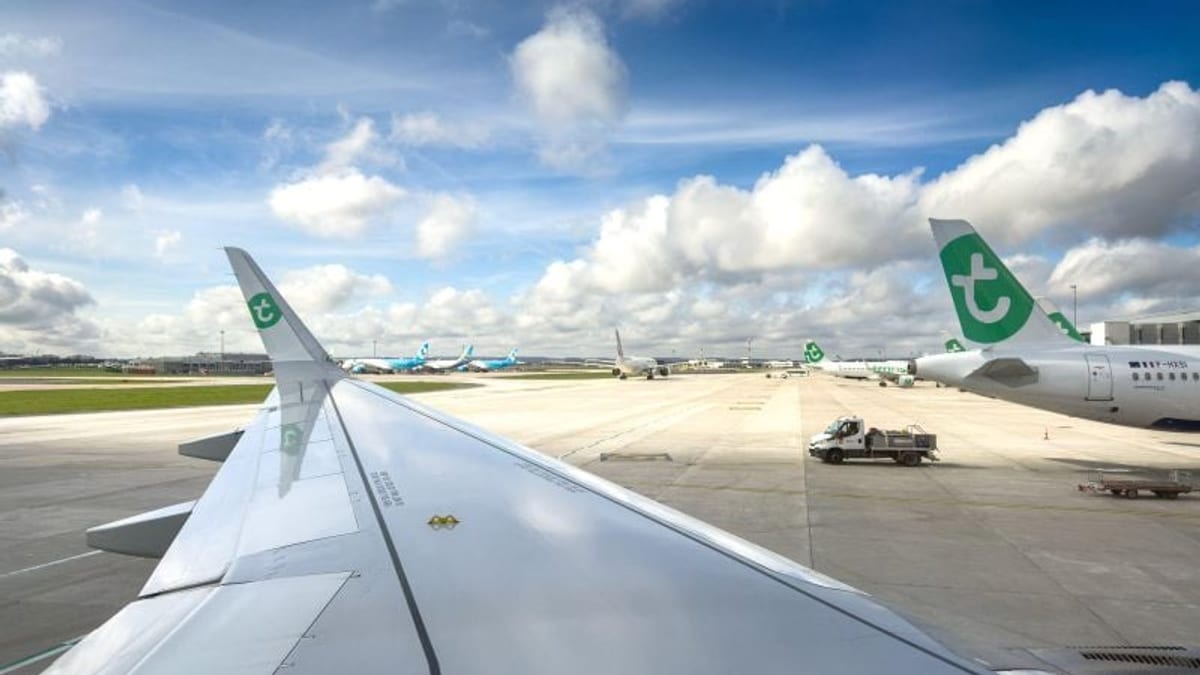
Image by AWN RSS by content source
Air France Refocuses on Charles de Gaulle Hub
Publicly available information shows that Air France has been gradually winding down most of its activity at Paris Orly in favor of a stronger focus on its Charles de Gaulle hub. The airline has cited a structural decline in demand for point to point domestic flights, influenced by the growth of high speed rail, corporate sustainability policies and a shift in business travel patterns.
According to published coverage of the carrier’s network strategy, Air France is concentrating its brand on long haul and European connections over Charles de Gaulle, using the larger airport as a single hub for most international and transfer traffic. Medium haul and domestic capacity that previously operated from Orly is being reallocated, with mainline aircraft and crews repositioned to support the Charles de Gaulle operation.
Reports indicate that by late March 2026 Air France is ending its remaining domestic services from Orly, including links to cities such as Marseille, Nice and Toulouse. These routes have historically been part of the airline’s shuttle style “Navette” offering, providing high frequency connections between the capital and major regional centers.
At the same time, group planning documents and recent airport statistics suggest that passenger traffic at Orly remains robust, supported by a mix of low cost, leisure and overseas French territory operations. The decision to shift Air France’s activity is therefore less about the airport’s overall viability and more about repositioning the flagship brand while keeping a presence through other group airlines.
Transavia Steps In on Domestic Links from Orly
Within this restructuring, Transavia France, the group’s low cost subsidiary, is taking over several domestic routes linking Paris Orly with major French cities. Network announcements and local airport updates highlight the transfer of services to Toulouse, Marseille and Nice, with Transavia scheduled to operate multiple daily rotations from summer 2026.
Information from regional airports indicates that the long running Air France shuttle between Toulouse and Paris will cease operating to Orly at the end of March 2026, with Transavia stepping in on the Orly route and Air France maintaining links from Toulouse to Charles de Gaulle. Similar transitions are planned on the Marseille and Nice corridors, ensuring that Orly retains frequent connections to France’s largest regional markets under the Transavia brand.
Industry analysis suggests that this move allows the Air France KLM group to keep an important footprint at Orly while adapting to price sensitive demand on domestic routes. Transavia’s lower cost structure and single class configuration are intended to support more competitive fares and high aircraft utilization on short haul sectors, which have come under pressure from rail competition and environmental regulation.
Transavia already has a strong presence at Orly on leisure routes around Europe and the Mediterranean, and the addition of more domestic links accelerates its role as the leading carrier at the airport. Existing schedules show that routes such as Orly to Nice are among the busiest domestic city pairs in France, giving the low cost airline a significant volume base from day one of the transfer.
What the Shift Means for French Domestic Travelers
For passengers traveling within France, the main change will be in airline branding and service model rather than city pair availability. Published schedules and corporate statements indicate that group capacity between Paris and the largest regional cities is expected to remain close to previous levels, with Air France continuing to feed its long haul network at Charles de Gaulle and Transavia managing most Orly based domestic operations.
Travelers who previously used Air France’s shuttle services from Orly will increasingly find themselves booking Transavia flights instead, often with different onboard service conditions and ancillary fee structures. Low cost carriers typically emphasize buy on board catering, optional seat selection and luggage charges, while aiming to offer lower base fares. This could appeal to price conscious leisure travelers, even as some frequent business customers adjust to a less traditional full service product on familiar routes.
The consolidation at Charles de Gaulle also changes connection patterns. Passengers heading from regional France to long haul destinations on Air France or its partners are more likely to route through Charles de Gaulle rather than Orly, simplifying hub operations but potentially altering travel times and airport preferences. For those who value shorter transfers or live closer to Orly, the presence of Transavia on domestic routes helps maintain non stop options into the southern Paris airport.
At a national level, the reshaping of the domestic network reflects broader policy and market pressures. France has introduced restrictions on certain short haul flights where high speed train alternatives under a set travel time are available, and corporate clients increasingly factor carbon reduction targets into travel decisions. Airlines are responding by concentrating premium connectivity at major hubs while using low cost units to defend market share where demand remains strong but yields are under pressure.
Capacity, Fleet and Competitive Landscape
Transavia’s assumption of domestic routes comes as the airline continues to expand its fleet and network from French bases. Recent deliveries of new generation narrowbody aircraft, including Airbus A320neo models, support additional capacity on both domestic and European services while improving fuel efficiency and lowering unit costs.
Reports on the airline’s seasonal schedules show that Transavia is adding aircraft and frequencies for summer 2025 and 2026, with Orly at the center of its growth plans. While much of this expansion focuses on leisure destinations in southern Europe, North Africa and island markets, the domestic transfers from Air France add a dense, year round traffic base that can help smooth seasonality and improve aircraft utilization.
Competitive dynamics on the main Paris to province routes are expected to evolve as Transavia ramps up. Other carriers, including low cost rivals and regional players, already serve several of the same city pairs from alternative Paris airports or regional bases. Analysts suggest that the Air France KLM group is using Transavia to maintain a strong position in these markets, even as it moves the flagship brand away from Orly.
For airports such as Toulouse, Marseille and Nice, the arrival of Transavia as the primary Orly operator offers continuity of service with some operational differences, including new schedules and aircraft types. Airport traffic reports and local commentary indicate that maintaining frequent links to the capital’s southern airport is seen as important for both business connectivity and inbound tourism.
Outlook for Orly and France’s Domestic Aviation Map
The transfer of domestic routes from Air France to Transavia at Orly is part of a multi year reconfiguration of France’s aviation landscape. Orly, long associated with domestic and overseas French territory flights, is steadily transitioning into a stronghold for low cost and leisure carriers, even as it remains a key airport for travel within the country.
Current traffic data from the Paris airport operator show that Orly’s passenger volumes have recovered strongly in recent years, with growth driven largely by carriers such as Transavia. With Air France withdrawing its remaining domestic services from the airport, the low cost subsidiary becomes an even more central player in sustaining domestic connectivity from the southern side of the capital.
Observers note that additional adjustments to schedules and capacity are likely as the 2026 summer season approaches and the transfer of routes is completed. Factors such as rail competition, environmental regulation, fuel prices and consumer demand patterns will continue to influence how many flights operate between Paris and regional France and which brands are most visible on those routes.
For travelers, the most immediate impact will be a new mix of fares, service styles and connection options rather than the loss of key city links. As Air France consolidates around Charles de Gaulle and Transavia expands its role at Orly, the French domestic market is set to offer a more clearly segmented choice between hub based connectivity and point to point low cost travel.