

Transportation costs are a core consideration for expatriates evaluating Mexico as a relocation destination. While Mexico generally offers lower day to day transport prices than many North American and European markets, expenses vary significantly by city, mode of transport, distance, and personal security preferences. Understanding how public transit, private vehicles, taxis, and intercity travel are priced is essential for building realistic mobility budgets and deciding where to live and work.
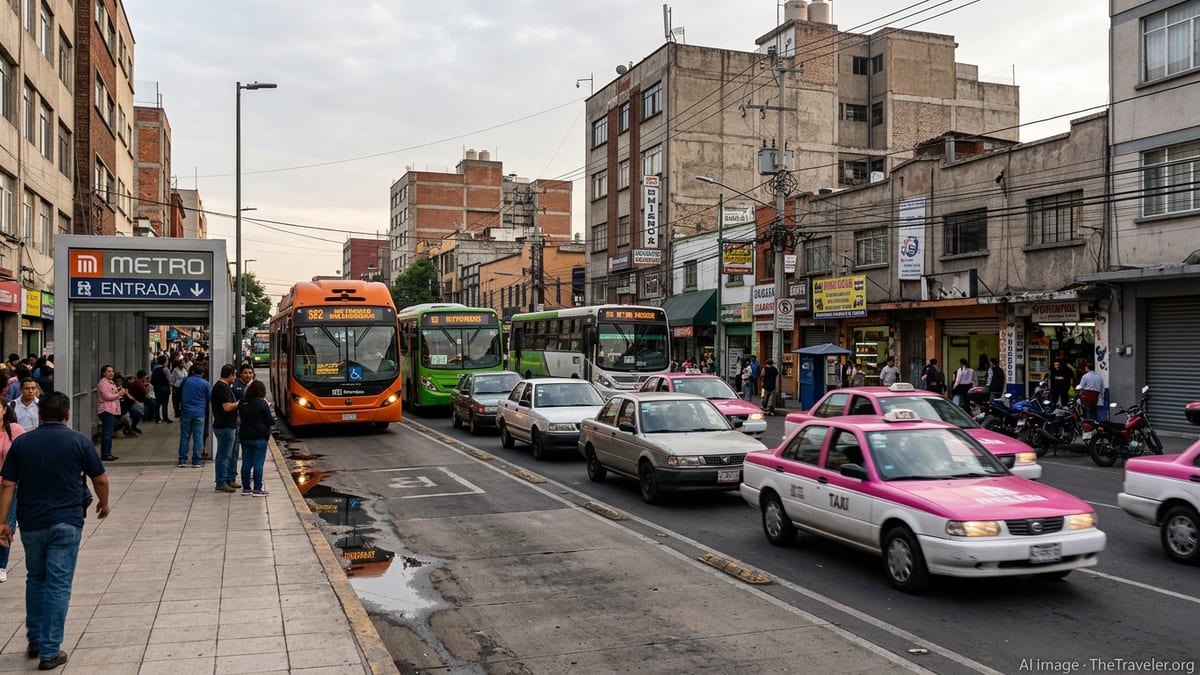
Overview of Transportation Cost Structure in Mexico
Mexico provides a wide spectrum of transport options, ranging from low cost urban metro services to higher priced private car use. For most expats, the main cost drivers are the mix of public versus private transport, city size and congestion, fuel prices, and frequency of long distance travel. Compared with many developed countries, per trip fares on public systems are low, but vehicle ownership and fuel costs are closer to global averages, narrowing the advantage for car based mobility.
Urban public transport in major cities such as Mexico City, Guadalajara, and Monterrey is anchored by flat fare metro or bus rapid transit lines, typically priced in the single digit peso range per ride. Concessioned buses, minibuses, and combis often charge slightly higher fares on a distance based or banded structure. Ride hailing platforms and taxis are widely available but are substantially more expensive per kilometer than formal public transport, although still generally cheaper than equivalent services in North America or Western Europe.
Fuel prices are an important underlying factor for expats who drive. As of early 2025, average regular gasoline prices in Mexico commonly fall in a band around 24 to 26 pesos per liter, with some regional variation and periodic tax adjustments. This places Mexico in the mid range globally and higher than fuel costs in several other major gasoline consuming countries, which directly influences taxi, bus, and private car operating costs.
For decision making, two broad mobility profiles can be distinguished. Car free households relying largely on urban public transport can keep monthly transport expenses low by international standards. By contrast, expats who own a car, commute by road, and frequently undertake intercity trips face significantly higher recurring costs, despite Mexico’s relatively affordable vehicle servicing and labor.
Urban Public Transportation Costs for Expats
Major Mexican metropolitan areas offer some of Latin America’s most affordable heavy rail and bus rapid transit fares. In Mexico City, the metro uses a flat fare model where a single ride costs approximately 5 pesos, independent of distance or transfers within the system. Metrobús, the bus rapid transit network using dedicated lanes, is typically priced around 6 pesos per trip, and the Cablebús aerial cable car services have fares around 7 pesos per ride. These low nominal fares keep core mass transit highly competitive against private options.
Secondary cities use different pricing structures but remain inexpensive in global terms. In Guadalajara, a recent policy decision in March 2026 confirmed that standard public transport fares would remain at 11 pesos per ride for several years, following public protests over proposed increases. In Mérida, the Va y Ven card based bus system has a general fare around 12 pesos, with social discounts for students, seniors, and people with disabilities. These systems rely heavily on prepaid smart cards, and in many corridors cash payments are being phased out.
Concessioned buses, microbuses, and combis are a key layer of mobility in many cities. In Mexico City, a fare increase in late 2025 set minimum prices for these services at approximately 7.5 pesos for short routes and around 8.5 to 9.5 pesos for longer distances, depending on vehicle type and kilometers traveled. These services tend to be more variable in comfort and reliability but often extend coverage to neighborhoods that formal rail and bus rapid transit do not reach, making them material to expat commuting budgets in less central areas.
From a budgeting standpoint, an expat relying primarily on public transit in a large city can estimate a typical commuting pattern of two to four paid trips per weekday plus some weekend travel. At current fare levels, a moderate public transit user might spend the equivalent of 500 to 1,200 pesos per month, depending on the number of transfers, use of premium modes, and the specific city. Even on the higher end, this is low compared with median monthly transport costs in many developed markets, provided the household does not depend on taxis or ride hailing for daily commuting.
Payment Systems, Cards, and Practical Cost Considerations
Mexico’s larger cities increasingly rely on stored value cards and integrated payment platforms that affect how expats experience transport costs. In Mexico City, the metro has fully eliminated paper tickets in favor of rechargeable fare cards. These cards, which can be purchased and recharged at metro stations and some machines, centralize payment for metro and Metrobús, and in some cases for trolleybuses and light rail. Many systems set a modest initial cost for the physical card and allow users to load balances up to limits such as approximately 120 pesos, which typically covers multiple days of commuting for a frequent user.
Smart card based systems such as Va y Ven in Mérida and the Guadalajara card for that city’s transit network require users to preload funds and then tap validators on entry. In some corridors, particularly in Mérida, cash payments on board have been discontinued, which is relevant for newly arrived expats who may expect to pay drivers directly. While card acquisition is generally straightforward, there can be initial queues or limited points of sale, especially at peak times or at suburban stops.
For cost planning, the main implication of these payment systems is the need to manage stored balances and card replacement risks. Lost or damaged cards may require expats to repurchase the card and any unregistered balance may not be recoverable. In addition, while fares are low, systematic use of urban public transport in conjunction with occasional taxis or ride hailing may create fragmented spending patterns that are harder to track without consistent use of digital receipts or budgeting tools.
Some systems, particularly in Mexico City, are experimenting with or gradually expanding contactless card and mobile wallet payments directly at turnstiles. This can benefit expats with international bank cards, but acceptance is not yet universal and may be subject to bank fees and currency conversion charges. As a result, the most predictable cost management approach remains maintaining a local stored value card and topping it up using pesos at official machines or counters.
Taxis, Ride Hailing, and Informal Transport Costs
Taxis and ride hailing services such as app based vehicles are a significant cost item for many expats, especially during the first months after relocation or for those who prioritize door to door travel. There is substantial regional variation, but broadly, base fares and per kilometer rates remain lower than in many major North American and European cities, while still exceeding the cost of mass transit by a large multiple.
Official airport taxis, hotel taxis, and private transfer services typically charge premium pricing compared with street taxis or app rides. For example, fixed rate taxis from international airports to inner city districts often cost the equivalent of several hundred pesos for distances of 10 to 20 kilometers, reflecting concession fees and perceived security advantages. Within cities, shorter urban taxi rides might range from tens to low hundreds of pesos depending on distance, traffic, and time of day. These figures accumulate quickly for daily commuting and can easily exceed a monthly public transport budget within a week.
Ride hailing platforms are generally somewhat cheaper than traditional taxis on comparable routes and are widely used by both locals and expats in larger cities. Dynamic pricing can substantially raise costs during peak hours, heavy rain, or major events, so expatriates who rely heavily on these services face unpredictability in monthly transport spending. In some neighborhoods, especially outer suburbs, app availability may be limited, pushing users toward informal or concessioned options with less transparent fare structures.
Informal and semi formal transport, such as shared vans, colectivos, and local minibuses, offer lower fares than individual taxis but are less standardized. Where regulated, they often align with concessioned bus fare ranges in the 7 to 14 peso per trip band, but enforcement of official prices can vary. From a relocation cost perspective, expats who choose security or comfort by favoring official taxis and ride hailing for regular commuting should budget a significantly higher monthly transport expenditure than those comfortable relying primarily on metro and bus systems.
Intercity Bus, Domestic Flights, and Long Distance Travel Costs
Mexico’s geography and distributed economic centers mean that many expats periodically rely on intercity buses and domestic flights. Long distance bus services are extensive and tiered into economy, standard, and executive or luxury categories. While specific fares fluctuate based on distance, operator, booking channel, and demand, expats can expect that a several hour intercity trip on a major route will typically cost a few hundred pesos in economy class, rising to higher amounts on executive services with additional amenities.
Premium bus brands often charge noticeably more per ticket than second class operators, but remain competitive with the total cost of driving once fuel, tolls, and vehicle wear are considered. For relocation planning, the key distinction is travel frequency. An expat taking monthly long distance bus trips for work or family reasons may need to allocate an additional 500 to 2,000 pesos per month depending on distances and service level. Occasional leisure trips will have a minimal impact on overall annual mobility costs when spread across the year.
Domestic air travel can be cost effective on certain routes, especially when booked in advance or during promotions, but is generally more volatile in pricing than buses. Airfares are influenced by airport charges, fuel prices, and route competition, and can jump significantly in peak holiday periods. For expats located in secondary cities without nearby major airports, ground access to air hubs also adds local taxi or bus costs, which should be included when modeling the full cost of domestic flights.
For those who prefer to avoid long distance buses and flights, driving between cities is technically feasible on major highways. However, fuel costs, toll road fees, and vehicle depreciation can make private car use more expensive on a per trip basis than bus travel, particularly on long intercity routes. As a result, most cost conscious expats use a mix of long distance bus services and selective air travel rather than relying exclusively on private vehicles for intercity journeys.
Car Ownership, Fuel Prices, and Operating Costs
Owning and operating a private car in Mexico significantly changes the transport cost profile for expats. While vehicle purchase prices and mechanical labor can be relatively favorable compared with some developed markets, sustained high fuel prices and tolls materially impact ongoing expenses. As of 2025, regular gasoline in Mexico often costs in the mid twenty peso range per liter, and analysis of national and international comparisons indicates that Mexico’s fuel tax burden is among the highest within the world’s largest gasoline consuming countries. Together with value added tax, this pushes pump prices into the upper band for the region.
For a typical compact car, an expat driving 15,000 to 20,000 kilometers per year can estimate annual fuel consumption costs in the tens of thousands of pesos, subject to vehicle efficiency and driving conditions. Urban congestion, stop start traffic, and use of air conditioning further increase fuel usage. In addition, major highways between cities frequently employ tolls, and regular use of toll roads for commuting or frequent intercity trips can add thousands of pesos annually to mobility budgets.
Other car related costs include maintenance, periodic inspections where applicable, parking fees, and insurance. Paid parking in central business districts, shopping centers, and some residential buildings can be substantial, especially in Mexico City and other dense urban cores. Routine maintenance such as oil changes and tire replacement is often less expensive in labor terms than in North America or Europe, but imported parts or premium services narrow this advantage. Insurance premiums vary widely based on vehicle value, coverage level, and location, but are a material recurring cost that should be factored into any comparison of car ownership versus reliance on public transport.
For many expats, the decision to own a car is less about pure cost minimization and more about flexibility, time savings, and perceived security, but it is important to recognize that any savings from lower local labor costs can be outweighed by fuel and toll expenditure. Households that can feasibly align home and work locations with high quality public transit corridors often achieve significantly lower total annual transport costs than those that depend on one or more private vehicles.
Regional Differences and Urban versus Rural Cost Profiles
Transportation costs in Mexico vary extensively by region, city size, and degree of urbanization. Major metropolitan areas such as Mexico City and Guadalajara benefit from extensive subsidized public transport networks with low flat fares for metro and bus rapid transit systems, which can keep daily commuting costs modest for residents living near stations. However, these same cities often have higher fuel prices, more expensive parking, and heavier congestion, all of which raise the cost of private car use and taxi or ride hailing services.
In contrast, smaller cities and rural areas may lack comprehensive formal public transport. Residents and expats in such locations often rely on a combination of informal minibuses, shared taxis, and private vehicles. While informal services may be low priced, they can be irregular, and limited competition can keep per trip fares relatively high for longer distances. The absence of a metro or structured bus network means that even modest car usage quickly becomes a major component of monthly household budgets.
Tourism heavy regions and border areas can show distinct pricing patterns. In some resort cities and popular coastal zones, official taxi tariffs from airports and hotel zones are significantly higher than local bus fares or informal options, reflecting a premium market dynamic. Similarly, border cities exposed to cross border traffic and foreign demand can see local fuel and service prices influenced by international differentials, although government policies sometimes seek to stabilize prices in specific periods.
For relocation planning, expats should avoid assuming a single national transport cost level and instead evaluate city specific conditions. An expat living in central Mexico City within walking distance of a metro station will face a very different cost profile from one based in a peripheral suburb of a mid sized state capital or in a rural area where car ownership is effectively mandatory.
The Takeaway
For expats considering relocation to Mexico, transportation costs can be either a structural advantage or a hidden expense, depending on location and mobility choices. Mass transit in major cities is inexpensive by global standards, with flat fares in the low single digit peso range for metro and bus rapid transit, and slightly higher but still modest prices for concessioned buses and newer card based systems in secondary cities. A car free or low car lifestyle anchored on these networks can keep monthly transport budgets relatively contained.
By contrast, car ownership combined with frequent use of toll roads, taxis, ride hailing, and long distance private driving exposes households to high cumulative fuel costs and recurring vehicle related expenses. Mexico’s relatively elevated fuel tax burden and the structure of intercity highway tolls mean that the perceived cost advantage of owning a vehicle compared with some other countries may be smaller than anticipated. Intercity buses and selective domestic air travel provide alternatives, but their costs become material for expats who need to travel long distances regularly.
Ultimately, the practicality of relocation from a transport cost perspective depends on aligning residential and work locations with the strengths of each city’s infrastructure. Expats who can live close to high capacity public transport corridors and limit reliance on private vehicles will typically benefit from significantly lower annual mobility costs and greater budget predictability than those whose circumstances require regular private car use in congested or infrastructure poor areas.
FAQ
Q1. Are transportation costs in Mexico generally lower than in the United States or Europe?
In most large cities, public transport fares are significantly lower than in the United States or Western Europe, while taxi and ride hailing services are moderately cheaper. However, fuel prices and certain fixed costs of car ownership can be comparable or even higher, so overall savings depend on how much a household relies on private vehicles.
Q2. How much should an expat budget per month for public transportation in a major Mexican city?
An expat using metro, bus rapid transit, and standard buses for commuting might typically spend between 500 and 1,200 pesos per month, depending on the number of trips, transfers, and whether higher priced concessioned services are used frequently. Costs rise if taxis or ride hailing are regularly added to the mix.
Q3. Is it financially sensible for expats to own a car in Mexico?
Car ownership can be practical for expats living in areas with limited public transport or those who frequently travel between cities. However, higher fuel prices, tolls, parking fees, maintenance, and insurance mean that annual transport costs for car owners are substantially higher than for car free households relying on public transit, especially in large metropolitan areas.
Q4. How expensive are taxis and ride hailing compared with public transport?
Taxis and ride hailing are many times more expensive per trip than metro or bus services, but still often cheaper than equivalent services in many developed markets. Short urban rides may cost tens of pesos, while airport transfers or cross city trips can reach several hundred pesos. Regular use of such services can quickly exceed a monthly public transport budget.
Q5. What impact do fuel prices have on transportation costs for expats?
Fuel prices in Mexico are relatively high compared with several other major gasoline consuming countries, largely due to taxes. This increases operating costs for private cars, taxis, and buses. Expats who drive frequently or live in car dependent areas will see fuel as a major recurring expense, while those using primarily electric or non motorized options are less affected.
Q6. Are intercity buses a cost effective way for expats to travel around Mexico?
Yes. Intercity buses offer a cost effective alternative to driving or flying on many routes, with fares that are generally lower than the full cost of private car use once fuel, tolls, and wear are considered. Ticket prices vary with distance and service tier, but for occasional travel they usually represent a manageable addition to annual transport costs.
Q7. Do all cities in Mexico have similarly low public transportation fares?
No. While many large cities maintain low flat fares, smaller cities and regions without metro or bus rapid transit systems can have more limited and sometimes relatively more expensive transport options. Informal services may be cheaper per trip but less consistent, and in some areas a private vehicle is effectively required, raising overall costs.
Q8. How do payment cards and cashless systems affect what expats pay for transport?
Payment cards themselves typically have a small one time cost, but they can provide access to flat fares and integrated systems that keep per trip prices low. In corridors where cash is no longer accepted, not having a card can temporarily limit access rather than change the fare level. The main considerations are managing stored balances, replacement costs, and any bank fees if using international cards for top ups.
Q9. Are there significant seasonal or policy driven changes in transportation costs?
Yes. Fuel prices respond to international markets and domestic tax policies, which can periodically raise or lower pump prices. Local governments also adjust bus and minibus fares from time to time, often after negotiations with operators. These changes are usually incremental, but expats who drive or use concessioned services heavily should be prepared for occasional upward adjustments.
Q10. What is the most cost efficient transportation strategy for expats in Mexico?
The most cost efficient strategy typically involves living near high quality public transit lines, using metro and formal bus systems for daily commuting, reserving taxis and ride hailing for occasional needs, and relying on intercity buses or selective flights for longer journeys. Avoiding or minimizing car ownership in large cities usually results in the lowest overall annual transport expenditure.