

Transportation costs in the United Arab Emirates are a central factor in relocation decisions for expatriates, given the country’s car-centric urban form, developing public transport networks, and regulated fuel pricing. This briefing outlines the main transport cost components facing expats in 2025–2026, with a focus on Dubai and Abu Dhabi as the primary relocation hubs, and provides indicative ranges that can be used for budgeting and employer mobility policies.
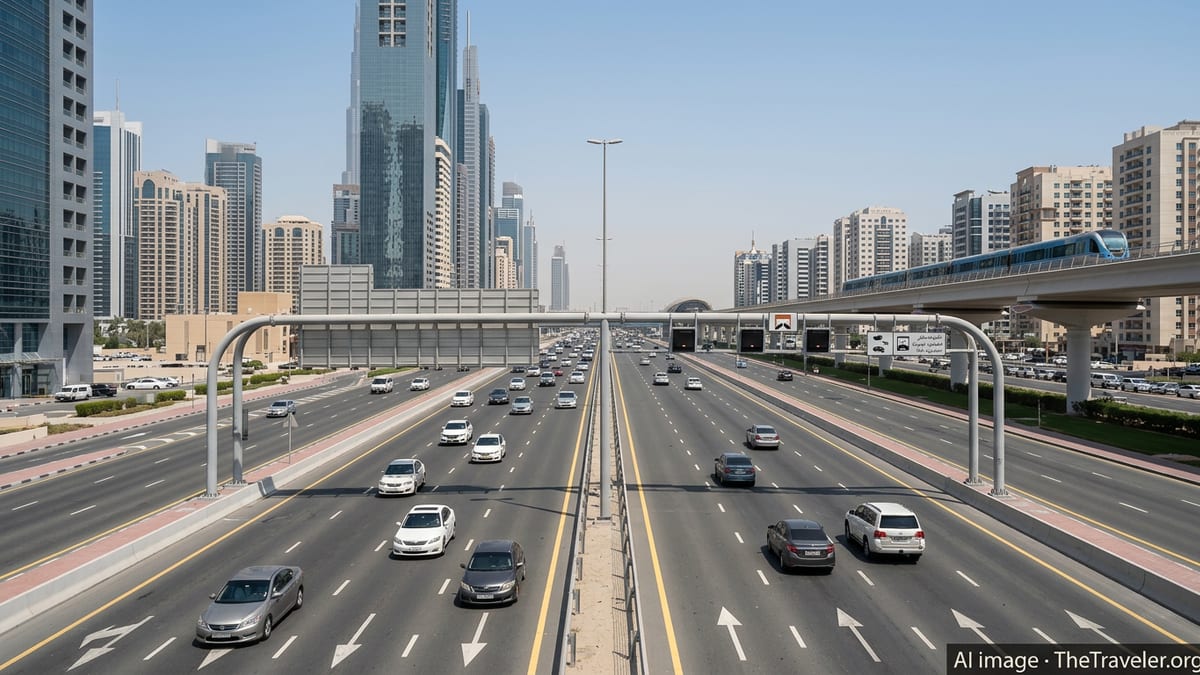
Overview of Transportation Structure and Cost Drivers in the UAE
Transportation in the UAE is shaped by high car ownership, extensive highway networks, and rapidly expanding but still city-concentrated public transport. Dubai has the most mature multimodal network, including metro, tram, buses, and marine transport under a unified smart card system. Abu Dhabi has a growing bus network and a focus on taxis and private cars. Other emirates rely heavily on private vehicles, intercity buses, and taxis, which affects cost structures for expats by emirate.
Key cost drivers for expatriates include fuel prices, vehicle purchase and depreciation, mandatory insurance, toll systems, parking fees, and public transport fares. While regulated fuel prices per litre are generally lower than many Western markets, recurring costs such as tolls, paid parking in dense business districts, and taxi use for non-drivers can significantly impact monthly budgets. Employer-provided transport allowances are common and should be evaluated against these structural costs when assessing an assignment.
For decision-making, it is helpful to distinguish between three typical expat profiles: car-dependent commuters, multimodal public transport users concentrated in Dubai, and mixed users who combine occasional taxis and ride-hailing with limited driving. Each profile faces a different cost envelope, particularly once tolls and parking are factored into daily commuting patterns.
Public Transport Costs for Expats
Dubai’s public transport fares are structured by zones and trips, with payment via the Nol smart card used across metro, tram, buses, and selected marine services. A single metro or bus trip using a standard card typically costs roughly in the low to mid single-digit dirham range per journey, depending on the number of zones crossed, with short journeys within a single zone at the lower end and multi-zone cross-city trips at the higher end. Children under a height threshold and people of determination have specific concessions, but most working-age expats pay standard adult fares.([rta.ae](https://www.rta.ae/links/rail/RTA-Metro-Tram-Fares-Fines-Etiquette-Digital-brochure-en.pdf?utm_source=openai))
For regular commuters, monthly passes provide cost predictability. Based on recent fare information, typical Nol monthly pass options for travel within one zone are priced in the low hundreds of dirhams, with higher-tier passes covering two zones and all zones priced proportionally higher. The average frequent public transport user in Dubai is estimated to spend approximately AED 250 to AED 400 per month on metro, tram, and buses, assuming five-day-a-week commuting with some additional discretionary trips.([dubaimetrorails.com](https://www.dubaimetrorails.com/blog/dubai-metro-fares-2025-or-nol-card-prices-passes-and-discount?utm_source=openai))
In Abu Dhabi and the northern emirates, public transport remains more bus-centric. Local city bus fares are generally set at a low flat rate per trip, typically in the low single-digit dirham range, making buses a cost-effective option where routes are practical for daily commuting. However, service coverage and frequency outside core areas may limit a bus-only commuting strategy for some expats, especially those working in industrial zones or remote office parks, which can push them toward taxis or private vehicles despite higher monthly costs.
Taxis, Ride-Hailing, and Chauffeured Options
Taxis are a significant component of transportation costs for expats who do not drive or choose not to own a car. Across UAE emirates, metered tariffs are regulated and broadly comparable, with a starting flagfall fee followed by a per-kilometre rate. Typical base fares begin in the range of approximately AED 5 to AED 8 depending on the emirate, time of day, and whether the taxi is hailed on the street or booked by phone or app. Per-kilometre charges are usually around AED 2 to AED 3, with minimum fare thresholds applied to very short trips.
In practice, a short inner-city journey of 5 to 7 kilometres often costs in the region of AED 20 to AED 35, while airport transfers or cross-city trips of 25 to 35 kilometres can range from roughly AED 70 to AED 120, particularly in Dubai and Abu Dhabi. Peak-hour congestion increases journey times rather than metered distance, resulting in higher effective cost per kilometre. Expats who rely on taxis daily for commuting can therefore see monthly bills approaching or exceeding the cost of operating a modest private car, especially if both directions are taxi-based and commutes exceed 15 kilometres.
Ride-hailing services operate alongside traditional taxis and are typically priced at or slightly above taxi rates, with dynamic pricing during peak hours and high-demand events. Employers sometimes contract with corporate car-hire or chauffeured services for senior staff; these arrangements are usually billed as hourly packages or monthly retainers, which can translate into several thousand dirhams per month per assignee. Such services offer predictability and reduced personal outlay but represent a high transport cost line item at the corporate level.
Private Car Ownership, Fuel, and Operating Costs
For many mid- to long-term expats, private car ownership remains the default mode of commuting. The UAE has a competitive market for both new and used vehicles, and headline purchase prices can be lower than in many European markets, but this upfront cost should be evaluated together with recurring and one-off expenses. These include vehicle registration, periodic inspections where applicable, mandatory third-party or comprehensive insurance, and maintenance. Insurance premiums are risk-based but for a typical mid-range sedan they frequently fall in the low thousands of dirhams per year, rising for new, high-value, or high-performance models.
Fuel prices are a critical factor in ongoing operating costs. The UAE adjusts pump prices monthly based on global oil markets through an official committee. Recent price data for 2025 indicates that unleaded petrol grades such as Special 95 and Super 98 have been priced broadly in the mid two-dirham range per litre, with specific months seeing prices around AED 2.6 to AED 2.8 per litre, and diesel showing similar magnitudes.([emirates247.com](https://www.emirates247.com/business/energy/uae-announces-fuel-prices-for-march-2025-2025-02-28-1.738172?utm_source=openai)) While exact values fluctuate, this level is generally lower than in many Western European countries and is closer to, or slightly above, levels found in some North American markets.
To translate this into monthly costs, an expat commuting 40 kilometres per day, five days per week, in a vehicle that averages 8 litres per 100 kilometres would consume around 64 litres monthly. At a fuel price in the mid two-dirham range per litre, this results in a monthly fuel spend of roughly AED 170 to AED 190, excluding weekend and discretionary driving. Heavier vehicles, longer commutes, air-conditioning use in extreme heat, and frequent congested driving can increase consumption and therefore monthly fuel costs. Conversely, expats living close to work or using public transport part-time can keep fuel expenditure relatively modest.
Maintenance and servicing intervals vary by brand, but for a standard car under manufacturer warranty, annual servicing can add several hundred to a few thousand dirhams, spread across the year. Tyres, occasional repairs, and depreciation also contribute to the true cost per kilometre. When annual costs are amortized, the total cost per kilometre of private car use, inclusive of fuel, maintenance, insurance, and depreciation, can be significantly higher than the pump price alone suggests, which is an important consideration when comparing against public transport or employer-subsidized corporate shuttles.
Tolls, Parking, and Intercity Travel Costs
Tolling and parking are two areas where expat transportation costs in the UAE can escalate quickly, especially in Dubai. The emirate operates an electronic road toll system that deducts a fixed fee each time a vehicle passes under a toll gate. The commonly quoted baseline toll rate is AED 4 per gate crossing, and gates are placed on key arterial roads and bridges, meaning that many cross-city commutes can involve two or more tolls per direction.([en.wikipedia.org](https://en.wikipedia.org/wiki/Salik_%28road_toll%29?utm_source=openai)) In 2025, adjustments introduced variable toll rates at certain times and locations, with peak periods attracting higher charges at selected gates, and additional gates added on important corridors.
For a commuter passing two gates each way on workdays, even at a flat AED 4 per crossing, tolls alone can reach around AED 320 per month, assuming 20 working days. Under variable pricing where specific gates can charge more in peak periods, this figure can be higher. Many expats adapt by choosing alternative routes where practical, though this can add driving time and fuel consumption. For employees receiving a fixed monthly car allowance, tolls may need explicit budgeting to avoid eroding the allowance’s value.
Parking fees are another significant urban transport cost. In central business districts of Dubai and Abu Dhabi, municipal paid parking is charged per hour, often with graduated tariffs by zone and time of day. Typical hourly rates in busy commercial areas range from low to mid single-digit dirhams per hour, with premium areas and privately operated car parks charging more. Daily parking for a standard workday in a high-demand zone can cost the equivalent of tens of dirhams, potentially exceeding AED 400 to AED 600 per month if no employer-provided parking is available. Free or low-cost parking is more common in residential suburbs and lower-density areas but cannot be assumed for downtown office locations.
For intercity travel between emirates, expats usually choose between driving and intercity buses. Driving exposes the commuter to additional tolls when using certain expressways, along with higher fuel usage given the distances between Dubai, Abu Dhabi, Sharjah, and other cities. Intercity bus fares are generally moderate, typically priced in the range of a few tens of dirhams for longer routes, making them a cost-effective alternative for those willing to accept longer travel times and fixed schedules compared with private cars.
Typical Monthly Transport Budgets for Different Expat Profiles
There is wide variance in actual spending, but it is possible to outline indicative monthly transport cost ranges for common expat profiles in the main cities. These numbers are not formal tariffs, but planning benchmarks that can assist relocation budgeting and policy design, assuming a five-day office-based workweek and moderate discretionary travel.
The following table summarizes typical monthly ranges in Dubai for a single working adult without dependents:
| Profile | Primary Modes | Indicative Monthly Transport Cost (AED) |
|---|---|---|
| Public transport commuter | Metro, tram, bus | Approx. 250 – 450 (passes and top-ups) |
| Car commuter, short distance | Private car, limited tolls | Approx. 500 – 900 (fuel, tolls, parking share, maintenance allowance) |
| Car commuter, cross-city | Private car, multiple tolls | Approx. 800 – 1,400 (higher tolls and fuel, central parking) |
| Taxi / ride-hail dependent | Taxis, ride-hailing | Approx. 1,000 – 1,800 (daily commuting plus errands) |
In Abu Dhabi and other emirates, where tolling is currently less extensive than in Dubai and municipal parking charges can be lower in many districts, car commuter costs may skew toward the lower part of these ranges, especially for those with employer-provided parking. However, individuals heavily reliant on taxis due to license, comfort, or lifestyle preferences can still incur monthly costs well above those of a modest car-owning household, particularly for long commutes to industrial or remote sites.
Families face additional complexity, as school runs and extracurricular trips can sharply increase mileage, taxi use, or both. Many households address this by purchasing a second vehicle or selecting school and housing locations that minimize cross-city travel, both of which have direct impacts on overall relocation cost and should be considered early in the assignment planning process.
The Takeaway
Transportation costs for expatriates in the UAE are not uniformly low despite relatively affordable fuel. The dominant cost drivers are the chosen commuting mode, distance between home and workplace, toll exposure, and access to free or subsidized parking. Expats in Dubai who can rely on metro, tram, and bus networks benefit from predictable and relatively moderate monthly transport outlays, particularly when using monthly passes and living within walking distance of stations. In contrast, car-dependent commuters traversing multiple toll gates and parking in premium business districts may face transport costs that rival or exceed major global cities when measured as a share of disposable income.
For relocation decision-making, it is advisable that prospective expats and employers model transport costs under several realistic scenarios: fully car-dependent, mixed car and public transport, and public-transport focused where infrastructure allows. Each scenario should explicitly account for fuel, tolls, parking, maintenance, public transport passes, and taxi or ride-hail usage. Doing so will provide a more accurate picture of the cost of living impact and help determine appropriate transport-related allowances or housing location strategies within corporate mobility policies.
FAQ
Q1. How much should an expat in Dubai budget monthly for public transport?
Most regular users spending on metro, tram, and buses typically fall in the range of about AED 250 to AED 400 per month, assuming weekday commuting and some additional trips.
Q2. Is it cheaper to drive or use taxis daily in the UAE?
For medium to long commutes, owning a modest car is generally cheaper over a month than using taxis twice daily, especially once taxi minimum fares and waiting time are considered.
Q3. How significant are toll costs for a typical Dubai commuter?
If a commute crosses two toll gates in each direction on workdays, monthly toll costs alone can be around AED 300 or more, depending on crossing frequency and any variable pricing.
Q4. Are fuel prices in the UAE low compared with other countries?
Fuel prices per litre are usually lower than in many Western European markets and are broadly comparable with, or slightly above, some North American levels, but total driving cost also depends on other factors.
Q5. Do expats in Abu Dhabi face the same transport costs as in Dubai?
Broad cost components are similar, but with fewer tolls and different parking patterns, Abu Dhabi car commuters often experience slightly lower monthly transport costs than similar profiles in Dubai.
Q6. Can an expat live in Dubai without owning a car?
Yes, particularly in areas well served by metro and tram lines, but this requires deliberate housing choice and reliance on public transport and occasional taxis or ride-hailing for off-network trips.
Q7. How much do taxis typically cost for a short journey?
A short urban taxi ride of around 5 to 7 kilometres often costs approximately AED 20 to AED 35, depending on time of day and traffic conditions.
Q8. Are monthly public transport passes available and cost-effective?
Monthly passes are available in Dubai and can be cost-effective for frequent users, providing predictable spending when commuting daily within defined zones.
Q9. How do parking charges affect overall transport costs?
In dense business districts, daily paid parking can add hundreds of dirhams per month, making parking availability and employer subsidies critical considerations when assessing total commuting cost.
Q10. What is a reasonable total monthly transport budget for a car-owning expat?
For a typical car commuter with moderate toll and parking exposure, a monthly transport budget in the approximate range of AED 700 to AED 1,200 is common, though high-mileage or premium vehicle use can push this higher.