

More news on this day
Travelers heading into the peak 2026 season are confronting higher airfares, unpredictable airport security lines and a rapidly evolving hotel landscape, as conflict in the Middle East pushes up fuel costs, a U.S. government funding lapse strains the Transportation Security Administration, and Hilton accelerates a new phase of global growth.
Get the latest news straight to your inbox!
Middle East Conflict Sends Fuel and Fares Higher
The renewed conflict centered on Iran and the Strait of Hormuz is reverberating across global aviation, driving up jet fuel prices and forcing airlines to redraw flight paths. Publicly available economic analysis shows Brent crude surging following disruptions to shipping through the key chokepoint, with jet fuel costs rising sharply in parallel. Airlines operating between Europe, Asia and Africa have been rerouting around closed airspace, adding distance, time and fuel burn to many journeys.
Recent coverage of U.S. carriers indicates that major airlines are already absorbing hundreds of millions of dollars in additional fuel expenses tied to the conflict. Jet fuel is typically one of an airline’s largest operating costs, and the current spike is being described in industry reports as the most severe test since the pandemic-era shocks to aviation. Many long-haul routes touching the broader Middle East have been reduced or suspended, while surviving services are operating on longer, costlier routings.
For passengers, the impact is showing up in higher airfares on key international corridors and more volatility in ticket pricing overall. Travel industry reporting notes that fares on select routes touching the Middle East and nearby hubs have jumped as capacity tightens and airlines recalibrate networks. Even travelers staying within North America are not immune, as fuel costs filter through to domestic pricing and carriers seek to protect margins during a period of intense demand.
Analysts suggest that if energy markets remain unsettled through the northern summer, elevated fares could become the new baseline for many long-haul trips in 2026. Some carriers are emphasizing premium cabins and high-yield markets to offset fuel costs, while budget-conscious travelers are increasingly pushed toward off-peak departures, secondary airports or alternative destinations.
Security Lines Stretch as TSA Feels the Strain
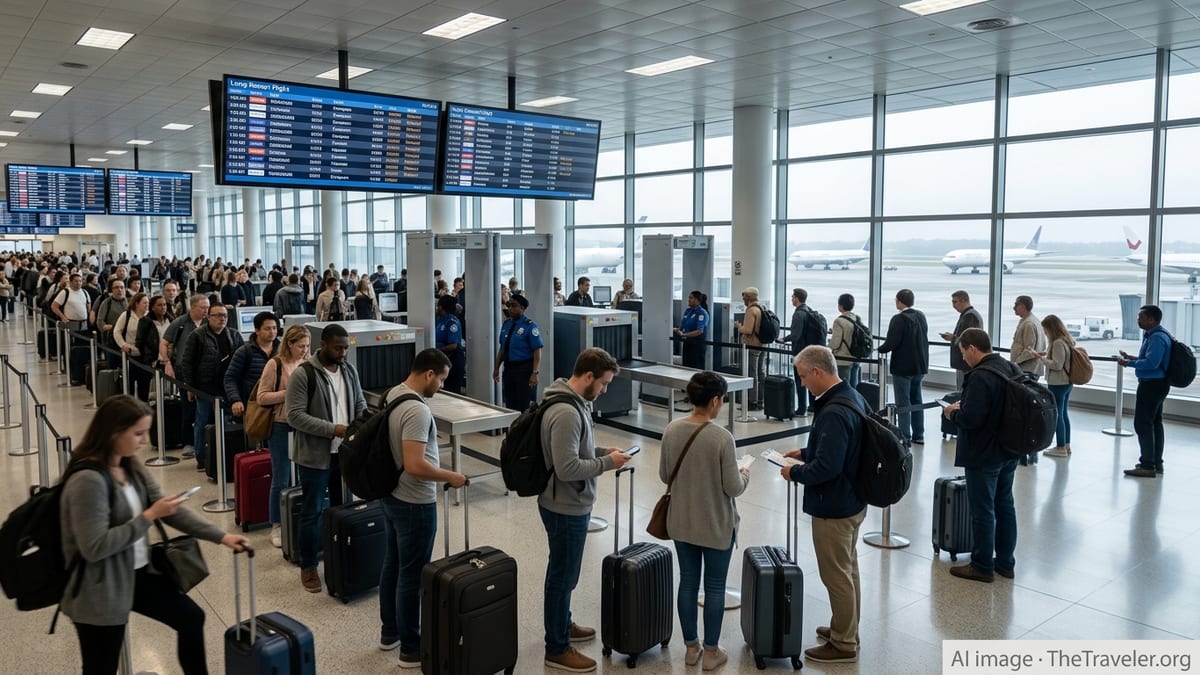
Inside the United States, another pressure point is emerging at the airport checkpoint. An ongoing partial federal government shutdown that began in mid-February has left thousands of TSA officers working without pay, and a growing number have started to resign or reduce their hours. Recent public reporting cites hundreds of employee separations within weeks, compounding an agency that already struggled with high turnover and low morale.
Travel coverage over the past week has detailed hourslong lines at several major airports as unscheduled absences ripple through staffing rosters. Wait times have become increasingly unpredictable, with some hubs experiencing early-morning surges that strand passengers in snaking queues, followed by quieter periods later in the day when more officers are on duty. For spring break travelers and business flyers alike, the result is a security experience that feels less reliable from one day to the next.
The staffing crunch is also affecting downstream operations. Reports indicate that tighter security throughput can lead to missed connections, compressed boarding windows and additional stress on airlines already juggling weather disruptions and air traffic control constraints. Travel advisers are urging passengers to arrive earlier than usual, particularly at large hubs and during peak travel periods, adding further friction to the overall journey.
While core TSA functions continue, experts note that prolonged funding uncertainty can slow hiring and training pipelines that are essential for stabilizing staffing ahead of the busy summer. If the shutdown persists, travelers may face an extended period in which security wait times are more a matter of luck than planning, reinforcing the perception that U.S. airport infrastructure is struggling to keep pace with record passenger volumes.
Hilton’s Bold New Play in a Volatile Market
Against this turbulent backdrop, Hilton is pressing ahead with a sweeping expansion strategy that it is positioning as a bet on resilient demand for travel and lodging. Company communications and industry coverage highlight 2026 as a milestone year, with Hilton’s luxury and lifestyle portfolio surpassing 1,000 hotels globally and hundreds more in the pipeline. The group is rolling out new properties across Europe, the Middle East, the Americas and Asia, alongside fresh concepts in extended stay and serviced apartments.
One of the most significant developments is the company’s introduction of Apartment Collection by Hilton, described in corporate materials as a new lodging category offering fully furnished apartments under the umbrella of its collection brands. This move is designed to capture travelers who want the space and flexibility of residential-style stays while still expecting the consistency and loyalty benefits of a global hotel chain. It also reflects Hilton’s growing emphasis on longer stays, a segment that has expanded since the pandemic reshaped work and travel patterns.
Hilton is also leaning heavily into lifestyle and conversion-led growth. Its Spark by Hilton premium economy brand continues to scale through renovations of existing properties, while new lifestyle hotels are set to open in ski destinations, urban centers and resort markets. Flagship luxury projects such as Waldorf Astoria London – Admiralty Arch and new resort investments in the Caribbean and Latin America signal confidence at the top end of the market, even as many travelers grapple with higher transport costs.
On the loyalty front, adjustments to Hilton Honors requirements for 2026 aim to draw frequent travelers more deeply into the ecosystem. Public reporting on these changes describes lower thresholds for earning status and new recognition for the program’s heaviest users. By easing the path to elite tiers at a moment when airline status is increasingly difficult to maintain, Hilton appears to be positioning its hotels as a relative refuge for value-seeking but status-conscious travelers.
What It Means for 2026 Travelers
For travelers mapping out 2026 itineraries, these developments form a complex picture. Higher airfares linked to the Middle East conflict and energy market turmoil are likely to remain a defining theme, particularly on intercontinental routes. Passengers may need to be more flexible about dates, routings and even destinations to keep costs in check, with off-peak seasons and alternative hubs gaining new appeal.
At U.S. airports, the TSA staffing strain introduced by the federal funding lapse adds a layer of uncertainty that is difficult to plan around. Early arrival, enrollment in trusted traveler programs and careful scheduling around peak holiday periods can help, but travelers may still encounter abrupt changes in checkpoint throughput from one day to the next. The combination of higher fares and less predictable security processing risks eroding some of the convenience that fueled the post-pandemic travel rebound.
Hilton’s strategic expansion and product experimentation, however, underline a different side of the 2026 travel story. While getting to a destination may be more expensive and occasionally more stressful, the range of accommodation options on arrival is widening, from new luxury flagships to lifestyle hotels and apartment-style stays. For travelers who can navigate the higher upfront transport costs, the payoff at the hotel end of the journey may be more choice, more localized experiences and richer loyalty rewards than in previous years.
As the year unfolds, much will depend on how long the Middle East conflict continues to disrupt energy markets and airspace, and how quickly U.S. policymakers resolve the funding standoff affecting TSA. What is already clear is that 2026 is shaping up as a year in which the cost and complexity of moving around the world are rising, even as global hotel groups like Hilton signal that they are preparing for travelers to keep coming.