

More news on this day
Travelers planning trips to Lebanon are facing heightened uncertainty after an Israeli airstrike on the southern village of Al-Shihabiya reportedly killed one person and intensified ongoing disruption to mobility, tourism, and daily life across the wider border region.
Get the latest news straight to your inbox!
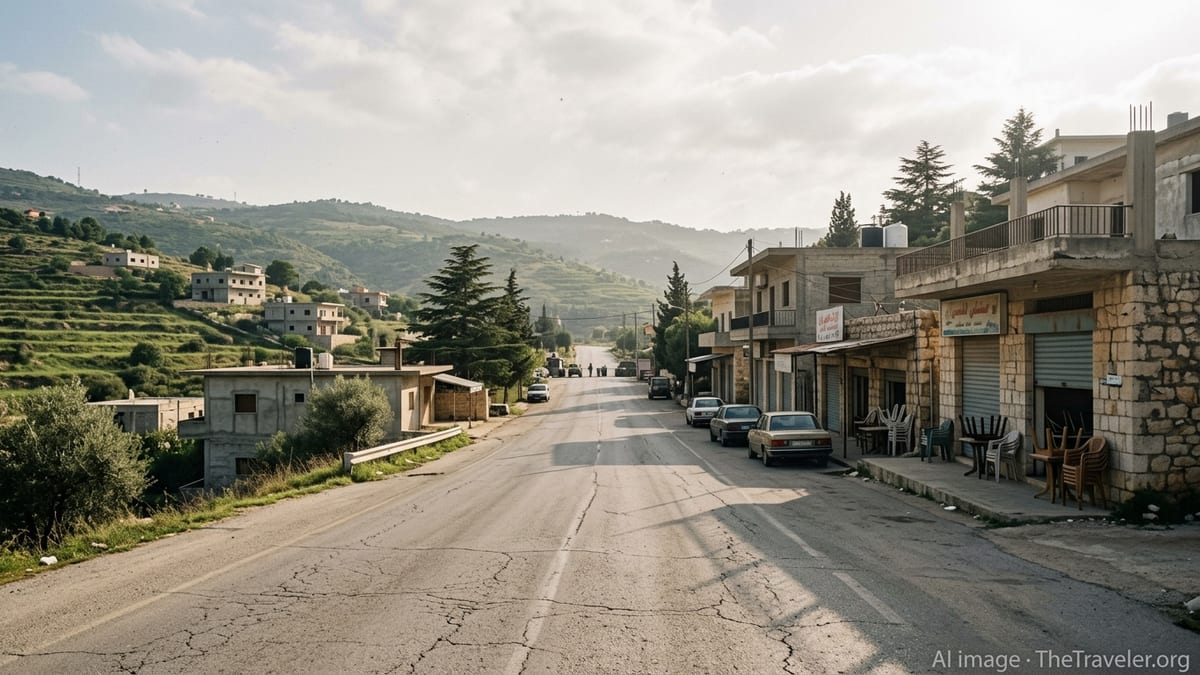
Latest Incident in a Widening Southern Lebanon Conflict Zone
Recent coverage from regional and international media indicates that an Israeli airstrike struck the area of Al-Shihabiya, a village in southern Lebanon close to the border with Israel, resulting in the death of at least one person. The incident forms part of a broader pattern of cross-border hostilities and military activity that has expanded since early March 2026, when open conflict between Israel and Hezbollah escalated sharply.
Publicly available information on the fighting in southern Lebanon describes repeated exchanges of fire, artillery shelling, and targeted strikes on villages and road corridors stretching from the western coastal approaches near Tyre through rural districts inland. Al-Shihabiya sits within this increasingly volatile belt, where civilian movement has become unpredictable and, in many areas, highly risky.
Reports from humanitarian agencies and news organizations covering the 2026 Lebanon war point to a steadily rising civilian toll and a rapid deterioration in infrastructure and essential services in some southern districts. The airstrike on Al-Shihabiya is viewed as one of many localized attacks contributing to an atmosphere of insecurity that directly affects residents, displaced people, and any remaining visitors in the region.
Travel Disruption Across Southern Lebanon
Travel conditions in southern Lebanon have deteriorated markedly as hostilities intensify. Road closures, military checkpoints, damaged bridges, and intermittent bombardment have combined to make overland journeys south of the Litani River particularly hazardous. According to open-source reporting, Israeli ground operations and aerial activity have expanded in several southern sectors, with residents urged by various parties to move further north when possible.
The transport network that once linked coastal towns, rural villages, and inland valleys now functions with significant constraints. Buses and shared taxis reportedly operate on a reduced and highly variable basis, adjusting routes or suspending services altogether when security conditions worsen. Many fuel stations in frontline or near-frontline areas are described as closed or intermittently stocked, further complicating movement.
For travelers, this has translated into cancellations of planned excursions to southern heritage sites, seaside villages, and vineyard regions that were, in previous years, included in many Lebanon itineraries. Tour operators that still advertise trips to the country are increasingly focusing on Beirut and relatively calmer northern destinations, often excluding southern routes entirely due to uncertainty about road safety and access.
Impact on Tourism and Local Economies
The tourism fallout from the latest airstrike and the broader conflict in southern Lebanon is evident in mounting hotel cancellations, shuttered guesthouses, and a sharp drop in domestic leisure travel. Travel and economic analyses published in recent weeks describe Lebanon’s tourism sector as facing renewed strain after several years of overlapping crises, with the 2026 hostilities delivering a particularly heavy blow to regions closest to the border.
Southern Lebanon had slowly been rebuilding its tourism appeal, with boutique hotels, agritourism ventures, and cultural festivals drawing both Lebanese and international visitors to coastal towns and mountain villages. That fragile recovery has been reversed. Industry observers note that many hospitality businesses in the south are now either hosting displaced families from more heavily affected areas or operating at minimal capacity due to security concerns and a lack of bookings.
Published economic commentary highlights that tourism is a key source of income for small businesses in the south, from family-run restaurants and cafés to guides, drivers, and craft producers. With visitor numbers plunging and travel advisories in major source markets warning against non-essential travel, these communities face a further contraction in revenue at a time when inflation and unemployment are already high nationwide.
Travel Advisories and Risk Assessments
Government travel advisories from several countries have, for some time, urged travelers to avoid southern Lebanon due to the risk of armed conflict, unexploded ordnance, and sudden military escalation. In the wake of the Al-Shihabiya airstrike and the broader intensification of fighting, publicly available advisories continue to characterize the security environment as highly volatile, particularly along and near the border.
Security assessments produced by think tanks and humanitarian organizations emphasize that the situation can shift quickly from relative calm to active hostilities with little warning. This unpredictability makes it difficult for travelers to rely on traditional risk-mitigation strategies such as avoiding nighttime travel or sticking to main highways, because those routes themselves may become targets or be temporarily closed.
For travelers already in Lebanon who had planned to visit the south, many consular and risk-analysis summaries recommend monitoring local news in Arabic, English, or French, remaining in regular contact with tour operators or accommodation providers, and staying prepared to change itineraries on short notice. Some travelers have reportedly opted to relocate to Beirut or northern cities, while others have brought forward their departures from the country entirely.
Practical Considerations for Current and Prospective Visitors
For prospective visitors evaluating whether to travel to Lebanon in the current context, the airstrike in Al-Shihabiya serves as a reminder that conditions along the southern axis remain closely tied to military developments. Prospective travelers are widely encouraged by public information sources to consult the latest travel advisories issued by their home countries, review their insurance coverage in detail, and consider whether policies exclude claims related to armed conflict or government warnings.
Travelers who decide to proceed with trips to Lebanon are increasingly concentrating their stays in areas away from the southern border and adjusting expectations for last-minute changes to plans. Many international airlines continue to assess the broader regional security picture, and schedules may be altered on relatively short notice in response to shifts in risk, which can complicate onward travel arrangements.
For the near term, the combination of active hostilities, infrastructure damage, and heightened uncertainty suggests that tourism flows to southern Lebanon will remain severely reduced. The strike in Al-Shihabiya and the wider conflict dynamics underscore the need for any travel planning involving Lebanon to remain flexible, well-informed, and grounded in the most up-to-date security information available at the time of departure.