

More news on this day
Travelers planning trips to Lebanon are facing mounting uncertainty after an Israeli airstrike reported near the southern community of Al-Shihabiya claimed one life and contributed to a broader wave of disruption across the border region, prompting renewed scrutiny of safety, transport reliability, and the near-term outlook for tourism flows into the country.
Get the latest news straight to your inbox!
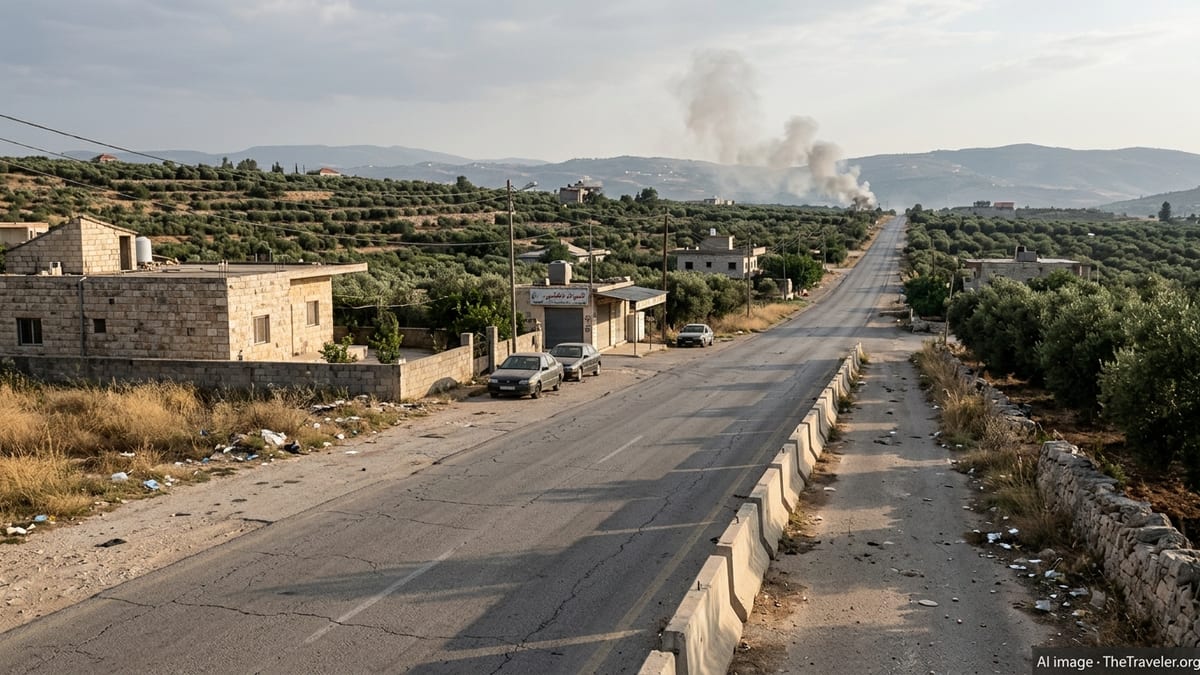
Escalating Hostilities Reach Al-Shihabiya
The reported airstrike in the vicinity of Al-Shihabiya comes amid an intensifying military campaign in southern Lebanon, where cross-border exchanges have steadily expanded in scope and frequency since early March 2026. Publicly available information on recent incidents describes a pattern of strikes on communities, roads, and infrastructure across the south, amplifying risks for residents and anyone traveling through the area.
Initial reports indicate that the Al-Shihabiya incident resulted in one fatality and several damaged structures in a largely rural zone close to the Israeli border. While details continue to emerge, regional coverage places this strike within a wider series of attacks that have affected villages and small towns throughout the border districts, often with limited warning and quickly changing security conditions on the ground.
The area around Al-Shihabiya is not a primary tourism destination in Lebanon, but it lies along important internal routes used by residents, aid workers, and domestic travelers moving between the coastal cities and inland communities. Any military activity there can rapidly cascade into broader travel constraints, affecting road movements, public transport links, and insurance assessments for overland journeys.
Travel Disruption Across Southern Lebanon
In the days surrounding the airstrike, humanitarian reporting and local media have pointed to intermittent closures or blockages of key roads in the south, as well as temporary restrictions on access to certain villages close to active fronts. Checkpoints, detours, and sudden convoy movements have complicated road travel, particularly in areas south of the Litani River, where evacuations and large-scale displacement have been documented.
These disruptions are occurring alongside ongoing ground operations by Israeli forces in southern Lebanon and continued launches of rockets and missiles by armed groups toward northern Israel. This fluid military landscape has made it difficult for travelers and transport operators to reliably predict which routes will remain open, and for how long, on any given day.
Publicly available travel advisories from several governments already classify southern Lebanon as an area to avoid due to frequent shelling and airstrikes. The latest events near Al-Shihabiya reinforce those warnings, underscoring that movement in and out of the region may be subject to abrupt changes, curfews, or localized no-go zones that can disrupt both private itineraries and organized tours.
Impact on Tourism and Flight Connectivity
The renewed violence in southern Lebanon is compounding pressures on Lebanon’s tourism industry, which had shown tentative signs of recovery before the latest escalation. Tourism bodies and economic assessments referenced in recent humanitarian and analytical reports describe a sharp fall in inbound leisure travel as images of ongoing strikes circulate globally and security alerts are updated.
In parallel, the broader regional conflict has affected air connectivity into Beirut. Publicly available airport and aviation reports in recent weeks describe a pattern of airlines canceling or adjusting flights to the Lebanese capital in response to changing risk calculations, even as the country’s airspace remains formally open. This has introduced further uncertainty for travelers who might have considered visiting areas of Lebanon that remain physically untouched by the fighting.
For the south specifically, domestic tourism and weekend travel that previously supported guesthouses, family-run restaurants, and rural attractions have declined significantly. Residents who once hosted visitors from Beirut and abroad now face both security risks and shrinking income, as travelers either postpone trips or redirect their plans to other Mediterranean destinations perceived as more stable.
Safety Considerations for Prospective Visitors
Prospective visitors weighing travel to Lebanon are being urged, in widely available advisories and regional briefings, to approach any plans with heightened caution and a flexible mindset. The reported strike near Al-Shihabiya illustrates how quickly conditions in the south can shift, even in areas that are not traditionally seen as front-line urban centers.
Routine tourism logistics such as overland transfers to historical sites, rural guest stays, and drives along scenic routes in southern districts now carry added layers of risk. Travelers considering movement beyond greater Beirut or the central coast may face a combination of flight schedule changes, insurance limitations, and ground-transport disruptions that can significantly alter original itineraries at short notice.
Industry observers note that travel to Lebanon at this time requires careful monitoring of official advisories, close attention to local news, and contingency plans, particularly for those who might otherwise be inclined to explore southern districts or transit by road near conflict-affected areas. Until there is a sustained reduction in hostilities, incidents like the airstrike near Al-Shihabiya are likely to continue weighing heavily on tourism flows into and within Lebanon.