

More news on this day
A newly listed $23 million Taishan-inspired estate is drawing attention from luxury buyers and travel lovers alike, offering a rare chance to step into an architectural homage to ancient China without leaving the comforts of modern living.
Get the latest news straight to your inbox!
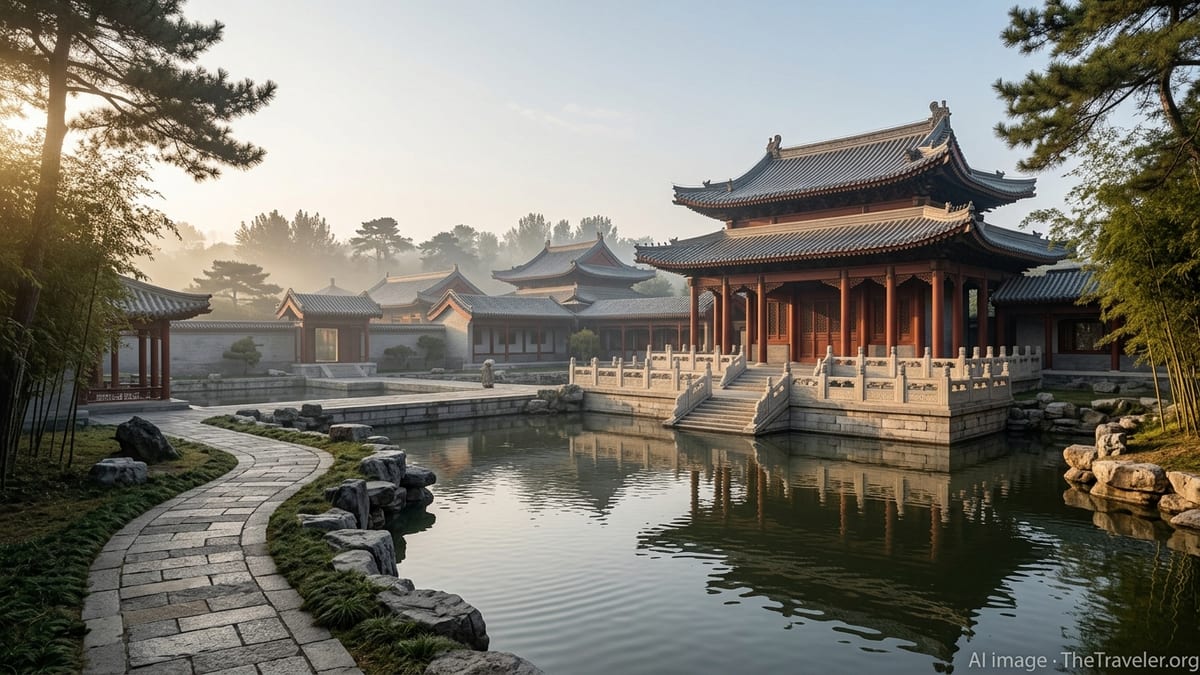
A Mega-Mansion Modeled on Imperial China
The Taishan Estate, now on the market for a reported $23 million, has been conceived as a contemporary interpretation of the grand compounds associated with historic Taishan and other culturally significant regions of China. Marketing materials describe a property that borrows the symmetry and hierarchy of classical courtyard houses, translated into a secluded luxury retreat intended for a global buyer base.
Publicly available details indicate that the residence spans several thousand square feet of interior space, framed by landscaped grounds that place traditional Chinese design cues at the forefront. Rooflines echo the soft curves of historic temple architecture, exterior walls are articulated with screens and carved stone, and pathways are arranged to create a sense of discovery reminiscent of old scholar gardens.
The overall effect positions the estate less as a conventional mansion and more as a private compound that could appeal to high net worth buyers with an interest in Chinese culture. While the asking price anchors it firmly in the ultra prime tier of the market, its narrative leans on heritage and atmosphere as much as on square footage and fixtures.
Courtyards, Pavilions and Water: Design Inspired by Taishan
The property’s name and concept draw on the cultural imagination surrounding Taishan, one of China’s most revered mountains and a UNESCO World Heritage site known for its temples, stone gateways and layered ceremonial routes. The estate adapts elements of that landscape into a residential format, with enclosed courtyards, ornamental water features and pavilions used to structure daily life around views and outdoor circulation.
From descriptions of the grounds, visitors approach through a main gate that sets a formal tone before opening into a series of walled gardens. These outdoor rooms are designed to mirror the progress through traditional compounds, moving from more public reception areas toward increasingly private inner courtyards where living quarters and meditation spaces are located.
Water plays a central role, both for visual calm and as a reference to classical geomantic beliefs that link flowing water with prosperity. Reflecting pools, stone bridges and carefully placed rocks recall the visual language of famous historic gardens, while plantings of pines, bamboo and flowering trees aim to anchor the estate in a timeless East Asian aesthetic.
Modern Luxury Behind Traditional Detailing
Although the Taishan Estate presents itself as a journey into the past, the lifestyle it offers is firmly contemporary. Floor plans circulate around great rooms suited to entertaining, spa style bathrooms, professional grade kitchens and extensive wellness amenities. Reports indicate that the residence incorporates high specification building systems, concealed climate control and home technology that would be expected at this price point.
Interiors are described as blending dark timbers, stone flooring and latticework with clean lined furnishings and large panes of glass to keep natural light at the center of the experience. Many rooms open directly to verandas or pocket courtyards, a layout that nods to traditional siheyuan houses while accommodating modern expectations for indoor outdoor living.
The contrast between historic detailing and current day comforts is a central part of the property’s appeal. Potential buyers can move from a reception hall lined with carved wood panels to a media lounge or wine room without leaving the overarching narrative of an estate inspired by ancient China. This hybrid character places the home within a broader international trend of culturally themed mega mansions aimed at globally mobile buyers.
Luxury Real Estate and the Allure of Cultural Storytelling
The listing of the Taishan Estate comes at a moment when ultra luxury residential properties increasingly rely on storytelling grounded in heritage and place. In markets from North America to Asia, developers and private owners have commissioned homes that echo everything from European palaces to classical Chinese gardens, positioning real estate as an immersive cultural object in addition to an asset.
Analysts observing recent trophy home sales note that buyers at this level often look for a narrative that sets a property apart from more generic contemporary designs. In that context, estates that evoke historic China tap into a rich visual and symbolic vocabulary, appealing to both members of the Chinese diaspora and international collectors who see cultural specificity as a form of distinction.
At the same time, this approach raises questions about how faithfully such designs reflect the traditions they reference. Specialists in Chinese architectural history often point out that many new builds borrow surface motifs like roof tiles and red columns while adapting underlying layouts to modern expectations. The Taishan Estate sits within that conversation, inviting potential residents to inhabit a selective, romanticized version of the past.
A Niche Offering in a Shifting High-End Market
The Taishan Estate’s asking price places it among the upper tier of current luxury listings, at a time when the global property market is navigating uneven conditions. Recent coverage of ultra prime sales suggests that while some regions are experiencing slower transaction volumes, singular properties with a strong brand and storyline can still capture attention and command premium prices.
Observers note that homes consciously designed around Chinese cultural themes have appeared in several high profile sales in recent years, from hilltop mansions with temple inspired silhouettes to urban compounds organized as contemporary courtyard residences. Against that backdrop, the Taishan Estate is positioning itself as a one of a kind retreat that aims to appeal both as a private residence and as a potential destination style asset for buyers interested in hosting cultural or wellness focused gatherings.
How quickly a property of this kind finds a buyer often depends on the depth of the global pool of collectors who value immersive cultural architecture and are comfortable with substantial estate scale maintenance. For now, the $23 million Taishan Estate stands as a highly visible example of how luxury real estate continues to mine ancient China for inspiration, inviting would be owners to imagine daily life framed by pines, courtyards and the evocative silhouette of Taishan itself.