

More news on this day
New York’s LaGuardia Airport is again at the center of nationwide travel disruption, with publicly available tracking data showing 136 delays and 18 cancellations affecting flights operated by Delta Air Lines, Spirit Airlines, JetBlue Airways and regional carrier Republic Airways across New York, Chicago, Miami, Los Angeles and other major U.S. cities.
Get the latest news straight to your inbox!
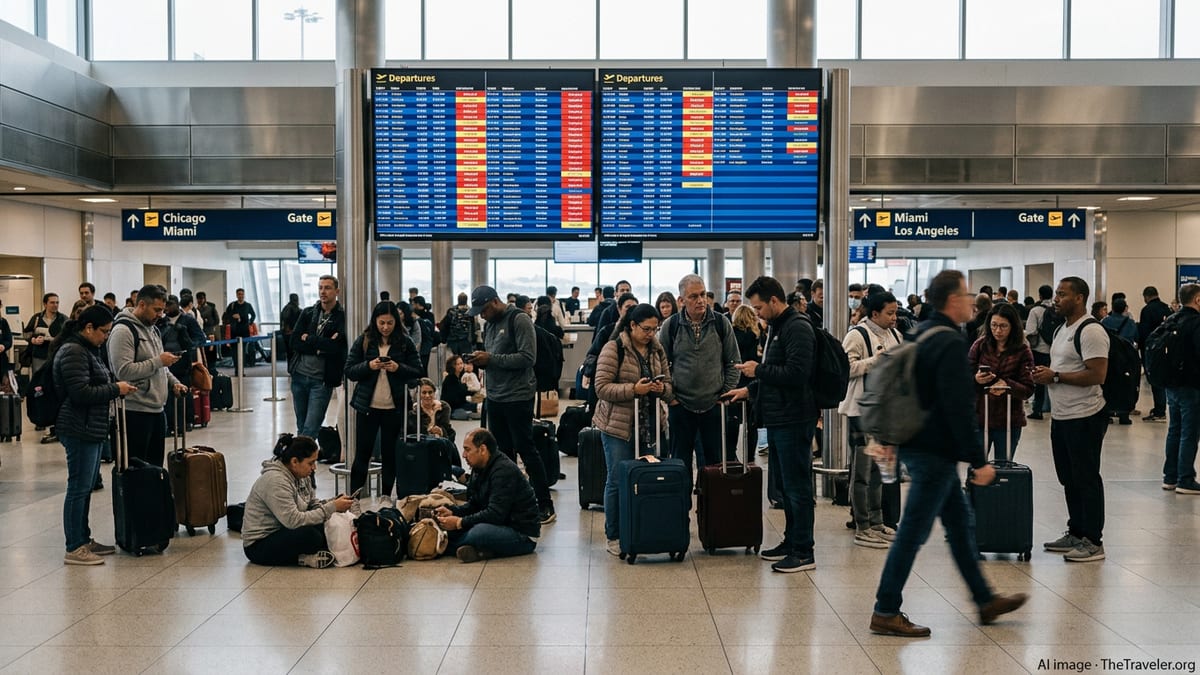
LaGuardia Gridlock Spills Into a National Network
The latest wave of disruption underscores how quickly operational strain at a slot-constrained airport such as LaGuardia can cascade through the wider U.S. aviation system. LaGuardia routinely ranks among the country’s most delay-prone hubs, and aviation statistics show that congestion there can trigger knock-on effects at other major airports, particularly along the busy East Coast and transcontinental corridors.
Tracking boards on Saturday indicated that departures and arrivals involving LaGuardia were running behind schedule by well over an hour in many cases, with a cluster of cancellations concentrated on regional routes operated on behalf of larger network airlines. The pattern closely mirrors prior disruption episodes in which a combination of weather, airspace flow programs and crew scheduling constraints has led to rolling delays that worsen as the day progresses.
Because LaGuardia is heavily tied into shuttle and hub-feeding services, even a modest number of cancellations can strand passengers far from their final destinations. Travelers booked on early-morning flights into New York have faced missed connections onward to the Midwest, Florida and the West Coast, forcing airlines to rebook passengers through alternative hubs or offer overnight accommodations under their respective customer service policies.
Delta, JetBlue, Spirit and Republic Bear the Brunt
Among the hardest-hit carriers in the current disruption are Delta Air Lines, JetBlue Airways, ultra-low-cost operator Spirit Airlines and regional partner Republic Airways, based on real-time delay tallies and recent federal on-time performance reports. These airlines collectively operate a significant share of LaGuardia’s daily schedule, including high-frequency shuttles to Chicago and Boston, as well as leisure-heavy routes to South Florida and transcontinental services to Los Angeles.
Historical performance data from the U.S. Department of Transportation show that all four carriers regularly experience some level of delay and cancellation activity at congested airports, though the specific balance between weather, air traffic control programs and airline-controlled factors varies month to month. Regional operators such as Republic, which fly under the brands of larger network airlines, are particularly exposed to cascading delays when crews and aircraft are tightly scheduled across multiple short-haul segments.
In the current bout of disruption, many of the impacted flights involve regional jets linking LaGuardia to secondary cities in the Northeast and Midwest, amplifying the effect on travelers whose only nonstop options rely on these services. Passengers on ultra-low-cost carriers such as Spirit often have fewer same-day rebooking alternatives, since these airlines operate lower-frequency schedules and rely on point-to-point networks rather than large domestic hubs.
Ripple Effects at Chicago, Miami, Los Angeles and Beyond
As delays mounted in New York, major hubs including Chicago, Miami and Los Angeles reported growing numbers of late arrivals and departures on itineraries tied to LaGuardia. Publicly available tracking boards showed rolling knock-on delays to Chicago O’Hare and Midway, where inbound aircraft arriving behind schedule compressed already busy departure banks and limited turn times for crews and ground staff.
In South Florida, flights between New York and Miami or Fort Lauderdale have long been sensitive to disruptions in either region, particularly during periods of convective weather. When schedules tighten, aircraft arriving late from LaGuardia can force airlines to push back departure times to comply with crew duty regulations or to complete necessary maintenance checks, leading to extended evening delays for northbound travelers returning to New York.
On the West Coast, cross-country services linking New York and Los Angeles have also been affected. Even when weather in Southern California remains favorable, long-haul operations can suffer from earlier-day disruptions at origin airports. A single delayed aircraft rotation in New York can eventually translate into late-night arrivals at Los Angeles International Airport, tightening connection windows for onward flights to smaller regional airports across the Pacific Coast.
Weather, Airspace Constraints and Airline Operations Intersect
While specific causes for individual flights vary, the pattern of disruptions at LaGuardia once again highlights the interplay between weather systems, constrained airspace and airline operational decisions. Industry analyses frequently point to thunderstorms and low-visibility conditions in the densely trafficked Northeast corridor as catalysts for ground stops and flow control measures, which the Federal Aviation Administration implements to maintain safe spacing between aircraft.
Once traffic management initiatives are in place, airlines often respond by consolidating flights, adjusting aircraft routings and recalibrating crew schedules in real time. Published performance data indicate that a significant share of delays nationwide are attributed to broader airspace and national aviation system constraints, even on days when local weather at a given airport appears relatively benign to travelers in the terminal.
At the same time, carrier-controlled factors such as aircraft maintenance, crew availability and tight scheduling can magnify the impact of an initial delay. If an inbound aircraft arrives substantially behind schedule, it may force a reset of its subsequent departures, particularly late in the day when options for swapping equipment or crews are limited. This pattern is evident in past multi-day disruption events, when airlines have needed several days to fully reset their operations.
Passengers Face Long Lines and Limited Options
For travelers caught in the latest round of disruptions, the practical impact is measured in hours spent waiting at the gate, rebooking itineraries or searching for scarce hotel rooms. Social media postings and traveler forums frequently reflect frustration when delay notifications appear to come in waves, sometimes with departure times pushed back repeatedly before an eventual cancellation is posted.
Consumer advocates often advise passengers to monitor their flights through multiple channels, including airline apps, third-party tracking tools and airport display boards, particularly when traveling through high-risk hubs such as New York and Chicago during busy travel periods. Published guidance from regulators and travel industry groups also recommends that passengers familiarize themselves with each airline’s customer service plan, which outlines compensation, meal vouchers and hotel accommodations offered during extensive delays or cancellations.
The disruption at LaGuardia serves as another reminder of the fragility of the U.S. air travel network at peak capacity. With several major carriers, including Delta, JetBlue, Spirit and Republic, operating dense schedules through constrained airports, even a relatively small number of delayed or canceled flights can quickly ripple across the country, affecting travelers far from the original source of the problem.