

More news on this day
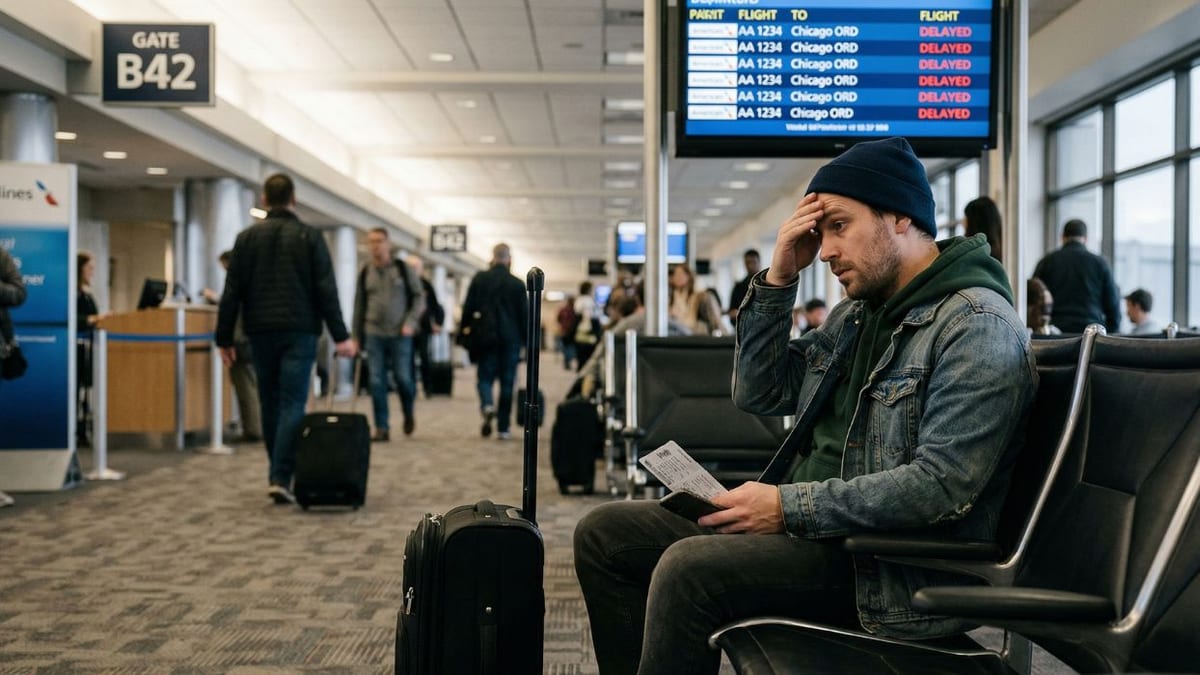
Travelers moving through Phoenix Sky Harbor International Airport on April 11 faced widespread disruption as 163 delayed flights rippled across some of the busiest domestic routes in the United States.
Get the latest news straight to your inbox!
Delays Concentrated on Major Hub-to-Hub Routes
Publicly available flight-tracking data for Saturday shows that Phoenix Sky Harbor’s disruption was concentrated on routes linking the Southwest to major national hubs, including Chicago, New York and Los Angeles. The backlog affected departures and arrivals operated primarily by American Airlines, Southwest Airlines and JetBlue, with knock-on effects for regional partners feeding into those networks.
Reports indicate that many of the delayed services were part of tightly timed hub-to-hub schedules, where aircraft are expected to turn around quickly to maintain onward connections. When multiple departures from Phoenix to cities such as Chicago and New York slipped behind schedule, the resulting congestion spilled into evening banks of flights, complicating rebooking options for passengers and placing additional strain on gate and crew availability.
Industry data from recent months has highlighted the importance of Phoenix as a connecting point, not just for Arizona but for flows linking the West Coast, the Midwest and the East Coast. The volume of affected flights in a single day underlined how quickly disruption at a large desert hub can translate into missed connections and cascading delays nationwide, even in the absence of a major local weather event.
Part of a Wider Pattern of U.S. Delay Spikes
The Phoenix episode unfolded against a broader backdrop of elevated disruption across the U.S. system in early April. Aggregated statistics from aviation and passenger-rights platforms this week show thousands of delayed flights across major hubs including Las Vegas, Denver, Houston, Atlanta and Washington, with Phoenix regularly appearing among the airports experiencing significant schedule pressure.
These nationwide patterns have been linked to a combination of factors, including unsettled spring weather in several regions, ongoing air traffic control constraints, and airlines operating near capacity on popular routes. When a single hub such as Phoenix registers more than 160 delays in a day, the effect is magnified by the existing fragility of the network, as late-arriving aircraft and crews miss their planned rotations at subsequent airports.
Recent industry analyses also point to a gradual increase in average delay times at major hubs. In some cases, average waits have approached or exceeded an hour, pushing many itineraries beyond the typical buffer built into domestic connections. Within that context, Phoenix’s spike in delays on April 11 served as another stress test for summer-style schedules arriving ahead of the peak travel season.
Impact on Passengers and Weekend Travel Plans
The timing of the disruption proved especially challenging for passengers starting or ending their trips at Phoenix. Weekend leisure travelers, including families heading to or from spring break destinations, were disproportionately exposed as popular departures to coastal cities and Midwest hubs slipped further behind schedule.
According to published coverage from regional and national outlets, many travelers faced missed connections, late-night arrivals and, in some cases, the need to secure last-minute hotel rooms or alternative flights. With key services to Chicago, New York and Los Angeles delayed, onward journeys to secondary cities across the Midwest and East Coast also became more complex, as limited remaining seats on later flights quickly filled.
Consumer-rights resources monitoring the weekend’s events emphasized that passengers affected by delays should document their disruption, track out-of-pocket expenses and monitor airline channels for options such as rebooking, travel credits or refunds where itineraries became unusable. Although U.S. regulations do not guarantee compensation in many delay scenarios, published guidance stresses that airlines are generally expected to offer assistance when long delays result in overnight stays or missed connections on a single ticket.
Operational Pressures Behind the Numbers
While Phoenix Sky Harbor itself was not reporting a sustained local ground stop during much of the day, aviation analysts note that an airport can still accumulate dozens of delays as it absorbs schedule disruptions originating elsewhere in the national network. Aircraft and crews arriving late from other cities often lead to outbound Phoenix departures missing their planned slots, which can, in turn, trigger further congestion on departure and arrival banks.
Comparative performance data from industry trackers shows that even at airports with generally solid on-time records, a single day of adverse conditions in other regions can quickly reshape the local picture. Phoenix’s role as a connecting point for both east-west and north-south traffic makes it particularly sensitive to storms and bottlenecks developing in distant hubs, including in the Midwest and along the East Coast.
Recent advisory and airport performance reports have highlighted that when average delays at a hub climb beyond 60 minutes, operational workarounds become more complex. Gates are occupied longer than scheduled, aircraft can be forced to wait on taxiways for available slots, and crews may come close to duty-time limits, increasing the risk of last-minute cancellations or equipment swaps that further confuse passengers.
What Travelers Can Do as Disruptions Persist
With Phoenix’s 163 delays arriving amid a season of volatile travel conditions, passenger advocates and travel planners are again underscoring practical steps for those passing through major hubs. Publicly available guidance from airline and airport information sources encourages travelers to enroll in alerts on carrier apps, monitor flight status frequently on the day of departure and consider earlier departures when connecting through busy airports such as Phoenix.
Experts also suggest building longer connection times into itineraries that rely on multiple hubs or that pass through cities with a recent history of delay spikes. When disruptions occur, passengers are typically advised to explore same-day changes through digital channels first, where rebooking tools may show options that call centers or airport desks have not yet processed.
For travelers still facing the aftermath of the April 11 disruption at Phoenix Sky Harbor, the day’s 163 delayed flights offer a pointed reminder of how quickly a localized scheduling problem can reverberate across the country. As airlines and airports refine their operations ahead of the busy summer period, passengers on major U.S. routes may continue to see days of relative calm punctuated by sudden bursts of travel chaos originating from hubs like Phoenix.