

More news on this day
Travelers moving through Phoenix Sky Harbor International Airport on April 11 faced widespread disruption as publicly available flight-tracking data showed 163 delayed departures and a small number of cancellations rippling across major U.S. routes.
Get the latest news straight to your inbox!
Delays Mount Across Busy Desert Hub
Flight-status dashboards tracking operations at Phoenix Sky Harbor indicated that the airport’s normally brisk Saturday schedule slowed sharply as the tally of delayed flights climbed to 163 on April 11. The disruption affected a mix of morning and afternoon departures, with some evening services also pushed back as the backlog built.
Published coverage of the incident describes the impact as airport-wide, touching both domestic and limited international services. While many delays appeared to fall in the range of 30 to 90 minutes, the sheer volume left departure boards crowded with revised times and “late” annotations, complicating travel plans for hundreds of passengers starting or connecting journeys in Phoenix.
Publicly available federal and airport information suggested that no prolonged all-airport ground stop was in effect during the middle of the day, even as individual flights continued to encounter rolling holds. That pattern is consistent with a scenario in which localized operational bottlenecks, rather than a single overriding weather or safety directive, drive a high number of smaller, scattered delays.
The busy desert hub typically handles more than a thousand movements on peak days, and aviation performance reports have previously highlighted the outsized network effects when a large share of those operations run behind schedule. The situation on April 11 underscored how quickly even moderate delay intervals can add up when they are spread across a significant portion of the day’s departures.
Major Airlines and Key Routes Disrupted
According to travel-industry reporting and flight-data aggregators, the delays were concentrated among Phoenix Sky Harbor’s largest domestic carriers, including American Airlines, Southwest Airlines and JetBlue. These airlines operate dense schedules from Phoenix to major hubs such as Chicago, New York, Los Angeles, Dallas and San Francisco, where aircraft from multiple banks of flights feed into tight connection windows.
On April 11, a notable share of delayed departures involved services linking Phoenix to those high-traffic cities, compounding issues for travelers depending on onward flights. Late pushbacks in Phoenix translated into compressed arrival banks at receiving airports, narrowing the margin for passengers to make their connections and, in some cases, triggering missed flights and forced rebookings.
Publicly accessible route and timetable data show that Phoenix is a critical bridge between the Southwest and other major U.S. regions. The April 11 disruption therefore did not only affect local origin and destination traffic but also the many passengers using Sky Harbor as a connecting point between the West Coast, the Midwest and the East Coast.
In the absence of detailed carrier-by-carrier breakdowns, early assessments point to a broadly shared operational challenge across multiple airlines rather than an isolated systems outage or single-carrier staffing issue. That pattern aligns with previous high-delay days at large U.S. hubs, where any one carrier’s late arrivals can quickly encroach on another’s turn times and gate availability.
Operational Strains Behind the Numbers
Although no single cause has yet been definitively tied to every delayed flight, reports referencing flight-tracking feeds highlight a familiar cluster of underlying pressures: late inbound aircraft, tight crew scheduling and congestion on the ground. When aircraft arrive behind schedule, ground crews have less time to turn planes, and flight crews may brush up against duty-time limits, forcing additional reshuffling.
Recent aviation punctuality studies have noted that Phoenix Sky Harbor, like other major U.S. airports, can experience a sharp performance drop once delays surpass a certain threshold of the daily schedule. Once that point is reached, minor issues that might otherwise be absorbed into normal turnaround buffers instead begin to knock subsequent flights out of their scheduled windows.
Weather did not appear to play an outsized role in the April 11 disruption, with regional forecasts calling for seasonably warm, mostly dry spring conditions around Phoenix. That contrasted with some past Sky Harbor delay events where low clouds, rain or summer thunderstorms were clearly identified as the primary trigger for widespread holds.
Instead, the pattern on April 11 resembled what industry analysts often describe as a “rolling” or “stacked” delay day, in which incremental schedule slippage gradually accumulates across multiple airlines and time banks. Under those circumstances, even flights operating close to on time can face longer-than-normal waits for gates, ground equipment or crew availability once they arrive.
Passenger Experience and On-the-Ground Impact
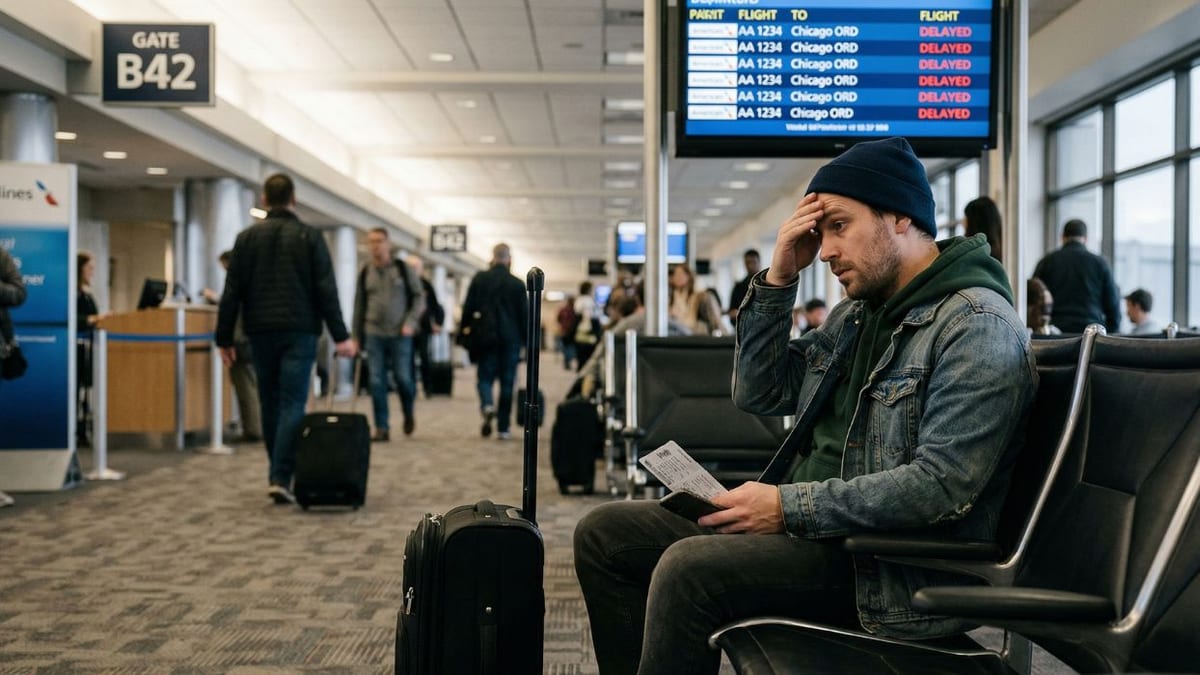
For travelers inside the terminals, the operational picture translated into long stretches in gate areas, frequent public address updates and heavy use of airline mobile apps and information screens. Published accounts from travel-news and consumer platforms described crowded seating zones and lines forming at service desks as passengers sought rebooking options or clarification on shifting departure times.
Because Phoenix Sky Harbor serves as both an origin and connecting point, the effects were unevenly felt. Some passengers departing Phoenix faced relatively short delays but still arrived at their next hub too late to catch onward flights, while others encountered extended waits before even leaving Arizona. Families traveling at the tail end of spring break periods and leisure travelers heading to major coastal cities appeared to be particularly exposed to disruption.
Ground-transportation patterns around the airport were also affected. Rideshare and taxi pickup areas typically see surges whenever flight banks are pushed back, as arriving passengers reach the curb later than planned. On high-delay days, this can compress demand into narrower windows, lengthening vehicle wait times and contributing to congestion on access roads and terminal loops.
Within the terminals, concessions and retail outlets generally experience higher foot traffic and longer dwell times during disruption events. While detailed sales data is not publicly available in real time, prior case studies at large U.S. hubs suggest that extended delays often lead to increased spending on food, beverages and last-minute travel essentials, even as passengers report higher overall frustration with their journeys.
What Travelers Can Learn from Phoenix’s Disrupted Day
The April 11 disruption at Phoenix Sky Harbor serves as a reminder of how quickly a single day of heavy delays at a key hub can reverberate through the wider U.S. air network. For travelers planning routes that rely on tight connections through Phoenix or similar airports, the incident reinforces longstanding advice to build in extra connection time, especially during busy weekends and holiday-adjacent periods.
Travel analysts frequently recommend that passengers consider earlier departures on days with high traffic, both to maximize rebooking options if something goes wrong and to reduce the risk that cumulative delays later in the day will affect their itinerary. The Sky Harbor episode illustrates how flights scheduled for midafternoon or evening can be particularly vulnerable when an airport has already spent hours working through earlier disruptions.
Publicly available tools from airlines, flight-tracking services and transportation agencies remain essential for monitoring conditions on days like April 11. While delay tallies such as the 163 affected flights at Phoenix provide a high-level snapshot, passengers still depend on gate-level updates to understand whether their specific departure is likely to be manageable, significantly delayed or at risk of cancellation.
For now, Phoenix Sky Harbor’s difficult day highlights the ongoing sensitivity of the U.S. aviation system to operational strain. Even under largely clear skies, airport and airline operations can quickly be pushed to the edge of their available buffers, producing scenes of disruption that ripple far beyond the desert city where they began.