

More news on this day
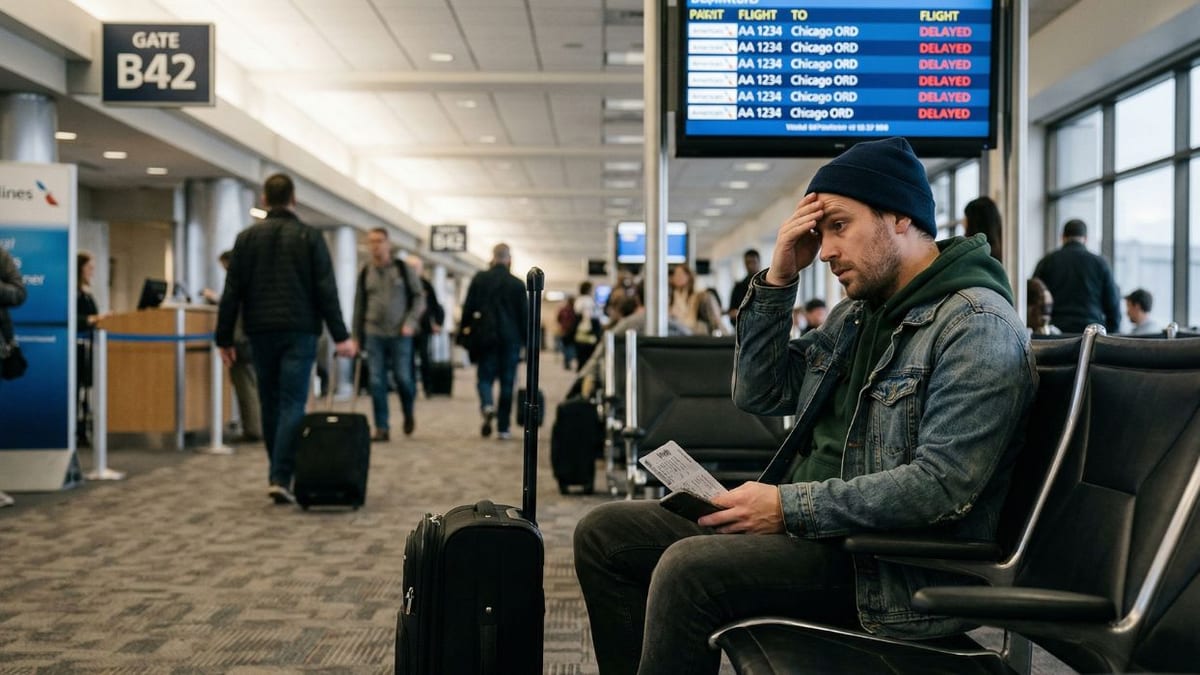
Travelers moving through Phoenix Sky Harbor International Airport faced widespread disruption as 163 flights were reported delayed, disrupting operations for American Airlines, Southwest Airlines and JetBlue on some of their busiest routes, including services to Chicago, New York and Los Angeles.
Get the latest news straight to your inbox!
Delays Ripple Across Key Domestic Hubs
Published flight-status data and industry reports indicate that Phoenix Sky Harbor logged 163 delayed flights and two cancellations in the latest disruption, leaving hundreds of passengers facing missed connections, extended waits and abrupt itinerary changes. The disruption affected a mix of domestic and international services, but the heaviest impact was felt on high-demand links between Phoenix and major hubs such as Chicago, New York and Los Angeles.
American Airlines, Southwest Airlines and JetBlue, all of which maintain significant schedules through Phoenix, saw departures pushed back by a range of operational and flow-control challenges. Publicly available route maps and schedule summaries show that these carriers rely on Phoenix for connectivity to Chicago O’Hare and Midway, New York area airports and Los Angeles, turning routine delays into wider network knock-on effects.
Real-time boards and third-party trackers reflected rolling pushback times throughout the day, with some Phoenix departures toward Chicago and Los Angeles operating well behind schedule. Passengers connecting onward from those hubs to other domestic and international destinations faced additional uncertainty as revised arrival times compressed already tight layovers.
The timing of the disruption compounded the impact. With elevated spring travel demand and fuller aircraft across many U.S. carriers, options for same-day rebooking were limited, and travelers bound for major coastal and Midwestern cities encountered crowded standby lists and scarce alternative routings.
American, Southwest and JetBlue Bear the Brunt
American Airlines, which uses Phoenix as a key Western hub feeding Chicago, New York and Los Angeles, was among the most exposed to the delay spike. Schedule databases and airline system summaries show that American operates a dense web of daily frequencies linking Phoenix to O’Hare, LaGuardia and Los Angeles, meaning disruption at Sky Harbor can quickly translate into missed onward connections across its national and international network.
Southwest Airlines, a dominant domestic carrier with heavy point-to-point traffic into and out of Phoenix, also faced notable knockbacks to its timetable. Flight-tracking tools showed delays on routes between Phoenix and Chicago Midway and other Midwest and West Coast cities, tightening aircraft utilization and adding pressure to afternoon and evening services.
JetBlue, while smaller in Phoenix than American or Southwest, was affected on select services that connect the Arizona hub with coastal gateways, including Los Angeles and New York. Any pushback on those departures can echo across JetBlue’s schedule, particularly where Phoenix flights are designed to feed transcontinental and Caribbean-bound banks from the East and West Coasts.
Operational performance data compiled in recent months has highlighted the sensitivity of these airlines to congestion and weather-driven or system-driven delays. Analysts note that American, Southwest and JetBlue all operate high-frequency schedules on core routes where a handful of delays can quickly cascade into widespread disruption when aircraft and crews are tightly scheduled.
Why Phoenix Delays Hit Chicago, New York and LA So Hard
Phoenix Sky Harbor’s strong connectivity to Chicago, New York and Los Angeles helps explain why a localized spike of 163 delayed flights can create outsized national effects. Airline schedule records show that Phoenix is a strategic connecting point for travelers moving between the Southwest and the Midwest, East Coast and Pacific gateways, often using Chicago, New York and Los Angeles as onward hubs.
On American, Phoenix to Chicago O’Hare and Phoenix to Los Angeles form part of longer itineraries that may stretch to Europe and Latin America, while Phoenix to New York links frequently feed transatlantic and East Coast networks. Delays on these legs can lead to missed international departures, overnight stays and complex rebooking chains that burden airline operations for days.
Southwest’s focus-city model means Phoenix and Chicago Midway are tied together by numerous daily frequencies that serve both business travelers and leisure passengers. When Phoenix departures slip, aircraft rotations into Midway, Los Angeles and other large cities are disrupted, tightening already busy bank structures and leaving fewer spare aircraft to recover the schedule.
For JetBlue, the Phoenix connections into New York and Los Angeles are important bridges into its larger coastal operations. Any irregular operations in Phoenix can therefore reduce resilience on popular transcontinental routes where load factors are already high and schedules are dense, particularly during peak travel periods.
Part of a Wider Pattern of U.S. Flight Disruption
The Phoenix disruption comes against a backdrop of recurring delay spikes across the United States. Recent national statistics compiled by flight-status aggregators and summarized in multiple news reports have highlighted thousands of daily delays and hundreds of cancellations on some peak days, affecting carriers from legacy airlines to low-cost operators.
Studies of North American airline punctuality indicate that large carriers and low-cost competitors alike are grappling with higher proportions of late arrivals compared with pre-pandemic benchmarks. Data reviewed in recent days points to a significant share of flights at major brands, including Southwest and JetBlue, arriving behind schedule, reflecting factors that range from air traffic control constraints and weather systems to maintenance and staffing complexity.
For airports like Phoenix Sky Harbor, which ranked relatively well on on-time performance in earlier annual reviews, episodes of disruption on the scale of 163 delayed flights underscore how even generally reliable hubs remain vulnerable to national and regional system stress. When weather, airspace restrictions or system outages converge, delay numbers can rise rapidly and challenge the resilience of even well-run facilities.
Industry observers note that as airlines continue to rebuild capacity, high load factors and tight turnaround times can leave little margin for recovery. Once a day’s operation slips significantly behind plan at a key connector such as Phoenix, bringing the system back into balance often requires rolling schedule adjustments, equipment swaps and, in some cases, cancellations to reset aircraft and crew positions.
What Travelers Can Expect in the Near Term
In the wake of the latest Phoenix disruption, travelers planning to fly through Sky Harbor, particularly on routes to Chicago, New York or Los Angeles, are likely to see a continued emphasis on schedule adjustments and rolling operational changes. Flight-status platforms and public-facing airline tools remain the primary sources for real-time updates on departure and arrival times.
Published coverage and recent traveler reports suggest that same-day rebooking options can be limited when delays reach into the triple digits, especially on peak travel days. Passengers on American, Southwest and JetBlue itineraries that rely on Phoenix for connections may be encouraged by online guidance to monitor their reservations closely, allow extra connection time and consider early-morning departures, which are often less affected by cascading delays.
For now, Phoenix Sky Harbor continues to operate with full traffic volumes, and national aviation dashboards show no prolonged ground stops in effect at the airport. However, the episode involving 163 delays and associated cancellations serves as another reminder of the fragility of tightly wound airline schedules and the potential for local disruptions to spill over onto major routes linking the Southwest with Chicago, New York and Los Angeles.