

More news on this day
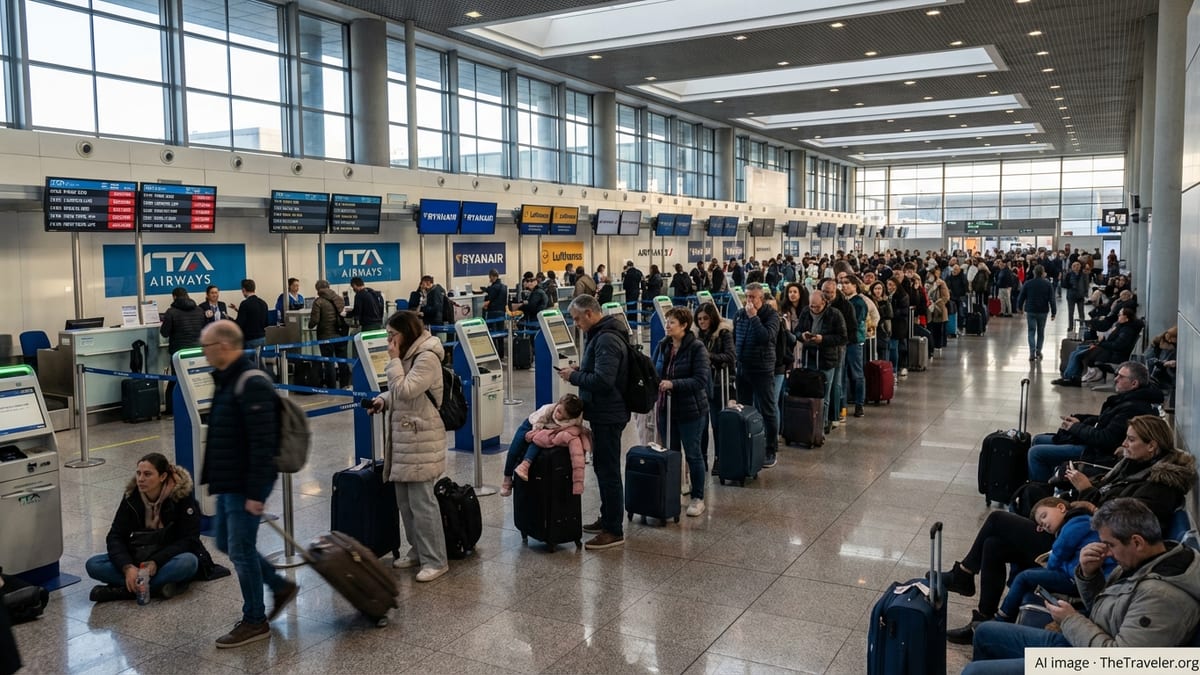
Rome’s Leonardo da Vinci–Fiumicino Airport descended into travel chaos on February 21 as rolling delays and an isolated cancellation rippled across major routes to Paris, London, New York and Berlin, disrupting operations for Alitalia, Ryanair, Lufthansa and Air France and straining an already fragile Italian aviation network.
Fiumicino Becomes the Epicenter of Fresh Disruption
By midafternoon on February 21, Fiumicino had emerged as the worst affected of Italy’s major airports, with 98 delayed departures and arrivals and one short-haul cancellation tied directly to services connecting the capital with key European and transatlantic hubs. Airport information screens showed extended hold times across a mix of legacy and low cost carriers, including Alitalia’s successor operations, Ryanair, Lufthansa and Air France, leaving passengers facing waits of up to several hours at departure gates.
The disruption at Fiumicino formed part of a broader day of turbulence for Italian aviation, with operational bottlenecks and staffing pressures also reported at Milan Malpensa, Bergamo’s Orio al Serio and Catania in Sicily. Yet industry observers noted that the concentration of long haul and high frequency European routes in Rome meant even a limited number of delayed rotations quickly cascaded into wider schedule problems, particularly on the busy corridors to Paris Charles de Gaulle, London Heathrow and Gatwick, Berlin Brandenburg and New York’s JFK Airport.
Airport officials described the situation as “dynamic,” with knock on effects from earlier rotations, congestion in surrounding European airspace and ground handling slowdowns combining to push back departure times. Although Fiumicino’s runways and air traffic control systems remained fully operational, the sheer volume of delayed aircraft waiting for slots and services created the impression for travelers of an airport struggling to keep pace with demand.
Key Routes to Paris, London, Berlin and New York Hit Hard
Among the most severely affected services were Rome’s high demand links with major European capitals. Short haul flights to Paris and London, traditionally among Fiumicino’s most frequented routes, saw repeated schedule revisions throughout the day as aircraft arriving late from earlier legs forced airlines to shuffle rotations, swap equipment or consolidate passenger loads. Travelers reported boarding flights only to wait on the tarmac for new departure times while crews awaited updated clearances.
Connections to Berlin also proved vulnerable, partly because of their tighter daily frequencies. With only a limited number of nonstop departures between the two capitals, even moderate delays on a single Rome Berlin service left passengers with few same day alternatives. Some travelers chose to rebook via Munich or Frankfurt, accepting additional connections in order to reach the German capital, while others were offered later flights from Rome or overnight accommodation when onward options were exhausted.
Long haul services between Rome and New York experienced knock on disruptions rather than outright cancellations. Afternoon departures were pushed back as arriving aircraft from earlier European legs missed their scheduled turnaround windows, forcing carriers to re crew and reshuffle gate allocations. For transatlantic passengers, even an hour’s delay risked jeopardizing evening connections onward from New York, turning what had been a routine intercontinental journey into a race against the clock.
Alitalia’s Successor, Ryanair, Lufthansa and Air France Under Pressure
The operational strain was most visible at the check in areas and customer service desks of the four carriers most impacted by the day’s problems. At Alitalia’s successor operations, which continue to handle a substantial share of Rome’s domestic and international feed, staff were tasked with rebooking passengers whose short haul flights linked to later long haul departures. Airline representatives worked to prioritize travelers with tight connections and vulnerable passengers, including families with small children and elderly customers, as queues stretched far beyond the usual cordoned areas.
At Ryanair counters in Fiumicino’s low cost terminals, delays on popular routes to London and other British and French airports tested the carrier’s lean operating model. Budget travelers described long lines at self service kiosks and boarding gates as they waited for real time updates through the airline’s app. With Ryanair operating tight turnaround times and heavily utilized aircraft, even minor schedule slips early in the day quickly translated into sizable late running by the evening peak.
Lufthansa and Air France felt the impact in their roles as key connectors between Rome and their respective hubs in Frankfurt, Munich and Paris. Delays to feeder flights from Fiumicino risked misaligning carefully timed connection banks that distribute passengers onto a web of onward European and intercontinental services. Airline staff on the ground in Rome coordinated with operations centers in Germany and France to hold certain departures or reroute customers via alternative hubs where possible, in an effort to minimize missed connections for travelers bound for North America, Africa and Asia.
Passenger Experience: Long Queues, Frayed Tempers and Missed Plans
Inside the terminals, the human impact of the disruption was immediately evident. Snaking lines formed at ticket counters, automated kiosks and boarding gates as travelers sought clarity on revised departure times, gate changes and rebooking options. Many passengers turned to their smartphones as the quickest way to adjust itineraries, often receiving confirmation of new flights through airline apps before those around them had reached the front of the customer service queue.
Families traveling with children faced particular challenges as delays stretched into the evening. With limited seating available near crowded gates and airport lounges filled to capacity, parents improvised makeshift rest areas on the floor using jackets and carry on bags. Some worried about dwindling supplies of snacks and medication for young children as they waited for updated boarding announcements, while others scrambled to adjust hotel reservations and ground transfers at their destinations.
Business travelers, many of them connecting through Rome on the way to meetings in London, Paris or Berlin, expressed concern about lost working hours and the cost of last minute itinerary changes. Several reported abandoning same day travel plans altogether, opting to postpone or shift critical meetings online rather than risk arriving late. For tour operators and small travel agencies, the wave of delays meant hurried calls to rearrange airport pickups, city tours and pre booked excursions for clients who would now land hours behind schedule.
Broader Context: Strikes, Staffing and a Fragile Network
The latest day of disruption comes against a backdrop of mounting pressure on Italy’s transport infrastructure. Aviation unions have already announced a nationwide 24 hour strike for February 26 that is expected to affect pilots, cabin crew, ground handlers and air traffic controllers across the country. Travel advisories have warned that the walkout could trigger hundreds of cancellations and widespread delays at Fiumicino and other major hubs, with knock on effects likely to linger into subsequent days.
In addition to industrial unrest, Italian airports and airlines are wrestling with post pandemic staffing challenges and the operational complexity surrounding Europe’s new border management systems. At Fiumicino, as at many large European hubs, the introduction of biometric entry and exit checks for non European visitors has lengthened processing times at peak hours, even on days when flights themselves operate more or less on schedule. When combined with weather disruptions or airspace congestion elsewhere on the continent, these structural pressures can quickly translate into the sort of cascading delays seen on February 21.
Industry analysts note that while the specific trigger for Friday’s problems appears to lie in a combination of staffing imbalances and air traffic control flow restrictions, the underlying issue is the limited resilience built into current schedules. With aircraft and crews operating close to capacity, the network has little room to absorb disruption, leaving passengers exposed whenever conditions deviate from the plan.
Options and Rights for Affected Travelers
For passengers caught up in the Fiumicino disruption, the first challenge was often understanding their options. Airlines urged customers to make use of digital tools wherever possible, including mobile apps and websites that allowed free same day changes, rebooking on later departures and, in some cases, voluntary travel vouchers. Travelers whose flights suffered lengthy delays or the single recorded cancellation were also advised to retain boarding passes, booking confirmations and receipts for food, accommodation and ground transport in case they prove eligible for reimbursement under European passenger rights rules.
Consumer advocates emphasized that, under European Union regulations, travelers may be entitled to care such as meals and hotel rooms when delays extend beyond certain thresholds, regardless of whether the underlying cause is considered extraordinary. Cash compensation, by contrast, can depend on the length of delay, route distance and the reasons cited by the airline. Because staffing shortages and operational mismanagement are generally considered within an airline’s control, many of Friday’s affected passengers may be in a position to file claims once they reach their final destinations.
Some travelers chose to bypass congested airport help desks entirely by turning to third party claims specialists and travel insurance providers. While these services often charge fees or commission on any compensation won, they can also relieve passengers of the burden of navigating complex claims procedures, particularly for those facing language barriers or tight onward schedules. However, consumer groups continue to recommend that passengers first pursue remedies directly with the operating carrier, both to preserve their rights and to avoid unnecessary costs.
Knock On Effects Across the Italian Travel Landscape
The problems at Fiumicino did not stay confined to the airport’s perimeter fences. Hotels in the airport district and central Rome reported a spike in last minute bookings as late running flights forced travelers to spend unplanned nights in the capital. Taxi lines lengthened outside arrival halls, and ride hailing applications showed surge pricing as local transport networks struggled to keep up with the sudden influx of stranded passengers seeking alternative routes into the city.
Elsewhere in Italy, rail services experienced additional pressure as some travelers opted to abandon domestic flights from Rome to cities such as Milan, Florence and Naples in favor of high speed trains. Ticketing platforms recorded increased same day purchases on key north south routes, a pattern that has become familiar during recent episodes of air disruption and strike action. While rail operators welcomed the extra business, the added demand also highlighted how closely intertwined Italy’s air and rail networks have become in handling the country’s tourism and business traffic.
Tourism officials expressed concern that the latest bout of aviation turmoil could unsettle potential visitors already wary of reports about upcoming strikes and infrastructure strains around the Winter Olympics period. Travel advisers are now urging would be visitors to Italy to build greater flexibility into their itineraries, avoid overly tight connections between international and domestic legs, and consider scheduling buffer days at the start or end of key events and cruises to accommodate possible last minute changes.
What Travelers Should Do Next
With further industrial action on the horizon and the wider European aviation system still prone to periodic disruption, experts say travelers using Fiumicino and other Italian hubs in the coming days should take a proactive approach. That includes closely monitoring flight status alerts from airlines and airports, completing online check in as early as possible, and allowing extra time both for airport formalities and potential transfers between terminals or transport modes.
Frequent travelers to and from Rome are increasingly encouraged to register for airline loyalty programs and travel apps that can deliver push notifications about gate changes and schedule shifts in real time. In some cases, elite status or paid options such as flexible tickets may offer access to priority rebooking channels when flights are disrupted, shortening the time spent in physical queues. Even for occasional visitors, selecting itineraries with slightly longer layovers or alternative routing via less congested hubs can yield dividends when conditions deteriorate.
For now, operations at Fiumicino are expected to normalize gradually as delayed aircraft and crews return to rotation and passenger flows even out. Yet as Italy heads into a period of heightened strike activity and continued infrastructural strain, the travel chaos experienced by passengers at Rome’s main airport on February 21 serves as a stark reminder of how quickly a modern hub can be pushed to its limits, and how essential preparation and flexibility have become for anyone planning to fly into or out of the country.