

More news on this day
Travel disruption swept through Zurich Airport today as five flights were cancelled and at least 68 were delayed, hitting key routes to London, Paris, Frankfurt and Amsterdam and leaving passengers facing missed connections, long queues and uncertain travel plans at one of Europe’s busiest winter hubs.
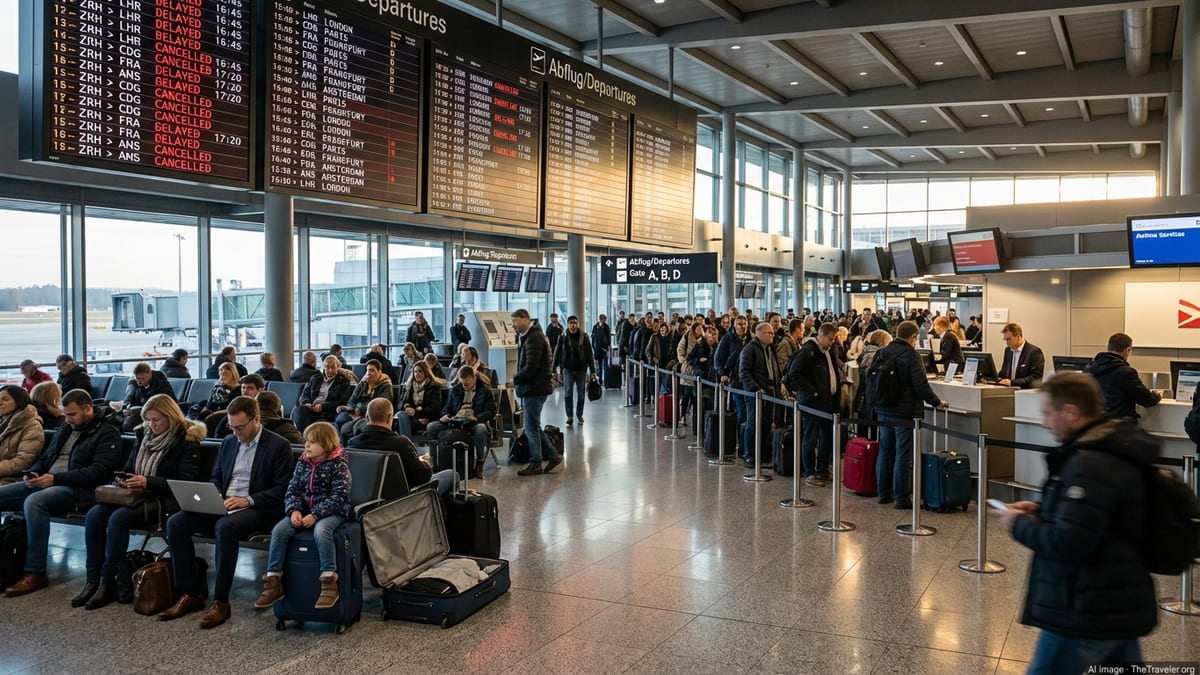
Major European Routes Hit by Cancellations and Delays
The latest disruption at Zurich Airport has focused sharply on some of Europe’s most heavily trafficked business and leisure corridors. Flights to London, Paris, Frankfurt and Amsterdam bore the brunt of the chaos, with services operated by Swiss International Air Lines, easyJet, Lufthansa and British Airways among those cancelled or heavily delayed.
According to airport operations data and airline updates, five scheduled departures or arrivals were cancelled over the course of the day, while 68 flights suffered delays ranging from 30 minutes to several hours. The knock-on effect has been particularly severe for passengers relying on Zurich as a connecting hub for onward long haul journeys, including transatlantic and Asian routes that typically feed through these major European cities.
Services between Zurich and London, especially to Heathrow, saw delays compound through the morning peak and into the afternoon wave, with several flights departing well behind schedule. Paris Charles de Gaulle and Amsterdam Schiphol, already under pressure from separate weather and operational issues in recent weeks, reported additional congestion as delayed Zurich services arrived late and disrupted onward itineraries.
Frankfurt, one of Lufthansa’s key hubs, also experienced a ripple effect as delayed flights from Zurich forced last minute rebookings and missed connections. Many travelers arriving late into Frankfurt found onward departures already closed or overbooked, adding to frustration at transfer desks and customer service counters.
Passengers Face Queues, Confusion and Missed Connections
Inside Zurich Airport’s terminals, scenes were marked by long lines at airline service desks, crowded gate areas and passengers clustered around flight information screens refreshing for updates. Those booked on the cancelled services were among the hardest hit, with many having to wait hours to secure alternatives amid limited spare capacity on popular European routes.
Families returning from ski holidays in the Swiss Alps, business travelers heading to financial centers such as London and Frankfurt, and weekend tourists bound for Paris and Amsterdam all reported difficulties in getting clear, timely information about their options. Several passengers described being moved between self service kiosks, call centers and in person desks as airlines struggled to process rebookings and issue hotel and meal vouchers.
Travelers with tightly timed connections were particularly vulnerable. A delayed morning departure to London could mean a missed evening long haul flight to North America, while late arrivals into Paris or Amsterdam risked cutting passengers off from onward services to Africa or Asia. In many cases, rebooked itineraries involved overnight stays or rerouting through other hubs, extending journeys by 12 hours or more.
The strain also showed in security and boarding areas, where rolling delays meant multiple delayed flights were boarding simultaneously. Gate changes added to the confusion as airlines tried to reshuffle aircraft and crew to keep as much of the schedule operating as possible.
Airlines Cite Weather, Congestion and Operational Pressures
The four airlines at the center of the disruption at Zurich Swiss International Air Lines, easyJet, Lufthansa and British Airways attributed the problems to a mix of adverse weather patterns across parts of Europe, air traffic control constraints and ongoing operational pressures within the aviation system.
In Zurich and surrounding regions, low cloud, intermittent rain and reduced visibility created challenging conditions for both departures and arrivals, slowing the pace of operations and forcing additional spacing between aircraft. At the same time, several of the affected destination airports including London, Paris and Amsterdam have been coping with their own congestion issues, with air traffic control slot restrictions limiting the number of movements permitted per hour.
Airline operations teams sought to emphasize that safety remained the overriding priority, with some flights held on the ground or rerouted to avoid storms or heavy traffic in crowded airspace corridors. However, capacity constraints and crew duty time regulations left limited flexibility to recover disrupted schedules once delays began to accumulate.
The situation was further complicated by the broader backdrop of strain on European aviation, where carriers have been facing tight staffing levels, high demand on key routes, and periodic technical issues. These factors reduce the margin for recovery when even relatively small disruptions occur at a major hub such as Zurich.
Impact on London, Paris, Frankfurt and Amsterdam Hubs
While Zurich was the origin of today’s disruption, its effects quickly spread to the major European hubs it connects with. London Heathrow and London Gatwick reported further pressure on gate availability and handling resources as delayed inbound flights from Switzerland spilled into already busy afternoon and evening waves.
In Paris, Charles de Gaulle operators indicated that late arriving Zurich flights fed into existing congestion from earlier delays, stretching turnaround times and leading to additional minor holdups on the ground. Passengers transferring in Paris to southern Europe, North Africa and the Middle East found themselves queueing for rebooking assistance alongside those who had already been impacted by separate local weather issues in recent days.
Frankfurt Airport, serving as Lufthansa’s primary hub, felt the disruption in its connecting complexes, where even a handful of delayed or cancelled Zurich services can reverberate through tightly timed wave structures. Missed connections required last minute baggage transfers and re-accommodation, creating added workload for ground staff across multiple terminals.
Amsterdam Schiphol, a key transfer point for northern Europe and transatlantic routes, also absorbed the impact of Zurich’s delays. Late inbound flights led to compressed connection windows and increased pressure on passport control and security checkpoints, particularly for travelers switching between Schengen and non Schengen flights.
Zurich Airport’s Role in Europe’s Winter Travel Network
Zurich Airport occupies a critical place in Europe’s winter travel network. As the primary gateway to Switzerland’s major ski regions and a significant hub for international business traffic, any disruption there tends to have outsized effects on both leisure and corporate travel across the continent.
During the peak ski season months, flights between Zurich and European capitals such as London, Paris, Frankfurt and Amsterdam are often heavily booked, carrying a mix of tourists, seasonal workers and connecting passengers from long haul markets. Seat availability on alternative departures can quickly become scarce when cancellations occur, leaving affected travelers with limited immediate options.
The airport has invested in recent years in expanding terminal capacity and improving passenger flows, yet days like today highlight how vulnerable even modern, well equipped hubs remain to external shocks. Weather, upstream congestion at partner airports and air traffic control limitations can all converge, overwhelming the buffers built into daily operations.
Industry analysts note that as airlines have streamlined fleets and schedules to boost efficiency, they have also reduced some of the redundancy that once helped absorb such disruptions. With fewer spare aircraft and leaner staffing, recovering from even a small cluster of cancellations and dozens of delays can take a full operating day or longer.
How Airlines Responded on the Ground
As the scale of the disruption became clear, Swiss, easyJet, Lufthansa and British Airways activated their standard irregular operations protocols at Zurich. Additional staff were deployed to customer service desks, and digital channels such as mobile apps and text alerts were used to push rebooking options and gate updates to affected travelers.
Swiss and Lufthansa, with significant hub operations at Zurich and Frankfurt respectively, focused on re protecting connecting passengers onto later bank departures and rerouting others via partner hubs where capacity allowed. In some cases, travelers bound for London or Paris from Zurich were rebooked via Munich, Brussels or Vienna to avoid fully booked direct services.
EasyJet, which operates a point to point model, concentrated on moving disrupted passengers onto later departures from Zurich or nearby airports. British Airways sought to consolidate lightly booked flights where operationally possible, freeing aircraft and crew to operate services with the highest numbers of stranded passengers.
Despite these efforts, many customers reported long waits to speak with an agent and a shortage of clear communication about compensation, accommodation rights and refund options. Consumer advocates once again urged passengers to familiarize themselves with European air passenger protection rules, particularly around eligibility for meal vouchers, hotel stays and financial compensation when flights are significantly delayed or cancelled for reasons within airlines’ control.
Advice for Travelers Heading to or Through Zurich
With Zurich Airport still working to clear backlogs created by the five cancellations and dozens of delayed flights, travel experts urged passengers scheduled to fly through the hub in the coming hours to plan for potential knock on effects. Even after the immediate disruption eases, aircraft and crew may be out of position, leading to schedule changes on subsequent rotations.
Travelers are advised to monitor their airline’s app or website closely, enable flight status notifications, and check in online as early as possible. Arriving at the airport with extra time, particularly for flights connecting to London, Paris, Frankfurt or Amsterdam, can help absorb any unexpected bottlenecks at security or passport control that arise when delayed flights bunch together.
Those with critical time sensitive journeys, such as same day business meetings or long haul connections, may wish to discuss backup options with their airline or travel agent, including alternative routings through other hubs. Flexible tickets and travel insurance policies that cover delays and missed connections can offer additional protection on days when Europe’s aviation network is under strain.
Passengers already at Zurich and facing extended waits are encouraged to keep receipts for meals, transport and accommodation related to the disruption, as these may be required for any subsequent claims. With the winter travel season still in full swing and Europe’s aviation system operating close to capacity, further episodes of disruption remain possible in the weeks ahead.