

More news on this day
Hundreds of passengers were caught in a fresh wave of travel disruption at Vancouver International Airport on Monday as 54 flights were delayed and six cancelled, part of a broader weather-driven meltdown snarling air traffic across Canada’s busiest routes.
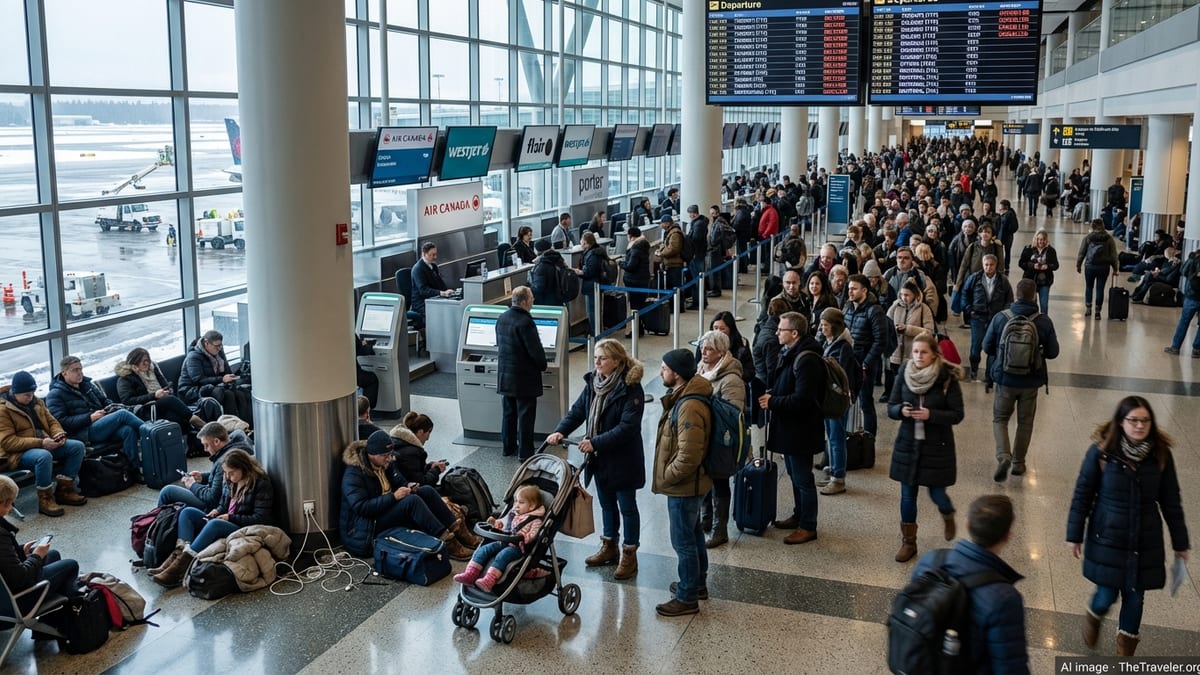
Weather Turmoil Sparks Fresh Wave of Disruptions
The latest operational crunch unfolded as a powerful winter system continued to lash parts of Canada and Atlantic North America, complicating takeoffs and landings along key west to east corridors. While Vancouver itself was spared the worst of the snow now hammering the eastern provinces, ripple effects from conditions across the country and congested airspace triggered delays that quickly cascaded through the network.
Operational data from Canadian hubs show that Vancouver’s 54 delayed and six cancelled flights formed part of a wider pattern of nationwide disruption affecting services to and from Calgary, Toronto, Ottawa and Montreal. Airlines have been juggling crew duty time limits, aircraft repositioning and ground handling challenges in difficult weather, creating bottlenecks that intensified through the day.
Airport staff at Vancouver International reported departure boards dominated by yellow and red status markers, as departure times slid repeatedly into later slots. Several arrivals from eastern Canada and transborder services landed well behind schedule, forcing carriers to compress turnarounds or reassign aircraft at short notice.
While safety remained the overriding priority, the cumulative effect was a day that passengers described as a slow moving gridlock, with aircraft ready to fly but flows into and out of affected cities sharply reduced by weather and congestion.
Air Canada, WestJet and Low Cost Carriers Hit Hard
Major Canadian airlines bore the brunt of Monday’s turmoil, as Vancouver’s schedule disruptions rippled across their domestic networks. Air Canada, operating a dense schedule linking Vancouver with Toronto, Montreal, Ottawa and Calgary, faced rolling delays on core trunk routes, with some flights held on the ground awaiting inbound aircraft and rested crews.
WestJet, heavily exposed to western and transcontinental routes, also struggled to keep services on time. Several Calgary and Toronto rotations experienced knock on delays, with aircraft arriving late into Vancouver and turning around behind schedule. Passengers connecting onward from those flights to the Prairies and Atlantic Canada encountered missed connections and overnight rebookings.
Low cost competitors were not spared. Flair Airlines reported schedule disruptions on value focused services linking Vancouver to Edmonton, Calgary and Toronto, while Porter Airlines saw delays on select routes feeding Toronto and Ottawa. With tighter fleet sizes and less spare capacity than the largest carriers, these airlines had little room to absorb late running aircraft without passing those delays directly on to customers.
By late afternoon, irregular operations across all four brands meant that even flights not directly affected by poor weather at origin or destination were running behind time, as aircraft and crews found themselves out of position across the network.
Passengers Endure Long Lines, Confusion and Frustration
Inside Vancouver International’s terminals, the impact was immediately visible. Lengthy queues formed at airline service desks and self service kiosks as travellers tried to rebook missed connections or secure accommodation vouchers. Families returning from school breaks, business travellers heading to Monday meetings and international visitors transiting through Vancouver joined the same lines, many scrolling through airline apps that continued to refresh with new estimated departure times.
With six flights cancelled outright, affected passengers were moved onto already busy later departures to Toronto, Montreal and Calgary, compressing available seat capacity. Some travellers reported being offered routings that would send them via secondary hubs or require overnight stays before reaching their final destinations.
In the gate areas, large numbers of passengers clustered around power outlets and seating zones, listening for public announcements about boarding changes. Airport volunteers and airline staff circulated with updates and basic refreshments in the most crowded sections, but a number of travellers described a day marked by sparse information and sudden schedule shifts.
Hotels near Vancouver International reported a spike in last minute bookings from stranded passengers, echoing similar surges in Calgary, Toronto, Ottawa and Montreal as the winter system continued to disrupt arrivals and departures there.
Ripple Effects Felt Across Canada’s Major Hubs
While Vancouver was a visible focal point of Monday’s problems, the underlying pressures stretched across the national air grid. Toronto Pearson, Montreal Trudeau, Calgary International and Ottawa Macdonald Cartier all continued to wrestle with weather impacts and residual disruption from earlier waves of cancellations and delays triggered by the same storm pattern.
Air traffic management restrictions and deicing backlogs at eastern hubs forced incoming flights to hold or divert, tightening turnaround windows and contributing to further schedule slippage. Services originating in Vancouver and bound for Toronto or Montreal often departed late, only to encounter additional congestion on arrival, reducing the time available before the aircraft’s next scheduled leg.
Industry analysts noted that Canada’s highly interconnected domestic network leaves little slack when multiple hubs are under stress at the same time. A single cancelled rotation can require complex reaccommodation for passengers who were due to connect onward to secondary cities such as Halifax, Quebec City or Winnipeg, creating knock on disruption that can take days to unwind.
Regional airports across British Columbia and the Prairies also felt the strain as inbound aircraft from Vancouver arrived late and some evening services were consolidated, leaving travellers in smaller communities facing curtailed options and longer waits for replacement flights.
Airlines Urge Travelers to Rebook Early and Monitor Flights
With more unsettled winter weather in the forecast and operations still recovering, airlines serving Vancouver and other Canadian hubs urged passengers to stay flexible. Carriers encouraged customers with non essential travel to monitor their bookings closely and, where possible, move to alternate dates without penalty under existing weather related waiver policies.
Air Canada and WestJet reiterated that customers should rely on official airline apps and direct notifications for the most accurate and timely information on departure times and gate changes. They also reminded travellers that rebooking and refund options differ depending on whether a disruption is caused by weather, air traffic control limitations or internal operational issues.
Consumer advocates, meanwhile, renewed calls for clearer communication standards when large scale disruptions occur, arguing that passengers left waiting for hours deserve more consistent updates on the likely timing of their flights and any contingency plans in place. They also pointed to the growing importance of travel insurance that explicitly covers weather related delays and cancellations on domestic and transcontinental routes.
For now, passengers planning to pass through Vancouver, Calgary, Toronto, Ottawa or Montreal over the coming days are being advised to build extra time into their journeys, keep essential items in carry on baggage and be prepared for further last minute adjustments as Canada’s air travel system works to stabilize after the latest winter induced meltdown.