

More news on this day
Major airports in Australia and New Zealand were hit by severe disruption this weekend, with 433 flight delays and 35 cancellations recorded across Melbourne, Sydney, Auckland, Christchurch and other key hubs, affecting services operated by Qatar Airways, QantasLink, Alliance Airlines, Air New Zealand and several other carriers.
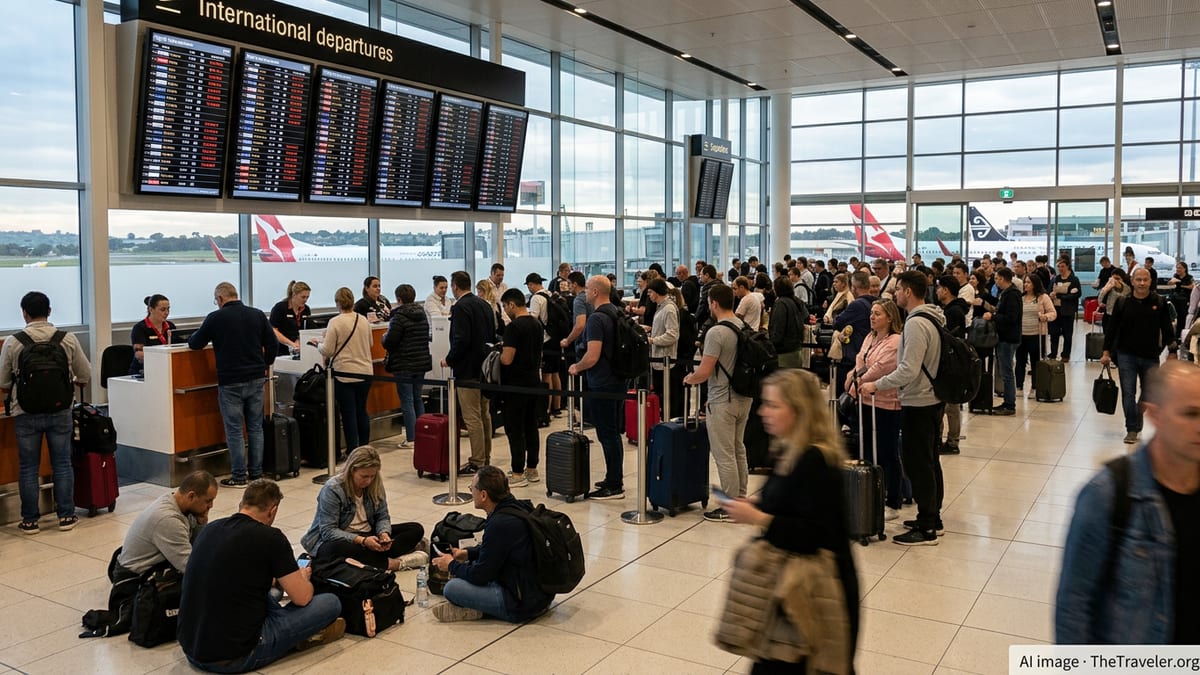
Major Hubs Struggle as Disruptions Mount
Operational data compiled from airport tracking platforms and airline schedules shows that the worst disruption has been concentrated at the region’s busiest gateways, including Melbourne Tullamarine, Sydney Kingsford Smith, Auckland International and Christchurch. Across these hubs, delays rippled through domestic and international networks, leaving passengers facing missed connections, long queues and extended time on terminal floors as they waited for new departure times.
While some airlines experienced relatively modest interruptions, others saw wide segments of their schedules pushed back. Regional operator QantasLink reported extensive hold-ups across intra-state and inter-state services, while Alliance Airlines faced similar challenges on contracted and charter operations feeding into and out of major cities. Air New Zealand flights linking Auckland, Christchurch and Australian east coast cities also recorded elevated delay rates, adding pressure to already busy trans-Tasman corridors.
International traffic was far from immune. Qatar Airways services into and out of Australia and New Zealand experienced notable timetable disruptions, compounding pressure on long-haul passengers with onward connections to Europe, the Middle East and Africa. Airport sources said departure banks during peak periods became particularly congested as airlines juggled aircraft and crew to keep as many services moving as possible.
Mixed Causes Behind Widespread Delays
Airline and airport officials cited a mix of contributing factors behind the latest wave of disruption, reflecting the fragility of tightly wound aviation schedules. Industry sources pointed to weather variability along the eastern seaboard, localized ground handling bottlenecks and flow-control measures in surrounding airspace, which together reduced the capacity of major hubs during peak operating windows.
Operational constraints were compounded by ongoing resourcing challenges that have lingered since the pandemic-era downturn. Several carriers have continued to report shortages of specialised staff, from licensed engineers to cockpit and cabin crews, which can quickly escalate into knock-on delays when even a single flight operates outside its scheduled slot. When one aircraft arrives late into a hub, its next rotation typically departs behind time, magnifying the disruption across subsequent services.
Long-haul operations have been particularly sensitive to any upstream disturbance. For airlines such as Qatar Airways that operate complex global connection banks, minor schedule slippages can force difficult decisions on whether to hold flights for inbound passengers or to depart on time to protect onward connections at the carrier’s main hub. In some cases, airlines have opted to consolidate or cancel individual services rather than run significantly late, a strategy that helps protect overall network stability but leaves affected passengers scrambling for alternatives.
Passenger Experience: Long Queues and Frayed Nerves
For travelers caught in the middle, the statistics translated into a day of uncertainty and frustration. At Melbourne and Sydney, early-morning queues at check in and security quickly stretched through terminal concourses as delays accumulated, with many passengers learning of revised departure times only after arriving at the airport. Families heading to school holiday breaks and business travelers on tight itineraries were particularly affected, with some reporting waiting hours before receiving firm information on rebooking options.
Across the Tasman, passengers at Auckland and Christchurch described long waits at airline service desks as ground staff attempted to reaccommodate those whose flights had been heavily delayed or cancelled. With many services operating close to capacity, same-day alternatives were limited, forcing some travelers to accept overnight stays or rerouting via secondary cities. Hotel capacity near the major airports tightened as airlines issued accommodation vouchers and independent travelers sought last-minute rooms.
Despite the challenges, airport operators stressed that safety was never compromised. Pilots and operations controllers held departures where necessary to avoid flying into adverse conditions or exceeding crew duty limits. However, that focus on safety added to the sense of disruption for travelers who saw multiple departure boards showing “delayed” or “cancelled” next to flights operated by a range of carriers including Qatar Airways, QantasLink, Alliance Airlines and Air New Zealand.
Airlines and Airports Move to Stabilise Operations
By Sunday afternoon, airlines were working to gradually restore schedule reliability. Additional standby crews were called in where available, and some non-essential positioning flights were adjusted to free up aircraft for revenue services. Airport coordination cells, bringing together air traffic control, ground handlers and airline operations teams, met frequently through the day to prioritise departures and ensure critical connections and long-haul services could depart as close to schedule as possible.
Air New Zealand deployed extra customer-care teams at key points in Auckland and Christchurch to help manage rebookings and provide welfare support, including meal vouchers for passengers facing lengthy waits. In Australia, QantasLink and Alliance Airlines highlighted efforts to reroute travelers via alternative domestic ports when direct services were no longer viable, while international carriers such as Qatar Airways explored interline options with partner airlines to keep disrupted passengers moving on longer journeys.
Airport authorities in Melbourne and Sydney indicated that they would review the day’s performance with airlines and air traffic management providers, focusing on pinch points where ground handling and security screening struggled to keep pace with revised departure waves. Early indications suggested that incremental improvements in staffing and contingency planning could help absorb future shocks more effectively, though industry figures cautioned that short-term fixes would not fully insulate passengers from similar days of disruption.
What Travelers Should Do if Flying in the Region
With schedules still fragile following the latest disruption, travel advisers urged anyone flying to or from Australia and New Zealand in the coming days to build additional flexibility into their plans. Passengers were encouraged to monitor their flight status frequently, use airline apps where possible and arrive at the airport earlier than usual, especially for trans-Tasman and long-haul departures that involve complex connections.
Experts also recommended that travelers consider booking the first flights of the day, which statistically are less exposed to knock-on delays from earlier disruptions. For those whose journeys involve multiple segments, longer connection windows in hubs such as Sydney, Melbourne or Auckland can reduce the risk of missed onward flights if the first leg runs late. In particularly disruption-prone periods, some frequent travelers are opting for routes with additional daily frequencies, giving them more options to rebook if a specific service is heavily delayed or cancelled.
Consumer advocates reiterated that passengers affected by significant delays and cancellations should familiarise themselves with their rights under airline conditions of carriage and, where applicable, regional consumer protection frameworks. While the specific obligations vary depending on the airline, route and cause of disruption, passengers may in some circumstances be entitled to meal vouchers, accommodation, ground transport and alternative routing. With hundreds of flights disrupted across Melbourne, Sydney, Auckland, Christchurch and other airports, those protections could make a critical difference for travelers navigating one of the region’s most challenging travel days in recent months.