

More news on this day
Hundreds of flights across the United States faced significant disruption on Tuesday, March 31, 2026, as operational bottlenecks and unsettled weather combined to trigger widespread delays at key hubs including Miami, Phoenix, Charlotte, and Philadelphia, with more than 650 delays and at least six cancellations affecting major carriers such as American Airlines and Southwest Airlines.
Get the latest news straight to your inbox!
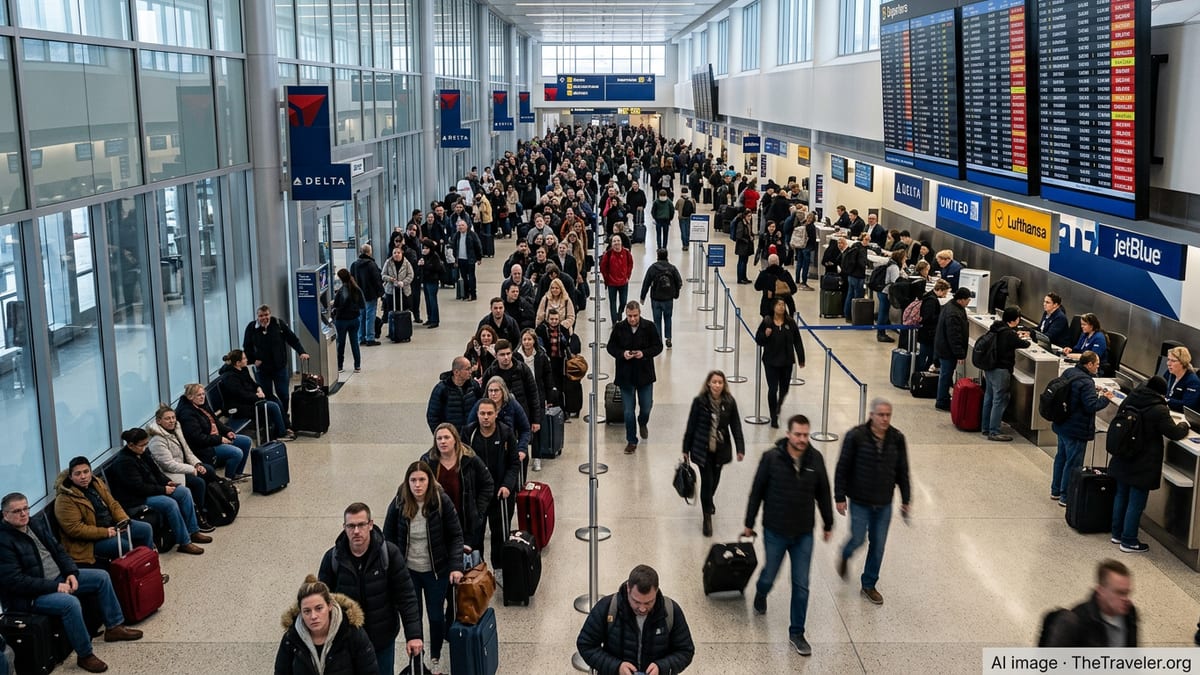
Major Hubs Struggle Under Wave of Delays
Publicly available aviation data and industry reports indicate that the latest day of disruption has hit several of the country’s most important connecting airports at once. Miami International, Phoenix Sky Harbor, Charlotte Douglas, and Philadelphia International are all reporting elevated levels of congestion, with departure and arrival boards dominated by late-running services.
Nationwide figures compiled from tracking platforms and aggregated by travel-industry outlets show more than 3,000 delays across the United States on March 31, with roughly 650 clustered around these four hubs alone. While the absolute number of outright cancellations remains comparatively low, at an estimated six flights tied directly to these airports, the knock-on effects are reverberating through secondary cities connected via their spokes.
Connections on popular business and leisure routes are bearing the brunt. Flights linking Miami and Phoenix to other major nodes in the Southeast and Southwest are seeing creeping departure times, often pushed back in repeated short increments that complicate planning for travelers attempting to connect onward.
The pattern reflects a broader strain evident across the national network, where strong demand, crew and aircraft positioning challenges, and weather-sensitive schedules have left little slack when conditions deteriorate or traffic peaks unexpectedly.
American Airlines, Southwest and Peers Face Operational Strain
According to national snapshots of carrier performance published by aviation-focused outlets, American Airlines and Southwest Airlines are among the most exposed to Tuesday’s disruption. One industry roundup for March 31 shows American handling more than 370 delayed flights systemwide and Southwest more than 430, placing them near the top of the list by sheer volume of affected services.
Their heavy reliance on hub-and-spoke operations in the affected cities is a critical factor. American’s large footprints in Charlotte, Miami, and Philadelphia mean that even modest schedule slippages can quickly cascade into missed connections and rolling delays. Southwest, with a dense schedule at Phoenix and across the Southwest, is experiencing similar pressure as aircraft and crews struggle to stay in sequence once morning flights depart late.
Despite the high number of delays, both carriers are keeping cancellation totals relatively contained compared with some past disruption events. The same national figures indicate that American has logged only a handful of cancellations on March 31 and Southwest a similarly low number, suggesting that airlines are favoring extended ground holds and re-timed departures over outright scrapping of flights.
However, for travelers this strategy can still mean long hours in terminals and tight or missed connections further along their journeys, particularly at the four focal hubs where gate space and crew availability are already stretched.
Philadelphia Emerges as a Flashpoint
Travel-industry coverage focused on Philadelphia International Airport portrays the city as one of the day’s flashpoints. An analysis by a travel news outlet on March 31 notes around 65 delays and several cancellations concentrated at the airport, with American Airlines responsible for nearly half of the delayed departures or arrivals.
The same reporting highlights contributions from low-cost carriers including Frontier, Spirit, and JetBlue, which together add to the tally of disrupted operations at Philadelphia. While most of these are short-haul domestic services along the East Coast corridor, any delay at a constrained hub can ripple out to affect aircraft utilization later in the day, particularly when turn times are already tight.
Philadelphia’s role as both a transatlantic gateway and a high-frequency domestic connector means that even modest local weather or airspace restrictions are magnified. On March 31, traffic management initiatives and ground delays in the broader Mid-Atlantic region appear to be compounding airport-level challenges, contributing to the elevated delay count that feeds into the nationwide total.
For passengers, the disruption is translating into missed evening departures to other US cities, longer queues at rebooking counters, and more frequent last-minute gate changes, all of which further slow the flow of people and planes through the terminal complex.
Weather, Congestion and Legacy Storms Keep System Fragile
The current wave of delays comes on the heels of a turbulent winter for North American aviation. Over the past two months, a series of significant storms, including a major January winter system and subsequent February and March snow and ice events, have repeatedly forced large-scale schedule reductions and complex recovery efforts across the eastern half of the continent.
Although conditions on March 31 are less extreme than during peak winter storms, residual impacts are still evident. According to national aviation summaries, severe thunderstorms and localized flooding in parts of the Midwest and East Coast are intersecting with already tight crew rosters and maintenance windows, leaving airlines with limited flexibility to absorb new disruptions.
Once delays build during the morning peak, they tend to persist throughout the day, particularly at hub airports where arrival and departure banks are tightly timed. Even a relatively modest hold on inbound flights into Charlotte or Miami can result in late departures to Phoenix or Philadelphia later in the schedule, creating a chain reaction that ultimately underpins the 650-plus delay count now associated with the four highlighted airports.
Industry observers note that structural pressures, including aircraft delivery lags, pilot and ground-staff shortages in some markets, and sustained travel demand, are keeping the system close to capacity. Under such conditions, even everyday weather can trigger outsized operational knock-on effects.
What Travelers Can Expect in the Coming Days
Projections based on current weather models and airline scheduling patterns suggest that some residual disruption is likely to linger into the midweek period, particularly for early morning departures from the hardest-hit hubs. Aircraft and crews displaced by March 31 irregular operations will need time to cycle back into their normal rotations, especially on transcontinental and long-haul domestic routes that touch multiple time zones.
Travel advisories issued through airline websites and airport communications encourage passengers flying through Miami, Phoenix, Charlotte, and Philadelphia to monitor their flight status closely and to allow extra time at the airport. Same-day rebooking options, use of mobile boarding passes, and proactive adjustments to tight connections are being described as practical steps for limiting the impact of rolling delays.
On a broader level, the latest day of disruption adds to a growing body of data suggesting that while US carriers have generally kept cancellations lower than during some high-profile meltdowns of recent years, delay minutes remain stubbornly high. Recent independent analyses of multi-year domestic flight performance indicate that average delay durations have edged up even as airlines refine schedules and ground operations.
For now, travelers connecting through the four affected hubs on March 31 face a familiar reality in the post-pandemic era of US aviation: flights are operating in large numbers, but they are increasingly vulnerable to even modest shocks, and a single day of widespread delays can ripple across the network long after departure boards return to normal.