

More news on this day
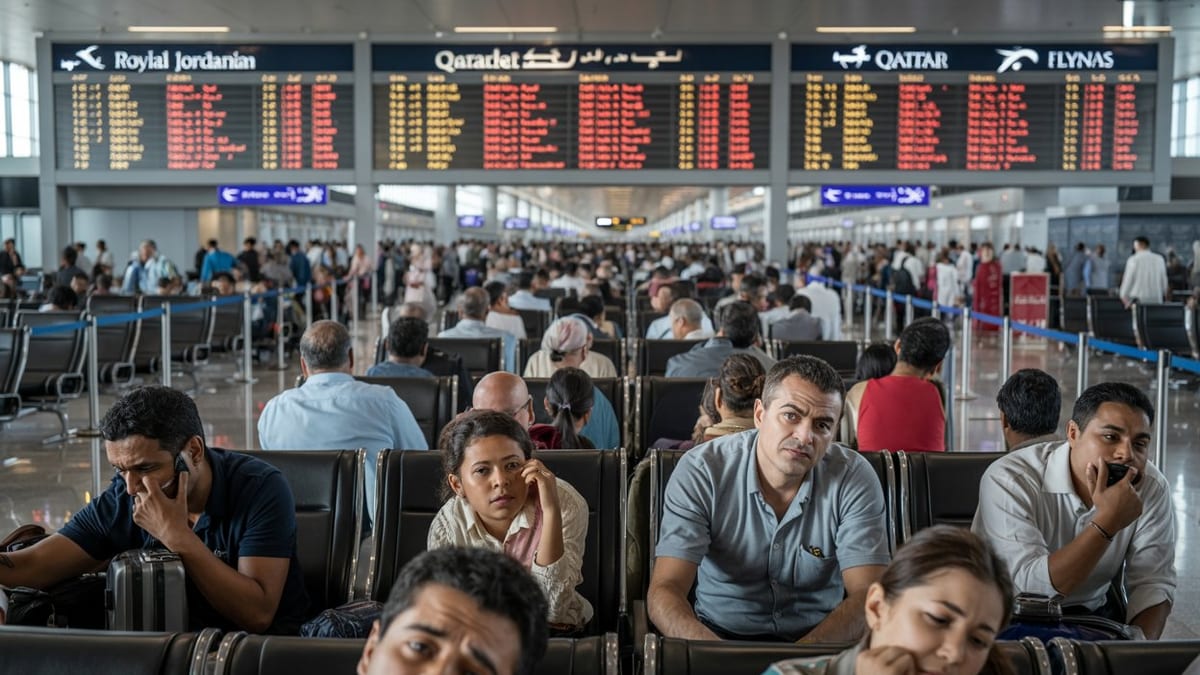
Passengers traveling through Nashville International Airport on April 7 faced hours of disruption as 72 delayed flights and 2 cancellations rippled across key domestic routes operated by Southwest, Spirit, Delta and American Airlines.
Get the latest news straight to your inbox!
Delays Mount Across Major Domestic Hubs
Publicly available flight tracking data and airport status boards for Monday indicate that Nashville International Airport recorded 72 delayed departures and arrivals and 2 cancellations, with knock-on effects to some of the country’s busiest hubs. Routes to Atlanta, New York and Dallas were among the most heavily affected, creating bottlenecks that spilled into wider national schedules.
The disruption came on a day when flight operations across the United States were already under strain, with national statistics showing elevated totals of delays and a smaller number of cancellations at major airports. Reports from travel outlets covering the broader network describe congested operations at Atlanta, New York area airports and other hubs, where delay counts reached into the hundreds as carriers worked to reset aircraft and crew rotations.
In Nashville, the imbalance between delays and cancellations mirrored a pattern seen at other airports. Most services eventually departed, but often significantly behind schedule, extending the impact well into the afternoon and early evening as late-arriving aircraft cascaded into subsequent departures.
Flight disruption data reviewed for April 7 suggests that the issues were concentrated on short and medium haul domestic services, which form the backbone of Nashville’s connectivity to the rest of the country. This left travelers on business and leisure itineraries scrambling to rebook missed connections or accept much later arrival times at their final destinations.
Southwest, Spirit, Delta and American Under Pressure
The four largest operators affected in Nashville’s latest disruption were Southwest Airlines, Spirit Airlines, Delta Air Lines and American Airlines, which collectively handle a significant share of the airport’s domestic traffic. Publicly available airline performance snapshots for April 7 show each of these carriers contending with elevated delay totals across their national networks, not just in Tennessee.
Southwest and Spirit, both heavily exposed to high-frequency domestic point to point routes, appeared among the carriers with substantial numbers of delayed departures nationwide. Industry coverage of Monday’s operations points to tight aircraft utilization and full spring travel loads as factors that can leave low cost airlines vulnerable when early morning departures run late and recovery options narrow as the day progresses.
Delta and American, which rely on hub and spoke networks centered on cities such as Atlanta, Dallas and New York, also reported significant nationwide disruption in published tallies. When those hubs experience congestion or spacing programs, ripple effects can quickly extend to spoke cities like Nashville, forcing schedule adjustments, rolling delays and, in a smaller number of cases, outright cancellations.
Operational data released in recent federal air travel consumer reports has shown that, on typical days, delays vastly outnumber cancellations for large United States carriers, underscoring that the primary challenge for passengers is often late operations rather than complete loss of service. Monday’s pattern at Nashville fit that broader trend, with most passengers eventually able to travel, albeit on a delayed basis.
Knock On Effects for Atlanta, New York, Dallas and Beyond
The concentration of disruption on flights linking Nashville with major hubs meant that the impact quickly radiated beyond Tennessee. Services to Atlanta, New York and Dallas play a critical role in feeding onward connections to smaller cities and long haul routes, so delays on these legs can translate into missed or misaligned itineraries across the country.
Travel industry reports covering the April 7 disruptions highlight that airports such as Atlanta, Chicago, Orlando and New York area facilities were already grappling with heavy delay volumes. Additional late arrivals from cities like Nashville added to gate constraints and turnaround challenges at those hubs, further stretching airline and airport resources.
Passengers connecting through these nodes often face compounded disruption, as an initial delay departing Nashville leaves narrower margins for transfers. When subsequent flights are already operating close to schedule capacity, rebooking options become more limited, sometimes requiring travelers to accept overnight stays or lengthy layovers in intermediate cities.
While the absolute number of cancellations at Nashville remained low compared with national figures, industry observers note that a relatively small cluster of cancelled flights can still strand hundreds of travelers if aircraft are full. In such cases, finding spare seats on later departures, especially at peak periods, can be challenging and may require rerouting through alternate hubs.
Systemic Strains Behind a Difficult Travel Day
The latest disruption in Nashville arrives against a backdrop of broader systemic pressure on the United States air travel network. Recent federal analyses of on time performance attribute a significant share of delays to what regulators classify as national aviation system factors, including non extreme weather, air traffic control workload, airport congestion and heavy traffic volume.
In and around Nashville, passengers and local aviation observers have for months highlighted the combined effects of rapid growth in demand, terminal construction and staffing constraints within the air traffic system. Public comments from air travel forums and community discussions frequently describe busy morning departure banks, closely packed arrival streams and limited slack in gate availability during peak periods.
Industry data from recent months also shows that several large carriers have been operating with high aircraft utilization, a strategy that maximizes efficiency when conditions are stable but can leave little room to absorb unexpected disruptions. When even a handful of early flights run late, the resulting delays can propagate throughout the day, particularly at mid sized hubs where backup aircraft and crews are less plentiful.
Travel analysts note that isolated operational incidents, such as weather near a key hub or maintenance challenges on a particular aircraft type, can still trigger delays far from the original source. For passengers in Nashville on April 7, this meant that issues playing out hundreds of miles away, in combination with local constraints, translated into real time schedule changes on the departure boards.
What Travelers Can Do on High Disruption Days
Consumer advocates and aviation specialists who study delay patterns consistently recommend that travelers build additional resilience into their plans on days when national disruption indicators are elevated. For passengers moving through Nashville on April 7, such strategies could include arriving earlier at the airport, especially for morning departures, and closely monitoring flight status through airline applications and airport information screens.
Published guidance from travel research groups suggests that, when possible, choosing earlier flights in the day can reduce exposure to rolling delays that accumulate over successive rotations. On heavily traveled routes from Nashville to hubs like Atlanta, New York and Dallas, early departures are often among the first to be retimed when traffic management initiatives or ground delay programs are implemented, making real time status checks particularly important.
Passengers facing lengthy delays or missed connections are also encouraged, based on publicly available consumer rights information, to familiarize themselves with each airline’s policies on meal vouchers, hotel accommodation and rebooking options. While compensation rules vary, especially when disruptions are attributed to broader system factors, understanding carrier commitments can help travelers make informed choices at the airport service desk.
For Nashville International Airport, Monday’s wave of delays and limited cancellations serves as another reminder of how closely local travel reliability is tied to conditions across the national network. With spring and summer travel demand ramping up, aviation analysts expect that days of intensified disruption will remain a recurring feature of the season, placing a premium on preparation and flexibility for anyone planning to fly.