

More news on this day
Thousands of travelers across the United States are facing prolonged delays, cancellations, and last minute schedule changes in early 2026, as a series of winter storms, ground stops, infrastructure failures, and safety incidents strain an already fragile aviation system.
Get the latest news straight to your inbox!
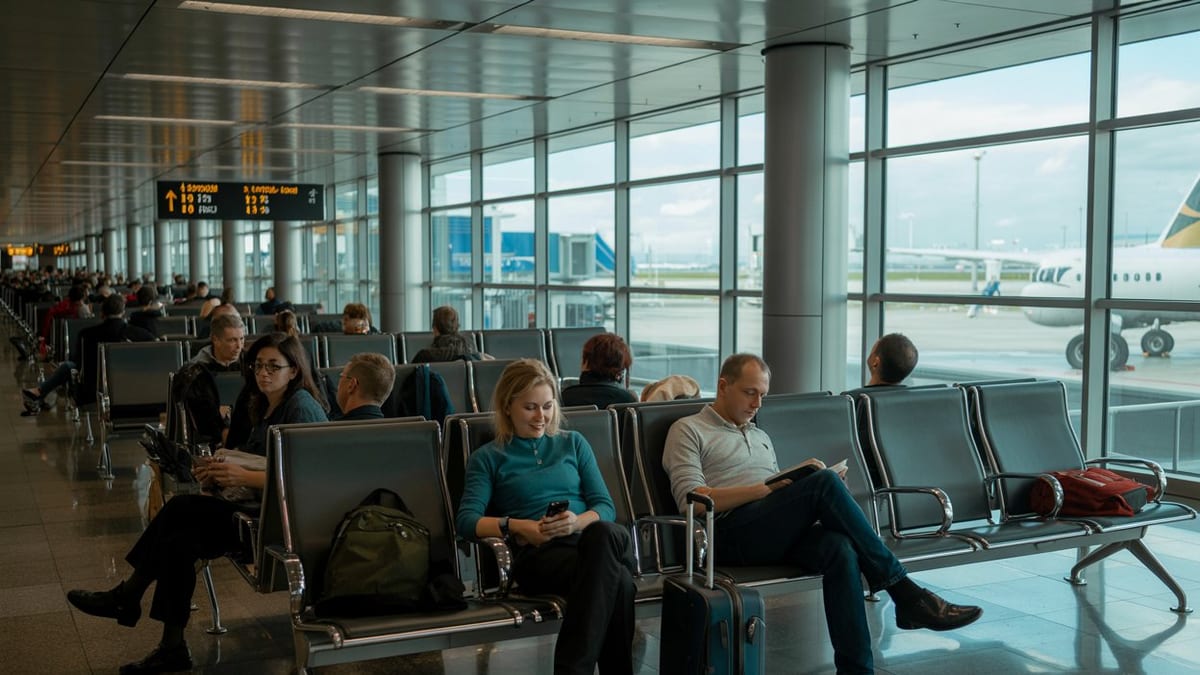
Image by Travel And Tour World
Multiple Winter Storms Trigger Mass Cancellations
Much of the disruption in the opening months of 2026 has been driven by severe weather. A major winter storm between January 23 and 27 brought one of the largest single day waves of weather related flight cancellations in recent US history, with public data indicating more than 10,000 flights scrapped on January 25 alone as snow, ice, and freezing rain spread from the southern Rockies to New England. Aviation analytics cited in news coverage described the event as the biggest cancellation spike since the height of the pandemic in 2020.
Subsequent storms deepened the impact. A powerful February blizzard in the Northeast, widely referred to as the Blizzard of 2026, forced the cancellation of thousands more flights and left key hubs such as Newark, Boston, and New York area airports operating on limited schedules. Coverage from national outlets described cascading knock on effects that rippled well beyond the storm zone as aircraft and crews remained out of position for days.
By March, another large scale system brought blizzard conditions to parts of the Upper Midwest and High Plains, icy weather around the Great Lakes, and severe thunderstorms across the South and Mid Atlantic. Regional airports saw delays and diversions, while larger hubs including Dallas Fort Worth and Denver reported significant schedule disruptions linked to snow, wind, and, in Denver’s case, a power outage that led airlines to issue flexible travel waivers for affected passengers.
Industry observers note that while winter has always been a difficult period for US aviation, the concentration of multiple high impact storms in quick succession has amplified the strain on airline operations, leading to extended recovery times and leaving travelers more vulnerable to subsequent disruptions.
Ground Stops and Airspace Closures Add to the Turmoil
Alongside weather, a series of ground stops and targeted airspace closures in 2026 has intensified travel chaos at several major hubs. In mid March, publicly available information showed the Federal Aviation Administration imposing ground stops at airports in Washington, D.C., Baltimore, and parts of Virginia after an equipment problem and reports of a strong chemical odor at the Potomac terminal radar approach control facility. Flights were temporarily halted at Ronald Reagan Washington National, Washington Dulles, Baltimore Washington International, Charlottesville Albemarle, and Richmond, with residual delays persisting for hours after operations resumed.
Local and national coverage has highlighted that this was not a one off event. Earlier in the month, a similar incident involving a chemical smell at the same facility caused another pause in traffic flows, compounding a sense of fragility around the infrastructure that manages some of the country’s busiest airspace. Social media posts from airlines and airports during these episodes pointed to multi hour delays, diversions to alternate hubs, and aircraft waiting on taxiways and tarmacs as traffic was gradually restarted.
Elsewhere, airspace restrictions have also played a role. Temporary flight restrictions introduced in February over parts of Texas and New Mexico led to abrupt changes in routing and, in one case, effectively closed El Paso International Airport for a period. Analysts noted that such sudden security driven restrictions are rare and can produce disproportionate disruption because airlines have limited ability to plan around them.
In addition, operational notices have flagged recurring ground delay programs at high traffic hubs as the FAA works to balance volume with weather, staffing, and equipment constraints. These programs, which meter the rate of arrivals and departures, often translate into rolling delays that can add hours to journey times even when flights are not formally canceled.
High Profile Incidents Intensify Passenger Anxiety
A series of high profile incidents in March has further unsettled travelers and added pressure to the system. On March 23, LaGuardia Airport in New York was closed after an Air Canada Express jet collided with an airport firefighting vehicle while landing, resulting in fatalities and injuries. Public reporting shows that the FAA issued a ground stop halting all arrivals and departures, with the closure expected to last for much of the day while investigators and emergency crews worked at the scene.
The LaGuardia shutdown forced airlines to divert or cancel numerous flights and drove additional traffic to nearby Newark Liberty and John F. Kennedy airports, both of which were already managing weather related and operational delays. Analyses published in the days following the crash pointed to concerns about communication and coordination among air traffic and ground units, even as formal investigations continued.
At the same time, localized operational problems have stranded passengers in other parts of the country. In Phoenix and Charlotte, regional outlets reported hundreds of travelers stuck in terminals as those airports logged well over a hundred delays each in late March, with only a small number of outright cancellations but widespread knock on disruptions to connections across the network. Travelers described long waits, difficulty securing rebooked itineraries, and limited information about when flights would actually depart.
Smaller scale incidents have also gained attention, including a nationwide ground stop affecting one major carrier after an internal connectivity issue, and concentrated delays at individual hubs following power or equipment outages. While these events are not unusual in isolation, their frequency during an already turbulent season has intensified the overall sense of instability.
Systemic Strains, Staffing Gaps, and Policy Uncertainty
Behind the immediate headlines, aviation analysts and academic studies have pointed to deeper structural strains in the US air travel system. Recent research examining delay patterns through 2024 indicates that security, staffing, and infrastructure constraints have become more prominent contributors to knock on delays in the post pandemic era. The findings suggest that busy hub airports are more vulnerable to small disruptions spreading across the wider network.
Public discussions in March about potential staffing shortfalls at security checkpoints and among federal aviation personnel have added to those concerns. Some reports have noted record numbers of security officers calling out at certain airports on key travel days, with warnings from policy experts that persistent shortages could lead to partial shutdowns or sharply reduced capacity at smaller hubs if not addressed.
The combination of tight airline schedules, high aircraft utilization, and limited spare crews means that when storms, ground stops, or infrastructure problems occur, recovery can take days rather than hours. Airlines have responded with rolling travel waivers, expanded use of digital rebooking tools, and selective reductions in flight frequencies at some airports in an effort to build more resilience into their schedules ahead of the peak summer season.
Regulators, for their part, have been reviewing the use of ground delay programs and seeking ways to better manage congestion at the busiest airports. Notices in the Federal Register and related planning documents outline proposed adjustments to how traffic is metered into constrained hubs during peak periods, with the aim of reducing last minute disruptions while maintaining safety margins.
What Travelers Can Expect Through Spring 2026
As of late March 2026, the immediate weather related disruption is gradually easing, but the broader pattern of instability is expected to persist into the spring travel period. Forecasts call for lingering late season storms in parts of the country, while ongoing infrastructure and staffing issues may still prompt targeted ground stops, airspace restrictions, or extended security wait times at certain airports.
Airlines are advising passengers through public statements and online alerts to build more slack into their itineraries, particularly when connecting through vulnerable hubs in the Northeast, Mid Atlantic, and central corridor. Travel experts recommend favoring early morning departures, allowing longer connection windows, and monitoring flight status closely in the 24 hours before departure, as schedule changes are often made overnight or early in the day.
Consumer advocates continue to remind passengers that if a flight is canceled and a traveler chooses not to travel, federal rules require airlines to provide a refund, even on nonrefundable tickets. However, compensation for delays that do not involve outright cancellation remains subject to each carrier’s individual policies, which vary widely and may depend on whether the disruption is considered within the airline’s control.
With the busy summer season on the horizon, the recent wave of disruptions is already shaping policy debates, airline planning decisions, and traveler expectations. For now, the outlook suggests that flexibility, preparation, and close attention to rapidly changing conditions will remain essential for anyone flying within or through the United States in 2026.