

More news on this day
Global air travel faces fresh turmoil after an Iranian drone attack on Dubai International Airport forced the suspension of flights at one of the world’s busiest hubs, stranding thousands of passengers and sending shockwaves through already fragile Middle East aviation corridors.
Drone Strike Shutters World’s Busiest International Hub
Dubai authorities halted all flights to and from Dubai International Airport on Saturday morning after a suspected Iranian drone strike triggered emergency protocols and raised immediate concerns over the safety of aircraft movements and terminal operations. Initial reports from officials described minor structural damage at parts of the airport, largely attributed to debris from intercepted drones, but the scale of the operational impact was far more dramatic.
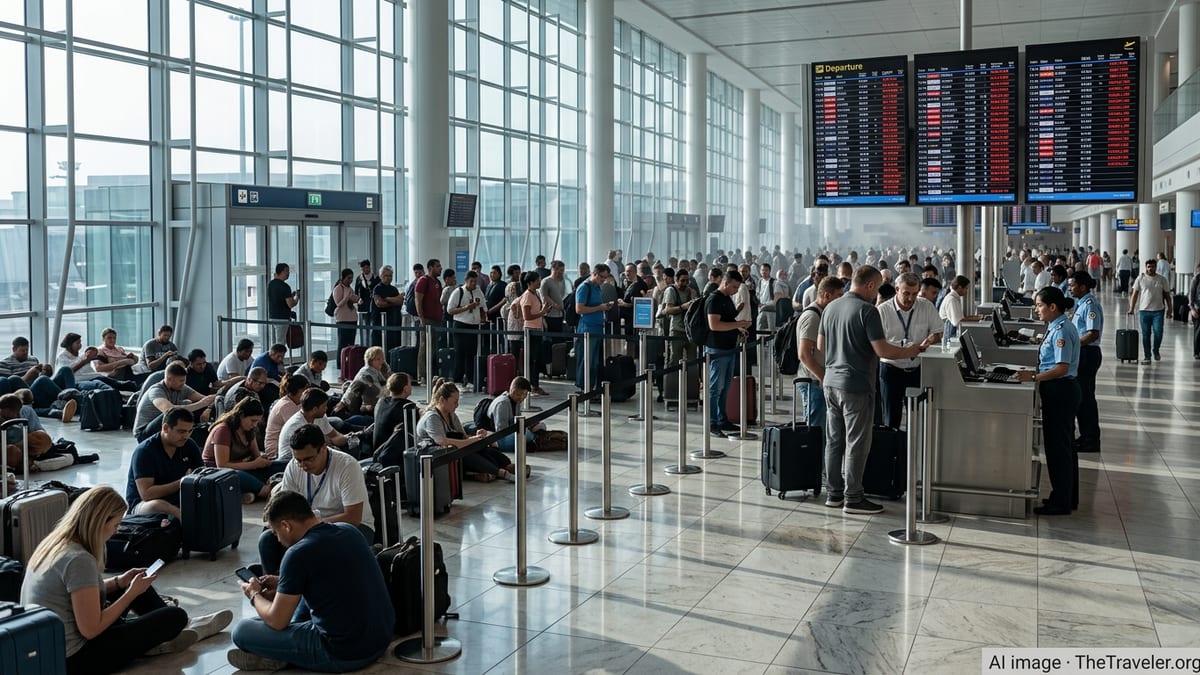
Security alerts sent passengers and airport staff scrambling for shelter, with some travelers ushered into underground train tunnels and service corridors as sirens sounded and explosions were heard across the city. Images shared by passengers showed darkened concourses, shuttered boarding gates and crowded holding areas as airport announcements urged people to remain calm and await further instructions.
The shutdown comes less than a week after Iran began a sustained campaign of missile and drone attacks across the Gulf in response to U.S.-Israeli strikes on its territory. Dubai’s main airport, which handled more than 454,000 aircraft movements last year and is routinely ranked as the world’s busiest for international traffic, has once again become a frontline casualty of regional escalation.
While officials in the United Arab Emirates stressed that air-defense systems had intercepted the majority of incoming threats, authorities acknowledged that even limited physical damage at such a complex hub can rapidly ripple into widespread disruption as aircraft, crews and passengers are left out of position.
Passengers Stranded Amid Cancellations, Diversions and Rolling Delays
The immediate effect for travelers has been a wave of cancellations, diversions and rolling delays that extend far beyond the Gulf. Long-haul flights bound for Dubai from Europe, Asia and North America were forced into extended holding patterns, rerouted to alternate airports, or turned back to their points of origin as news of the attack filtered through to airline operations centers.
Several flights already en route to the emirate were diverted to cities such as Muscat, Riyadh, Istanbul and other secondary hubs, leaving passengers facing improvised overnight stays and lengthy rebooking queues. Others found themselves stuck airside in Dubai, unable to board onward connections as departure boards shifted from delayed to canceled throughout the morning.
Travelers described scenes of growing frustration in terminal seating areas, where families with young children tried to sleep on the floor and business travelers queued at service desks for hours seeking information. With airline call centers overwhelmed and websites intermittently unresponsive, many passengers relied on social media and independent flight-tracking apps to piece together the status of their journeys.
Tourist-heavy routes have been particularly hard hit. Thousands of holidaymakers transiting through Dubai on their way to Southeast Asia, Africa and the Indian Ocean found their itineraries abruptly upended, as hotel reservations, tours and cruise departures suddenly became uncertain. Airlines have begun issuing broad waiver policies allowing free changes, but availability on alternative routes remains limited as carriers across the region operate on reduced schedules.
Airlines Slash Schedules While Working to Protect Key Routes
Dubai-based Emirates, the airport’s dominant carrier, confirmed it had suspended regular passenger operations at Dubai International while maintaining only a skeleton schedule of cargo, repositioning and select repatriation flights. The airline said it was prioritizing customers already stranded in the network, warning that new ticket sales on many routes would remain restricted until operations stabilize.
Etihad Airways in Abu Dhabi and low-cost FlyDubai have likewise cut back services, operating limited departures when airspace conditions and security clearances allow. Airlines are favoring essential long-haul trunk routes and government-coordinated evacuation services over discretionary leisure frequencies, a strategy aimed at maximizing the number of passengers they can move out of the region with each available aircraft.
Carriers outside the Gulf have adopted a mix of caution and contingency. Several European and Asian airlines have temporarily suspended direct services to Dubai and other regional hubs, or are skirting closed and contested airspace by flying lengthy detours over the eastern Mediterranean and Central Asia. These reroutings add several hours to flight times and significantly increase fuel costs, but are seen as necessary to maintain at least a minimal level of connectivity.
Industry analysts warn that the financial toll on airlines could be substantial if the disruption stretches over days or weeks. Many carriers are still recovering from previous shocks to demand and capacity, and the sudden loss or curtailment of one of the world’s key transfer hubs adds a fresh layer of operational and commercial risk.
Safety Advisories and Shifting Travel Guidance for the Region
As attacks and interceptions continued across the Gulf, governments moved swiftly to update travel advisories, urging citizens to reconsider nonessential trips to the region and, in some cases, to depart while commercial options remain. The United States and several European countries have issued warnings that highlight both the direct security threat from drones and missiles and the secondary risk of becoming stranded by abrupt airport closures.
Consular teams in Dubai, Abu Dhabi and Doha are working extended hours to assist nationals whose travel plans have collapsed. In some cases, embassies are coordinating with airlines to secure seats on limited outbound flights, prioritizing vulnerable travelers, families with children and those with urgent medical or professional needs back home. Queues outside consular offices have lengthened as stranded tourists seek emergency travel documents, new tickets and accommodation support.
Regional aviation regulators, meanwhile, are maintaining tight restrictions on airspace as they coordinate air-defense operations and assess damage at civilian facilities. Authorities in the UAE have stressed that safety remains the overriding priority, insisting that no relaxation of flight suspensions will be considered until they are confident the immediate threat has diminished and key infrastructure at Dubai International has been fully assessed.
For travelers, this means that schedules remain highly fluid. Even flights that appear confirmed several hours ahead of departure can be subject to last-minute changes if alerts sound or intercept operations restart. Passengers are being advised to stay in close contact with their airline, avoid heading to the airport without written confirmation, and build in generous buffers to any onward plans.
Global Ripple Effects on Routes, Fares and Future Travel Plans
Because Dubai functions as a central crossroads linking Europe, Asia, Africa and Australasia, the suspension of its operations echoes across the global network. Routes that normally rely on the emirate as a key connection point are now being fragmented or pushed through smaller hubs that lack the same capacity, leading to bottlenecks and limited seat availability at short notice.
Tour operators are scrambling to adjust itineraries that depended on smooth Dubai transits, rerouting groups through alternative hubs where possible or offering credit and rebooking options to clients unwilling to travel amid uncertainty. Corporate travel managers are similarly revising policies, temporarily avoiding routings via the Gulf and seeking more flexible booking terms from preferred airlines.
Short-term pressure on seats, combined with longer routings and higher fuel burn, is expected to put upward pressure on fares in some markets, particularly for last-minute bookings. At the same time, traveler confidence in the wider region faces a fresh test, with some passengers likely to defer or cancel discretionary trips until the security picture becomes clearer.
Yet aviation experts note that major hubs such as Dubai have shown resilience in previous crises, often restoring substantial capacity within days once physical damage is addressed and airspace is deemed safe. The pace of the current recovery will depend heavily on the trajectory of the conflict, the effectiveness of regional air defenses and the willingness of both airlines and travelers to return to normal patterns once the immediate shock of the latest drone attack subsides.