

More news on this day
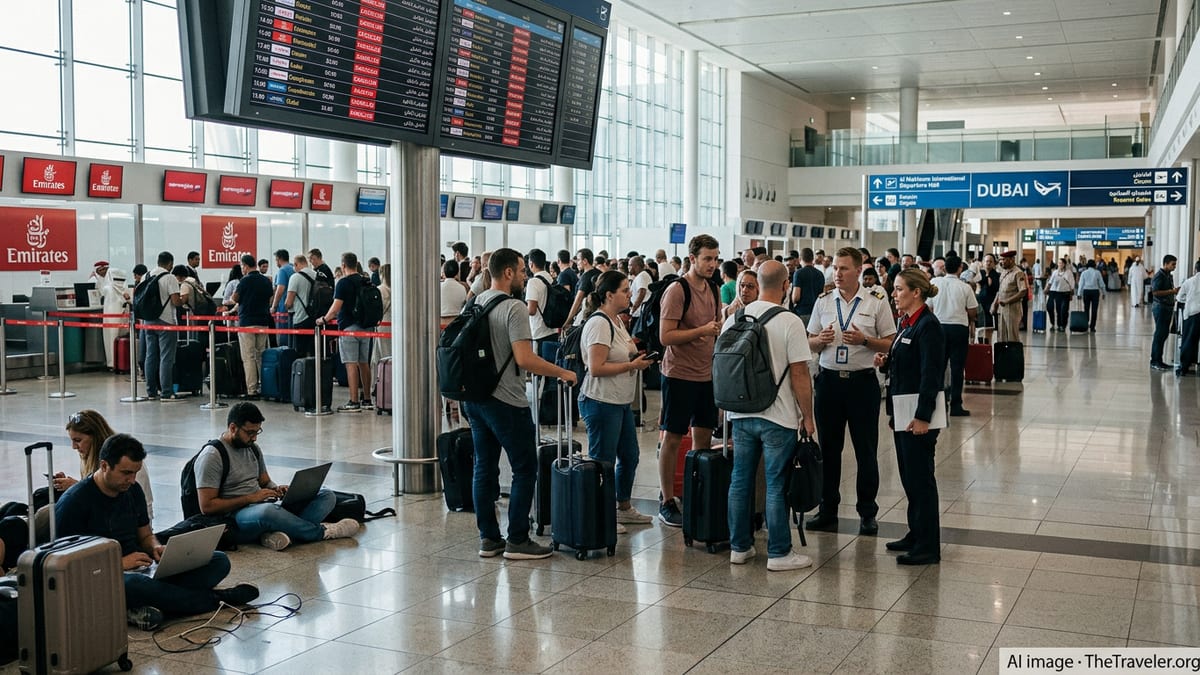
Passengers moving through Dubai’s Al Maktoum International Airport on March 10 faced fresh disruption as five flights were cancelled and one significantly delayed, affecting Emirates, Norwegian Air Sweden and Compass Cargo Airlines services linking Dubai with Oslo and Stockholm.
Targeted Disruptions Amid Wider Gulf Airspace Turmoil
The latest wave of disruption at Al Maktoum International comes against the backdrop of ongoing airspace restrictions across the Gulf, which have forced carriers to thin out schedules, reroute long haul services and prioritize repatriation and essential cargo. While both Dubai International and Al Maktoum have technically reopened with limited operations, schedules remain volatile and subject to late changes as airlines respond to evolving safety assessments and airspace bottlenecks.
On Tuesday, operational data and airport schedules indicated that a cluster of six services touching Al Maktoum were hit: five outright cancellations and one extended delay. The affected flights included Emirates-operated passenger services using Dubai’s secondary hub and a Norwegian Air Sweden rotation tied to Scandinavian routes, alongside a Compass Cargo Airlines freighter that was held or rerouted as air corridors shifted.
The pattern underscores how fragile the recovery remains after the initial full shutdown of Dubai’s airports at the beginning of March. Even as flagship carriers talk publicly about restoring large parts of their networks, the reality on the ground for many travelers is continued uncertainty, rolling cancellations and crowded rebooking queues stretching into the evening hours.
Airport officials have continued to characterize the situation as “dynamic,” urging passengers not to proceed to either Dubai airport without a confirmed, operating flight and warning that last minute schedule changes remain possible as regional security conditions evolve.
Emirates Passengers From Dubai Face Last Minute Cancellations
For Emirates customers departing from Dubai, Tuesday’s cancellations were another blow after more than a week of heavily curtailed operations. Several Emirates flights linked to Al Maktoum’s reduced schedule were scrubbed, affecting travelers who had already been rebooked once or twice from earlier dates when the carrier’s global network was largely suspended.
Travelers reported learning of cancellations through the airline’s app and email alerts, in some cases only hours before departure. At Al Maktoum, passengers arriving early for check in described finding static departure boards and long customer service lines as agents worked flight by flight to secure alternative routings through other Gulf or European hubs where airspace remained open.
Emirates has been steering many disrupted passengers toward later departures from Dubai International or to different connection points, often involving additional stops and longer flying times. However, with limited seats available and a backlog of stranded travelers from earlier in the crisis, some passengers from Dubai bound for Scandinavia reported being offered rebooking dates several days away or refunds instead of near-term alternatives.
The carrier has reiterated that safety considerations and compliance with evolving airspace restrictions remain paramount, while advising customers with upcoming departures to monitor their bookings frequently and avoid heading to the airport without reconfirmed itineraries.
Scandinavian Links to Oslo and Stockholm Disrupted
The turbulence was acutely felt on routes connecting Dubai with Oslo and Stockholm, as a Norwegian Air Sweden departure associated with Al Maktoum and a related Scandinavian service were among those cancelled. The move temporarily severed an important leisure and business corridor at the tail end of the northern winter travel season, when demand for sun destinations in the Gulf remains strong among Nordic travelers.
Passengers due to fly from Oslo and Stockholm toward Dubai described a scramble to secure seats on alternative routings via other European hubs or to postpone travel altogether. With the disruptions tied to regional airspace constraints rather than typical operational issues such as weather or crew shortages, some travelers expressed concern about compensation eligibility under European passenger rights rules, which allow exemptions for extraordinary circumstances.
Norwegian Air Sweden advised affected passengers to use digital channels first to change tickets or request refunds, noting pressure on call centers and airport desks. Those who chose to continue their journeys were often rerouted through airports in continental Europe, adding hours to overall travel time and increasing the risk of missed connections further down the line.
In the wider Scandinavian market, tour operators and corporate travel managers reported having to redraw itineraries at short notice, advising clients that direct services to Dubai could remain vulnerable to sudden disruption, even as airlines gradually restore parts of their schedules.
Cordoned-Off Cargo: Compass Flights Caught in the Crossfire
Beyond the passenger terminals, Compass Cargo Airlines also felt the impact of Tuesday’s turbulence. One of the carrier’s Al Maktoum-linked operations was caught up in the wave of changes, as regional authorities and air navigation providers continued to limit and reroute traffic through key Middle Eastern corridors used heavily by freighter operators.
Although cargo flights are often granted greater flexibility than passenger services during crises, the current combination of airspace closures, congestion on alternative routes and heightened insurance and security requirements has constrained freight capacity. Compass Cargo’s disrupted service added to a broader ripple effect for shippers moving goods between Europe, the Gulf and Asia, including high value electronics and time-sensitive e-commerce shipments.
Logistics specialists say that each additional cancellation or long delay at Al Maktoum, which has grown into a major cargo hub, compounds existing backlogs. Forwarders have been forced to juggle bookings across multiple carriers and routings, with some diverting volume to secondary gateways elsewhere in the Gulf or to European airports that still maintain relatively stable links to Asia.
For exporters in Scandinavia reliant on predictable uplift to the Middle East, the Compass disruption highlighted a growing mismatch between demand for airfreight capacity and the limited slots available through safe corridors. Industry observers expect elevated cargo rates and longer transit times to persist until more of the region’s airspace fully reopens and carriers can normalize schedules.
What Stranded Travelers at Al Maktoum Should Do Now
With cancellations and delays no longer confined to the peak of the shutdown, travel advisors say passengers passing through Al Maktoum in the coming days should treat schedules as provisional and take proactive steps to protect their plans. That starts with checking flight status directly with the airline’s own channels on the day of travel and again before leaving for the airport, rather than relying solely on screenshots, third party apps or static itinerary printouts.
Experts also recommend that travelers build in substantially more buffer time for connections, especially when itineraries involve mixed carriers or a transfer between Dubai’s two airports. Those affected by cancellations on Emirates or Norwegian Air Sweden are being encouraged to familiarize themselves with the carriers’ rebooking and refund options, as well as any applicable protections under European regulations for flights originating in EU or EEA countries.
Passengers already at Al Maktoum when their flights are cancelled or delayed are advised to seek written confirmation of disruption from airline staff, which can be useful for travel insurance claims. In many cases, airlines have been arranging hotel accommodation and meal vouchers for overnight delays, but availability can vary based on the cause of disruption and local capacity constraints.
For now, the message from travel industry professionals is one of caution and flexibility. While airlines serving Dubai, Oslo and Stockholm work to restore their schedules and clear backlogs, travelers transiting Al Maktoum International should be prepared for last minute changes, keep essential items in carry on bags and remain ready to adjust onward plans at short notice.