

More news on this day
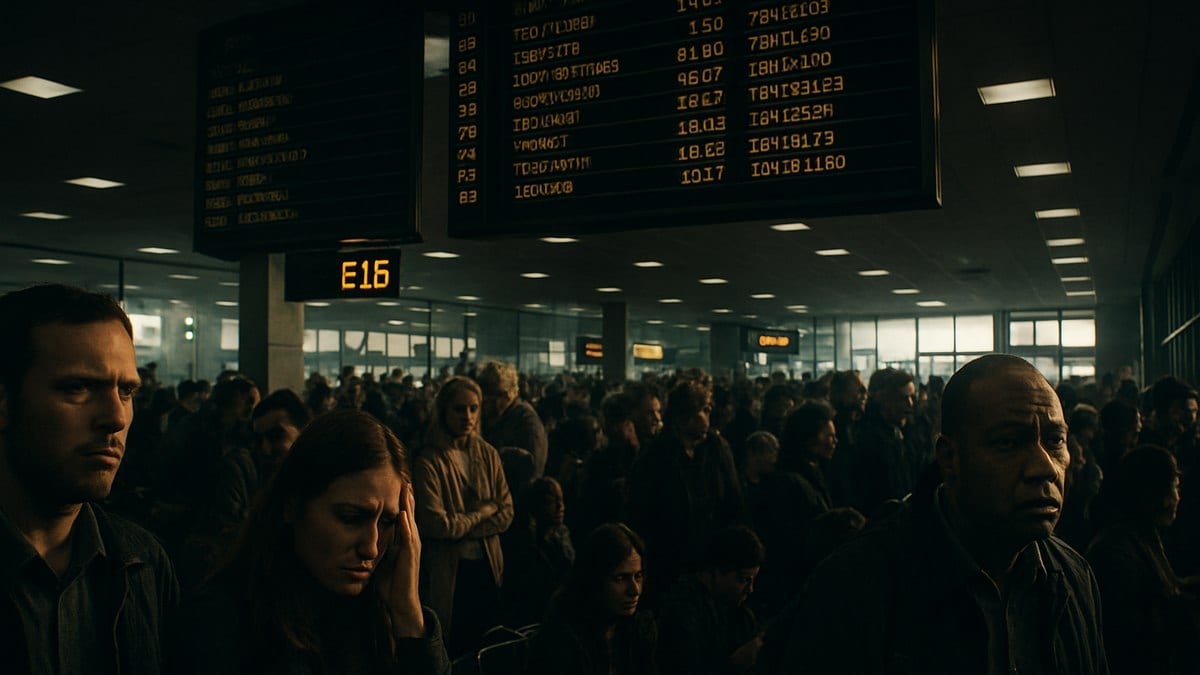
Europe’s already strained aviation network absorbed another shock this week as at least 79 flights operated by Lufthansa, easyJet and SAS were disrupted across multiple countries, triggering fresh queues, missed connections and mounting concern over reliability during the busy spring travel period.
Get the latest news straight to your inbox!
Simultaneous disruptions hit three major European carriers
Publicly available flight tracking and schedule data indicate that a cluster of cancellations and long delays involving Lufthansa, easyJet and SAS unfolded almost in parallel across several European hubs. While the wider network recorded hundreds of delayed and cancelled services, analysis of intra-European routes served by the three carriers points to at least 79 individual flights either cancelled outright or delayed beyond standard thresholds within a short window.
The disruptions were most visible at Frankfurt and Munich for Lufthansa, London-area and regional continental airports for easyJet, and Copenhagen and Stockholm for SAS. Reports suggest that passengers connecting between these hubs bore the brunt of the issues as missed onward flights cascaded through the timetable and available spare capacity quickly evaporated.
Travel industry monitoring sites note that the magnitude of the disruption is smaller than during major strike days or extreme weather events, but still significant because it struck three different airline groups at once. That overlap reduced opportunities for affected travelers to be rebooked on alternative carriers operating similar routes at convenient times.
The episode follows a series of difficult weeks for European aviation, with earlier data already pointing to more than two hundred cancellations and well over a thousand delays in just one recent multi-country disruption cycle. Against that backdrop, even a few dozen additional failures on busy routes can tip local airport operations back into visible chaos.
Labor pressures, staffing gaps and knock-on delays
Published coverage across European travel and aviation outlets links the latest wave of disruption to a familiar combination of factors: crew availability issues, ongoing wage negotiations, tight ground-handling resources and lingering knock-on delays from earlier operational challenges. In Germany, fresh strike calls and industrial action targeting Lufthansa and its regional affiliates have periodically thinned schedules and left timetables vulnerable to even minor shocks.
For easyJet, the pressure appears to be rooted more in high aircraft utilization and congested airport slots than in wide-scale cancellations driven by strikes. With the low-cost carrier operating dense point-to-point networks across popular leisure destinations, any unplanned aircraft rotation issue can quickly spill over into later departures, extending delays into the evening bank of flights.
SAS, meanwhile, continues to manage a complex rebuild of its network amid restructuring efforts and changes to long-haul and regional capacity. Industry commentary notes that even limited schedule adjustments or crew shortages on Scandinavian routes can generate misconnects for passengers using Copenhagen or Stockholm as gateways to the rest of Europe, contributing to the overall tally of disrupted services.
Aviation punctuality data released for Europe in early April points to reactionary delays as a dominant cause of late departures, with congestion in crowded airspace and staffing shortfalls in air traffic control compounding airline-specific issues. This environment leaves carriers with little slack to absorb simultaneous problems at multiple hubs.
Hubs across Germany, the UK, the Nordics and Iberia feel the strain
According to data collated from airport operations reports and independent delay trackers, the 79 Lufthansa, easyJet and SAS flights affected were spread across a swath of major and secondary hubs. Frankfurt and Munich in Germany, London-area airports, Amsterdam, Copenhagen, Stockholm and several Iberian gateways all reported knock-on crowding at departure gates, check-in zones and transfer security points.
In Germany, Lufthansa’s role as the anchor carrier at Frankfurt and Munich meant that even a relatively contained set of cancellations and long delays reverberated widely. Passengers arriving from other European cities found that missed connections forced them into overnight hotel stays or lengthy re-routing via third countries as remaining seats on later departures quickly sold out.
In northern Europe, SAS disruptions at Copenhagen and Stockholm created bottlenecks for travelers heading to or from Norway, Finland and the Baltic states, especially those relying on tight connection windows. Some travel platforms reported an uptick in same-day rebookings onto alternative carriers on parallel routes, highlighting how quickly disruption on a handful of flights can reshape demand patterns across the region.
easyJet’s network felt the impact most acutely on popular leisure routes linking the United Kingdom with Mediterranean and Atlantic island destinations. Even where services operated, longer queues, aircraft swaps and crew reassignments left departure boards dotted with late departures, complicating itineraries for travelers with onward rail or ferry connections.
Passengers scramble for rebookings under EU protections
As disruption spread, passengers turned to airlines’ digital channels and airport service desks to secure new itineraries. Under the European Union’s air passenger rights framework, travelers whose flights are cancelled or significantly delayed may be entitled to re-routing at the earliest opportunity, refunds in certain cases and, when eligible, financial compensation.
Travel law specialists point out that eligibility depends on multiple variables, including the length of delay, the distance of the route and the underlying cause of the disruption. Industrial action by an airline’s own staff, for instance, is generally treated differently from extraordinary circumstances such as severe weather or airspace closures, and that distinction can determine whether compensation is payable.
Publicly available guidance also stresses that passengers affected by overnight disruptions should keep records of additional expenses such as meals, accommodation and ground transport, as airlines may be required to reimburse reasonable costs when they are responsible for the cancellation or delay. Several consumer organizations recommend using carrier-provided claim forms and maintaining screenshots of original itineraries and boarding passes.
With multiple carriers impacted simultaneously, however, rebooking options have been narrower than usual on key European routes. Capacity constraints during the busy spring period mean that in some cases, the most realistic alternative has involved departing a day or more later, or accepting longer routings through less congested hubs.
What the latest chaos signals for Europe’s summer season
The clustering of 79 disrupted Lufthansa, easyJet and SAS flights into a short period is being read by many industry observers as another warning sign ahead of Europe’s high summer season. Airlines across the continent have advertised expanded schedules and additional capacity for 2026, aiming to capture strong leisure and business demand after several volatile years.
Yet operational data and recent episodes of travel chaos suggest that staffing, infrastructure and air traffic management have not fully kept pace with the rapid return of passengers. Even as carriers invest in more aircraft and new routes, they continue to rely on finely tuned schedules that leave little margin for error when problems hit multiple hubs on the same day.
Travel management companies are advising corporate clients and holidaymakers alike to build more slack into itineraries involving European connections, particularly where travel is time sensitive. Recommendations include favoring earlier flights in the day, allowing longer layovers at major hubs and considering alternative airports if primary gateways show persistent punctuality problems.
For now, the latest round of disruption underscores how interdependent Europe’s aviation network has become. A cluster of failures on 79 flights spread across three major airlines has been enough to generate visible travel chaos across the continent, raising questions about how resilient the system will be when peak summer crowds arrive.