

More news on this day
Travelers flying within and through China on March 10, 2026, are facing major disruption as more than 100 flights have been cancelled across the country, hitting services operated by Air China, China Southern, China Eastern and several smaller carriers and affecting popular routes to Beijing, Shanghai, Guangzhou, Chengdu, Shenzhen, Xi’an, Kunming and other key cities.
Heavy Weather and Network Strain Trigger Fresh Wave of Cancellations
China’s latest bout of travel turmoil comes on the back of severe storms and low visibility across eastern and central regions, which have forced airlines to ground or significantly delay aircraft. Aviation authorities and airport operators reported that weather-related air traffic control restrictions early on March 10 cascaded through tightly scheduled domestic networks, leaving carriers with little room to recover services during the busy morning and afternoon peaks.
Major hubs including Beijing Capital, Shanghai Pudong and Shanghai Hongqiao experienced a sharp spike in both cancellations and rolling delays as crews and aircraft fell out of position. Airlines prioritized safety and diversion capacity around storm cells, reducing the number of departures per hour and temporarily suspending operations on some routes where conditions deteriorated fastest.
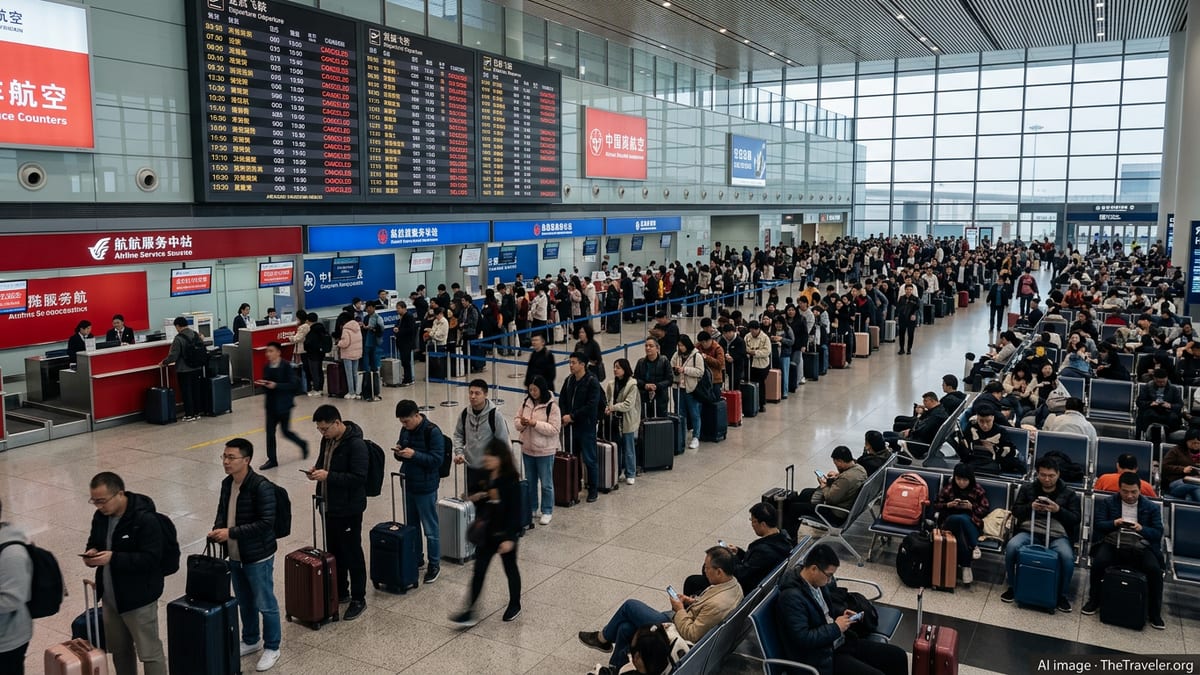
The result has been an uneven pattern of disruption: some departures to secondary cities have operated close to schedule, while high-demand trunk routes linking Beijing, Shanghai, Guangzhou and Chengdu have seen multiple flights scrubbed or consolidated. Travelers report crowded terminals, long queues at transfer desks and limited spare seats on remaining services.
Key Carriers Hit: Air China, China Eastern and China Southern
Air China, China Eastern and China Southern, which together handle a large share of China’s domestic traffic, have been among the hardest hit. At Beijing Capital, Air China cancelled a significant number of services during the morning wave, particularly on routes to and from Shanghai, Chengdu, Xi’an and Kunming, after aircraft arriving from storm-affected regions missed their slots or were diverted.
In Shanghai, China Eastern trimmed schedules at both Pudong and Hongqiao, cancelling flights to cities such as Beijing, Guangzhou, Chengdu and Chongqing and warning passengers of continuing delays for the rest of the day. The carrier also reported knock-on disruption to some international links that depend on inbound aircraft from affected domestic routes, prompting rebooking for travelers heading onward to destinations in the Middle East and Southeast Asia.
China Southern has been contending with its own operational pressures at Guangzhou and Shenzhen, where delays on early arrivals restricted the airline’s ability to dispatch mid-morning departures to Beijing, Shanghai, Chengdu and Xi’an. Additional regional operators, including subsidiaries and partner airlines serving Kunming and inland hubs, have also cancelled or retimed flights as they adjust to revised slot allocations and crew duty limits.
Major Hubs From Beijing to Kunming Feel the Impact
Beijing Capital and Beijing Daxing, the country’s twin gateways to the north, have reported congested terminals and extended waits at security and check-in as affected passengers seek alternative options. With multiple flights to Shanghai, Guangzhou and Chengdu removed from schedules, remaining services have filled quickly, leaving limited opportunities for same-day rebooking.
Shanghai’s dual-airport system has also come under strain. Shanghai Hongqiao, a critical domestic hub, has seen multiple cancellations on short-haul routes to Beijing, Chengdu, Chongqing and other inland cities. At Shanghai Pudong, long-haul and regional international traffic continues, but many connecting passengers from cities such as Xi’an and Kunming have missed onward flights due to late arrivals or last‑minute cancellations.
Further south and west, Guangzhou, Shenzhen, Chengdu and Kunming are each dealing with a mix of cancellations and extended delays on domestic links. In Chengdu, adverse weather and air traffic control restrictions have had a ripple effect on flights to neighboring provinces, while Kunming’s role as a gateway to Southeast Asia means schedule disruptions are being felt by international travelers who rely on same‑day domestic connections.
What Affected Travelers Should Do Today
Airports and airlines across China are urging passengers with bookings on March 10 to check their flight status before leaving for the airport and to expect longer processing times once they arrive. Travelers are being advised to use airlines’ official mobile apps, customer hotlines and airport information desks for the most up‑to‑date information on cancellations, rebookings and refund options.
Most major carriers, including Air China, China Eastern and China Southern, have activated irregular-operations policies that allow free changes or refunds for flights cancelled or significantly delayed today. However, passengers report that telephone lines are busy and in-person queues at airport service counters are lengthy, particularly at Beijing and Shanghai, as staff work through a backlog of rebooking requests.
Travelers with tight onward connections, especially those linking from domestic flights to same-day international departures, are being encouraged to proactively contact their airline to explore alternative routings through less affected hubs or to move their journey to later dates where possible. Those already at airports are advised to stay close to departure gates, monitor announcement boards and keep receipts for any unexpected accommodation or meal costs in case partial reimbursement is offered.
Outlook: Gradual Recovery but More Disruptions Possible
Airline operations teams expect a gradual recovery through the evening and into March 11 as weather conditions stabilize and aircraft and crews are repositioned. However, with many planes and staff displaced from their usual rotations, residual delays and occasional short‑notice cancellations are likely to persist into at least the next operating day on some routes.
Carriers are working with airport authorities and air traffic controllers to add extra sectors where capacity allows, though the tightly regulated nature of China’s airspace and existing slot constraints at major hubs limit the scope for rapid schedule expansion. Priority is being given to high-demand trunk routes, such as Beijing to Shanghai and Guangzhou, and to flights carrying large numbers of connecting international passengers.
For now, travelers planning journeys within or through China in the coming days should build in extra time, avoid tightly timed itineraries and remain flexible about routing and departure times. While today’s wave of cancellations underscores the vulnerability of dense domestic networks to sudden weather shifts, it has also prompted airlines to review contingency plans and passenger communication tools in a bid to manage future disruptions more smoothly.