

More news on this day
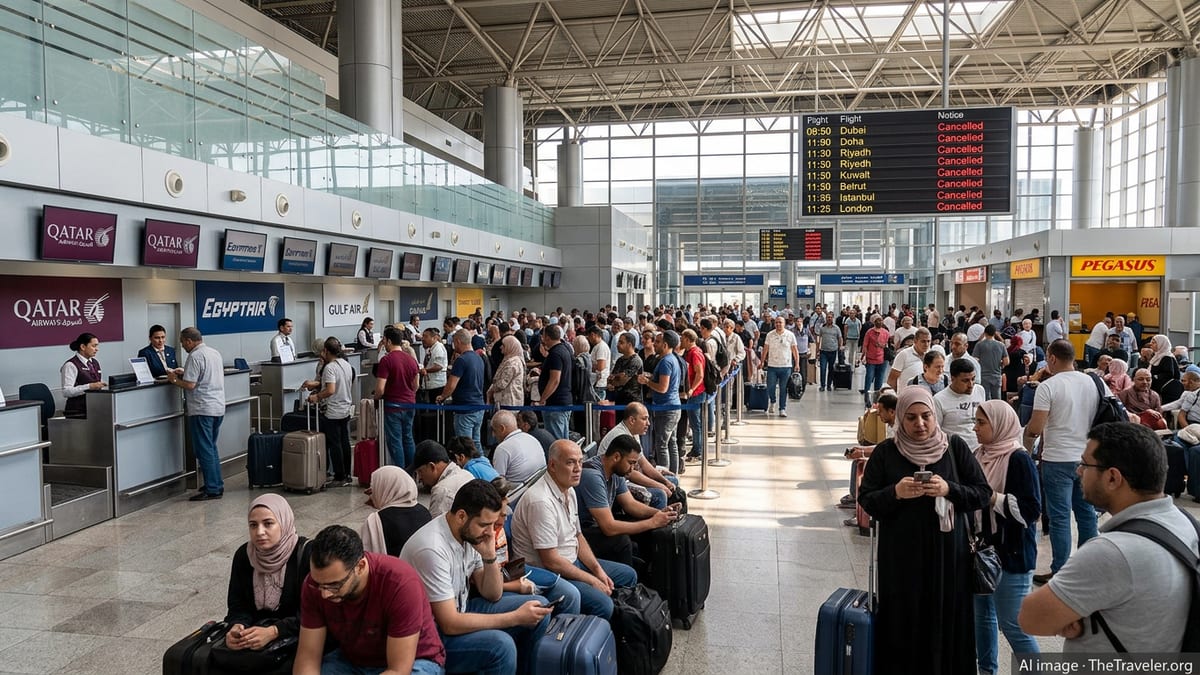
More than 130 flights linked to Egypt have been cancelled or severely disrupted in recent days as a widening Middle East airspace crisis ripples through major carriers including Qatar Airways, EgyptAir, Gulf Air and Pegasus, throwing travel plans to Dubai, Doha, Riyadh, Kuwait, Beirut, Istanbul, London and other key hubs into disarray.
Get the latest news straight to your inbox!
Regional Conflict Shuts Skies and Snarls Cairo’s Connectivity
The latest wave of cancellations follows the closure or severe restriction of airspace across multiple Middle Eastern countries after the escalation of conflict involving Iran and US-allied states at the end of February 2026. While Egyptian airspace remains technically open, Egypt’s role as both a destination and a vital connecting point has left its airports heavily exposed to knock-on disruption.
According to regional aviation bulletins and airline statements, closures and operational caps in the United Arab Emirates, Qatar, Kuwait, Bahrain and parts of Iraq and Jordan have forced carriers to scrap or reroute thousands of services. Egypt-bound flights that would normally pass through Gulf hubs or traverse now-restricted air corridors have been disproportionately affected, particularly services to and from Cairo.
Industry analysts say the cumulative impact for Egypt amounts to well over 130 cancelled or heavily delayed flights since February 28, spanning both national and foreign airlines. With several key Gulf and Levant destinations still suspended or operating at sharply reduced frequencies, that number is expected to rise if airspace restrictions are extended beyond current mid-March timelines.
The cancellations have hit at the tail end of Egypt’s winter high season, when visitor numbers typically remain strong and Egyptian expatriate workers plan return trips from Gulf countries, amplifying the disruption for both tourists and migrant workers.
Major Carriers Slash Routes Serving Egypt
EgyptAir, the national flag carrier, has been among the hardest hit. In a series of advisories issued since March 1, the airline confirmed the continued suspension of flights from Cairo to several regional capitals, including Beirut and Tel Aviv, alongside extended disruption on routes to Gulf cities such as Dubai and Riyadh. Services to parts of Iran, Iraq, Jordan, Lebanon and Syria remain halted until further notice, while flights to the United Arab Emirates, Qatar, Bahrain, Kuwait and some Saudi destinations have been operating on a sharply curtailed basis.
Qatar Airways, which normally feeds a steady stream of passengers between Cairo and its Doha hub for onward connections to Europe, Asia and North America, has been operating under emergency conditions since early March. After the partial reopening of Qatari airspace, the airline announced a limited schedule from Doha, including select flights to Cairo, London and Istanbul, but standard commercial operations remain far from normal, with multiple daily rotations still cancelled.
Gulf Air has also pared back its network across the conflict-affected zone, cancelling flights that link Bahrain with both Cairo and secondary Egyptian cities, as well as suspending some services that would ordinarily carry Egyptian travellers onward to Riyadh, Kuwait and other Gulf business centres. Pegasus Airlines, a major low-cost player for leisure and labour traffic between Turkey, the Gulf and North Africa, has extended cancellations on flights from Istanbul to several Middle Eastern destinations, including Beirut, Doha, Dubai and Kuwait, affecting many itineraries that include Egypt as an origin or final stop.
Turkish aviation authorities confirmed this week that Turkish Airlines, Pegasus and other carriers have halted or reduced flights to Iraq, Syria, Lebanon and Jordan, and temporarily stopped services to Doha, Dubai, Kuwait, Bahrain, Abu Dhabi and Dammam. That has cut a crucial alternative corridor relied upon by Egyptian passengers rebooking away from Gulf hubs.
Routes to Gulf Hubs, Istanbul and London in Disarray
The greatest impact for travellers using Egypt has been on routes linking Cairo and other Egyptian cities with Gulf mega-hubs such as Doha, Dubai, Abu Dhabi, Riyadh and Kuwait City. With large sections of regional airspace closed or subject to strict controls, many of these flights have either been outright cancelled or rerouted on longer, fuel-intensive paths that are difficult to sustain at normal frequencies.
Travel to Beirut and other Levant destinations has also been severely constrained. EgyptAir and several foreign carriers have suspended or drastically reduced flights to Lebanon, while restrictions over Syria and western Iraq have complicated traditional northbound corridors toward Turkey and Europe. As a result, services between Cairo and Istanbul, normally one of the region’s busiest city pairs, have seen rolling timetable changes and occasional cancellations by both full-service and low-cost airlines.
Long-haul itineraries linking Egypt to London and other European gateways have not been spared. While many flights between Cairo and major European capitals continue to operate, schedules are being adjusted on short notice to accommodate airspace diversions, and seats have become scarce as stranded passengers scramble for alternatives that bypass Gulf hubs entirely. Aviation data providers report sharp increases in average journey times and connection windows for Egypt–Europe trips.
Travel agents in Cairo say the disruption is particularly acute for passengers holding tickets that route through Doha, Dubai or Abu Dhabi on their way to London, Istanbul, Riyadh or Kuwait. Many have seen their connecting legs cancelled even when the Egypt-originating segment is still scheduled, leaving them unable to complete their journeys without major rebooking.
Stranded Passengers Face Long Waits and Patchwork Rebooking
At Cairo International Airport and other major Egyptian terminals, scenes of confusion have played out as passengers arrive to discover their flights cancelled or significantly delayed. Airport staff and airline ground teams have been attempting to rebook customers on the limited remaining services, but with seat capacity slashed across multiple carriers, waits of several days for the next available departure are becoming common.
EgyptAir has launched what it describes as an exceptional operating plan to help citizens whose return bookings from affected Gulf destinations were cancelled, including running additional one-off flights to key hubs when airspace permissions allow. The airline has also emphasised that passengers with existing bookings will be given priority on these recovery services, and that extra fees are being waived in many cases for involuntary changes.
Qatar Airways, Gulf Air and other regional airlines have likewise introduced temporary rebooking and refund policies, offering waivers on change fees and the option to shift travel dates into late March and beyond. However, passenger reports from online forums and social media suggest that phone lines and customer service channels remain overwhelmed, with some travellers resorting to routing themselves via more distant hubs in Europe or South Asia at their own expense.
Travel consultants warn that even confirmed rebookings remain vulnerable as airlines continue to adjust timetables on a rolling basis in response to shifting security assessments and evolving airspace permissions. They advise travellers to monitor their bookings closely up to the time of departure and to avoid heading to the airport without a reconfirmed flight.
Outlook: Limited Resumptions but Ongoing Uncertainty
There are tentative signs of easing, with some airlines announcing phased resumptions of select routes as regional regulators gradually relax the strictest restrictions. EgyptAir has begun restoring limited service to certain United Arab Emirates destinations, and Qatar Airways has outlined a day-by-day schedule of restricted flights in and out of Doha, including connections to Cairo, Istanbul and London.
Nevertheless, aviation authorities and industry experts caution that the wider regional network remains fragile. Any further escalation in the conflict or new security advisories could trigger fresh rounds of cancellations, particularly on routes crossing or skirting Iranian, Iraqi or Israeli airspace. Insurers and airline risk teams are continuing to scrutinise flight paths, sometimes forcing last-minute reroutes that undermine the predictability of schedules.
For Egypt’s tourism sector, the timing could hardly be worse. Tour operators report a spike in cancellations and deferrals from visitors unwilling to risk multi-leg trips through a volatile region, even though Egyptian airports themselves remain open. Hoteliers in Cairo, Luxor and Red Sea resorts say they are fielding a surge of queries from guests concerned about their ability to reach the country or return home on schedule.
With more than 130 flights already cancelled and many more operating under tight operational constraints, travellers with plans involving Egypt and regional hubs such as Dubai, Doha, Riyadh, Kuwait, Beirut, Istanbul or London are being urged to stay flexible, consider alternative routings that avoid Gulf connection points where possible, and prepare for significant delays as the Middle East’s aviation map is redrawn day by day.