

More news on this day
Europe’s already strained aviation network has suffered another setback, with 79 flights operated by Lufthansa, easyJet and Scandinavian Airlines (SAS) disrupted on key routes in a single day, intensifying a rolling pattern of delays and cancellations that has frustrated passengers across the continent since early April.
Get the latest news straight to your inbox!
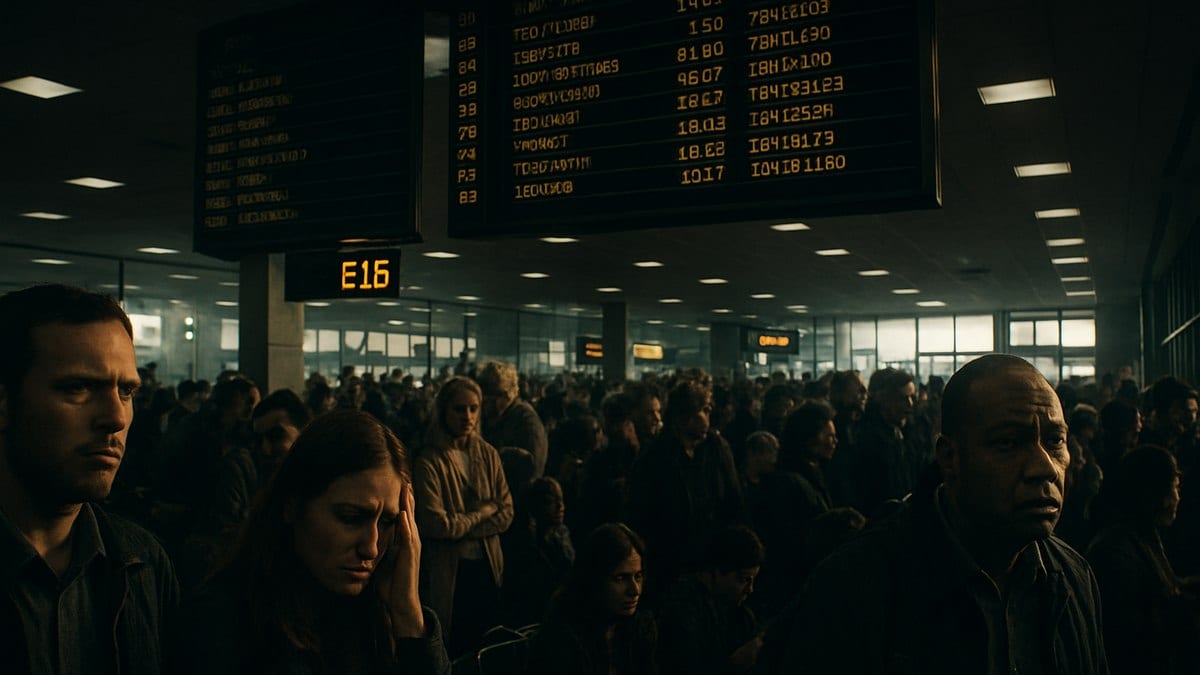
Knock-on disruption across major European hubs
Tracking data and recent operational summaries indicate that the latest wave of disruption was concentrated at large hubs and popular holiday gateways, where tight turnaround schedules left little room to absorb fresh problems. The 79 affected flights, spanning cancellations and multi hour delays, were mainly concentrated on intra European links connecting Germany, the United Kingdom, France, the Netherlands, Denmark and the Nordic region.
Recent reports on European aviation performance show that traffic levels have climbed sharply into the spring travel period, but airport and air traffic control capacity have not kept pace. Analysts point to a combination of chronic controller shortages, weather related flow restrictions and a surge in peak hour demand that leaves airlines vulnerable when even a small part of the system falters.
Data compiled by travel industry outlets over the past week highlights how quickly local issues can cascade. A cluster of delays at one hub often results in aircraft and crews arriving late to their next departure point, forcing airlines to retime or consolidate services in order to keep within crew duty limits and aircraft maintenance windows.
The geographic spread of the latest incidents mirrors broader patterns observed in early April, when more than 1,600 flights across Europe were reported delayed in a single 24 hour period, with London Heathrow and London Gatwick among the hardest hit. That earlier disruption, driven largely by weather and air traffic management constraints, set the stage for a fragile operating environment in which additional shocks are now having an outsized impact.
Lufthansa schedules strained by strikes and staffing gaps
Germany’s Lufthansa Group has been at the center of the current turbulence, as industrial action compounds long running staffing and cost pressures. According to widely cited event summaries, a one day strike by cabin crew in mid April forced Lufthansa to cancel hundreds of flights at Frankfurt and Munich, affecting tens of thousands of passengers and leaving aircraft out of position for subsequent rotations.
Even where strike action is limited to a single day, knock on effects can last for several more. Publicly available timetables and airline notices show that Lufthansa has had to thin out some frequencies and retime others in the days following industrial action, as it works to gradually restore aircraft and crew to their planned locations. This has increased the likelihood that marginal routes, including thinner business and regional services, are cut or merged when fresh bottlenecks appear.
In the most recent wave of 79 disrupted flights, Lufthansa connections linking Germany with France, Italy, Denmark and the United Kingdom appear prominently. Travel news outlets tracking individual airport movements cite additional same day cancellations and long delays on services touching Frankfurt, Munich, Paris, Milan and London, suggesting that the airline is still operating with limited resilience in its short haul network.
Industry observers note that Lufthansa is not alone in facing such constraints. However, its role as a major provider of feeder traffic into and out of continental hubs means that any disruption to its timetable can reverberate through partner networks and onward intercontinental journeys.
easyJet faces pressure on dense short-haul routes
Low cost carrier easyJet, which routinely ranks among Europe’s busiest airlines by daily departures, has also been heavily exposed to the recent wave of travel chaos. Recent network overviews show easyJet operating more than 1,600 flights per day in peak periods, leaving little slack when delays or ground handling issues slow operations at large bases such as London Gatwick, Berlin, Milan or Geneva.
Coverage from European travel and consumer outlets over the last week indicates that easyJet has been responsible for a significant share of both cancellations and delays across multiple reporting days. On one recent day of heavy disruption, easyJet led all carriers in cancellations while also registering delays on roughly one in four of its scheduled flights, underscoring how a densely scheduled short haul network can struggle once aircraft fall behind rotation.
Within the 79 flight figure tied to the latest episode of chaos, easyJet’s affected routes are heavily skewed toward leisure oriented links and cross channel services that feed into major hubs. Disrupted flights connecting the United Kingdom with France, Spain and the Netherlands have created particular headaches for travelers with onward connections, who often find that alternative services on the same day are fully booked or already running late.
Analysts point out that, while low cost carriers pioneered rapid turnarounds to keep aircraft in the air longer, the same model can be a vulnerability during periods of systemic stress. When an aircraft is scheduled to operate multiple hops in a single day, an early morning delay can cascade across the entire rotation, forcing airlines to cancel or heavily delay later legs.
SAS disruptions add Nordic links to the turmoil
Scandinavian Airlines (SAS) has also been drawn into the widening disruption, particularly on routes linking Nordic capitals with major Western European hubs. Recent tallies of flight performance show that SAS has experienced elevated levels of delay on services touching Denmark, Norway, Sweden and key connecting cities such as London, Amsterdam and Paris.
Publicly available disruption summaries from early April list SAS among the affected carriers on days when more than a thousand flights across Europe were delayed or cancelled. In those instances, knock on delays were frequently attributed to air traffic control restrictions and congested airspace over central Europe, conditions that can be especially challenging for carriers whose networks rely on precise timing for short turnaround connecting flights.
Within the latest batch of 79 failed or heavily disrupted flights, SAS operations have been particularly impacted on southbound services into central and southern Europe. Travelers on routes between Nordic cities and hubs in Germany, France and the United Kingdom have reported missed connections and extended waits as airlines work to rebook passengers on later departures or alternative routings.
The situation has underscored how closely intertwined Europe’s aviation system has become. Even when disruptions originate far from Scandinavia, the ripple effects can rapidly reach SAS schedules as aircraft and crews are delayed in crowded airspace or held on the ground while downstream congestion clears.
What passengers can do as disruption mounts
The recurring waves of disruption have renewed attention on the protections available to air travelers under Europe’s passenger rights framework. Regulation EC 261/2004 sets out entitlements to care, assistance and, in many circumstances, financial compensation when flights are significantly delayed or cancelled for reasons within an airline’s control, such as staffing shortages or operational decisions.
Consumer advocates note, however, that many of the current delays have been linked to causes that may be argued as outside airlines’ direct control, including air traffic control capacity limits, severe weather and strikes by third party staff. In such cases, passengers may still be entitled to meals, accommodation and rebooking, even when cash compensation is not ultimately payable.
Travel experts recommend that affected passengers document their disruption carefully by retaining boarding passes, booking confirmations and any written communication from airlines detailing the reason for a delay or cancellation. This information can prove crucial when submitting claims through airline channels or, if necessary, via national enforcement bodies and alternative dispute resolution schemes.
Advisers also suggest that travelers build additional buffer time into itineraries involving critical events or same day connections, particularly when routing through hubs that have recently experienced high levels of disruption. As Europe’s skies grow busier into the summer season, recent events indicate that even modest operational shocks can still trigger widespread travel chaos.