

More news on this day
Spring travelers across Norway’s busiest hubs faced mounting disruption this week as 81 flight delays and a series of cancellations rippled through Oslo, Bergen, Stavanger and Tromsø, straining airline operations at the start of the peak season.
Get the latest news straight to your inbox!
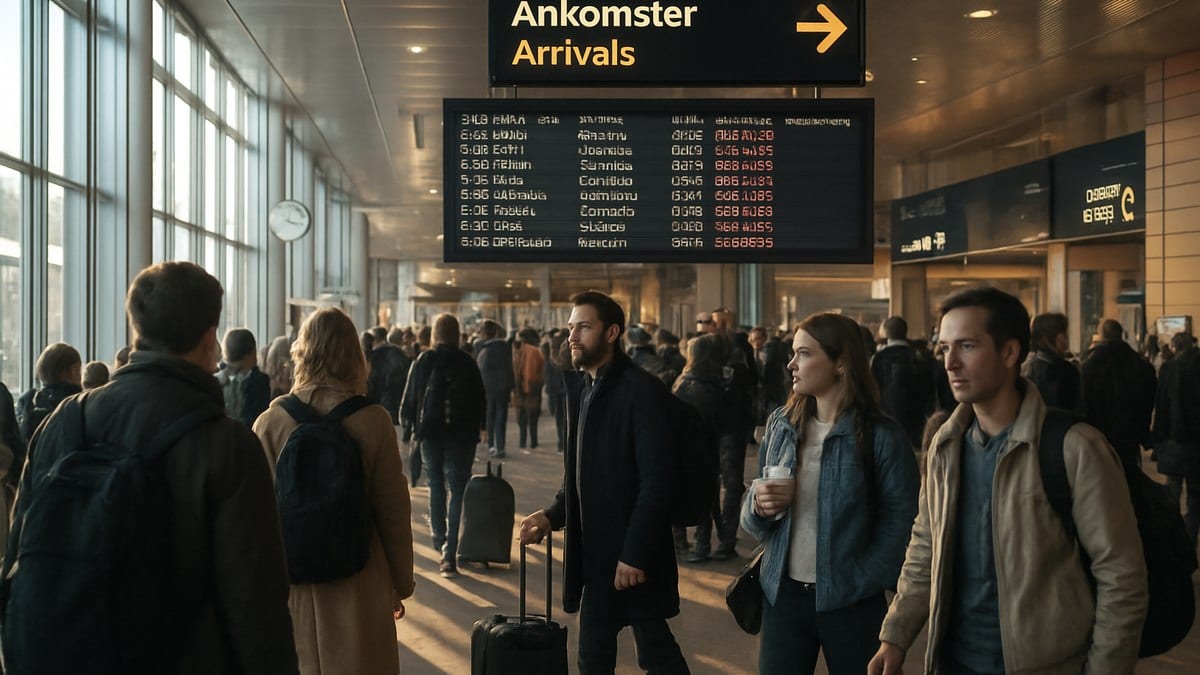
Major Hubs Struggle With a Wave of Flight Disruptions
Published coverage indicates that Norway’s main airports have entered April under pressure, with Oslo Gardermoen at the center of a fresh episode of travel disruption. Reports focused on a cluster of 81 delays, alongside at least 10 cancellations, affecting traffic through Oslo and connecting hubs such as Bergen Flesland, Stavanger Sola and Tromsø Langnes. The knock-on effects have been felt on both domestic links and short haul European routes at a time when spring demand is accelerating.
Travel industry reports describe congested departure boards, extended waiting times and rebooked itineraries as carriers struggled to keep schedules intact. Scandinavian Airlines, Norwegian and regional operator Widerøe were among the airlines most exposed on the high frequency domestic network that ties Oslo to western and northern Norway. Services on popular corridors, including Oslo to Bergen and Oslo to Tromsø, were repeatedly cited among the affected departures.
Publicly available flight tracking data shows that delays were unevenly spread across the day, with some early morning rotations disrupted by aircraft and crew imbalances and later departures pushed back as ground operations attempted to recover. For passengers, the visible result was a patchwork of postponed flights, missed connections and last minute gate changes at terminals that usually pride themselves on efficient throughput.
According to aviation monitoring sources, the disruption in Norway coincides with a broader pattern of springtime irregularities across European airspace. Neighboring hubs such as Copenhagen and London have also reported spikes in delayed or rerouted flights in recent days, amplifying the sense of fragility in the continental network just as carriers ramp up capacity for the warmer months.
Spring Demand Meets Tight Capacity
The timing of the Norwegian delays is particularly sensitive. Spring is traditionally a ramp up period for leisure and business travel, with traffic building steadily from March into the Easter holidays and beyond. Planning documents from European air traffic bodies show that Oslo and Bergen have been handling rising average daily movements in the weeks leading into late March, leaving little slack when operational stress appears.
Airlines have scheduled denser timetables on domestic routes that connect regional cities and remote communities to the capital. This strategy is designed to capture growing demand and to restore frequencies that were cut in previous years. However, it also means that any technical issue, crew shortage or airspace constraint can trigger a cascade of delays, as aircraft are tightly cycled between successive legs with limited buffer time.
Industry analyses of Norwegian and wider Scandinavian operations in recent seasons highlight how quickly punctuality can deteriorate in such an environment. Even relatively short delays on early departures can propagate through the day, particularly on multi leg rotations that touch several of Norway’s coastal hubs. This dynamic appears to have been at play in the latest bout of disruption, where delays mounted across multiple cities rather than remaining confined to a single airport.
Travel experts note that passengers are increasingly sensitive to these patterns, especially those planning complex itineraries that link domestic Norwegian flights with long haul services from Oslo to other parts of Europe, North America or Asia. A departure that leaves a coastal city an hour late can be enough to jeopardize international connections, forcing travelers into overnight stays or extensive rerouting at short notice.
Airlines and Infrastructure Under Ongoing Pressure
While the current episode is centered on a sudden cluster of delays, it also reflects longer running strains in Norway’s aviation system. Historical performance monitoring has previously pointed to challenges at Oslo Gardermoen during periods of heavy traffic, with staffing levels in air traffic control and ground handling identified as potential pinch points during peak hours.
On the infrastructure side, recent monitoring reports show that Norwegian airports have been working to balance cost efficiency targets with resilience measures intended to protect punctuality. Investments in runway, apron and terminal upgrades are designed to accommodate more flights and passengers, yet many of these projects are phased in gradually, leaving the network periodically exposed when growth in demand runs ahead of capacity enhancements.
Airlines operating in and out of Norway also face external pressures that complicate day to day reliability. Higher fuel prices, evolving environmental regulations and competitive pressure on fares all limit the financial room to maintain substantial operational buffers. As a result, carriers tend to keep aircraft utilization high and turnaround times tight, which can magnify the impact of any unforeseen event, from a ground handling delay to a minor technical inspection.
Aviation analysts observing the current situation emphasize that Norway is not unique in facing this mix of challenges. Similar reports have emerged from other European markets where traffic has rebounded strongly and capacity has been stretched. However, Norway’s geography, with a heavy reliance on air travel to bridge long distances and difficult terrain, means that domestic disruptions can feel particularly acute for residents and visitors alike.
Impact on Travelers and Growing Focus on Passenger Rights
For passengers caught up in the latest travel chaos, the most immediate impact is lost time, missed connections and uncertainty about when they will reach their destinations. Social media posts and traveler accounts describe crowded gate areas, long queues at customer service desks and a scramble for alternative itineraries when multiple flights on the same route are delayed or cancelled in quick succession.
The episode has renewed attention on passenger rights under European regulation for delays and cancellations. Publicly available guidance from carriers serving Norway advises travelers to familiarize themselves with compensation and assistance rules, especially when delays exceed certain time thresholds or cancellations are announced on short notice. Travel advisers also encourage passengers to keep documentation of boarding passes, delay notifications and any additional expenses incurred in case they pursue claims later.
In response to the recurrent disruptions seen across the wider region this spring, consumer advocates have been urging travelers to build more buffer time into their plans, particularly when connecting between domestic Norwegian flights and long haul services. Recommendations often include choosing longer connection windows, avoiding the last departure of the day on critical legs and considering travel insurance products that specifically cover delays and missed connections.
Despite the turbulence, aviation data suggests that most flights in and out of Norway are still operating close to schedule on an average day. For many travelers, the current bout of 81 delays will translate into inconvenience rather than trip cancellations. Yet the visibility of the disruption at major hubs such as Oslo, Bergen, Stavanger and Tromsø is likely to intensify debate about how much redundancy and resilience should be built into the system as spring and summer traffic continues to grow.