

More news on this day
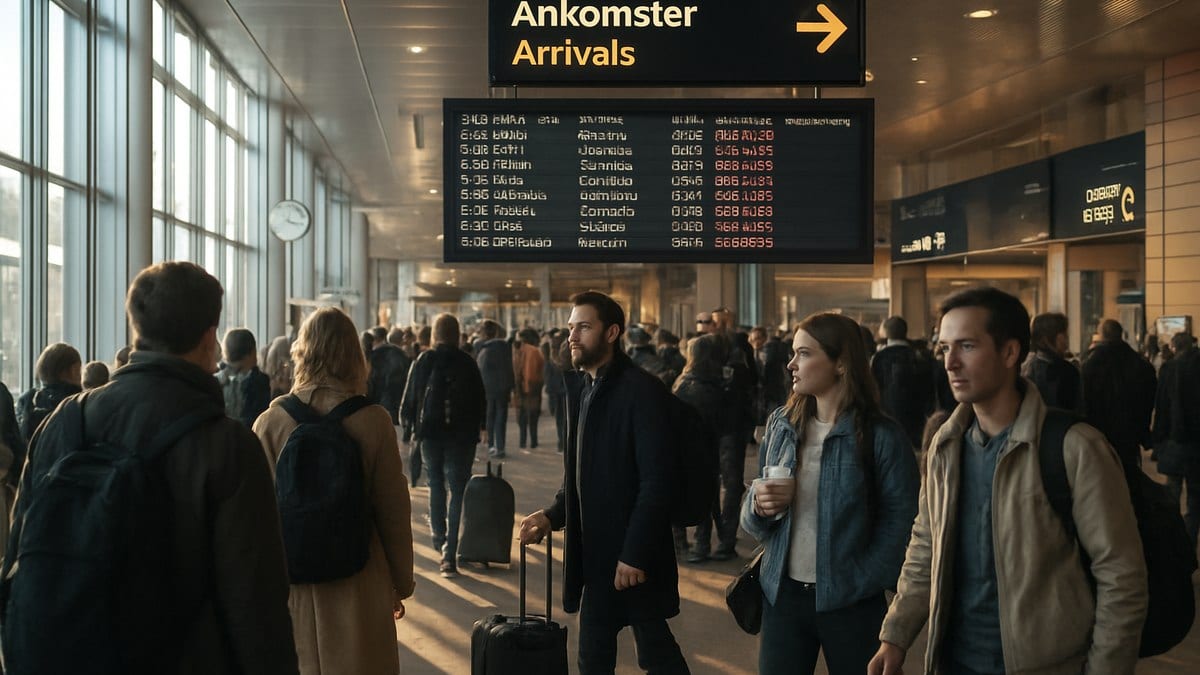
Spring getaways across Norway have been thrown off course as a fresh wave of disruption sweeps through the country’s main air gateways, with 81 flight delays reported at major hubs and knock-on effects felt across northern Europe.
Get the latest news straight to your inbox!
Delays Mount at Oslo and Key Regional Airports
Published coverage of recent aviation data indicates that Norway’s busiest airports have entered April under mounting strain, with a combined 81 delays logged across Oslo Gardermoen and other major hubs on some of the season’s peak travel days. Oslo, Norway’s primary international gateway, has been among the hardest hit, featuring prominently in wider European disruption tallies that show hundreds of late departures across the continent over the first week of April.
Reports from travel-industry outlets describe Gardermoen grappling with a mix of late-arriving aircraft, congested air corridors and residual schedule imbalances that built up over the preceding weekend. Similar patterns are being noted at secondary Norwegian airports that act as regional connectors, adding further stress for travelers relying on onward domestic links.
Across Europe, data compiled by aviation trackers for early April shows more than a thousand delayed flights in a single day, with Oslo repeatedly named alongside hubs such as Amsterdam, Copenhagen and London as among the most affected. Within that wider picture, Norway’s tally of 81 delays over select 24 hour periods highlights how even a relatively compact market can experience outsized disruption once networks begin to seize up.
While overall passenger throughput at Norwegian airports has been tracking modest growth into 2026, the latest figures suggest that operational resilience is being tested as carriers try to meet rising spring demand with tightly scheduled fleets and crews.
Knock-on Effects Across Nordic and European Routes
The disruption is not confined to Norway’s borders. Publicly available flight statistics indicate that late departures and rolling delays at Oslo and regional Norwegian hubs have fed into broader instability across Nordic and European networks, particularly on routes linking Norway with Denmark, Sweden, the Netherlands, the United Kingdom and Spain.
Travel-focused news services tracking daily performance report that Oslo-origin flights have contributed to delay clusters at major partner hubs, where late inbound aircraft and crews have forced airlines to re-time or consolidate departures. As schedules slip at one end of a route, aircraft rotations fall out of place, generating additional delays on subsequent sectors far from where the original problem started.
This pattern has been evident on popular leisure and business corridors connecting Norway with Amsterdam, Copenhagen and London, all of which appear regularly in delay tables for early April. Passengers beginning or ending journeys in Norway have therefore encountered disruption not only on domestic legs, but also on connecting flights deeper into Europe.
The timing is particularly sensitive for travelers hoping to take advantage of early spring holidays and long weekends, with many itineraries built around tight connections that leave little room for error when schedules begin to slip.
Mixed Causes Behind Spring Travel Chaos
Available reporting suggests that no single trigger is responsible for the current wave of delays. Instead, aviation analysts point to a familiar combination of factors, including localized weather constraints, temporary airspace restrictions in parts of Europe, operational challenges at individual airlines and lingering fleet and crew imbalances as carriers ramp up into the busier warm season.
In Norway, the transition from winter to spring can still present difficult operating conditions at higher-latitude airports, where late-season snow or strong winds occasionally limit capacity or require extended de-icing procedures. Even modest weather-related slowdowns can quickly cascade into outbound delays when traffic volumes are high and schedules are tightly packed.
At the same time, European travel outlets covering the recent disruption point to congestion at major control centers and constraints on airspace in some regions, which can force aircraft onto longer routings or into holding patterns. These upstream issues affect Norway-bound and Norway-originating flights just as much as services elsewhere in Europe.
Operational pressures within airlines themselves are another recurring theme. After several years of capacity adjustments and staffing changes across the industry, some carriers are still working to balance crew availability with ambitious flight programs. When even a small number of rotations run late, the resulting chain reaction can add significantly to national delay totals such as the 81 disruptions now being associated with Norway’s main hubs.
What Travelers Passing Through Norway Should Expect
For passengers planning trips through Oslo Gardermoen and other Norwegian airports in the coming days, industry advisories recommend building extra time into itineraries. Travel reports emphasize the importance of allowing generous connection windows, particularly when journeys involve separate tickets or transfers between different airlines or alliances.
Publicly accessible guidance from carriers operating in Norway underscores that travelers should continue to check in according to their original schedules unless specifically advised otherwise, even when news of delays emerges in advance. This reflects the reality that departure times can shift at short notice as airlines try to recover lost minutes and reposition aircraft.
Passenger rights frameworks in Norway and the wider European Economic Area provide some protection when flights are heavily delayed or cancelled, depending on the cause and the length of the disruption. Travel advisories encourage affected customers to retain boarding passes and confirmation emails, monitor airline apps closely and be prepared for rebooking or overnight stays if knock-on delays escalate.
With 81 delays already recorded across key Norwegian hubs during the early spring travel period, the experience of flying through the country may remain unpredictable in the short term. However, schedule data from previous disruption episodes suggests that once weather patterns stabilize and airlines complete their immediate recovery efforts, operations can improve relatively quickly, easing pressure on both domestic and international travelers.